You might not realize that lineman pliers are designed for much more than just gripping wires.
Lineman pliers are multifunctional tools that combine cutting, twisting, and crimping capabilities into one device, making them indispensable in electrical work.
If you want to handle wires efficiently and safely, understanding their specific uses can save you time and prevent damage.
Let’s explore how these pliers can transform your approach to wiring tasks.
What Lineman Pliers Are and How They Work
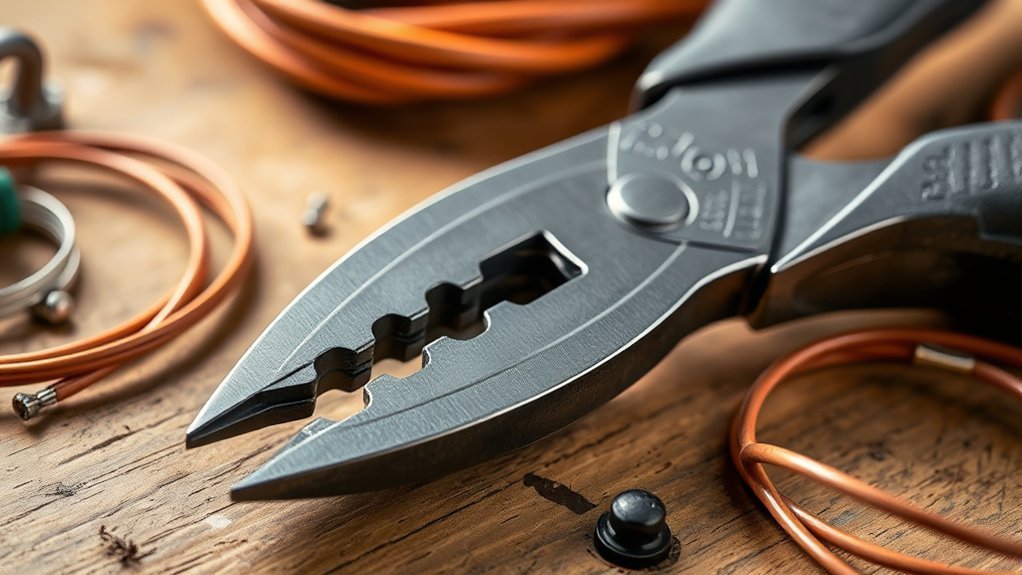
Lineman pliers are specialized hand tools designed for gripping, twisting, bending, and cutting wire and cable. You’ll find several types of lineman pliers, each tailored for specific tasks.
Standard lineman pliers feature a flat gripping surface near the tip and a rounded gripping area for twisting. Their design includes a robust fulcrum that maximizes leverage, enabling efficient wire manipulation.
Some variants incorporate insulated handles for electrical safety. The jaws are forged from hardened steel, ensuring durability and precise gripping.
You use the lineman pliers design to apply controlled force, allowing you to grip wires firmly without slipping. Understanding the types of lineman pliers and their design helps you select the right tool for precise wire handling in electrical and construction work.
Cutting and Stripping Wires With Lineman Pliers
You’ll use the cutting edge of lineman pliers to trim wires cleanly without fraying. When stripping insulation, position the jaws carefully to avoid damaging the conductor beneath.
Always wear protective gloves and guarantee the tool is rated for the wire gauge to maintain safety.
Wire Cutting Techniques
Mastering wire cutting techniques with pliers requires understanding the tool’s cutting edges and grasping methods for clean, efficient cuts. When you cut with lineman pliers, position the wire near the pivot for maximum leverage. Avoid cutting too close to the handles to prevent damaging the blades.
Use steady pressure to guarantee a clean slice without frayed ends, which aids in wire stripping and cable management later.
Keep these tips in mind:
- Select the correct wire gauge for your pliers’ capacity
- Hold the wire firmly but avoid excessive bending
- Cut perpendicular to the wire for an even edge
- Make incremental cuts for thicker cables
- Inspect blades regularly for sharpness
Following these steps enhances precision and tool longevity during wire cutting tasks.
Effective Wire Stripping
Although cutting wires cleanly is essential, stripping insulation effectively is equally critical for reliable electrical connections. When using lineman pliers, position the wire between the jaws where the cutting edges meet, then carefully rotate the pliers to score the insulation without damaging the conductor.
This precise wire insulation removal guarantees the metal core remains intact. After scoring, pull the insulation away with the pliers’ gripping area to expose the bare wire. Mastering this technique requires steady control to avoid nicking the wire, which could weaken the connection or cause breaks.
Combining effective wire cutting with accurate insulation stripping using lineman pliers streamlines your workflow and enhances connection integrity, making these tools indispensable for electricians and technicians alike.
Safety Tips for Handling
When handling lineman pliers for cutting and stripping wires, always guarantee the tool is rated for electrical work and in good condition to prevent accidents. To maintain safety and efficiency, adopt proper posture and wear personal protective equipment.
Follow these guidelines:
- Inspect pliers for damage before use.
- Use insulated handles to avoid electrical shocks.
- Maintain a firm grip and keep fingers clear of cutting edges.
- Cut wires perpendicular to avoid slipping.
- Keep your workspace organized to prevent tripping hazards.
Twisting and Bending Wires With Lineman Pliers
Lineman pliers provide the leverage and control you need to twist and bend wires accurately. When applying wire manipulation techniques, position the wire securely between the pliers’ jaws near the pivot point to maximize torque.
Use steady, controlled force to twist wires together, ensuring tight, uniform cable twisting methods that prevent loosening or damage. For bending, grip the wire firmly and apply gradual pressure, shaping it to the desired angle without kinking.
The hardened steel jaws are designed to withstand high stress, making them ideal for manipulating various wire gauges. By mastering these techniques, you can achieve precise bends and twists essential for reliable electrical connections and efficient cable management in your projects.
Gripping and Holding Cables With Lineman Pliers
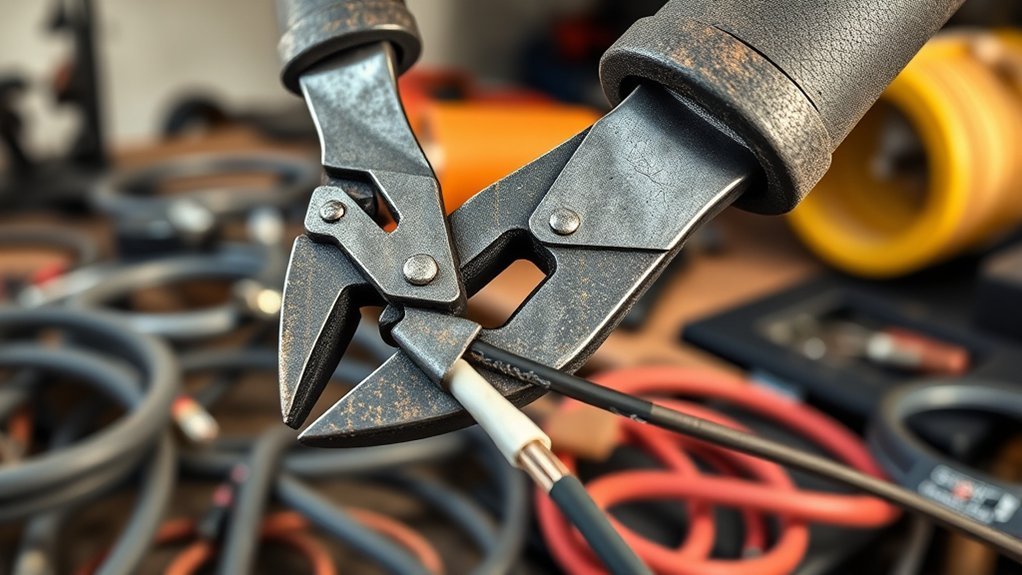
When you grip cables with lineman pliers, you rely on their strong, serrated jaws to secure wires firmly without slipping. This grip strength lets you hold cables steady for cutting, twisting, or positioning tasks.
Mastering proper cable securing techniques guarantees safety and efficiency in your electrical work.
Cable Securing Techniques
Mastering three key cable securing techniques will help you grip and hold cables effectively with lineman pliers. These techniques guarantee reliable cable anchoring and precise wire securing, essential for safe electrical work.
First, position the pliers near the cable’s end to maintain control. Then, apply firm pressure to prevent slippage without damaging insulation. Next, use the pliers’ serrated jaws for a secure grip on smooth or coated cables. Finally, twist or bend wires as needed while maintaining a steady hold.
Remember these tips:
- Align cables parallel to the jaw for better anchoring
- Use the pliers’ cutting edge to trim excess wire
- Avoid over-tightening to prevent cable damage
- Employ steady pressure for consistent wire securing
- Reposition grip when adjusting cable placement
Grip Strength Advantages
Grip strength plays an essential role in securing and manipulating cables effectively with pliers. When you use lineman pliers designed with ergonomic design principles, you benefit from enhanced grip comfort that reduces hand fatigue during prolonged tasks.
The pliers’ jaws provide a firm, stable hold on cables, allowing you to twist, bend, or cut with precision. Their textured gripping surfaces prevent slippage, ensuring you control cables securely even in tight or awkward spaces.
Safely Crimping Connectors With Lineman Pliers
Although lineman pliers are primarily known for cutting and twisting wires, they also provide a reliable method for safely crimping connectors. When using lineman pliers, your crimping techniques must adapt to various connector types to guarantee a secure, conductive joint.
Here’s how to optimize your crimping process:
Select the appropriate connector type for your wire gauge. Strip insulation precisely to expose the correct wire length. Position the connector firmly in the pliers’ jaw.
Apply steady, even pressure to avoid damaging the connector. Inspect the crimp visually and physically for a secure fit.
Using Lineman Pliers for Heavy-Duty Electrical Work
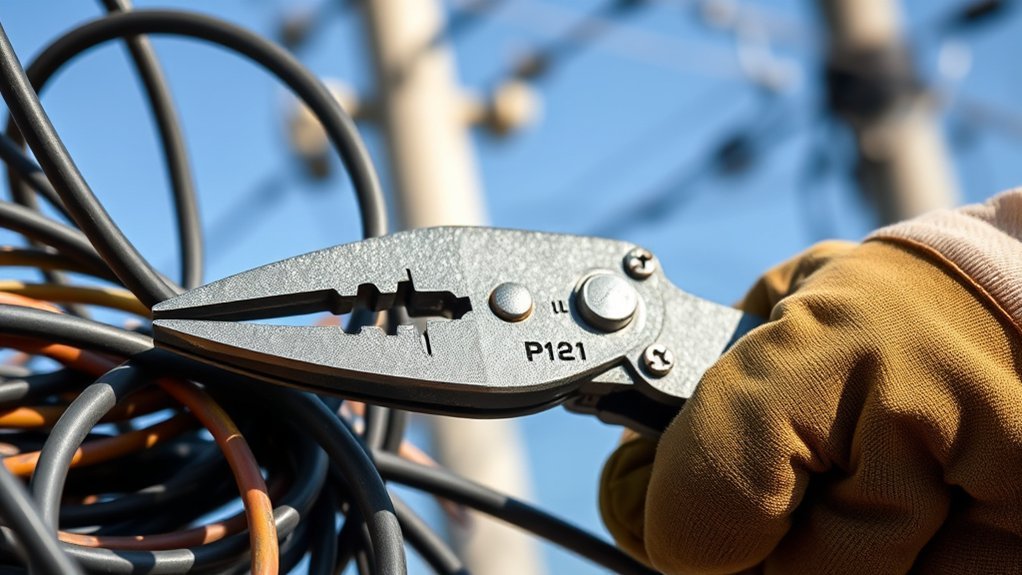
When tackling heavy-duty electrical tasks, lineman pliers offer the strength and versatility you need to cut, twist, and pull thick wires and cables efficiently. Designed for heavy-duty applications, these pliers provide a robust gripping surface and high-leverage handles, enabling you to manipulate large gauge wires common in electrical installations.
You can rely on their hardened jaws to withstand the stress of twisting multiple conductors together or cutting through tough insulation without damaging the wire beneath. Their ergonomic design also reduces hand fatigue during prolonged use.
Whether you’re bundling cables or making precise cuts, lineman pliers guarantee durability and control, making them indispensable for demanding electrical work. Using them correctly enhances safety and efficiency on any job site involving heavy-duty electrical installations.
Comparing Lineman Pliers With Other Electrical Pliers
While lineman pliers excel at heavy-duty electrical tasks, you might wonder how they stack up against other types of electrical pliers. Each type of electrical tool serves a specific purpose, and knowing their differences helps you choose the right one.
Lineman pliers handle heavy-duty tasks, but understanding each tool’s purpose ensures you pick the right one.
Here’s a quick comparison:
- Lineman pliers: Robust grip, cutting, twisting wires; ideal for heavy-duty work
- Needle-nose pliers: Precision bending and reaching tight spaces
- Diagonal cutters: Specialized in clean wire cutting, not gripping
- Slip-joint pliers: Adjustable jaws for varying grip sizes, less forceful
- Linesman’s wire strippers: Designed specifically for stripping insulation, not gripping or twisting
Understanding these distinctions guarantees you use lineman pliers appropriately and complement them with other electrical tools for efficiency and safety on your project.
Choosing the Right Lineman Pliers for Your Project
Since lineman pliers come in various sizes, materials, and designs, selecting the right pair depends on the specific demands of your project. Prioritize ergonomic design to reduce hand fatigue during extended use. Also, guarantee high material quality, as durable steel improves cutting and gripping performance.
| Feature | Importance | Recommendation |
|---|---|---|
| Size | Match wire gauge and access | Medium size for versatility |
| Material Quality | Guarantees durability and strength | Hardened steel with corrosion resistance |
| Ergonomic Design | Reduces hand strain | Cushioned, non-slip handles |
Choose pliers that balance these factors to achieve precision and comfort tailored to your electrical tasks.
Maintaining Lineman Pliers to Extend Their Lifespan
Proper maintenance greatly extends the lifespan of your lineman pliers and guarantees consistent performance. To keep them in prime condition, focus on effective cleaning techniques and appropriate storage methods. Follow these steps:
Clean jaws and pivot with a wire brush to remove debris and prevent rust. Wipe the tool with a lightly oiled cloth to lubricate moving parts. Inspect regularly for wear or damage, addressing issues immediately.
Store pliers in a dry place, ideally in a toolbox or on a pegboard to avoid moisture exposure. Avoid using pliers for unintended tasks that can damage cutting edges or alignment.
Conclusion
When you use lineman pliers, you gain reliable control for cutting, twisting, gripping, and crimping wires with precision and safety. Their robust design gives you the leverage needed for heavy-duty electrical tasks, making your work more efficient.
By choosing the right pair and maintaining them properly, you guarantee durability and consistent performance. Trust these pliers to handle wire manipulation confidently, turning complex electrical jobs into manageable, precise actions every time you use them.
In conclusion, lineman pliers are essential tools that provide the control and strength needed for various electrical tasks, ensuring both accuracy and safety in your work.