You might wonder if you can use an orbital sander as a polisher when you don’t have the right tool on hand.
While it’s possible to achieve some shine using fine pads and polish at low speed, the sander’s design isn’t optimized for controlled, low-heat polishing.
This limitation can increase swirl marks and extend correction time, raising important considerations before you proceed.
Understanding these factors helps you decide when to push forward or step back.
What Is an Orbital Sander?
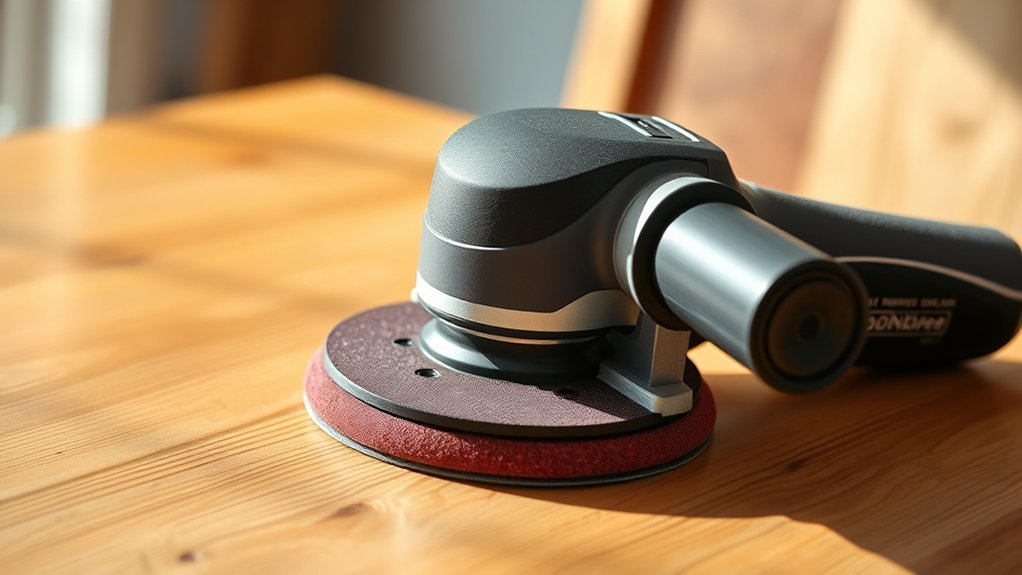
An orbital sander is a power tool designed to smooth surfaces by rapidly moving a sanding pad in small, circular orbits. When you use an orbital sander, you can effectively remove material without leaving swirl marks, thanks to this random orbit motion.
Its design optimizes surface finish uniformity, making it ideal for preparing wood, metal, or plastic before further treatment. However, understanding polishing compatibility is essential; orbital sanders generally lack the speed control and specialized pads needed for effective polishing.
While they excel at abrasion and surface leveling, their mechanics limit their ability to achieve the fine finish that dedicated polishers provide. So, while an orbital sander serves you well in smoothing tasks, it’s not inherently optimized for polishing applications.
Can an Orbital Sander Be Used as a Polisher?
You can use an orbital sander for polishing, but it’s not designed for that purpose and lacks the control of a dedicated polisher. The key differences lie in speed, pad type, and motion, which affect finish quality and surface protection.
To get acceptable results, you’ll need to adjust your technique and use fine grit pads carefully to avoid damage.
Differences Between Tools
How do an orbital sander and a polisher differ in function and design? An orbital sander primarily removes material with aggressive, rapid sanding motions, while a polisher uses controlled, smooth rotations to enhance surface shine without cutting deeply.
Crafting ergonomics also diverge: sanders often feature compact grips optimized for downward pressure, whereas polishers provide balanced handles for steady, lateral movement.
Noise concerns are significant; sanders emit higher decibel levels due to abrasive friction, which can cause fatigue during extended use. Conversely, polishers run quieter, promoting longer, more comfortable sessions.
Understanding these distinctions helps you select the right tool for your project, preventing surface damage or inefficient results. Using an orbital sander as a polisher compromises precision and finish quality because the tools’ core mechanics and ergonomics serve fundamentally different purposes.
Polishing Tips With Sander
Recognizing the functional differences between an orbital sander and a polisher clarifies why using a sander for polishing requires careful technique. When you adapt an orbital sander for polishing, you must prioritize polishing safety and control to avoid damaging surfaces.
Use fine-grit sanding pads or dedicated polishing pads compatible with your sander. Maintain consistent, gentle pressure and avoid lingering in one spot to prevent uneven polishing or burns. Keep your speed low to moderate to mimic a polisher’s action without overheating.
Choose the right pad: soft and suited for polishing
Apply minimal pressure to avoid surface damage
Work in slow, overlapping motions for uniform results
Wear protective gear to ensure polishing safety
These tips help you safely and effectively polish with an orbital sander.
How Polishing Differs From Sanding With an Orbital Sander
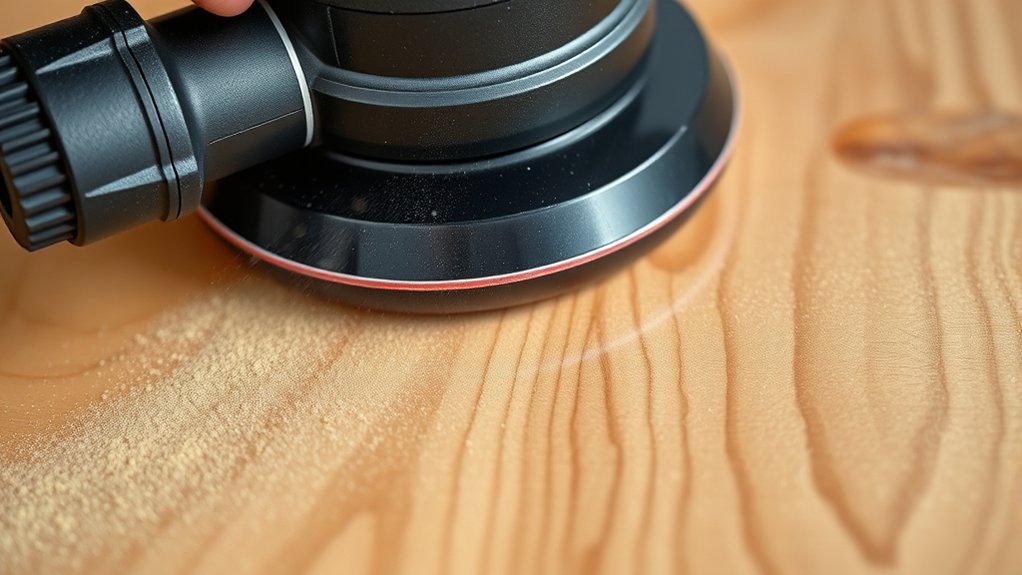
You’ll notice that polishing creates a much smoother surface texture compared to sanding, which is more abrasive. An orbital sander typically operates at higher speeds designed for material removal, while polishing requires slower, controlled rotations to refine the finish.
Understanding these differences is indispensable before attempting to use an orbital sander for polishing tasks.
Surface Texture Differences
Why does the surface texture differ so markedly between polishing and sanding with an orbital sander? When you sand, the abrasive action creates a rough texture designed to enhance paint adhesion by increasing surface area. Polishing, on the other hand, aims to smooth and refine the surface, reducing micro-abrasions and imperfections.
Here’s how the textures differ technically:
- Sanding leaves microscopic grooves that improve mechanical bonding for coatings.
- Polishing smooths these grooves, creating a glossy, reflective finish.
- Rough texture from sanding can trap contaminants, while polishing cleans and seals.
- Polishing minimizes surface irregularities, essential for final aesthetic quality.
Understanding these differences helps you know why an orbital sander’s sanding pads aren’t suitable for achieving the polished finish you want.
Tool Speed Variations
How does the speed of an orbital sander influence its effectiveness as a polisher? Unlike sanding, polishing demands lower, consistent speeds to prevent heat buildup that can alter surface color and texture. Think of it like color theory in action, where excessive heat shifts hues.
Orbital sanders typically operate at higher RPMs optimized for material removal, not the gentle refinement polishing requires. You’ll find that adjusting speed settings, akin to using keyboard shortcuts for efficiency, can fine-tune performance.
If your sander lacks variable speed control, you risk uneven polishing and surface damage. To use an orbital sander as a polisher effectively, you must control the tool’s speed precisely, ensuring it doesn’t exceed the threshold where polishing becomes abrasive sanding.
This distinction is pivotal for achieving professional, scratch-free finishes.
Risks of Polishing Cars and Other Surfaces With an Orbital Sander
When considering an orbital sander for polishing cars or delicate surfaces, what risks should you be aware of? Using an orbital sander outside its intended application can cause damage and personal hazards. The risk of burns arises from excessive friction heat generated by aggressive sanding or polishing, which can mar paint finishes.
Using an orbital sander on delicate surfaces risks heat burns and damage from improper application.
Additionally, prolonged noise exposure from the sander’s motor may harm your hearing without proper protection. Mechanical misuse can also result in surface gouging, uneven polish, and premature wear on the tool.
Key risks include:
- Overheating leading to paint burns or clear coat damage
- High noise levels causing hearing fatigue or loss
- Abrasive action creating swirl marks or surface imperfections
- Loss of control causing physical injury or tool damage
Understanding these risks ensures safer, more effective polishing when using an orbital sander.
Choosing Pads and Compounds for Orbital Sander Polishing
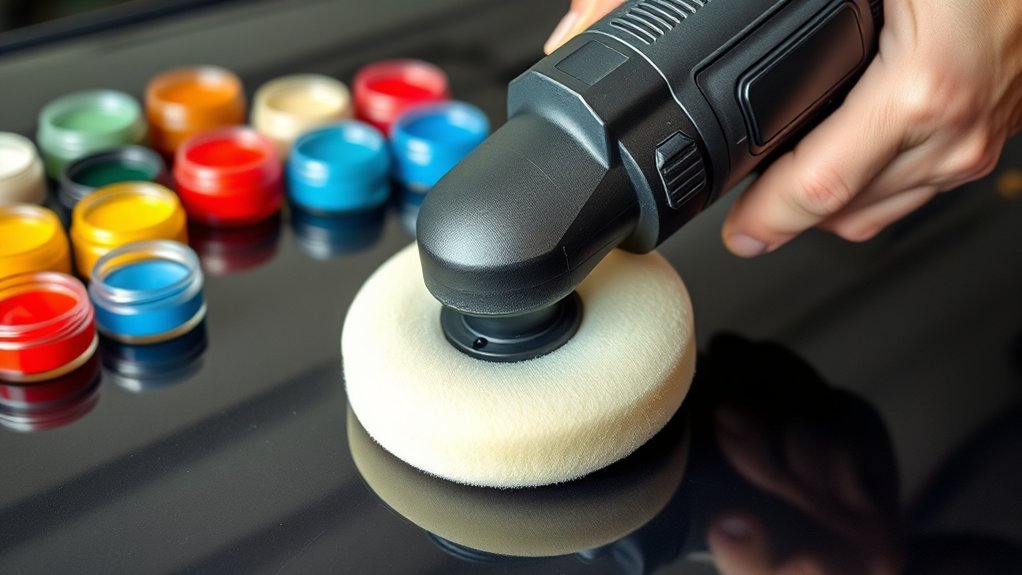
Selecting the right pads and compounds directly impacts the effectiveness and safety of polishing with an orbital sander. You’ll want to choose polishing pads specifically designed for orbital sanders, as their backing matches the tool’s random orbit motion, minimizing swirl marks.
Foam pads vary in density and cut; softer pads suit finishing, while firmer ones handle more aggressive polishing. Pair these with compounds formulated for orbital use, usually finer abrasives that reduce heat buildup and surface damage.
Avoid using standard abrasive sanding discs; they aren’t made for polishing and can harm both the surface and your orbital sander. By matching polishing pads and compounds appropriately, you ensure consistent surface refinement and prolong your sander’s life during polishing tasks.
How to Safely Polish With an Orbital Sander
Why should you prioritize safety when polishing with an orbital sander? Ensuring safety protects both you and the workpiece while respecting polishing ethics and minimizing environmental impact. Follow these guidelines for effective, responsible use:
Always wear protective gear: goggles, gloves, and a dust mask to guard against debris and fumes. Secure your workpiece firmly to prevent slipping, ensuring consistent pressure and control.
Use the correct speed settings to avoid overheating, which can damage surfaces and release harmful particles. Opt for eco-friendly polishing compounds to reduce toxic runoff and adhere to environmental impact standards.
Tips for a Professional Shine Without a Polisher
How can you achieve a professional shine without a dedicated polisher? Start by selecting the right abrasive pads. Opt for fine-grit sanding or polishing pads compatible with your orbital sander. Apply a suitable polishing compound sparingly to avoid overloading.
Maintain consistent pressure and keep the sander moving to prevent burning or uneven surfaces. For beginners, practice on scrap material first to master control and speed settings.
Always wear protective eyewear and a dust mask as essential safety considerations, since polishing generates fine particles. Keep your workspace well-ventilated to reduce inhalation risks.
Lastly, clean the surface thoroughly after polishing to remove residue and inspect your work under strong light. These steps ensure a smooth, glossy finish without specialized polishing tools.
When to Choose a Dedicated Polisher Instead of an Orbital Sander
When does your project demand a dedicated polisher rather than an orbital sander? Using the wrong tool not only compromises results but also raises safety concerns. Choose a dedicated polisher when your task requires precision and finesse, which an orbital sander can’t reliably provide.
Consider a dedicated polisher if:
Consider a dedicated polisher when precision, consistent speed, and safety are essential for your project’s success.
- You need consistent speed control for delicate surfaces.
- The surface demands a swirl-free, high-gloss finish.
- Extended use requires ergonomic design to reduce fatigue.
- You’re working on automotive paint or fine woodworking where heat buildup can damage the material.
In these scenarios, relying on an orbital sander risks uneven polishing, damage, and personal injury. Choosing the correct tool ensures optimal results and maintains safety standards throughout your project.
Frequently Asked Questions
Can an Orbital Sander Damage Delicate Wood Finishes?
Yes, using an orbital sander on delicate finishes can easily damage them due to its aggressive sanding action. You should avoid orbital sanders on sensitive surfaces and opt for gentler polishing tools to preserve finish integrity.
How Do I Maintain My Orbital Sander for Longevity?
You should clean dust filters regularly, lubricate moving parts, and check sanding pad wear. Store the sander in a dry place.
These maintenance routines ensure optimal performance and provide longevity tips to extend your orbital sander’s lifespan effectively.
What Is the Average Cost of an Orbital Sander?
Back in the days of muskets, an orbital sander typically costs between $40 and $150. When mastering polishing techniques, you’ll want a model with variable speed control for precision and smoother finishes.
Are There Cordless Orbital Sanders Suitable for Polishing?
Yes, you’ll find cordless orbital sanders designed for polishing with variable speed controls and compatible polishing pads. They offer precision and mobility, making cordless polishing effective for detailed or hard-to-reach surfaces without compromising control.
Can I Use an Orbital Sander for Metal Surface Preparation?
You know what they say: measure twice, cut once. You can use orbital sanding for metal prep, but choose the right grit and backing pad to avoid damaging the surface while ensuring efficient rust or paint removal.
Conclusion
Using an orbital sander as a polisher is like steering a winding road without a GPS—you can get there, but it’s slower and riskier. With careful control, low speed, and the right pads, you’ll coax a modest shine from your surface.
However, for a mirror-like finish that gleams like glass, a dedicated polisher is your true compass. Don’t force the tool; choose precision over compromise to protect your work and save time.
In conclusion, while an orbital sander can be used as a polisher in a pinch, investing in a proper polishing tool will deliver better results and efficiency.