It’s no coincidence that linesman pliers are a staple in every electrician’s toolkit—they’re engineered for tasks that require both strength and precision.
Linesman pliers are designed specifically to handle the challenges of electrical work, making them indispensable for professionals and DIY enthusiasts alike.
If you’ve ever struggled with twisting or cutting thick wires, you’ll appreciate how these pliers combine gripping surfaces with cutting edges in one tool.
Understanding what sets them apart can change how you approach electrical work.
But there’s more to their design that makes them uniquely suited for demanding jobs.
Their robust construction and versatile functionality make linesman pliers a go-to tool for a wide range of tasks.
What Are Linesman Pliers and What Sets Them Apart
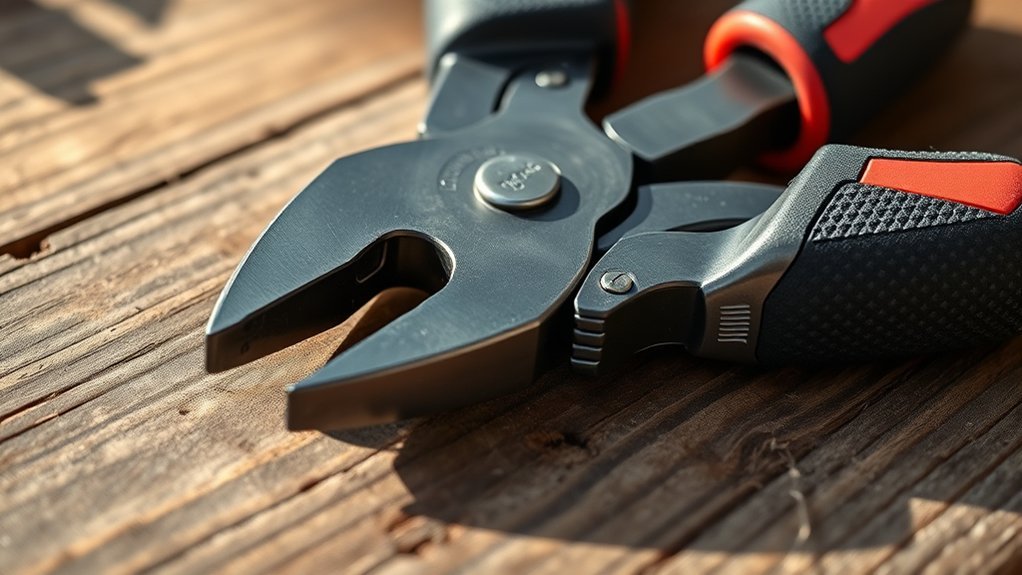
Linesman pliers are specialized hand tools designed primarily for gripping, twisting, bending, and cutting wire. You’ll find their robust construction and flat gripping surfaces distinguish them from other pliers.
Understanding the linesman pliers history reveals their evolution from basic gripping tools to essential equipment for electricians and linemen. When selecting your tool, you’ll notice reputable linesman pliers brands like Klein Tools, Channellock, and Irwin stand out for durability and ergonomic design.
These brands have refined the tool’s jaw alignment and cutting edges over decades, ensuring precision and reliability. By choosing quality linesman pliers, you get a tool engineered for controlled force application, making wire handling tasks more efficient and safer in demanding environments.
What Makes Linesman Pliers Ideal for Electrical Work
You’ll find linesman pliers are built with durable materials like high-carbon steel, ensuring they withstand the rigors of electrical work. Their ergonomic design provides enhanced grip and control, allowing you to manipulate wires with precision and safety.
These features make them indispensable tools for any electrician.
Durable Construction Materials
Exceptional durability defines the construction materials used in these pliers, ensuring they withstand the rigorous demands of electrical work. When you choose linesman pliers, you rely on meticulous material selection and rigorous durability testing to guarantee performance.
Manufacturers employ high-grade alloys and advanced heat treatment processes to enhance strength and resistance to wear. Key material features include:
- High-carbon steel for superior hardness and edge retention
- Chromium-vanadium alloy to resist corrosion and mechanical stress
- Precision heat treatment to optimize tensile strength
- Hardened cutting edges for clean wire cuts
- Durable joint construction for consistent alignment and reliability
These factors combine to provide you with pliers that maintain structural integrity and functionality under frequent, heavy use, making them indispensable for professional electrical tasks.
Enhanced Grip And Control
Although strength and durability are essential, enhanced grip and control truly define what makes these pliers ideal for electrical work. You rely on precise grip techniques to hold wires securely without slippage, ensuring accuracy during cutting or twisting.
The ergonomic handles are designed to optimize your hand placement, reducing fatigue and improving control methods. Textured, non-slip grips provide consistent traction, enabling you to maintain steady pressure even in oily or wet conditions.
Additionally, the pliers’ balanced pivot point enhances leverage, allowing you to manipulate components with minimal effort. Mastering these grip techniques and control methods lets you execute delicate tasks safely and efficiently, making linesman pliers indispensable in your electrical toolkit.
How to Use Linesman Pliers
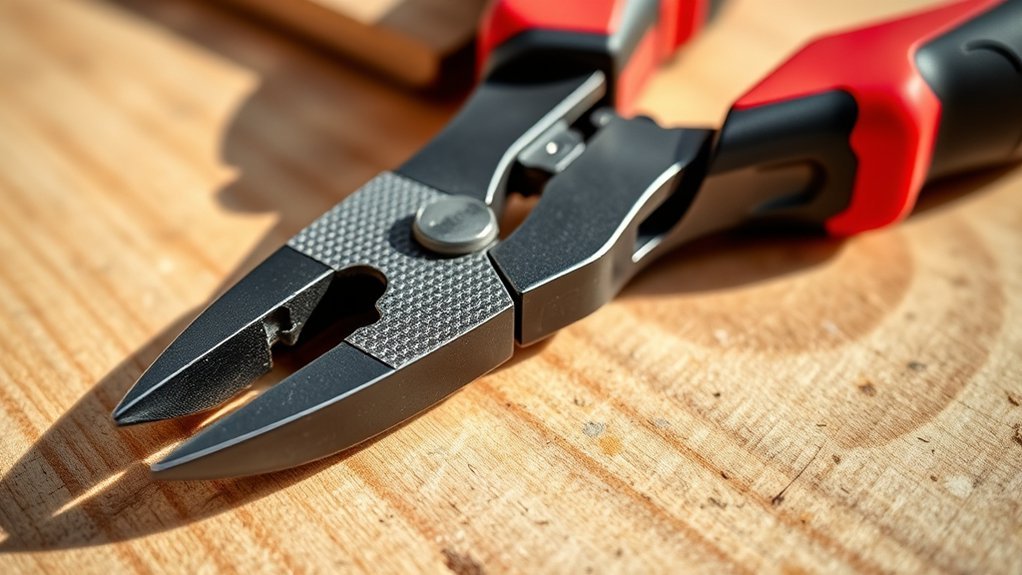
Mastering the use of linesman pliers involves understanding their multifunctional design, which allows you to grip, twist, cut, and strip wires efficiently. When using linesman pliers, always prioritize safety measures like wearing insulated gloves and ensuring the power is off.
Here’s how to handle them effectively:
Position the jaws firmly around the wire for a secure grip.
Use the cutting edge near the pivot to trim wires precisely.
Twist wires by holding one set firmly and rotating the pliers.
Strip insulation by carefully cutting without damaging the conductor.
Apply controlled pressure to avoid slipping or damaging materials.
Key Strength and Versatility Features of Linesman Pliers
The robust construction of linesman pliers gives you the strength needed to handle tough electrical tasks without bending or breaking. Their forged steel jaws offer exceptional durability, enabling precise cutting wire operations and reliable gripping fasteners.
The serrated gripping surfaces provide firm control, preventing slippage during twisting or pulling. Additionally, the integrated cutting edge near the pivot point is engineered to exert maximum force with minimal effort, ensuring clean cuts through various wire gauges.
Ergonomically designed insulated handles enhance your grip and reduce hand fatigue, allowing extended use in demanding environments. This combination of strength and versatility makes linesman pliers an indispensable tool for electricians and technicians who require reliable performance when cutting wire and gripping fasteners in tight spaces.
Types of Linesman Pliers and Their Uses
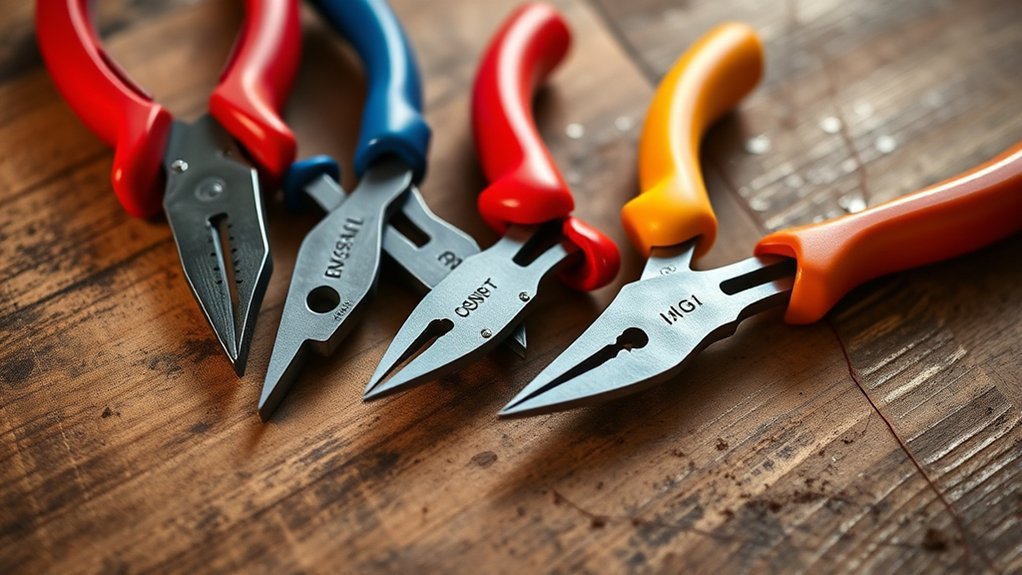
Anyone working with electrical wiring will find that selecting the right type of linesman pliers directly impacts efficiency and safety. You’ll encounter variations primarily based on types of grips and cutting edges, each tailored for specific tasks. Understanding these differences guarantees precise handling and reduces fatigue.
Common types include:
- Standard linesman pliers with flat, serrated grips for secure wire holding
- Needle-nose pliers featuring elongated jaws for tight spaces
- Insulated pliers with rubber-coated grips to prevent electric shock
- Long-handled pliers offering increased leverage for cutting thicker wires
- Combination pliers integrating gripping and cutting edges for versatility
How to Choose Quality Linesman Pliers
You’ll want to prioritize linesman pliers made from high-grade steel for maximum durability and corrosion resistance. Look for ergonomic handle designs that reduce hand fatigue during prolonged use.
Also, verify the jaws offer precise alignment and an appropriate size for your typical tasks to guarantee efficient gripping and cutting.
Material Durability
When selecting quality linesman pliers, understanding material durability is essential because it directly affects tool performance and longevity. The material composition determines the pliers’ strength, wear resistance, and ability to withstand mechanical stress.
High-grade alloy steel with heat treatment offers superior hardness and toughness. Additionally, corrosion resistance is critical to prevent rust and degradation, especially if you use the pliers in damp or outdoor environments. Consider these factors for durable linesman pliers:
- High-carbon steel for strength and edge retention
- Heat-treated surfaces for enhanced hardness
- Protective coatings like chrome or black oxide for corrosion resistance
- Solid rivets for durable joint integrity
- Precision machining to maintain structural reliability
Prioritizing these material qualities guarantees your linesman pliers remain reliable and effective over time.
Ergonomic Handle Design
Although material durability guarantees the tool’s longevity, ergonomic handle design directly impacts your comfort and control during use. When selecting linesman pliers, prioritize handles that provide ergonomic benefits to reduce hand fatigue and improve grip security.
Look for cushioned, non-slip materials that enhance handle comfort without sacrificing durability. Properly contoured handles align with your hand’s natural shape, delivering precise force application and minimizing strain during repetitive tasks.
| Feature | Benefit |
|---|---|
| Cushioning Material | Absorbs shock, reduces fatigue |
| Non-slip Grip | Guarantees secure handling |
| Contoured Shape | Matches hand anatomy |
| Handle Length | Offers leverage and control |
Focusing on these ergonomic features helps you maintain efficiency and safety during prolonged use.
Jaw Precision and Size
Because jaw precision directly affects cutting accuracy and gripping strength, choosing linesman pliers with properly sized and finely machined jaws is crucial. The jaw design influences how effectively the tool handles wire cutting, twisting, and gripping tasks. You want jaws that align perfectly without gaps to guarantee maximum jaw functionality.
When evaluating jaw precision and size, consider these factors:
- Tight jaw alignment for consistent cutting performance
- Appropriate jaw length to balance reach and control
- Finely serrated gripping surfaces to prevent slippage
- Hardened steel construction for durability and sharp edges
- Smooth pivot action enhancing jaw closure accuracy
Prioritizing these elements guarantees your linesman pliers deliver reliable, precise performance in demanding electrical and mechanical applications.
Linesman Pliers vs. Needle-Nose and Slip-Joint Pliers
While linesman pliers excel at gripping and twisting heavy gauge wires, you’ll find needle-nose and slip-joint pliers serve distinct purposes due to their design differences. Linesman pliers feature robust, flat jaws with a cutting edge, ideal for linesman pliers applications like twisting wires and cutting cables securely.
Their ergonomic handles enhance linesman pliers safety by reducing hand fatigue during heavy-duty tasks. Needle-nose pliers, with their long, slender jaws, allow you to reach into tight spaces and manipulate fine wires, making them perfect for precision work rather than heavy gripping.
Slip-joint pliers offer adjustable jaw widths, giving you versatility but less torque and cutting power than linesman pliers. Understanding these differences guarantees you select the right tool for each electrical or mechanical task.
Everyday Tasks Perfect for Linesman Pliers
When you need to cut, twist, or grip wires during electrical repairs or installations, linesman pliers deliver reliable performance with their strong jaws and sharp cutting edges. They’re essential for common household tasks that require durability and precision.
You’ll find these pliers invaluable for:
- Stripping and cutting electrical wires cleanly without damaging the strands
- Twisting wires together to guarantee secure connections
- Pulling nails or staples during minor home repairs
- Bending or shaping metal components for custom fits
- Holding small hardware firmly while tightening or loosening screws
Their robust construction makes linesman pliers ideal for consistent use in electrical repairs, helping you achieve professional results with ease and safety. Using them in your toolkit guarantees you’re ready for a variety of everyday tasks requiring strength and accuracy.
How to Maintain and Care for Your Linesman Pliers
To guarantee your linesman pliers perform at their best and last longer, you must regularly clean and lubricate their joints. Begin with proper cleaning techniques: use a stiff brush to remove debris and a cloth dampened with a mild solvent to eliminate grease and dirt. Avoid harsh chemicals that can damage metal surfaces.
After cleaning, apply a light machine oil to the pivot joint to ascertain smooth operation and prevent rust. Wipe away excess oil to avoid attracting dust.
For storage solutions, keep your pliers in a dry, organized toolbox or hang them on a pegboard to prevent moisture exposure and mechanical damage. Regular maintenance like this preserves cutting edges and enhances grip, safeguarding your linesman pliers remain reliable for all electrical and mechanical tasks.
Conclusion
Now that you’ve explored the unique design and versatility of linesman pliers, you’re equipped to handle electrical tasks with precision and confidence. Whether twisting wires or cutting heavy gauge cables, these tools deliver unmatched control and durability.
Just like a skilled blacksmith relied on his hammer centuries ago, you’ll appreciate how quality linesman pliers become an extension of your hand—ensuring efficient, reliable performance in every job you tackle. In the end, mastering the use of linesman pliers will elevate your workmanship and make challenging electrical tasks more manageable.