When you need dike pliers, a tool designed specifically for cutting wire cleanly and efficiently, they become indispensable.
Their angled jaws deliver a precise shearing action that standard pliers can’t match, allowing you to handle electrical or craft tasks with greater accuracy.
Understanding what sets dike pliers apart—and when to choose them over other cutting tools—can greatly improve your workflow and results.
But what exactly makes their design so effective?
What Are Dike Pliers and How Do They Work
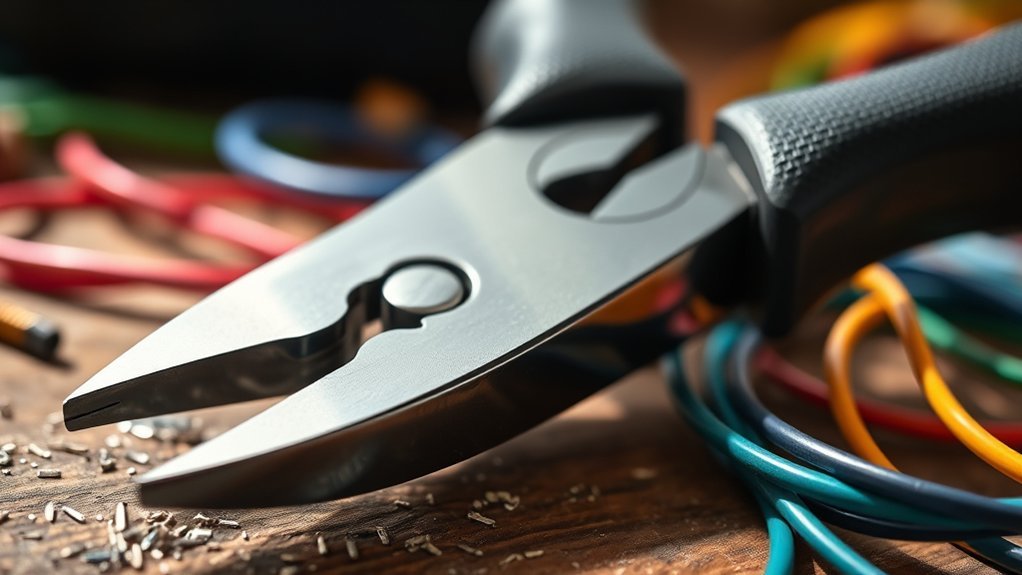
Dike pliers, also known as diagonal cutting pliers, are specialized hand tools designed for cutting wire and small pins in electrical and mechanical tasks. Understanding dike pliers history reveals their evolution from simple cutting tools to precision instruments favored by professionals.
When you use dike pliers, you apply a shearing force created by the angled cutting edges, which meet at an acute angle to provide clean, flush cuts. You’ll find top dike pliers brands like Klein Tools and Channellock emphasize durability, ergonomic design, and hardened steel construction, guaranteeing consistent performance.
Their compact form factor allows access to confined spaces, making them indispensable for electricians and technicians. By mastering their mechanics and selecting reputable brands, you guarantee reliability and efficiency in wire cutting tasks.
What Makes Dike Pliers Special? Key Features Explained
You’ll notice dike pliers stand out due to their unique jaw design, which provides ideal grip and cutting angles. Their cutting edges are engineered for precision, enabling clean cuts through tough materials with minimal effort.
Additionally, the ergonomic handles reduce hand fatigue, allowing for extended use without compromising control.
Unique Jaw Design
Although many pliers share common features, the unique jaw design sets these tools apart by combining cutting efficiency with gripping precision. You’ll notice that the jaw functionality of dike pliers integrates two distinct surfaces: a sharp cutting edge and a serrated gripping area.
This dual-purpose design provides significant advantages, allowing you to cut wires cleanly while also securing small components firmly without slippage. The angular shape of the jaws enhances leverage, reducing the effort required during use.
Additionally, the compact jaw profile grants you access to tight spaces where other pliers might struggle. These design advantages optimize your control and effectiveness, making dike pliers indispensable for electrical and mechanical tasks where precision and reliability are paramount.
Cutting Edge Precision
The sharp cutting edge, combined with the serrated gripping area, plays an essential role in defining the effectiveness of dike pliers. When you employ these precision tools, the cutting edge allows for clean, accurate cuts, essential for advanced cutting techniques.
This edge is engineered from hardened steel, ensuring long-lasting sharpness and minimal effort during use. Its precise alignment reduces material deformation, letting you achieve exact cuts without damaging surrounding components.
The serrated gripping area complements this by securely holding wires or materials, preventing slippage and enhancing control. Together, these features transform dike pliers into indispensable precision tools for electricians and technicians who demand reliability and accuracy in their cutting tasks.
You can trust these tools to deliver consistent performance in various cutting scenarios.
Ergonomic Handle Features
Because prolonged use demands comfort and control, dike pliers incorporate ergonomic handle designs that reduce hand fatigue and enhance grip stability. You’ll notice an ergonomic grip made from non-slip materials, allowing precise manipulation without strain.
The comfort design contours fit your hand’s natural shape, distributing pressure evenly. These features guarantee you maintain control during repetitive cutting tasks, minimizing discomfort.
| Feature | Benefit |
|---|---|
| Ergonomic grip | Prevents slipping, improves control |
| Contoured handles | Reduces pressure points, enhances comfort |
| Shock-absorbing material | Minimizes vibration impact on hands |
| Lightweight design | Decreases fatigue during extended use |
This technical setup optimizes your efficiency and safety, making dike pliers indispensable in demanding electrical and mechanical work.
Types of Dike Pliers You Should Know
You’ll encounter several types of dike pliers designed for specific tasks and safety requirements. Standard dike pliers offer reliable cutting features, while insulated versions protect you from electrical hazards.
Additionally, specialty varieties provide tailored solutions for niche applications, enhancing precision and efficiency.
Standard Dike Pliers Features
Understanding the standard features of dike pliers helps you select the right tool for specific cutting and gripping tasks. The essential components include sharp cutting edges, ergonomic handles, and a sturdy pivot joint, all designed to enhance precision and durability. These standard features guarantee the pliers perform effectively on various materials like wires and cables.
| Feature | Description | Benefit |
|---|---|---|
| Cutting Edges | Hardened steel blades | Clean, precise cuts |
| Handles | Ergonomic, non-slip grip | Reduced hand fatigue |
| Pivot Joint | Robust, smooth action | Consistent cutting force |
Insulated Dike Pliers Benefits
Insulated dike pliers provide essential protection when working with live electrical wires, combining cutting efficiency with safety features. You’ll appreciate the insulated benefits, which include resistance to electrical shock, allowing you to handle energized circuits confidently.
These tools feature dual-layer insulation, rated to specific voltage levels, ensuring compliance with industry safety standards. The ergonomic design reduces hand fatigue, while the insulated handles prevent accidental current transfer.
Safety features such as non-slip grips and precise cutting edges enhance control and accuracy during wire cutting tasks. Using insulated dike pliers minimizes the risk of electric shock and short circuits, making them indispensable for electricians and technicians.
Incorporating these tools into your kit not only improves safety but also boosts your operational efficiency in electrical work.
Specialty Dike Pliers Varieties
Although dike pliers share a common core function, various specialty types exist to address specific cutting challenges and material requirements. You’ll encounter specialty applications demanding pliers designed for unique materials, such as hardened wires or delicate electronics.
Selecting the right variety guarantees peak performance and tool longevity.
| Type | Specialty Application | Material Focus |
|---|---|---|
| Precision Dikes | Electronics, fine wires | Soft metals, thin gauge |
| Heavy-Duty Dikes | Thick cables, rebar | Hardened steel, wire |
| Insulated Dikes | Electrical work | Conductive wires |
| Compact Dikes | Tight spaces, detailed cuts | Small wires, plastics |
| Long-Handled Dikes | Increased leverage | Tough materials, thick wire |
Understanding these varieties helps you match the tool to your task with precision and efficiency.
Choosing the Right Dike Pliers for Your Project
How do you select dike pliers that best fit your specific project requirements? Start by analyzing the dike pliers applications involved. Are you cutting electrical wires, trimming metal, or working with delicate components? Understanding this defines the necessary jaw design and cutting capacity.
Next, focus on selecting materials: high-carbon steel offers durability and sharpness, while insulated handles provide safety for electrical tasks. Consider ergonomic factors, such as handle length and grip texture, to guarantee precision and reduce fatigue.
Additionally, verify the pivot mechanism’s quality to maintain consistent cutting force. By systematically evaluating these technical aspects, you optimize tool performance and longevity, assuring your dike pliers meet the demands of your project without compromise.
When Should You Use Dike Pliers Instead of Regular Pliers?
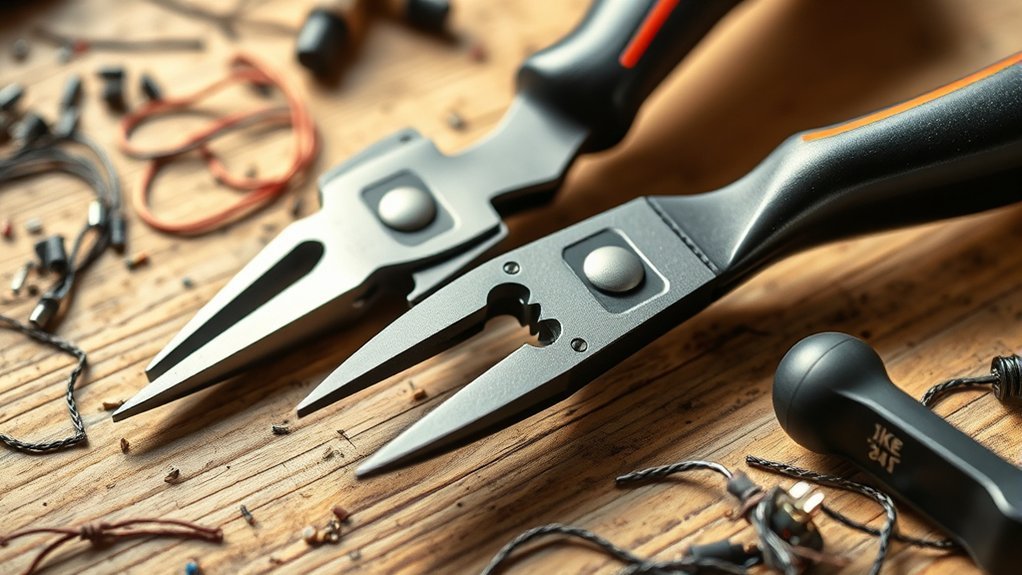
When do you choose dike pliers over regular pliers? The decision hinges on specific tasks where dike pliers advantages outshine traditional pliers. You should opt for dike pliers in scenarios requiring precision cutting rather than gripping or twisting.
Consider these dike pliers applications:
- Cutting electrical wires cleanly without fraying
- Snipping small nails or pins with minimal effort
- Trimming plastic ties or cable wraps precisely
- Accessing tight spaces where jaw size matters
- Performing delicate work on electronics or jewelry
Their sharp, flush-cutting edges and ergonomic design make dike pliers indispensable for cutting tasks. Regular pliers lack the precise cutting capability and often damage wires or components. Consequently, you use dike pliers whenever your project demands accuracy and clean cuts beyond simple gripping.
How to Use Dike Pliers Safely, Step by Step
To use dike pliers safely, you need to maintain a proper hand position that guarantees maximum control and minimizes strain. Focus on precise cutting techniques to avoid slipping or damaging the material.
Additionally, always wear essential safety gear like gloves and eye protection to prevent injury.
Proper Hand Position
Correct hand positioning is critical for maximizing control and minimizing the risk of injury when using dike pliers. Establishing an effective grip technique guarantees precision and safety during operation.
Focus on these key points for ideal hand positioning:
- Hold the pliers firmly but avoid excessive force to prevent hand fatigue.
- Position your thumb on one handle and wrap fingers around the opposite handle for balanced leverage.
- Keep your wrist aligned with the forearm to reduce strain and enhance control.
- Maintain a relaxed grip to allow quick adjustments and prevent slipping.
- Make sure your hand is clear of the cutting edges to avoid accidental injury.
Cutting Technique Tips
Mastering the cutting technique with dike pliers involves a sequence of deliberate steps designed to optimize efficiency and safety. First, identify the wire type, soft copper or hardened steel, as it dictates required force and blade positioning.
Position the pliers so the cutting edge aligns precisely with the wire. Apply steady pressure to guarantee a clean cut without deforming the wire. Release gradually to avoid sudden snaps.
| Step | Action | Tip |
|---|---|---|
| 1 | Identify wire type | Use correct pliers for hardness |
| 2 | Align cutting edges | Position close to joint or bend |
| 3 | Apply steady pressure | Avoid twisting or excessive force |
| 4 | Complete cut smoothly | Maintain consistent grip strength |
| 5 | Release carefully | Prevent wire from snapping back |
Safety Gear Essentials
After aligning and cutting wires with dike pliers, you need to focus on safety gear to protect yourself from potential hazards. Proper protective equipment and adherence to safety procedures reduce the risk of injury from sharp wire ends and flying debris.
Follow these essential steps:
Wear safety goggles to shield your eyes from wire fragments. Use cut-resistant gloves to protect your hands during handling. Verify your workspace is well-lit to maintain precision.
Avoid loose clothing or jewelry that might get caught. Maintain a firm grip on the pliers to prevent slips.
Common Wires and Materials You Can Cut With Dike Pliers
Although dike pliers are designed primarily for cutting wire, their versatility extends to a variety of materials commonly encountered in electrical and mechanical applications. Understanding wire types and performing material comparison helps you select the right tool for each job.
Dike pliers excel at cutting soft to medium-hard wires without damaging the cutting edges.
| Material Type | Typical Wire Gauge | Cutting Suitability |
|---|---|---|
| Copper Wire | 10-16 AWG | Excellent |
| Steel Wire | Up to 14 AWG | Moderate (harder wear) |
| Aluminum Wire | 12-18 AWG | Good |
These pliers handle insulated and bare copper, aluminum, and mild steel wires efficiently. Harder materials like hardened steel or piano wire may reduce tool longevity and require specialized cutters.
Maintaining Your Dike Pliers for Long-Lasting Use
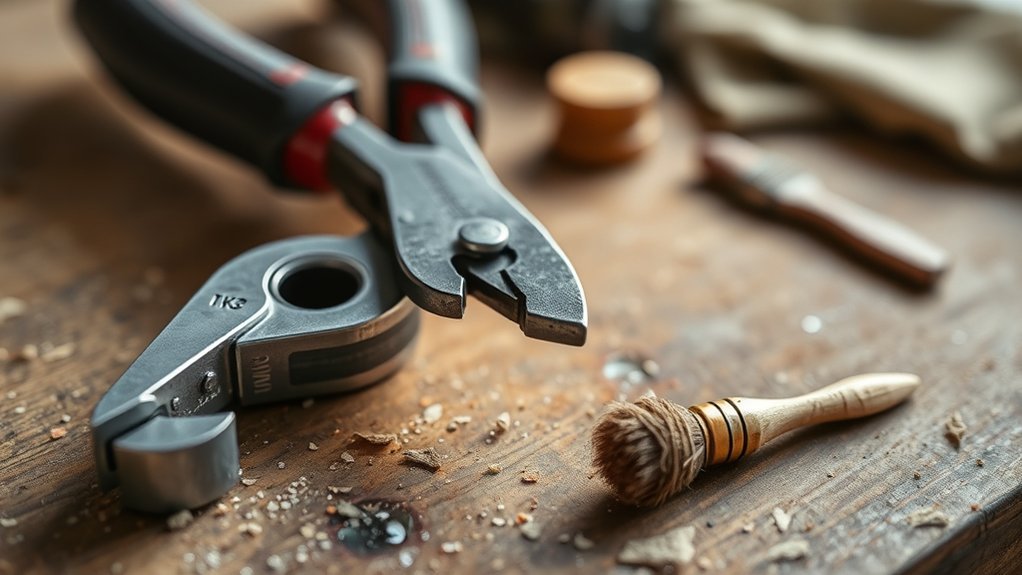
To guarantee your dike pliers perform reliably and maintain sharpness, you need to clean and lubricate them regularly while inspecting for wear or damage. Employ effective cleaning methods such as wiping blades with a solvent-soaked cloth to remove residue and prevent corrosion. Apply light machine oil to pivot joints to maintain smooth operation. Follow proper storage tips to protect your tool’s integrity.
Clean blades after each use to remove debris and prevent rust
Lubricate pivot points monthly for peak movement
Inspect cutting edges for nicks or dullness
Store in a dry, secure case to avoid moisture exposure
Avoid dropping or overextending handles to preserve alignment
Adhering to these maintenance practices extends your dike pliers’ lifespan and guarantees consistent cutting performance.
Troubleshooting Common Dike Pliers Problems
When your dike pliers don’t cut cleanly or feel stiff during operation, diagnosing the underlying issue quickly can prevent further damage. Start by inspecting the cutting edges for nicks or dullness. These reduce cutting efficiency and require sharpening or replacement.
Check the pivot joint for debris or corrosion, which impedes smooth movement. Clean and lubricate this area as part of regular dike pliers maintenance. If the handles feel loose or misaligned, assess the rivet tension and adjust or tighten as needed.
Avoid excessive force during dike pliers usage, as it can cause premature wear or blade separation. By systematically addressing these common problems, you guarantee peak performance and extend the tool’s lifespan, maintaining precision and safety in your cutting tasks.
Where to Buy Quality Dike Pliers and What to Look For
Where can you find dike pliers that combine durability, precision, and ergonomic design? To source quality tools, focus on reputable dike pliers brands known for consistent performance and robust materials. Use these purchasing tips to guide your selection:
Verify the tool’s cutting edge hardness and alignment. Check for ergonomic grips that reduce hand fatigue. Confirm the manufacturer’s warranty and customer support.
Ensure cutting edge hardness, proper alignment, ergonomic grips, and reliable warranty for optimal dike pliers performance.
Compare brand reviews and user feedback for real-world reliability. Guarantee availability through authorized dealers or trusted online retailers.
Prioritize brands that invest in high-grade steel and precision machining. Avoid generic or unbranded tools that often compromise cutting accuracy and durability.
Conclusion
Now that you understand what sets dike pliers apart, you’re equipped to handle precise cutting tasks with confidence. Choosing the right type guarantees you’re not biting off more than you can chew, avoiding damage to materials or tools.
Keep them well-maintained for peak performance, and you’ll have a reliable partner for all your wiring needs. With dike pliers in hand, you’re ready to tackle projects efficiently and accurately every time. Using proper dike pliers ensures your work is both safe and effective.