When you don’t have pliers on hand, you might think you’re stuck, but there are plenty of tools that can handle gripping, twisting, or bending just as well.
Whether you need to hold a small object firmly or twist wires, using the right alternative can save you time and frustration.
Before you reach for pliers or make a trip to the store, consider these practical substitutes that might already be in your toolbox.
These alternatives can be just as effective and often more convenient depending on the task at hand.
Top Alternatives to Pliers for Common Tasks
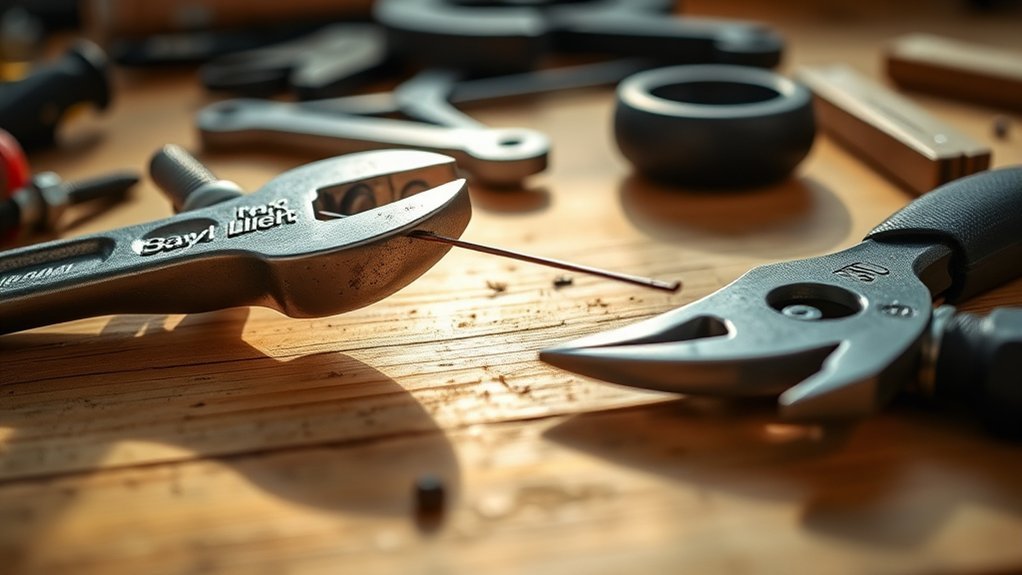
When you don’t have pliers on hand, several tools can step in to help you grip, twist, or pull with ease. A common trick is to use screwdriver grips combined with rubber band techniques. Wrap a rubber band around the screwdriver handle to increase friction and improve your grip on small objects or nuts.
This simple adjustment allows the screwdriver to function like a pair of pliers for light twisting tasks. Additionally, locking onto items with adjustable wrenches or using your hands with added traction from rubber bands can substitute pliers for gripping. These methods work well for minor repairs or when specialized tools aren’t available, ensuring you maintain control without damaging the item you’re working on.
When to Choose Adjustable Wrenches or Clamps Instead of Pliers
Although pliers are versatile, you’ll find adjustable wrenches or clamps offer better control for certain tasks, especially when dealing with larger nuts or irregularly shaped objects. Adjustable wrenches let you fit various sizes securely, reducing slippage and damage.
Clamps, with their diverse clamp types, provide firm, even pressure, ideal for holding objects steady.
| Tool Type | Best Use | Key Advantage |
|---|---|---|
| Adjustable Wrenches | Large nuts and bolts | Size versatility |
| C-clamps | Holding materials in place | Strong, steady grip |
| Bar clamps | Woodworking or assemblies | Wide opening range |
| Spring clamps | Quick, temporary holds | Easy one-handed use |
Choose these when you need precision or a secure hold that pliers can’t reliably provide.
Everyday Tools That Can Grip Instead of Pliers
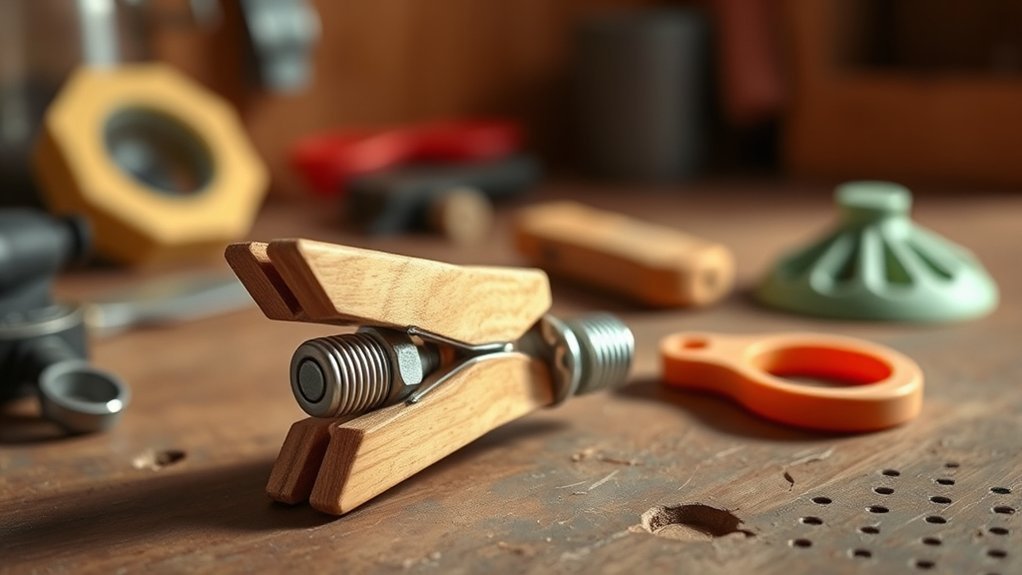
Several everyday tools can grip objects effectively, often serving as convenient alternatives to pliers. For instance, a sturdy pair of locking tweezers offers excellent grip strength for small, delicate tasks where precision matters.
Adjustable wrenches also provide versatile gripping options, adapting to different sizes while maintaining firm hold. You might find a bench vise handy for stable, hands-free gripping, especially during repairs.
Even a set of locking clamps can deliver strong grip strength and tool versatility, securing materials without slipping. When using these alternatives, focus on how well they hold your object and their ease of adjustment.
How to Twist and Bend Without Pliers
If you need to twist or bend materials but don’t have pliers on hand, you can still get the job done using alternative tools and techniques. Mastering simple twisting techniques and bending methods lets you manipulate wires, small rods, or metal strips effectively.
Use your hands for light bends, or leverage a sturdy screwdriver or wrench for increased torque. A cloth or rubber grip can protect your fingers and improve control.
| Tool | Best Use |
|---|---|
| Screwdriver | Twisting wires or small rods |
| Wrench | Applying strong bending force |
| Your Hands + Grip | Gentle twisting and bending |
With these practical techniques, you can handle most twisting and bending tasks without pliers.
Cutting and Stripping Wires Without Pliers
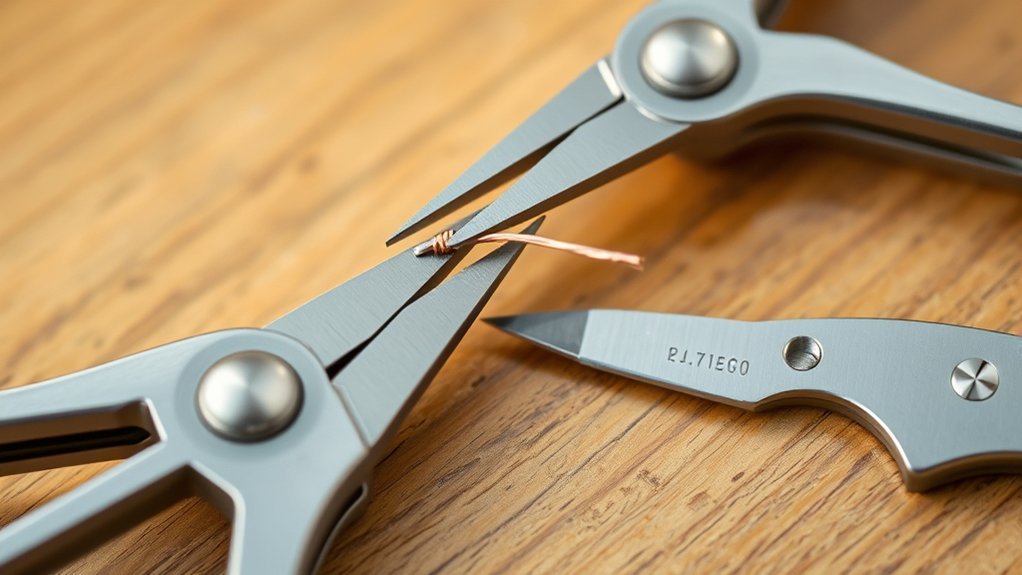
When you don’t have pliers, a sharp utility knife can help you cut and strip wires safely if you handle it carefully. There are also alternative tools like wire strippers designed specifically for these tasks.
If needed, you can use simple DIY techniques to make clean cuts and remove insulation without risking damage.
Using Utility Knives Safely
Using a utility knife to cut and strip wires requires steady hands and careful attention to safety. Begin by securing the wire on a stable surface to prevent slipping. Use precise utility knife techniques: score the insulation lightly without cutting into the wire itself.
Rotate the wire slowly to deepen the cut evenly, then gently pull off the insulation. Always cut away from your body and keep your fingers clear of the blade’s path to guarantee safe cutting. Replace dull blades promptly to maintain control and reduce accident risk.
After stripping, inspect the wire to avoid nicks that could weaken it. By mastering these safety measures and techniques, you can effectively use a utility knife for wire work without pliers while minimizing injury and damage.
Alternative Wire Stripping Tools
Though pliers are common for wire stripping, you don’t have to rely on them exclusively. Wire strippers are designed specifically to remove insulation cleanly without damaging the wire. They come in various sizes to fit different wire gauges and often have adjustable stops for precision.
Cable cutters offer another alternative, allowing you to cut through thicker cables quickly and neatly. While cable cutters don’t strip insulation, they make preparing wires easier before using a wire stripper or other tools.
Using these alternatives improves efficiency and reduces the risk of nicking wires, which can cause future electrical problems. Keep both wire strippers and cable cutters in your toolkit to handle most wiring tasks safely and effectively without depending solely on pliers.
DIY Wire Cutting Techniques
Master cutting and stripping wires without pliers by employing simple tools and techniques that you can easily handle. Start with a sharp utility knife or a pair of scissors to carefully score and strip the wire insulation.
Use a steady hand to avoid damaging the wire strands beneath. For cutting, tin snips or heavy-duty scissors work well, giving you clean cuts without specialized tools.
When you need to bend wires, practice diy wire bending using your fingers or a sturdy edge like a screwdriver handle to shape the wire accurately. These wire cutting techniques let you complete basic electrical tasks without pliers, saving you time and money.
With patience and proper technique, you’ll handle wire projects efficiently and safely.
Safe Alternatives and DIY Pliers Substitutes for Small Repairs
When you don’t have pliers on hand, several common household items can serve as safe and effective substitutes for small repairs. You can create DIY pliers substitutes by enhancing grip and leverage with simple tools.
- Screwdriver grips with rubber band assistance: Wrap a rubber band around screwdriver handles to increase friction and grip small objects securely, mimicking pliers’ hold.
- Adjustable wrench: Use it to grip and turn nuts or bolts carefully; its adjustable jaws accommodate different sizes.
- Locking clothespins: Their spring-loaded grip can hold wires or small parts steady during minor fixes.
These alternatives offer safe, practical solutions when pliers aren’t available, letting you tackle small repairs efficiently without specialized tools.
Conclusion
When you don’t have pliers on hand, picture yourself confidently gripping, twisting, or clamping with the right tool—whether it’s an adjustable wrench tightening a stubborn bolt or a C-clamp holding pieces steady.
With simple alternatives like locking tweezers or a bench vise, you can tackle tasks smoothly without fumbling.
Keep these versatile tools close, and you’ll always be ready to fix, bend, or cut with precision and ease.
By knowing what to use instead of pliers, you can turn challenges into quick wins every time.