When you need to grip or bend small objects in tight spaces, needle nose pliers are often your best choice.
Needle nose pliers have long, narrow jaws that let you reach where other tools can’t, making precise tasks easier.
Whether you’re working with wires, delicate components, or tiny parts, these pliers provide control and accuracy.
But what specific tasks are they designed for, and how can you get the most out of them?
What Are Needle Nose Pliers Designed For
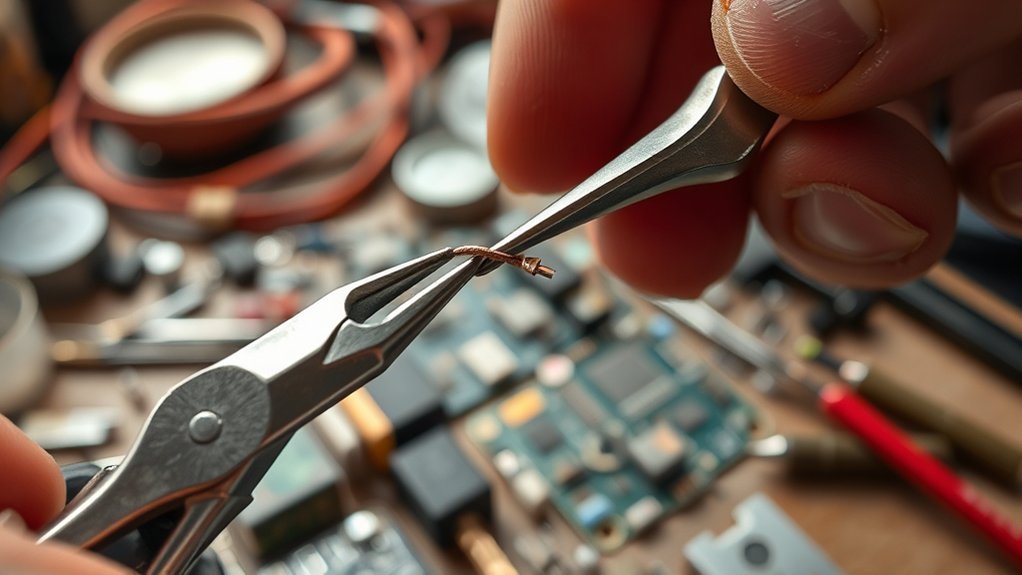
Needle nose pliers are designed to help you grip, bend, and manipulate small objects in tight spaces where your fingers or larger tools can’t reach. Their long, slender jaws give you precise control, making them ideal for detailed tasks like jewelry making, electronics repair, or intricate wiring.
The needle nose tool versatility means you can use them for cutting wire, twisting components, or even pulling out tiny nails or staples. Their tapered shape lets you easily access confined areas without damaging surrounding parts.
When you choose needle nose pliers, you get a dependable tool that combines gripping strength with delicate handling. This makes them essential for anyone needing accuracy in small-scale projects or repairs. Their design maximizes efficiency in limited spaces.
How to Use Needle Nose Pliers: Bending, Gripping, and Shaping
To bend wire precisely, position the needle nose pliers at the exact spot and apply steady pressure while turning. When gripping small objects, use the pliers’ narrow tips for a firm hold without slipping.
You can also shape delicate materials by carefully manipulating them with controlled movements using the pliers.
Precise Bending Techniques
Mastering precise bending techniques with pliers lets you shape wires and small metal components accurately without damaging them. To start, position the wire firmly between the jaws of your needle nose pliers, close to the tip for greater control.
Use steady, gentle pressure to bend the wire gradually, avoiding sharp angles that can weaken the material. For precise applications, make small incremental adjustments rather than forcing a single bend.
Rotate your wrist slightly to achieve smooth curves or specific angles needed for your project. Remember, the narrow, tapered jaws of needle nose pliers excel at reaching tight spaces, allowing you to bend components that larger tools can’t handle.
Effective Gripping Methods
One key to effective gripping with needle nose pliers is applying the right amount of pressure to securely hold objects without causing damage. To achieve effective gripping, start by positioning the tips firmly around the object’s surface.
Use a steady, controlled squeeze instead of forcing the pliers shut, which can deform delicate materials. Employ grip techniques such as adjusting the angle of the pliers to maximize contact area, enhancing stability.
For small wires or components, use the serrated jaws to prevent slipping while maintaining gentle pressure. Remember, your grip should be firm but not crushing.
Practicing these grip techniques helps you handle intricate tasks confidently, ensuring you hold objects securely for bending or positioning without risking breakage or slippage.
Shaping Small Materials
Shaping small materials with needle nose pliers requires precise control and a gentle touch. When bending wires, position the pliers near the point where you want the bend, then apply steady pressure to avoid kinking or breaking the wire.
Use the narrow, tapered tips to make tight curves or delicate loops, essential for crafting jewelry. You can also grip tiny components firmly without slipping, allowing you to twist or adjust pieces accurately.
For consistent shapes, work slowly and check your progress frequently. Needle nose pliers let you manipulate small materials in confined spaces where fingers can’t reach, making them ideal for detailed tasks.
Mastering these techniques guarantees you create clean, professional results in your jewelry-making or any project involving fine wire shaping.
Needle Nose Pliers in Electrical Work
When working with electrical wiring, you’ll rely on needle nose pliers for precise wire bending to fit connections perfectly. Their slim, pointed tips let you reach into tight spaces where fingers or larger tools can’t fit. This makes handling delicate electrical components much easier and safer.
Wire Bending Precision
Mastering wire bending precision with needle nose pliers lets you create clean, accurate bends essential for electrical work. When you need to shape wires for connections or terminals, these pliers offer the control necessary for precise wire twisting and accurate manipulation.
Their narrow, pointed jaws fit snugly around wires, allowing you to bend them exactly where needed without damaging the insulation or conductor. You can easily form loops or hooks to secure wires under screws or connect multiple strands tightly.
This precision reduces the risk of loose connections, which can cause shorts or failures. By using needle nose pliers, you guarantee your wiring is neat, reliable, and professionally finished, making your electrical projects safer and more efficient.
Tight Space Access
Needle nose pliers give you unmatched access to tight spaces where other tools simply won’t fit. When working in electrical projects, you often face cramped spots filled with wires and components.
These pliers excel at tight corner access, letting you reach around obstacles without damaging nearby parts. Their slender, pointed tips allow precise small area maneuvering, making it easier to grasp, twist, or pull wires in confined areas.
Unlike bulkier tools, needle nose pliers let you work confidently inside junction boxes or behind appliances. You’ll appreciate how they minimize the risk of accidental slips or shorts by giving you firm control even in restricted spaces.
If you need reliable tight space access, these pliers are a must-have in your electrical toolkit.
Needle Nose Pliers in Electronics Repair
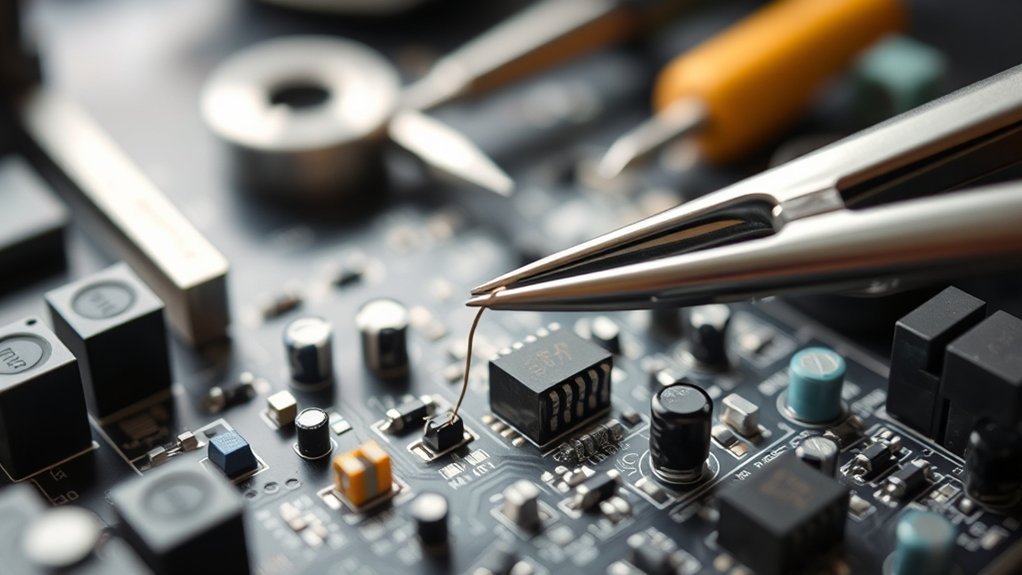
Few tools are as essential as needle nose pliers when you’re repairing electronics. Their slim, pointed jaws let you reach into tight spots on a circuit board, making it easier to grip and manipulate tiny components.
You can use them to bend, twist, or position wire connections precisely without damaging delicate parts. When soldering, needle nose pliers hold wires steady, ensuring clean and secure joins.
They also help you remove or insert small connectors and clips that are otherwise hard to handle by hand. Because electronics often involve compact layouts, these pliers give you the control needed to work efficiently in confined spaces.
Using needle nose pliers in electronics repair simplifies complex tasks and reduces the risk of accidental damage to sensitive components.
Needle Nose Pliers for Jewelry Making
When you work on jewelry making, precision and control are key, and needle nose pliers provide both with their narrow, tapered jaws. They’re essential for detailed tasks like beading techniques and wire wrapping. Here’s how you’ll use them:
- Gripping small components firmly without damaging delicate materials.
- Bending and shaping wire accurately to create intricate designs.
- Opening and closing jump rings cleanly for attaching charms and clasps.
- Holding beads securely while threading or adjusting placement.
These pliers give you the fine control necessary to manipulate tiny parts smoothly. Whether you’re twisting wire into spirals or positioning beads precisely, needle nose pliers make the process easier and more efficient. They’re a must-have for crafting professional-looking jewelry with detailed wire work and bead arrangements.
Top Crafting and Hobby Projects With Needle Nose Pliers
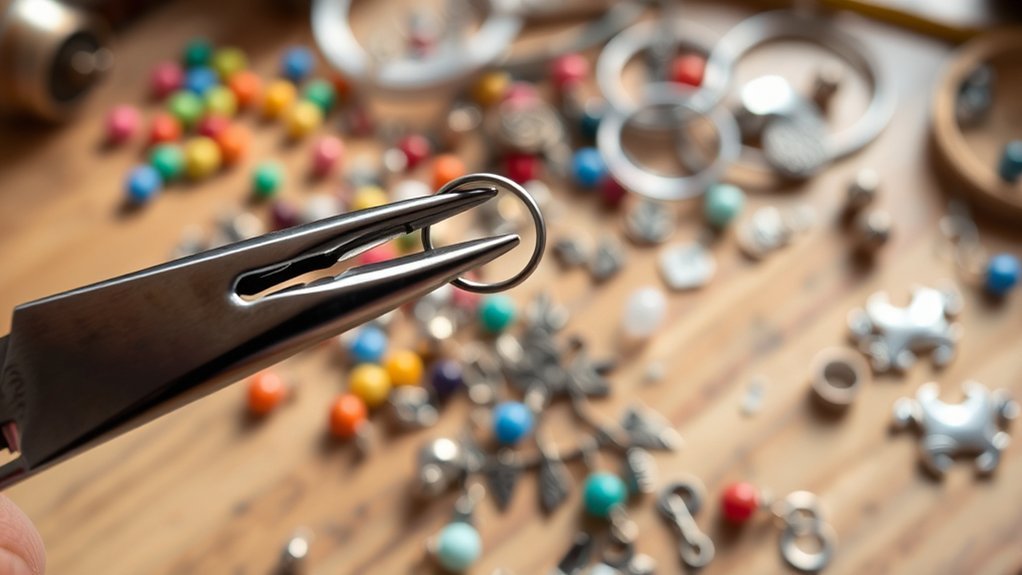
Although crafting projects vary widely, you’ll find needle nose pliers indispensable for many detailed and delicate tasks. Whether you’re working on wire wrapping, bead stringing, or miniature model assembly, these pliers offer precision and control. Their narrow, pointed tips allow you to bend, twist, and cut wires with ease, fundamental crafting techniques for creating intricate designs.
In hobby projects like making custom jewelry, repairing electronics, or assembling small mechanical parts, needle nose pliers help you handle tiny components without damaging them. They also excel in floral arranging and leather crafting, where manipulating fine materials is vital.
When to Choose Needle Nose Pliers Over Other Pliers
You’ll want to reach for needle nose pliers when you need to handle tiny parts with precision or work in cramped spaces where regular pliers won’t fit. Their long, narrow jaws give you control and access that other pliers can’t match.
Keep them handy for tasks that demand accuracy and maneuverability.
Precision Tasks Advantage
A needle nose plier’s slender, pointed jaws give you unmatched control for precision tasks that require careful handling. Their ergonomic design guarantees comfort during delicate operations, minimizing hand fatigue.
You’ll choose these pliers over others when precision control is vital, such as when you need to:
- Bend or shape small wires without damaging them.
- Grip tiny components securely for assembly or repair.
- Twist wires in tight, detailed electrical work.
- Reach and manipulate parts in intricate craft or jewelry making.
These tasks demand accuracy that broader pliers can’t provide. Using needle nose pliers allows you to perform delicate adjustments with confidence and finesse, making them an essential tool for any situation where precision and control matter most.
Accessing Tight Spaces
When you need to work in confined or hard-to-reach areas, needle nose pliers outperform many other types of pliers. Their slender, tapered jaws allow you to easily achieve tight corner access where bulkier tools simply won’t fit.
Whether you’re wiring inside an electrical box or retrieving a small component from a cramped machine, these pliers provide the precision and reach required. The narrow gap manipulation they offer lets you grip, bend, or twist small objects without damaging surrounding parts.
Unlike regular pliers, their design gives you control in spaces where visibility and maneuverability are limited. Choosing needle nose pliers for tight spaces guarantees you can complete your task efficiently without struggling or risking damage to delicate components.
Tips for Maintaining Your Needle Nose Pliers
Although needle nose pliers are built to last, regular maintenance guarantees they perform smoothly and prolong their lifespan. To keep your tool in top shape, follow these tips:
- Clean your pliers after each use with a cloth to remove dirt and debris. Use mild cleaning techniques like soapy water for stubborn grime, then dry thoroughly.
- Apply a light machine oil to the pivot joint regularly to prevent rust and facilitate smooth movement.
- Store your pliers in a dry place, ideally using dedicated storage solutions such as a toolbox compartment or hanging rack to avoid damage and moisture exposure.
- Inspect the tips and gripping surfaces for wear or damage, addressing issues early to maintain precision.
Common Mistakes to Avoid When Using Needle Nose Pliers
Since needle nose pliers are designed for precision tasks, using them incorrectly can quickly damage both the tool and your workpiece. One common mistake is relying on improper grip techniques, which reduces control and increases the risk of slipping or damaging delicate components.
Avoid holding the pliers too loosely or too tightly; both can compromise your accuracy. Another frequent error is applying excessive force. These pliers aren’t built for heavy-duty tasks, so forcing them can bend or break the tips and ruin your project.
Instead, use just enough pressure to grip securely without stressing the tool. By steering clear of these mistakes, you’ll protect your needle nose pliers and achieve cleaner, safer results in your detailed work.
How to Grip Small Objects in Tight Spaces With Needle Nose Pliers
Mastering the correct grip prevents damage and improves control when working with needle nose pliers. To handle small objects in tight spaces effectively, follow these gripping techniques:
- Position the pliers so the tips align perfectly with the object, ensuring a secure hold.
- Apply steady, gentle pressure to avoid crushing delicate items while maintaining control.
- Use your thumb and index finger to guide the pliers, enhancing precision in confined areas.
- Adjust your wrist angle to maximize reach without straining your hand or obstructing your view.
Conclusion
When you pick up needle nose pliers, you’re wielding a precision tool that’s like an artist’s brush for tiny, tricky tasks. Whether you’re bending wires, gripping delicate parts, or maneuvering tight spaces, these pliers give you the steady hands and sharp reach you need.
Keep them sharp and well-maintained, and they’ll be your trusty sidekick in everything from electrical work to jewelry making—turning small challenges into smooth, effortless wins. Ultimately, understanding what are needle nose pliers used for ensures you get the most out of this versatile tool.