Did you know that over 60% of mechanical repairs involve components tucked into tight, hard-to-reach spots?
When it comes to which pliers are used to get into narrow spaces, selecting the right type is crucial. The right pliers can make all the difference between precision and frustration in these confined areas.
Choosing the proper tool requires understanding how jaw shape and length influence accessibility and control.
Before you reach for your standard pliers, consider which specialized designs can truly help you navigate narrow spaces efficiently.
Essential Pliers for Working in Narrow Spaces
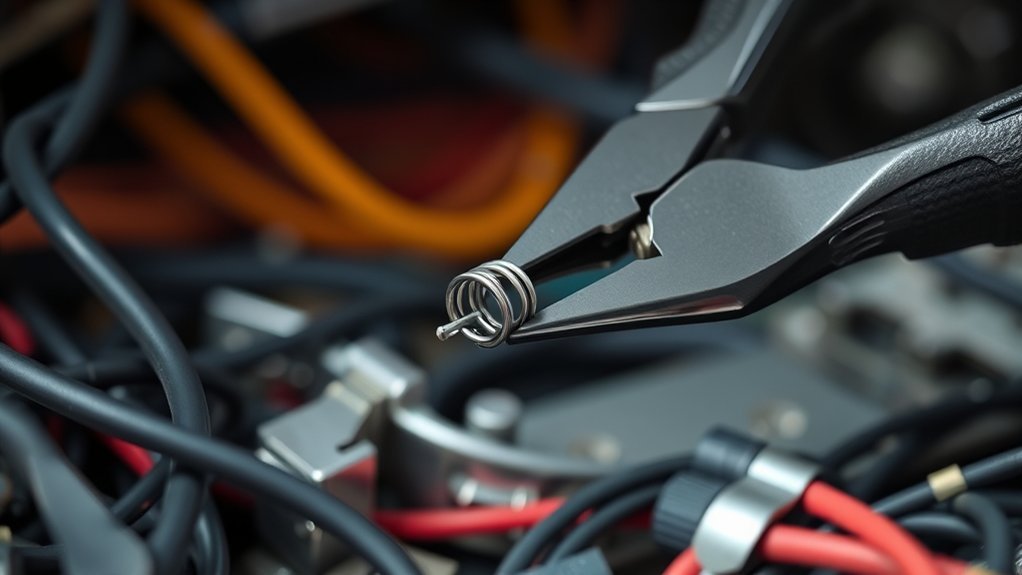
When you’re working in tight areas, choosing the right pliers can make all the difference. Essential pliers for narrow spaces typically feature an ergonomic design that minimizes hand fatigue during prolonged use. This design enhances grip comfort, allowing you to maintain firm control without slipping.
Needle-nose pliers, with their slender jaws, excel in reaching confined spots, while bent-nose variants offer better access at awkward angles. Additionally, lineman’s pliers with compact heads provide robust grip strength without bulkiness.
Prioritize pliers crafted from high-strength steel to guarantee durability in constrained environments. The ergonomic handle contours distribute pressure evenly across your hand, reducing strain and improving precision. Selecting tools with optimized grip comfort and ergonomic form factors directly impacts your efficiency and accuracy in narrow spaces.
How to Choose Pliers by Jaw Shape and Size for Narrow Spaces
When selecting pliers for tight spaces, focus on the jaw shape to guarantee precise access and grip on confined components. Smaller jaw sizes improve maneuverability but may reduce gripping force, so balance size with the task’s demands.
Understanding the variations in jaw geometry helps you match the tool to the specific spatial constraints you face.
Jaw Shape Varieties
Although selecting the right pliers for narrow spaces depends on several factors, understanding jaw shape varieties is essential. Different jaw shape variations influence grip, reach, and maneuverability, critical in tight areas.
When choosing pliers, consider these common plier jaw types:
- Needle-nose jaws: slender tips for precision and access in confined spots
- Bent-jaw pliers: angled jaws improve leverage and visibility around obstacles
- Flat-jaw pliers: broad, flat surfaces maximize grip strength on flat objects
- Round-jaw pliers: circular jaws ideal for bending wire or gripping round components
Each jaw shape offers distinct advantages, so match the plier jaw types to your task’s spatial constraints and object geometry. This targeted approach guarantees ideal control and efficiency in narrow spaces.
Size Considerations
Selecting the appropriate plier size is essential for maneuvering through narrow spaces effectively, as the dimensions directly influence access and control. When choosing pliers, you must analyze the jaw length and width relative to the confined area.
Smaller jaws allow precise manipulation but may sacrifice gripping strength, while larger jaws provide force but can limit entry into tight spots. Consider your specific crafting techniques, since delicate tasks demand fine, narrow jaws to avoid damage.
Tool ergonomics also play a critical role; a compact handle design reduces hand fatigue and improves maneuverability in restricted zones. By balancing jaw size with ergonomic comfort, you optimize both precision and efficiency.
Always match the plier dimensions to the spatial constraints of your project to guarantee seamless operation and superior control.
Why Needle-Nose Pliers Are Ideal for Narrow Spaces
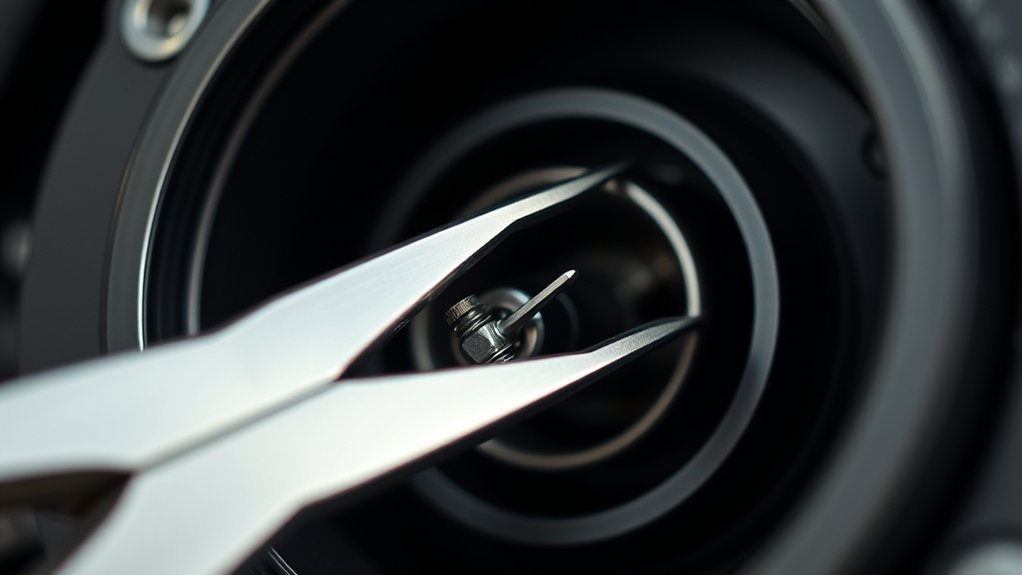
Because needle-nose pliers feature long, tapered jaws, they allow you to reach into tight or confined areas that standard pliers cannot access. Their design supports intricate needle techniques, enabling precise control in delicate plier applications.
Needle-nose pliers’ long, tapered jaws reach tight spaces, offering precise control for delicate tasks.
You’ll find these pliers indispensable when working within narrow spaces where accuracy is critical.
You’ll appreciate how needle-nose pliers:
- Provide exceptional reach without sacrificing grip strength
- Offer fine control for manipulating small components
- Minimize workspace obstruction with their slender profile
- Adapt seamlessly to various electrical, jewelry, and mechanical tasks
How Long-Nose Pliers Help You Reach Difficult Angles
You’ll appreciate how the slim jaw design of long-nose pliers lets you access tight spots with minimal obstruction. Their precision tip control guarantees you can manipulate small components accurately in confined areas.
Additionally, the angled nose provides a mechanical advantage for reaching difficult angles that straight tools can’t easily handle.
Slim Jaw Design
Long-nose pliers feature a slim jaw design that enables precise manipulation in confined or hard-to-reach spaces. This design’s slim jaw benefits include enhanced access to tight spots where bulkier tools fail, making it indispensable in electrical, jewelry, and mechanical work.
You’ll appreciate how the slim jaw applications allow you to grip, twist, or bend components without obstructing your view or workspace.
- Navigate cramped engine compartments effortlessly
- Reach delicate wires in compact electronics
- Grip small fasteners with minimal slippage
- Maneuver around intricate assemblies smoothly
Precision Tip Control
Achieving precise tip control is essential when working in tight or awkward spaces, and these pliers excel by offering fine, responsive manipulation at the tool’s extremity. When you apply precision grip techniques with long-nose pliers, you can effortlessly maneuver components in narrow space applications where larger tools fail.
The slender, tapered tips provide enhanced tactile feedback, allowing you to adjust pressure and angle with accuracy. This control minimizes slippage and damage to delicate parts. Additionally, the elongated design extends your reach, enabling access to confined areas without compromising grip stability.
Angled Nose Advantage
When you need to access tight corners or awkward angles, the angled nose design of these pliers provides a critical mechanical advantage. This design enhances angled efficiency by allowing you to maneuver around obstacles that straight pliers can’t reach.
The bent tip increases your grip strength on small or irregular objects, making tasks in confined spaces more manageable.
With angled nose pliers, you can:
- Reach difficult angles without repositioning your hand
- Maintain a secure hold on tiny components
- Reduce hand fatigue through improved leverage
- Execute precise movements in cramped environments
Why Bent-Nose Pliers Are Best for Hard-to-Reach Areas
Although accessing tight spots challenges many tools, bent-nose pliers excel by combining angled jaws with precise grip control. This allows you to maneuver around obstacles and securely hold components in confined spaces.
Their bent nose versatility enables you to approach workpieces at suitable angles, reducing wrist strain and increasing reach in narrow gaps. The ergonomic handles improve your control and comfort during extended use, minimizing hand fatigue while maximizing torque application.
These features make bent-nose pliers ideal for tasks requiring delicate manipulation in restricted areas, such as bending wire or retrieving small parts. By integrating angled jaw geometry with user-centric design, bent-nose pliers provide unmatched efficiency and reliability when standard straight or angled pliers fall short in tight, hard-to-reach environments.
Why Chain-Nose Pliers Are Perfect for Electronics Work
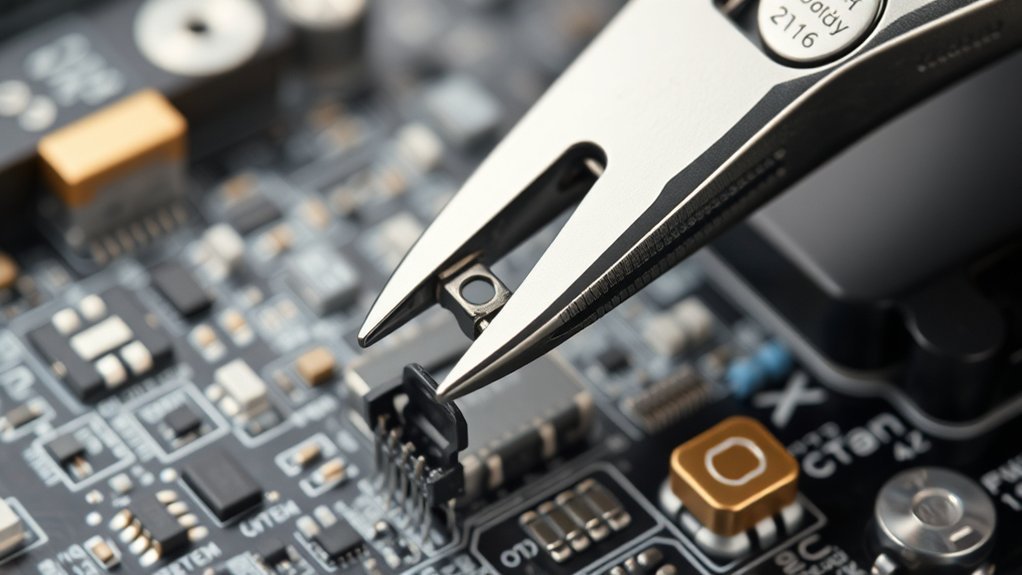
Since electronics work demands precise manipulation of small components in confined spaces, chain-nose pliers offer unmatched control and accessibility. Their flat, tapered jaws provide the chain nose advantages you need for intricate electronics applications. You can grip, bend, and position wires with exactness unattainable by other pliers types.
Using chain-nose pliers lets you:
- Access tight circuit board areas without slipping
- Apply consistent pressure to delicate parts
- Perform intricate wire bending and looping with ease
- Maintain visibility of components during manipulation
These advantages make chain-nose pliers indispensable for tasks like soldering, wire shaping, and component installation. Their slim profile and fine tips guarantee you can work efficiently in narrow spaces while minimizing the risk of damage. When handling electronics, you’ll find chain-nose pliers deliver precision and reliability unmatched by bulkier tools.
When to Choose Round-Nose Pliers for Delicate Tasks
If you need to form smooth loops or curves in wires without compromising their integrity, round-nose pliers offer the specialized design required for delicate tasks. Their tapered, conical jaws enable precise control over wire bending, essential in executing round nose techniques accurately.
When working with fine gauge materials or creating intricate loops, these pliers minimize stress points, preventing wire deformation or breakage. You should choose round-nose pliers whenever your project demands subtle shaping rather than firm gripping or cutting.
Their ability to reach narrow spaces and execute controlled bends makes them indispensable for jewelry making, electronics, and detailed craftwork. By selecting round-nose pliers, you guarantee delicate tasks are performed with the precision and care necessary to maintain material integrity and achieve professional results.
How to Use Narrow-Space Pliers Safely Without Damage
Mastering the use of narrow-space pliers builds on your understanding of specialized tools like round-nose pliers, especially when working in confined areas. To use these pliers safely without damage, you must observe strict safety precautions and regular tool maintenance.
Master narrow-space pliers use by applying safety measures and proper maintenance, especially in tight working conditions.
Here’s how to proceed:
Always inspect the pliers for wear or damage before use to prevent tool failure. Apply controlled pressure to avoid deforming the tool or the workpiece. Keep your grip firm but not excessive to maintain precision and avoid slippage.
Store pliers in a dry environment and lubricate joints regularly to guarantee smooth operation.
Best Practices for Maintaining Pliers Used in Tight Spaces
Although narrow-space pliers are designed for precision, maintaining their functionality requires regular attention to cleaning, lubrication, and inspection. For effective pliers maintenance, you should remove debris, apply lubricant to pivot points, and check for wear or damage. This guarantees tool longevity and consistent performance in confined areas.
| Maintenance Task | Frequency | Purpose |
|---|---|---|
| Cleaning | After each use | Remove dirt and residue |
| Lubrication | Monthly | Reduce friction and rust |
| Inspection | Weekly | Detect damage early |
Adhering to this schedule prevents premature wear and maintains grip accuracy. Incorporate these practices into your routine to extend the service life of your narrow-space pliers effectively.
Conclusion
When working in tight spaces, choosing the right pliers can make all the difference. Needle-nose pliers offer precision, while bent-nose pliers reduce wrist strain, and chain-nose pliers excel in electronics. Round-nose pliers handle delicate loops perfectly.
So, why settle for less when the right tool improves both accuracy and comfort? By understanding jaw shapes and proper maintenance, you’ll tackle narrow spaces efficiently and safely every time. Knowing which pliers are used to get into narrow spaces ensures your work is both effective and hassle-free.