Imagine trying to trim a stubborn nail flush with a wall without damaging the surface—this is where end cutting pliers come into play.
End cutting pliers are designed with a perpendicular cutting edge that makes them invaluable for precise, close cuts in tight spaces.
You’ll find them especially useful when working with wires, nails, or fasteners. Understanding their specific uses can greatly improve your efficiency and results.
But what makes end cutting pliers different from other types of pliers?
And how can you pick the right one for your task?
What Are End Cutting Pliers and How Do They Work?
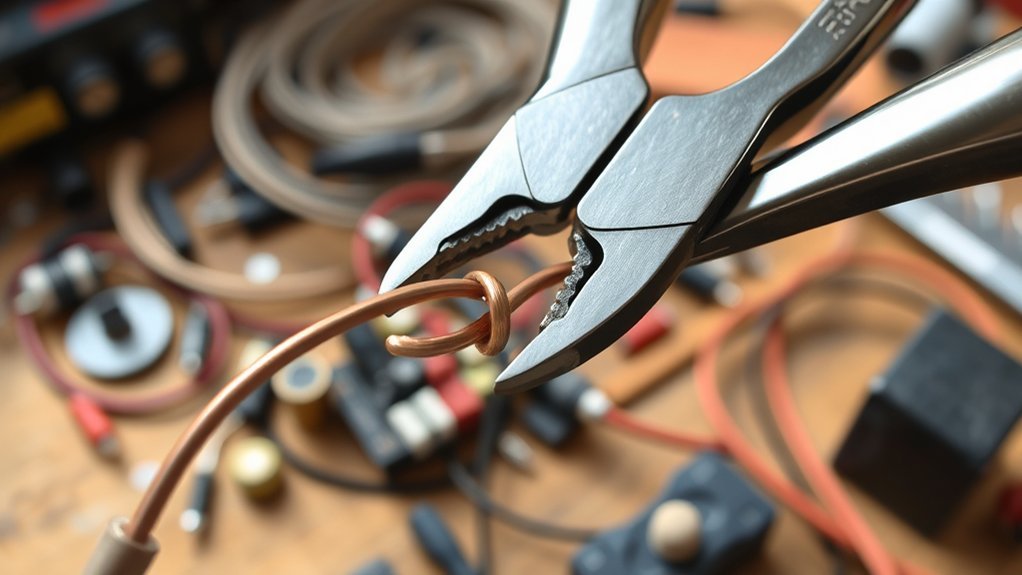
End cutting pliers are specialized hand tools designed to cut through materials like wires, nails, and bolts close to a surface. Unlike other types of pliers, they feature a perpendicular cutting edge at the tool’s tip, allowing you to apply precise cutting techniques in confined spaces.
When you use these pliers, the force is concentrated on the cutting edge, enabling clean, flush cuts without damaging the surrounding material. The pivot mechanism amplifies your hand strength, making it easier to sever tough materials.
Understanding how end cutting pliers differ from diagonal or needle-nose pliers helps you select the right tool for specific tasks. Mastering proper cutting techniques with these pliers guarantees efficiency and safety in your work.
Common Uses: Cutting Wire, Nails, and Removing Fasteners
You’ll find end cutting pliers effective for trimming various wire types with clean, flush cuts. They also provide leverage to extract nails and other fasteners without damaging surrounding material.
Understanding these applications guarantees you use the tool safely and efficiently.
Wire Cutting Applications
When working with various materials, you’ll find that cutting wire, nails, and removing fasteners require tools designed for precision and durability. End cutting pliers excel in wire cutting applications due to their sharp jaws and ideal cutting angles, which minimize wire deformation.
Selecting the appropriate pliers depends on the wire gauge; heavier gauges demand pliers with reinforced jaws to guarantee clean cuts without excessive force. The cutting angles are engineered to provide leverage and precise shearing action, preventing frayed ends.
Whether dealing with electrical wiring, fencing, or metal fasteners, these pliers allow you to cut close to surfaces, improving accuracy and safety. Proper use extends tool life and enhances efficiency in tasks requiring controlled wire cutting and removal of embedded materials.
Nail Removal Techniques
Mastering three essential nail removal techniques can greatly improve your efficiency when using end cutting pliers. First, grip the nail head firmly with the pliers’ jaws, applying steady pressure to loosen it.
Second, use a rocking motion to incrementally extract the fastener, minimizing surface damage. Third, if the nail is flush or embedded, position the pliers’ cutting edge beneath the head and leverage it out carefully. These nail extraction methods optimize control and reduce material harm.
| Technique | Purpose | Key Tip |
|---|---|---|
| Firm Grip | Secure nail removal | Align jaws squarely |
| Rocking Motion | Gradual extraction | Apply gentle, alternating force |
| Cutting Edge Lift | Flush nail extraction | Use leverage carefully |
Employ these plier techniques to enhance precision and effectiveness.
Specialized Applications: Electrical and Jewelry Work
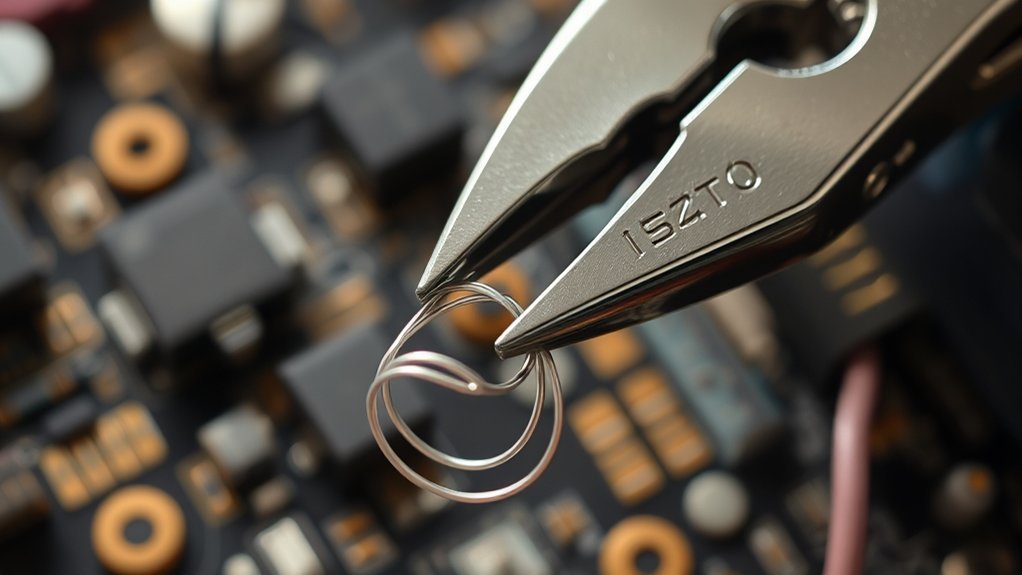
Several industries rely on end cutting pliers for tasks requiring precision and strength, especially electrical work and jewelry making. In electrical repairs, these pliers help you cleanly cut wires close to terminals without damaging surrounding components. Their flush-cutting ability guarantees neat connections, essential for circuit integrity and safety.
In jewelry design, end cutting pliers allow you to trim wire ends precisely, preventing sharp edges that could cause discomfort or snagging. You can also use them to remove pins or staples in delicate assemblies without distorting precious metals. The tool’s strong, narrow jaws give you control and leverage in tight spaces, making it indispensable for detailed craftsmanship.
Understanding these specialized applications helps you maximize the tool’s efficiency in your technical projects.
How to Choose the Right End Cutting Pliers for Your Project
Choosing the right end cutting pliers involves analyzing factors such as jaw size, cutting capacity, handle ergonomics, and material quality.
When selecting end cutting pliers, consider the specific application to match the jaw size and cutting edge with the material thickness you’ll work on. Check the cutting capacity to confirm it handles the gauges or wire types you intend to cut.
Focus on handle ergonomics to reduce hand fatigue during prolonged use. Look for pliers made from high-grade steel with corrosion-resistant coatings for durability.
Additional end cutting pliers features like insulated handles or spring-loaded jaws can enhance safety and efficiency. By systematically evaluating these criteria, you’ll select end cutting pliers that optimize performance and longevity for your project requirements.
Maintenance Tips for Keeping Your End Cutting Pliers in Top Shape
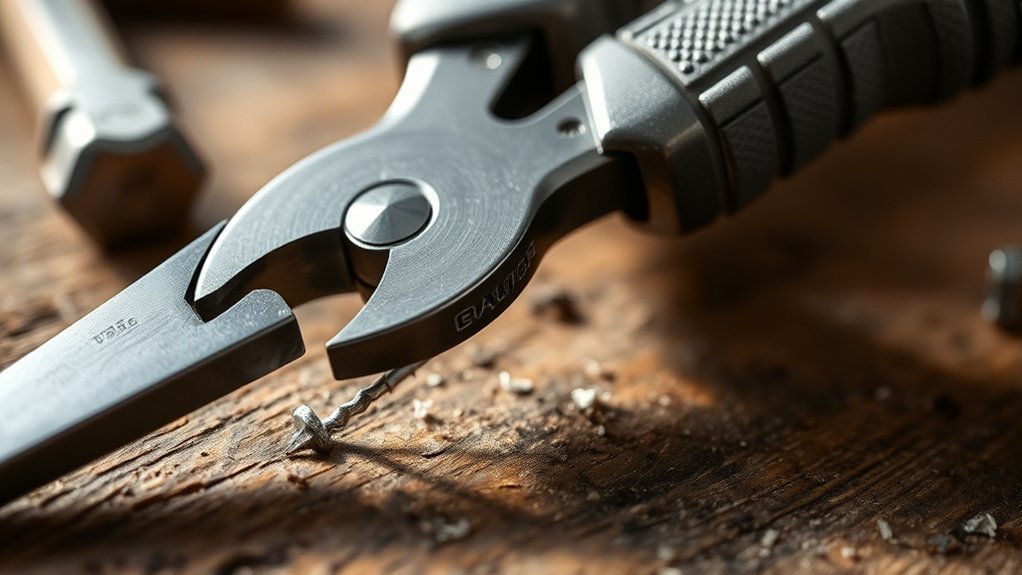
Although end cutting pliers are designed for durability, regular maintenance is essential to guarantee they perform reliably over time. To keep your tool in top shape, focus on cleaning techniques, proper lubrication, and storage solutions. Follow these steps:
Regular maintenance ensures your end cutting pliers stay durable and perform reliably over time.
- Clean the cutting edges and pivot joint after each use with a dry cloth or soft brush to remove debris and prevent rust.
- Apply a light machine oil to the pivot area regularly to maintain smooth operation and reduce wear.
- Store your pliers in a dry, organized toolbox or hang them on a pegboard to avoid moisture exposure and damage.
Implementing these maintenance tips prolongs tool life and guarantees precise performance whenever you need it.
Safety Tips for Using End Cutting Pliers Effectively
When you handle end cutting pliers, following safety protocols is essential to prevent injury and guarantee accurate cuts. Always maintain a proper grip by firmly holding the handles near the pivot point to maximize control and leverage.
Avoid using excessive force, which can cause slippage or tool damage, increasing the risk of injury. Ascertain your workpiece is securely clamped or held steady to prevent sudden movement during cutting.
Wear appropriate personal protective equipment, such as safety glasses, to shield your eyes from flying debris. Inspect the pliers for damage or wear before use, as compromised tools can fail unexpectedly.
Common Mistakes to Avoid When Using End Cutting Pliers
Anyone using end cutting pliers should be aware of common mistakes that compromise both safety and tool performance. Avoid these frequent oversights to maximize efficiency and longevity:
Recognize and avoid common end cutting plier mistakes to ensure safety, efficiency, and tool durability.
- Applying excessive force: Overexertion can damage the cutting edges and strain your hands.
- Using an improper grip: Holding the pliers incorrectly reduces control and increases the risk of slipping or injury.
- Cutting materials beyond capacity: Attempting to cut hardened wires or thick materials can dull or break the blades.
Always maintain a firm, correct grip and select pliers suited for the specific task. Neglecting these precautions leads to premature wear and potential accidents. By understanding and avoiding these pitfalls, you guarantee precision cuts and maintain tool integrity.
Conclusion
Now that you know what end cutting pliers do, you’re equipped to make precise, clean cuts every time. Whether trimming wires or removing nails, these tools act like the scalpel of your toolbox—sharp, reliable, and indispensable.
Don’t overlook maintenance and safety; they’re the twin gears that keep your pliers working smoothly. With the right care and technique, you’ll wield these pliers not just as tools, but as extensions of your skill.
Understanding what end cutting pliers are used for ensures you get the most out of this essential tool in your collection.