Did you know that diagonal pliers can increase cutting efficiency by up to 40% compared to standard wire cutters?
Diagonal pliers feature angled jaws and a precise pivot placement that allow for clean cuts in confined spaces. This design makes them indispensable for electricians and technicians.
Understanding how these design features work together will help you determine why diagonal pliers are often the preferred tool for intricate cutting tasks.
Their unique structure provides better access and control, enhancing precision.
In summary, diagonal pliers combine efficiency and accuracy, making them essential for detailed cutting work in tight areas.
What Are Diagonal Pliers and How Do They Work
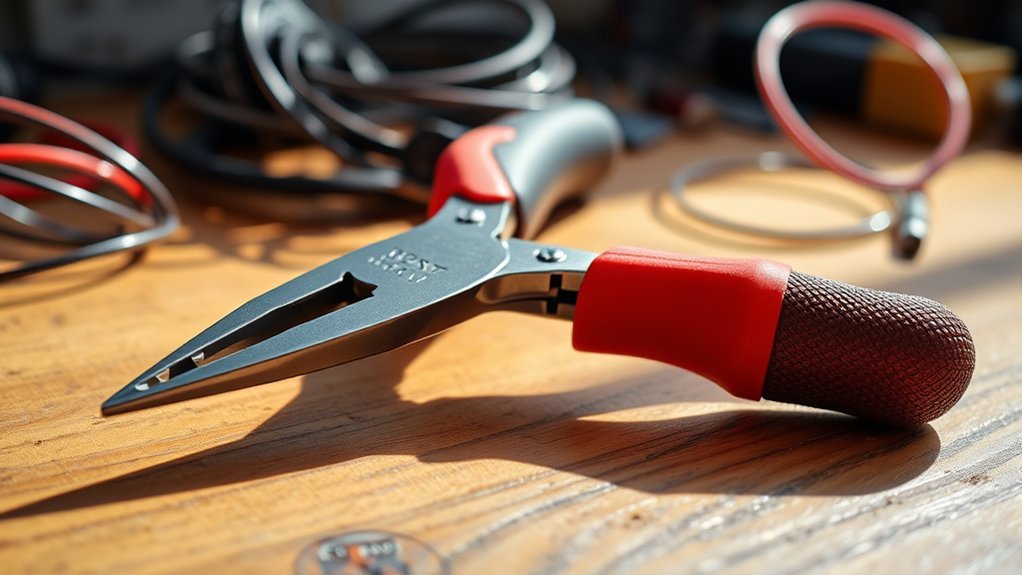
Although diagonal pliers resemble standard cutting tools, they feature angled jaws designed specifically for cutting wire and small pins in tight spaces. Understanding diagonal pliers history reveals their evolution from simple cutting devices to precision tools optimized for electrical and mechanical work.
The diagonal pliers design incorporates a pivot point near the cutting edge, maximizing leverage and guaranteeing clean cuts with minimal effort. You’ll notice the cutting edges are typically hardened steel, enabling them to slice through materials without dulling quickly.
When you use diagonal pliers, their angled head grants access to confined areas, unlike straight cutters. By applying force to the handles, you activate the compound leverage, allowing the jaws to shear through wires efficiently. This design guarantees accuracy and durability in various professional applications.
What Materials Can Diagonal Pliers Cut?
You can rely on diagonal pliers to cut through common materials like copper, aluminum, and soft steel wires with precision. When handling specialty materials such as hardened steel or coated cables, selecting the right pliers with appropriate cutting edges is essential. Understanding these material limitations guarantees peak performance and tool longevity.
Common Cut Materials
When selecting diagonal pliers, understanding the range of materials they can effectively cut is essential. The efficiency of cutting techniques depends heavily on material properties such as hardness and thickness. Diagonal pliers excel in precise snips where leverage and sharpness are critical.
Typically, you can rely on diagonal pliers for cutting:
- Copper and aluminum wires Soft metals that require clean, controlled cuts without deformation.
- Steel wire and nails Harder materials demand pliers with hardened cutting edges and appropriate jaw strength.
- Plastic zip ties and cable insulation Non-metallic materials that need careful cutting to avoid damage to underlying components.
Specialty Material Handling
Beyond common materials like copper, steel, and plastic, diagonal pliers handle specialty materials that demand specific cutting capabilities. You’ll encounter tasks requiring cuts on hardened wire, piano wire, and delicate electronic leads.
Mastering material handling techniques is essential here; you must apply precise force to avoid damaging the tool or workpiece. Diagonal pliers designed with ergonomic tool design principles reduce hand fatigue during repetitive cuts, ensuring consistent performance.
Their hardened cutting edges and optimized jaw geometry allow you to cut through tough alloys and fragile components alike. When working with specialty materials, select pliers rated for the material’s hardness and thickness to maintain cutting efficiency and tool longevity.
Proper technique combined with suitable pliers guarantees clean cuts and reliable results across diverse specialty applications.
What Makes Diagonal Pliers Different From Other Cutting Tools?
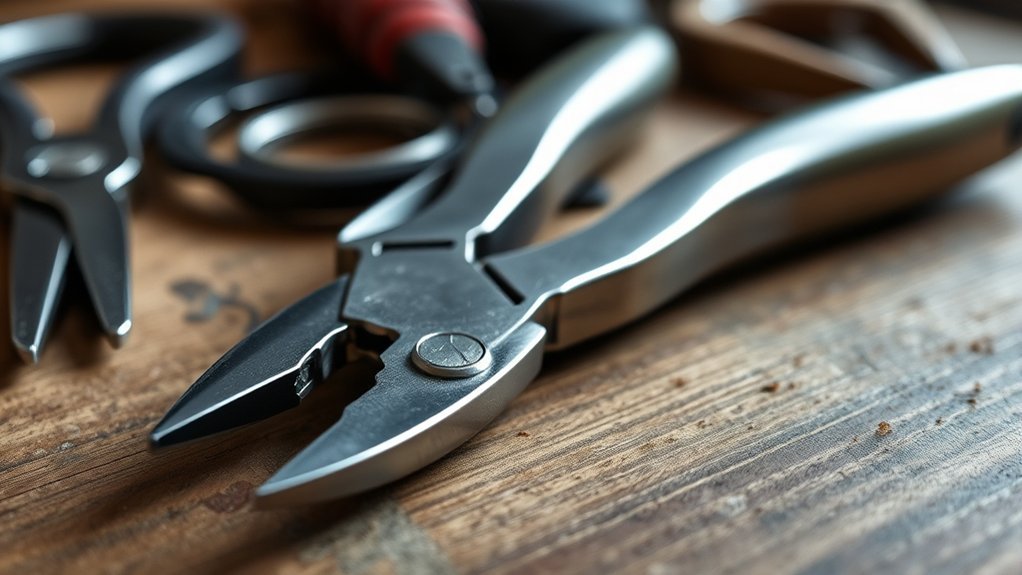
Although many cutting tools share similar functions, diagonal pliers distinguish themselves through their angled cutting edges and specific jaw design, which optimize them for precise wire cutting and trimming tasks.
When you compare diagonal pliers to other cutting tools, consider these key differences:
- Cutting Techniques: Diagonal pliers use a shearing action with offset jaws, allowing cleaner cuts on wires without crushing or deforming them, unlike scissors or straight cutters.
- Jaw Geometry: Their angled jaws provide better access in tight spaces, enhancing precision and control during intricate trimming tasks.
- Tool Materials: High-grade, hardened steel often composes diagonal pliers, ensuring durability and sharpness retention for consistent performance.
Understanding these distinctions helps you select the right tool for specialized cutting needs.
Common Uses of Diagonal Pliers in Electrical and DIY Projects
Diagonal pliers serve as essential tools for cutting, stripping, and trimming wires in both electrical and DIY projects. Their sharp, angled jaws provide precision cuts, allowing you to efficiently handle various wire gauges without damaging insulation.
In an applications overview, they’re commonly used for tasks like snipping excess wire during circuit installations or removing cable ties in tight spaces. Project examples include wiring household outlets, assembling electronic components, and crafting custom lighting setups.
You’ll find diagonal pliers indispensable for cleanly cutting through copper, aluminum, and other soft metals. Their ergonomic design supports repetitive use, reducing hand fatigue during complex wiring tasks.
Understanding these typical uses helps you maximize efficiency and accuracy in your electrical and DIY endeavors.
How to Choose the Right Size and Type of Diagonal Pliers
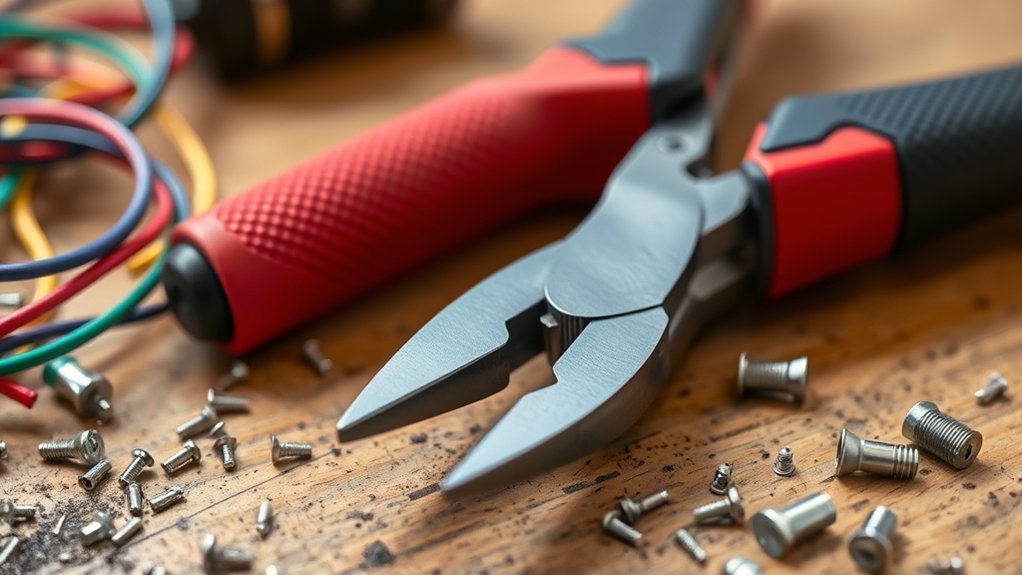
You’ll want to select diagonal pliers based on the size of the materials you’re cutting and the specific tasks involved. Smaller pliers offer precision for delicate wiring, while larger ones provide leverage for thicker cables. Understanding the types, such as flush-cutting or heavy-duty models, ensures you match the tool’s design to your project’s demands.
Size Selection Tips
Selecting the right size and type of pliers directly impacts the efficiency and safety of your work. To choose correctly, consider these factors:
- Size Comparisons: Assess the dimensions relative to your task. Smaller pliers offer precision for intricate cuts, while larger ones handle thicker materials but may reduce control.
- Handle Comfort: Evaluate grip ergonomics and material. Comfortable handles reduce hand fatigue and improve cutting accuracy during extended use.
- Cutting Capacity: Match the plier’s jaw size and strength to the wire gauge or material thickness you’ll be working with to avoid tool damage or failure.
Types and Uses
Three primary types of diagonal pliers cater to distinct cutting needs: standard, heavy-duty, and precision models. Understanding diagonal pliers features helps you select the right tool for your task.
Standard pliers suit general cutting of soft wires, while heavy-duty models, often with reinforced jaws and longer handles, handle tougher materials like thick cables. Precision diagonal pliers, with smaller jaws and ergonomic grips, excel in electronics and delicate work.
Reflecting on diagonal pliers history reveals that design improvements aimed to optimize cutting efficiency and user comfort across these types. When choosing, consider wire gauge, material hardness, and accessibility.
Selecting an inappropriate type risks tool damage or inefficient cuts. By matching your application to the appropriate diagonal pliers type, you guarantee accuracy, durability, and safety in your cutting tasks.
Tips for Using Diagonal Pliers Safely and Effectively
Although diagonal pliers are straightforward tools, using them safely and effectively requires attention to proper technique and conditions. To maximize safety and efficiency, follow these critical safety precautions and cutting techniques:
- Inspect the tool before use to verify the cutting edges are sharp and the handles are intact, preventing slippage and incomplete cuts.
- Position the material close to the pivot point for ideal leverage, minimizing hand fatigue and verifying a clean cut.
- Cut at right angles to the wire or component, avoiding twisting motions that can damage both the tool and the workpiece.
How to Maintain and Sharpen Diagonal Pliers
To guarantee your diagonal pliers perform at their best, you need to maintain and sharpen them regularly. Start with effective cleaning techniques: remove debris and grease using a wire brush and a solvent like isopropyl alcohol. Dry thoroughly to prevent rust.
Inspect the cutting edges for nicks or dullness. For sharpening methods, use a fine triangular file or a diamond-coated sharpening stone. Hold the pliers steady and mimic the original bevel angle, typically around 15-20 degrees.
Work with smooth, consistent strokes to restore the sharp edge without altering the tool’s geometry. After sharpening, test the cut on a wire to ascertain efficiency. Finally, apply a light machine oil to the pivot joint and blades to reduce friction and prevent corrosion.
This routine extends tool life and maintains cutting precision.
When Should You Replace Your Diagonal Pliers?
Maintaining and sharpening your diagonal pliers guarantees peak performance, but even with proper care, tools wear down over time. Recognizing when to replace them is essential to guarantee safety and efficiency. Monitor these performance indicators closely:
- Blade Dulling and Chipping: Excessive wear and tear on cutting edges reduces precision and increases effort.
- Handle Integrity: Cracks, deformation, or loss of grip compromise control and may lead to injury.
- Joint Looseness or Rust: Worn pivot joints decrease cutting accuracy and can cause tool failure.
If you notice any of these signs, replacing your diagonal pliers is advisable. Continuing to use degraded tools risks damaging materials and undermines your work quality. Regular inspection helps you maintain peak tool performance and prevents unexpected breakdowns.
Top Diagonal Pliers for Every Budget
You need diagonal pliers that match both your technical requirements and budget constraints. We’ll compare budget-friendly models, mid-range options with increased durability, and premium heavy-duty picks designed for rigorous use.
This breakdown helps you select the right tool based on performance and cost efficiency.
Budget-Friendly Diagonal Pliers
Although high-end diagonal pliers offer advanced features, budget-friendly options deliver reliable performance without breaking the bank. When selecting affordable options, focus on tools that maintain budget durability through quality materials and solid construction. Here’s what to prioritize:
- Material quality: Choose pliers made from hardened steel with corrosion-resistant coatings to guarantee longevity under regular use.
- Ergonomics: Opt for handles with comfortable grips to reduce hand fatigue during repetitive tasks.
- Cutting efficiency: Look for precise cutting edges that stay sharp, allowing clean cuts on wires without excessive force.
Mid-Range Quality Options
Budget-friendly diagonal pliers provide reliable basic performance, but mid-range options elevate functionality with enhanced materials and design features. When you select mid-range diagonal pliers, you benefit from improved mid range durability due to higher-grade steel alloys and precision heat treatment.
These pliers often feature ergonomic handles and optimized jaw geometry, which increase cutting efficiency and user comfort. User reviews consistently highlight their balance between cost and performance, noting fewer wear issues and longer tool life compared to lower-end models.
While not as robust as premium picks, mid-range diagonal pliers suit most professional and advanced DIY tasks, delivering consistent results without frequent replacement. If you want a dependable tool that won’t break the bank yet lasts through regular use, mid-range options are a smart investment.
Premium Heavy-Duty Picks
Three key factors distinguish premium heavy-duty diagonal pliers from their mid-range counterparts: superior materials, advanced engineering, and enhanced durability. When choosing premium heavy-duty picks, focus on these critical aspects:
- Premium Features: Look for precision-ground cutting edges and corrosion-resistant coatings that maintain sharpness and performance over time.
- Heavy Duty Design: Opt for pliers built with high-carbon steel or alloy steel, ensuring they withstand rigorous use without deformation.
- Ergonomics and Longevity: Select models with reinforced joints and ergonomic handles to reduce user fatigue and extend tool lifespan.
Key Features That Help You Pick the Best Diagonal Pliers
When selecting diagonal pliers, you’ll need to evaluate several critical features that affect performance and durability. Prioritize an ergonomic design to reduce hand fatigue during extended use and improve grip stability. Look for handles with non-slip materials and contouring that fit your hand naturally.
Cutting precision is paramount; examine the alignment and sharpness of the cutting edges to guarantee clean, accurate cuts without excessive force. High-quality steel construction, such as alloy or carbon steel, enhances edge retention and resistance to wear.
Additionally, consider the joint type. Box joint designs typically offer better stability and longevity. By focusing on these elements—ergonomic design, cutting precision, material quality, and joint construction—you’ll select diagonal pliers optimized for efficiency and durability in your specific tasks.
Conclusion
You might think all cutting tools perform similarly, but diagonal pliers offer unmatched precision where others fall short. Their angled jaws and strategic pivot deliver clean cuts in tight spaces, unlike bulky cutters that sacrifice control.
Choosing the right diagonal pliers means balancing size, material, and durability to match your task’s demands. With proper maintenance, they outlast many tools, proving that a specialized cutter outperforms general ones every time.
When accuracy and efficiency are essential, diagonal pliers stand out as the superior choice among cutting tools.