When you’re working with tough materials like concrete or brick, a hammer drill bit is essential. A regular drill bit won’t cut it in these situations.
A hammer drill bit combines rapid rotation with a hammering action to efficiently break through dense surfaces. Its carbide tip and unique design help manage heat and debris, ensuring durability and performance.
Understanding how this specialized bit functions is essential before you tackle your next heavy-duty project.
What Is a Hammer Drill Bit and How Does It Work?
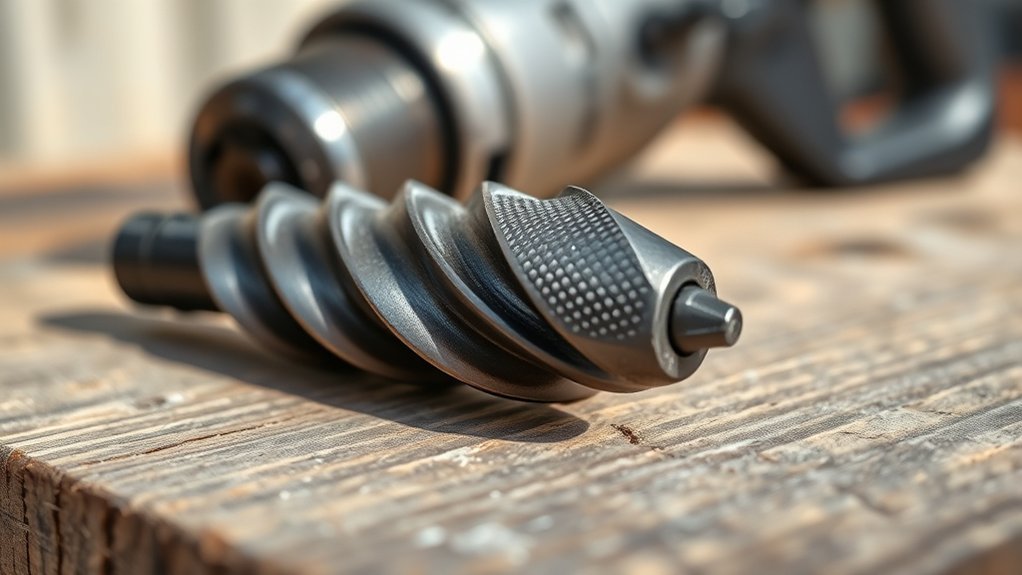
A hammer drill bit combines rotation with rapid, short hammering motions to efficiently penetrate hard materials like concrete and masonry. When you use a hammer drill, its mechanics generate both rotational force and percussive impacts, allowing the bit to chip away at tough surfaces while spinning.
This dual-action reduces resistance and increases drilling speed compared to standard drills. Understanding hammer drill mechanics helps you optimize bit longevity; excessive pressure or improper speed can cause premature wear or breakage.
To maintain bit longevity, verify you match the bit to your hammer drill’s specifications and let the tool’s hammering action do the work rather than forcing it. Proper technique minimizes heat buildup and material stress, extending the functional life of your hammer drill bit.
What Makes Hammer Drill Bits Different From Regular Bits?
You’ll notice hammer drill bits have a unique tip design that allows them to effectively chisel through tough materials. They’re also built with enhanced impact resistance to withstand the repeated hammering action.
These features set them apart from regular bits, which aren’t designed for such intense stress.
Unique Tip Design
Although hammer drill bits may resemble regular bits at first glance, their unique tip design sets them apart by enhancing performance for tough materials like concrete and masonry. The tip functionality relies on a special carbide composition shaped into a dual-flute or four-facet geometry, enabling efficient pulverization of hard surfaces.
This design advantages include superior cutting efficiency and precise chip removal, reducing heat buildup and bit wear. Unlike standard bits, hammer drill tips feature a reinforced, often tungsten carbide-tipped face that absorbs and transfers the hammering impact effectively.
This tailored geometry maximizes energy transfer from the hammering action, allowing you to drill faster and with less effort. Understanding these tip design specifics helps you choose the right bit for demanding drilling tasks, ensuring durability and peak performance.
Enhanced Impact Resistance
Impact resistance defines the core advantage of hammer drill bits over regular bits by enabling them to withstand repeated hammering forces without fracturing or deforming. When you use a hammer drill bit, its enhanced shock absorption properties dissipate the intense vibrations generated during drilling, preventing structural damage to the bit.
This resilience is achieved through specialized alloy compositions and heat treatment processes designed to optimize toughness. Manufacturers subject hammer drill bits to rigorous durability testing, simulating high-frequency impacts to verify their capacity to endure demanding conditions.
Unlike regular bits, which can quickly wear or break under percussive stress, hammer drill bits maintain integrity and performance, allowing you to drill into hard materials like concrete efficiently. This superior impact resistance ultimately extends the bit’s lifespan and reliability during heavy-duty applications.
What Materials Are Hammer Drill Bits Designed For?
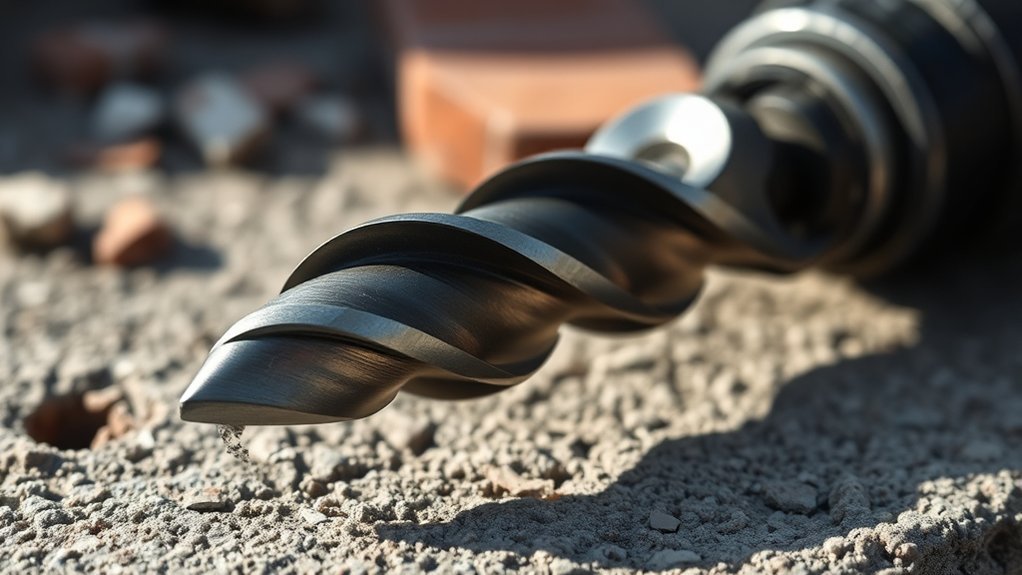
When working with tough surfaces, hammer drill bits excel because they’re specifically engineered to penetrate hard materials like concrete, brick, and stone. You’ll find these bits ideal for concrete drilling due to their carbide tips and robust construction, which withstand the intense impact and rotary forces involved.
In masonry applications, hammer drill bits maintain sharpness and structural integrity, enabling efficient removal of material without premature wear. Unlike standard drill bits, they’re not designed for wood or metal, as their impact mechanism and tip geometry focus on brittle, dense substrates.
When selecting a hammer drill bit, verify it matches the material’s hardness and density to optimize drilling speed and bit longevity in your concrete drilling and masonry tasks.
Common Types of Hammer Drill Bits and Their Uses
Hammer drill bits come in several common types, each engineered for specific drilling tasks and materials. Masonry bits feature tungsten carbide tips designed to penetrate concrete, brick, and stone effectively. SDS (Slotted Drive System) bits offer enhanced grip and durability, ideal for heavy-duty bit applications involving dense materials.
Multi-purpose bits combine carbide and steel to handle both wood and metal but aren’t the best choice for hard masonry. Chisel bits serve specialized purposes like chiseling or demolition, allowing you to break up tough surfaces. When selecting a hammer drill bit, understanding these common materials and their corresponding bit applications guarantees you match the right tool to your project’s demands, maximizing efficiency and tool life.
How to Choose the Right Hammer Drill Bit for Your Project
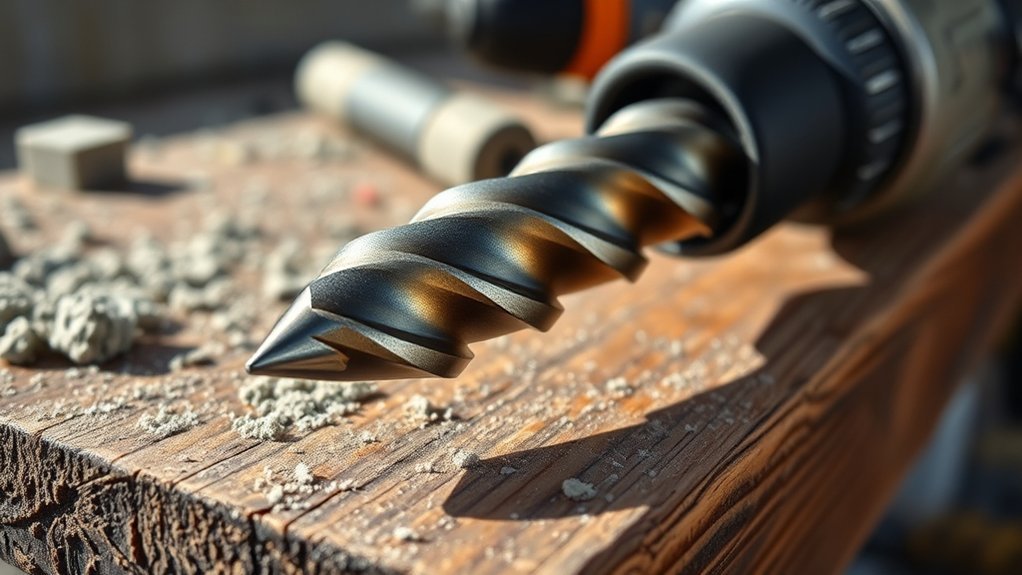
You need to match the hammer drill bit material to the surface you’re working on to guarantee durability and efficiency. Selecting the correct bit size is essential for accuracy and to prevent damage to both the bit and the material.
Also, consider your drill’s power rating to choose a bit that won’t overload or underperform during your project.
Material Compatibility
Although selecting a drill bit might seem straightforward, choosing the right hammer drill bit depends heavily on the material you’ll be working with. Different material types, such as concrete, brick, or stone, demand specific compatibility factors to guarantee efficient drilling and prevent bit damage.
For instance, carbide-tipped bits excel in masonry, offering durability against abrasive surfaces, while high-speed steel bits suit softer materials like wood or metal. You’ll want to assess hardness, density, and brittleness of the substrate to match the bit’s design and tip composition accordingly.
Ignoring these compatibility factors can lead to premature wear or ineffective drilling. Consequently, understanding the material types and their demands allows you to select a hammer drill bit that maximizes performance and longevity for your project.
Bit Size Selection
Selecting the appropriate bit size greatly impacts the efficiency and accuracy of your drilling task. When selecting appropriate sizes, start by evaluating the hole diameter required for your project.
Bit diameter considerations guarantee proper fit for anchors, screws, or bolts, preventing structural weaknesses or material damage. Choose a bit that matches or slightly exceeds the hole size specified by your fasteners.
Keep in mind that overly large bits can cause loose fittings, while undersized bits may lead to excessive force and bit wear. Additionally, consider the material you’re drilling into; harder materials might require smaller pilot holes initially.
Drill Power Requirements
Understanding the power requirements of your hammer drill is essential when choosing the right drill bit for your project. Different power sources affect the drill’s torque and speed, which in turn influence bit performance and energy efficiency.
Selecting a bit compatible with your drill’s power output guarantees peak operation and prolongs tool life.
| Power Source | Typical Power (Watts) | Recommended Bit Type |
|---|---|---|
| Corded Electric | 600 – 1500 | SDS-Plus, SDS-Max |
| Cordless Battery | 300 – 900 | SDS-Plus, Smaller SDS |
| Pneumatic | 500 – 1200 | Heavy-Duty Carbide |
| Gas-Powered | 1000 – 2000 | SDS-Max, Industrial |
| Manual | N/A | Not applicable |
Match your bit to the drill’s power source for energy-efficient, precise drilling.
Top Safety and Performance Tips for Using Hammer Drill Bits
When you use hammer drill bits, guaranteeing proper safety measures and optimizing performance go hand in hand. Start by wearing protective gear: safety goggles, gloves, and ear protection to prevent injury from debris and noise. Secure your workpiece firmly to avoid unexpected movement.
Always check that your drill is set to hammer mode and that the bit is correctly installed. To maximize performance optimization, apply steady, moderate pressure rather than forcing the bit. Let the hammer action do the work.
Keep the bit cool by pausing periodically, especially when drilling hard materials, to prevent overheating and premature wear. Regularly inspect the bit and drill for damage or loosening. Following these safety precautions and performance tips guarantees efficient, safe drilling and extends the life of your hammer drill bits.
How to Tell When Your Hammer Drill Bit Needs Replacing or Sharpening
How can you quickly identify if your hammer drill bit requires replacing or sharpening? Pay attention to signs of wear such as a dull cutting edge, visible chipping, or uneven surfaces on the bit.
If the bit performance noticeably decreases, meaning longer drilling times, increased effort, or excessive heat generation, it’s time to act. Inspect the bit tip closely; rounded or chipped edges reduce efficiency and increase stress on the drill.
Additionally, if the bit no longer penetrates material cleanly or produces excessive vibration, these are clear indicators that sharpening or replacement is necessary. Maintaining peak bit performance hinges on recognizing these signs early, ensuring your hammer drill operates safely and effectively without risking damage to the tool or material.
How to Maintain Hammer Drill Bits for Longer Life
To extend the life of your hammer drill bits, you should consistently clean and inspect them after each use. Proper maintenance techniques guarantee peak performance and prevent premature wear. Follow these longevity tips:
Consistent cleaning and inspection after use ensure peak performance and extend your hammer drill bits’ lifespan.
- Remove dust and debris with a wire brush to prevent clogging and overheating.
- Check for visible damage or dull edges; sharpen or replace as needed.
- Apply a light coating of oil to prevent rust and corrosion during storage.
- Store bits in a dry, organized case to avoid physical damage and moisture exposure.
Regularly applying these maintenance techniques not only preserves the bit’s cutting efficiency but also reduces downtime and costs. By integrating these longevity tips into your routine, you maximize the durability and effectiveness of your hammer drill bits.
Comparing Hammer Drill Bits to Regular Drill Bits: When to Switch
Maintaining your hammer drill bits properly guarantees they perform at their best, but knowing which bit to use for specific tasks can further enhance efficiency and tool longevity. When evaluating hammer drill vs regular drill bits, consider material and function.
Hammer drill bits are designed for masonry and concrete, featuring carbide tips and fluted shafts to endure impact and rotation. Regular drill bits excel in wood, metal, and plastic due to their sharper edges and smoother cuts.
Switch to a hammer drill bit when working on hard materials requiring percussive force; revert to regular bits for softer substrates to avoid unnecessary wear. This drill bit comparison helps you optimize tool performance, prevent damage, and ascertain clean, accurate holes tailored to your project’s demands.
Conclusion
When you grip a hammer drill bit, imagine it pounding through tough concrete with sharp, rhythmic strikes. Its carbide tip slices cleanly, making tough jobs easier.
Knowing how it works and when to switch bits guarantees you tackle heavy-duty tasks efficiently without damaging your tools.
By choosing the right bit and maintaining it well, you’ll drill with precision and confidence. This turns hard surfaces into manageable projects.
Keep these insights in mind, and your drilling will always hit the mark with the perfect hammer drill bit.