When you pick up a pair of vise grip pliers, your first step is to adjust the jaw width by turning the screw at the handle’s end. This adjustment ensures the jaws fit snugly around your workpiece.
Next, position the jaws over your workpiece and squeeze the handles until the locking mechanism engages, securing a firm grip. The tool locks in place, allowing you to work without constantly applying pressure.
The precision and reliability of vise grip pliers depend on proper adjustment and technique. These can vary based on the material you’re working with.
Understanding these nuances is key before moving forward.
What Are Vise Grip Pliers and When to Use Them
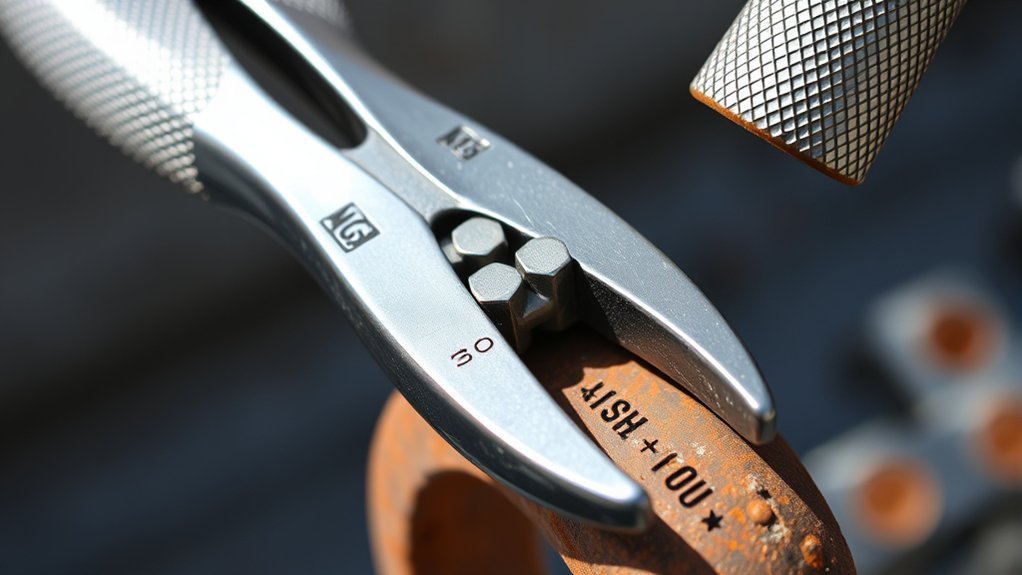
Vise grip pliers are locking pliers designed to firmly clamp onto objects, providing a secure grip that frees your hands for other tasks. Unlike standard types of pliers, vise grips use a lever and screw mechanism allowing you to lock the tool in place.
This functionality makes them ideal for tasks requiring sustained pressure without hand fatigue. When using vise grips, precise gripping techniques involve positioning the jaws around the object, then tightening to achieve a stable hold.
You can use them for turning, pulling, or holding irregularly shaped items that other pliers may slip from. Recognizing when to use vise grips versus slip-joint or needle-nose pliers improves efficiency and safety during mechanical or repair work.
How to Adjust and Lock Vise Grip Pliers
To achieve a secure grip on your workpiece, you need to correctly adjust and lock the pliers. Begin by using the adjusting technique: turn the screw at the handle’s end to set the jaw width just wider than the object.
Position the jaws over the workpiece and squeeze the handles firmly. As you apply pressure, the locking mechanism engages, holding the jaws tightly in place. Confirm the jaws are aligned parallel to the gripping surface for maximum contact.
If the grip feels loose, release the pliers by pulling the release lever, readjust the screw, and try again. Mastering this adjusting technique and understanding the locking mechanism confirms a reliable hold, preventing slippage and enabling precise manipulation during your tasks.
Using Vise Grip Pliers on Different Materials
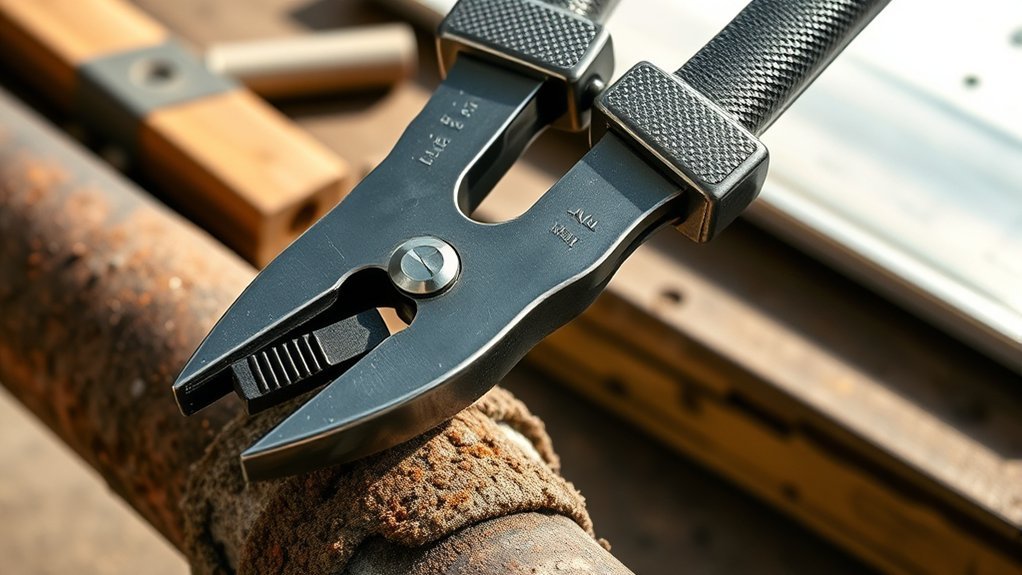
When gripping different materials, you’ll need to adjust your approach to prevent damage and guarantee a secure hold. For wooden surfaces, avoid over-tightening to prevent denting or splitting.
Adjust your grip for each material to ensure a secure hold without causing damage.
When handling metal fasteners, apply firm pressure for a reliable grip without slipping. Use the following guidelines:
For wooden surfaces, pad jaws with cloth to protect grain. On metal fasteners, make sure jaws align perfectly to avoid rounding edges.
Adjust the locking screw to control clamping force precisely. For soft plastics, reduce pressure to avoid deformation.
When gripping irregular shapes, reposition jaws for maximum contact.
How to Maintain and Clean Your Vise Grip Pliers
Although regular use can cause buildup and wear, you can extend the lifespan of your locking pliers by performing routine maintenance and cleaning. Begin by disassembling any removable parts to access crevices.
Apply appropriate cleaning techniques such as using a wire brush to remove rust, and a cloth dampened with solvent to clear grease and debris. After cleaning, lubricate pivot points with a light machine oil to guarantee smooth operation.
Maintenance tips include inspecting for damaged teeth and worn springs, replacing parts as needed to maintain grip integrity. Store your vise grip pliers in a dry environment to prevent corrosion.
Following these methodical steps assures ideal functionality and durability, making certain your tool remains reliable for precise tasks.
Common Mistakes to Avoid When Using Vise Grip Pliers
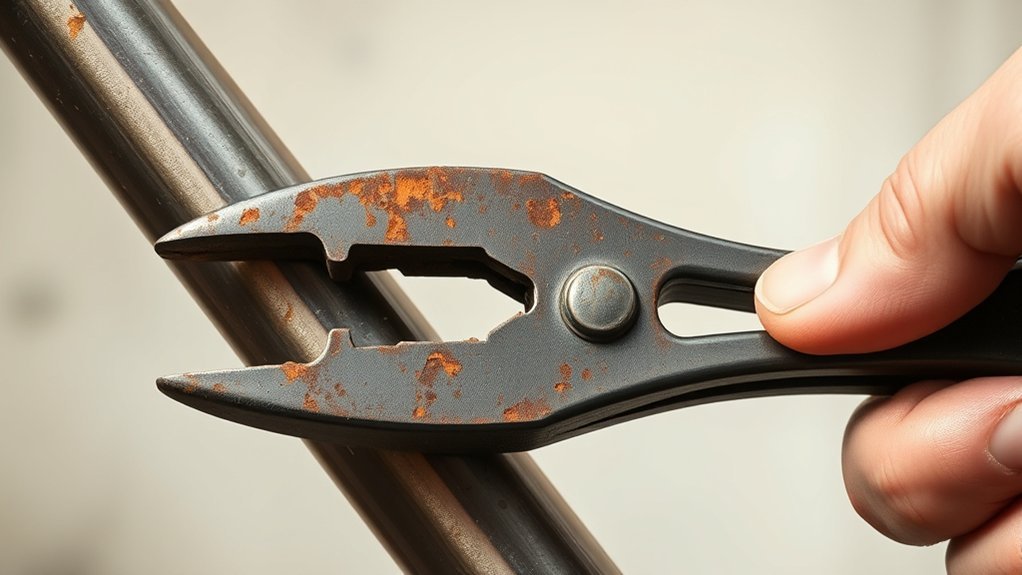
Since vise grip pliers rely on precise locking and pressure, you must avoid common errors that compromise their function and safety. Misusing grips or failing to adjust pressure correctly can damage both the tool and the workpiece.
To guarantee peak performance, steer clear of these mistakes:
- Using excessive force instead of properly adjusting pressure
- Clamping on irregular or damaged surfaces without repositioning
- Attempting to grip objects beyond the tool’s capacity
- Neglecting to release the locking mechanism before removal
- Applying vise grips for twisting tasks rather than clamping
Conclusion
Now that you know how to adjust, lock, and release your vise grip pliers properly, you can see why their design is so effective. The locking mechanism isn’t just a simple clamp—it’s engineered to apply consistent pressure without slipping, which has been tested repeatedly in various materials.
By mastering these steps and avoiding common mistakes, you guarantee precision and safety in your work. Trust the tool’s mechanics, and your grip will never fail.
Using vise grip pliers correctly ensures a secure hold every time, making them an indispensable tool for any project.