Just as a locksmith relies on the right key to open a door, you need the proper technique to handle retaining ring pliers effectively.
Using retaining ring pliers demands precision and a clear understanding of their interaction with retaining rings, whether internal or external.
If you want to avoid damaging parts or struggling with stuck rings, mastering the correct approach is essential.
Let’s explore how to do this step-by-step, ensuring both safety and efficiency.
What Are Retaining Rings and Retaining Ring Pliers?
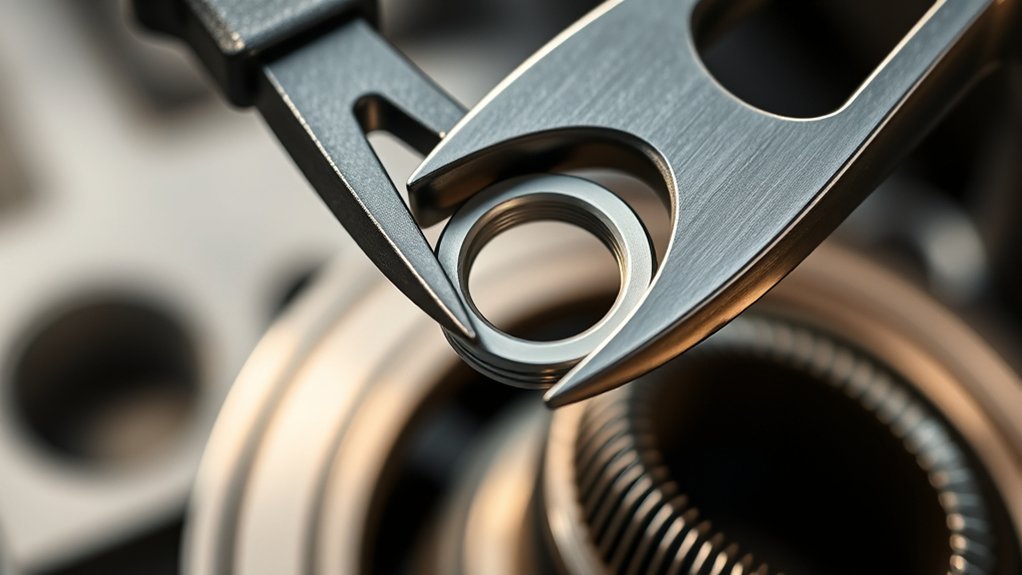
A retaining ring is a fastener designed to hold components or assemblies onto a shaft or inside a bore, preventing axial movement. Understanding retaining ring basics is crucial before using the correct tools.
Retaining rings fit into grooves, securing parts firmly yet allowing for easy assembly or disassembly. To handle these rings, you’ll need retaining ring pliers, specifically engineered to expand or compress rings for installation and removal.
These pliers feature specially shaped tips that engage the ring’s holes or ends, providing precise control. In this pliers overview, you’ll find that proper tool selection and technique reduce the risk of ring deformation or component damage.
Mastering these fundamentals guarantees efficient, safe handling during mechanical assembly or maintenance.
Types of Retaining Rings and Matching Pliers
You’ll work with three main types of retaining rings: internal, external, and specialty. Each type requires a specific style of pliers designed to fit their unique shapes and installation methods.
Understanding these distinctions guarantees you select the right tool for secure and efficient ring placement.
Internal Retaining Rings
Although internal retaining rings may seem straightforward, selecting the correct type and matching pliers is crucial for proper installation and removal. Internal rings fit into a groove inside a bore, requiring pliers with inward-facing tips to compress the ring for internal ring installation and internal ring removal.
You must identify the ring’s material and size to ascertain compatibility with your pliers, as mismatched tools can damage the ring or the groove. During internal ring installation, position the pliers’ tips inside the ring’s holes or notches, compress it evenly, and carefully place it into the groove.
For removal, reverse the process by compressing the ring to release it from the bore. Precision and steady control prevent deformation and secure a reliable fit.
External Retaining Rings
Internal retaining rings require pliers with inward-facing tips to compress the ring for installation inside a bore. In contrast, external retaining rings fit around a shaft and need pliers with outward-facing tips to expand the ring for placement.
When handling external ring applications, you must select the correct pliers to match the ring’s size and design, ensuring proper grip and control. External ring materials commonly include carbon steel, stainless steel, and sometimes beryllium copper, each demanding careful handling to avoid deformation.
Using the right external retaining ring pliers prevents damage during installation and removal, maintaining the ring’s integrity and function. Always verify the ring’s specifications and material before choosing your tool to achieve precise, efficient assembly or maintenance.
Specialty Retaining Rings
Specialty retaining rings come in various designs tailored for specific applications, requiring matching pliers to guarantee accurate installation and removal. These rings include spiral rings, constant section rings, and E-clips, each engineered for specialty applications demanding custom designs.
When handling spiral rings, use spiral retaining ring pliers that engage the ring’s inner coils, facilitating controlled expansion or compression. Constant section rings require pliers that apply uniform force to maintain ring integrity.
E-clips demand side-opening pliers designed to snap the clip securely into grooves. Selecting the correct pliers for these custom designs avoids ring deformation and guarantees precise placement.
Always verify the ring type and match it with the appropriate specialty pliers to maintain assembly integrity and operational reliability in your mechanical systems.
How to Choose the Right Retaining Ring Pliers
You need to identify the specific type of retaining ring you’re working with before choosing your pliers, as internal and external rings require different tools. Consider the application’s size, load, and access constraints to select pliers with the appropriate jaw design and reach. Matching these factors guarantees precise handling and secure installation or removal of the retaining ring.
Types Of Retaining Pliers
When selecting retaining ring pliers, it’s essential to take into account the type of ring you’ll be working with, as different pliers are designed for internal or external rings. Consider the retaining ring materials and plier ergonomics to guarantee compatibility and ease of use.
Below is a comparison of common types:
| Pliers Type | Key Feature |
|---|---|
| Internal Ring Pliers | Designed to expand rings inward |
| External Ring Pliers | Designed to compress rings outward |
| Straight Tip Pliers | Precision for tight spaces |
| Bent Tip Pliers | Access hard-to-reach areas |
| Adjustable Pliers | Versatile for multiple ring sizes |
Selecting Based On Application
Several factors determine the ideal retaining ring pliers for your application, including ring type, size, and installation environment. Start by identifying whether you’re working with internal or external rings, as this dictates plier jaw orientation.
Next, consider ring dimensions. Using appropriately sized pliers guarantees a secure grip and prevents deformation. Your installation environment also influences your choice; for corrosive or high-temperature settings, selecting materials like stainless steel or coated alloys enhances durability.
Additionally, understand the specific application techniques required, whether compression or expansion, and choose pliers with compatible jaw shapes and tips. Prioritize ergonomic design for precision and comfort during repetitive tasks.
Preparing Your Retaining Ring Pliers for Use
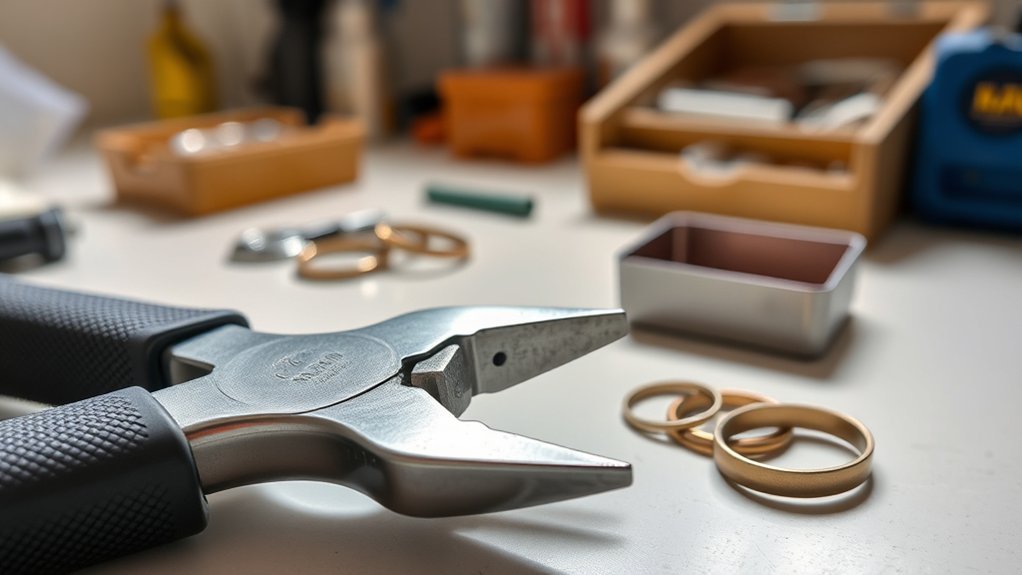
Before operating retaining ring pliers, verify they are properly prepared to ascertain accuracy and safety. Begin by conducting a thorough tool inspection: check the jaws for wear, damage, or misalignment. Ensure the tips match the retaining ring size and type for a secure grip.
Confirm the pivot joint moves smoothly without excessive play or stiffness. Apply light lubrication to the pivot if necessary. Adhere to safety precautions by wearing protective eyewear and gloves to prevent injury from sudden ring release.
Adjust the pliers’ tension mechanism, if available, to suit the specific retaining ring. Proper preparation prevents tool slippage and ring deformation, ensuring efficient and safe operation. Only proceed once you confirm the pliers meet all functional and safety criteria.
How to Remove Retaining Rings Safely, Step-by-Step
Start by securely positioning the retaining ring pliers on the ring’s holes or grooves, guaranteeing a firm grip without slipping.
Before you begin, follow essential safety precautions: wear protective eyewear and gloves to prevent injury from sudden ring release.
Choose the correct tool selection based on the ring type, internal or external, to avoid damage. Squeeze the pliers gently but steadily to compress or expand the ring, depending on its installation.
Keep steady control to prevent the ring from snapping out unexpectedly. Once loosened, carefully lift the ring away from the shaft or housing without forcing.
Maintain focus throughout to avoid slippage or damage to surrounding components. Following these precise steps guarantees safe, efficient removal while preserving tool and part integrity.
How to Install Retaining Rings Without Damage
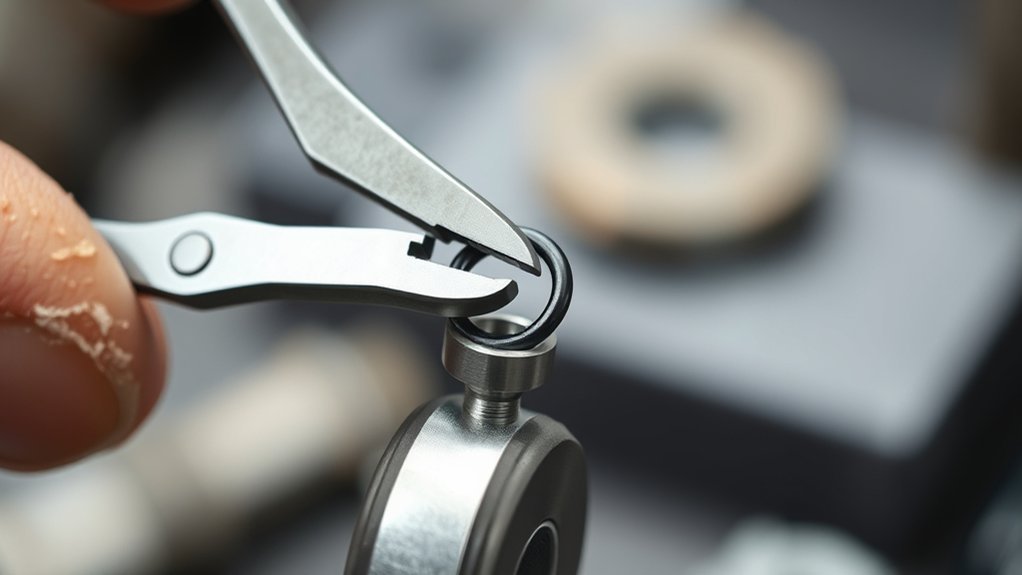
To install retaining rings without causing damage, you’ll need to select the appropriate retaining ring pliers that match the ring type and size precisely. Begin by ensuring the pliers’ tips engage securely with the ring’s holes or notches.
When installing rings, apply steady, controlled pressure to expand or compress the ring just enough to fit into its groove. Avoid over-expanding or twisting, which risks deforming the ring or damaging the groove.
Align the ring evenly around the shaft or bore before releasing tension to seat it properly. Inspect the installed ring to confirm it sits flush and evenly.
These methodical steps focus on installing rings while preventing damage, ensuring the retaining ring functions reliably without compromising component integrity.
How to Handle Stuck or Difficult Retaining Rings
Even with proper installation techniques, retaining rings can sometimes become stuck or difficult to remove due to corrosion, debris, or deformation. When facing this challenge, begin by cleaning the area to remove rust or dirt that may hinder movement.
Apply penetrating oil and let it sit briefly to loosen corrosion. Use retaining ring pliers with the correct tip size to avoid additional damage. Carefully apply steady pressure, avoiding sudden force that could deform the ring.
If the ring remains stuck, gently tap the pliers’ handles to create vibration, aiding in release. These removal techniques, combined with troubleshooting tips like verifying plier alignment and inspecting the ring for deformation, will help you safely extract difficult retaining rings without compromising the component or tool integrity.
Mistakes to Avoid When Using Retaining Ring Pliers
Although retaining ring pliers are designed for straightforward use, improper handling can lead to tool damage or compromised ring integrity. One of the most common errors is applying excessive force, which can deform the ring or damage the pliers’ tips.
Avoid using pliers not suited for the specific ring type or size, as mismatched tools reduce grip accuracy. Another frequent mistake is neglecting to align the pliers’ tips perfectly with the ring’s holes, which can cause slipping and potential injury.
To prevent these issues, always follow the proper technique: select the correct pliers, guarantee tip alignment, and apply controlled pressure. By steering clear of these common errors, you’ll maintain tool efficiency and secure ring installation or removal.
Maintaining and Storing Your Retaining Ring Pliers
Since retaining ring pliers endure frequent stress during use, you must perform regular maintenance to secure their longevity and peak performance. Begin with proper cleaning techniques: remove debris and grease with a soft brush and mild solvent, then dry thoroughly to prevent corrosion.
Inspect the pivot joint and apply a light machine oil to maintain smooth operation. Avoid excess lubrication, which can attract dirt.
For storage solutions, keep your pliers in a dry, organized toolbox or a dedicated rack to prevent damage and misplacement. Use protective caps on the tips if available to avoid dulling or bending.
Store them separately from other tools that may cause wear. By following these steps, you’ll secure your retaining ring pliers remain reliable and precise for all your tasks.
Conclusion
You might think using retaining ring pliers is tricky or risky, but with the right type and steady control, you’ll avoid slippage and damage every time.
Follow precise steps to align, compress, or expand rings carefully, and you’ll guarantee a secure fit. Remember, preparation and patience are key.
Once you master these techniques, you’ll handle any retaining ring confidently and efficiently, preventing costly mistakes and prolonging your tool’s lifespan. Using retaining ring pliers correctly ensures both safety and effectiveness in your work.