If you find yourself without pliers but need to open jump rings, don’t worry—you can still get the job done with everyday items.
Opening jump rings without pliers is possible by using flat tools like butter knives or even sturdy needles. These tools can help you carefully twist open the ring without distorting its shape.
The key is to apply gentle, controlled pressure while keeping the ring steady.
With the right approach, you’ll avoid common mistakes that damage the metal and compromise your work.
Take your time and be patient to ensure the jump ring remains intact and functional.
How To Open Jump Rings Without Pliers Using Household Items
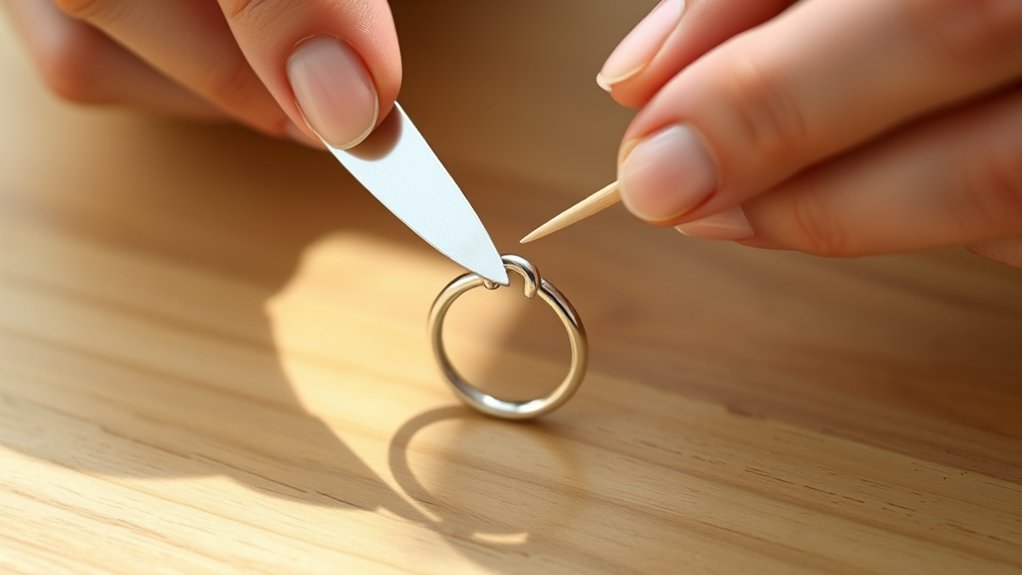
Although pliers are the traditional tool for opening jump rings, you can easily use common household items to achieve the same result. Alternative methods include using flat objects like butter knives or the edge of a credit card to gently twist the ring open.
You’ll want to position the jump ring on a stable surface, then carefully insert the item into the ring’s opening. Using a slow, controlled motion, twist the ring sideways rather than pulling it apart to maintain its shape.
Creative solutions also involve using your fingernails or even a sturdy, thin spoon handle to apply the necessary leverage. These household items provide enough control and precision, allowing you to open jump rings without specialized tools, ensuring your jewelry projects stay smooth and efficient.
Open Jump Rings Step-by-Step With Two Needles, Screwdrivers, Or Toothpicks
To open jump rings without pliers, start by selecting two sturdy needles, small screwdrivers, or toothpicks that fit comfortably inside the ring’s opening. Hold the jump ring steady with one tool while gently twisting the other to pry it open, following a controlled, step-by-step motion.
Keep your fingers clear and work slowly to avoid bending the ring out of shape or causing injury.
Choosing The Right Tools
When you don’t have pliers on hand, selecting the right alternative tools becomes essential for opening jump rings effectively. For tools selection, prioritize objects that offer control and precision, such as two fine needles, small screwdrivers, or even sturdy toothpicks.
Needles provide sharp, narrow points ideal for inserting into the ring’s gap, while screwdrivers give you a solid grip and leverage. Toothpicks work well for softer metals but require gentle handling to avoid breakage.
Avoid bulky or blunt items that could damage the ring or make maneuvering difficult. Consider the jump ring’s size and metal thickness when choosing your tools.
Step-by-Step Opening Guide
Mastering three simple techniques will help you open jump rings easily using two needles, small screwdrivers, or toothpicks. These alternative methods rely on steady hands and precise movements, so patience is key.
First, insert tools on opposite sides of the ring’s split. Then, twist gently sideways, never pull apart, to maintain the ring’s shape. Finally, slide the ring open enough to connect or remove components.
| Tool Type | Key Step |
|---|---|
| Two Needles | Insert and twist sideways |
| Screwdrivers | Use tips to pry open gently |
| Toothpicks | Leverage split with light twist |
Tips For Safe Handling
Although it might seem straightforward, handling jump rings with needles, screwdrivers, or toothpicks requires careful control to prevent injury or damaging your materials. To guarantee safety and effectiveness, follow these safety precautions and handling techniques:
Use tools with fine, non-slip grips to maintain control and avoid slipping during manipulation. Work on a stable, well-lit surface to clearly see the jump ring’s opening without straining your eyes or hands.
Apply gentle, consistent pressure when twisting the jump ring open; avoid forcing it to prevent bending or breaking.
Tips To Open Jump Rings Safely Without Damaging Them
Since jump rings are delicate, you’ll need to apply gentle, controlled pressure to open them without bending or weakening the metal. Use creative techniques like twisting the ring sideways instead of pulling it apart, which helps maintain its shape.
If you don’t have pliers, try alternative tools such as two sturdy craft sticks or the tips of your fingernails to gently pry the ring open. Work slowly and steadily to avoid cracking or distorting the metal.
Always open the jump ring by twisting it sideways, never pulling it apart directly, as this can warp the ring and compromise its strength. By combining these careful methods with patience, you’ll protect the integrity of your jump rings while completing your project efficiently.
When To Use Split Rings Or Key Rings Instead Of Jump Rings
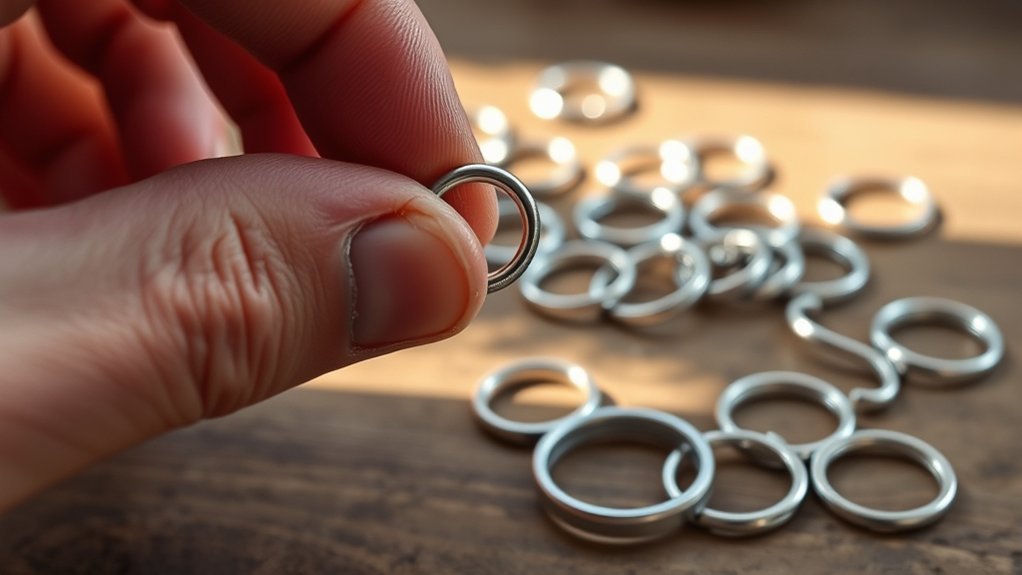
You should choose split rings or key rings over jump rings when your project demands extra durability and security, such as holding keys or heavy charms. These rings prevent accidental openings better than jump rings, which can bend or gap under stress.
Also, split rings make attaching items easier since you can thread them without worrying about the ring slipping open.
Durability Needs
When your project demands extra strength and long-lasting reliability, split rings or key rings offer better durability than jump rings. Jump ring strength varies greatly based on material types and thickness, often making them less suitable for heavy or frequently handled items.
Use split rings or key rings when you need a secure, closed loop that resists accidental opening and withstands tension. They are also ideal if the project involves materials prone to wear or frequent movement, where jump rings might deform.
Additionally, choose split rings or key rings if you require compatibility with thicker chains or attachments that demand stronger connectors.
Choosing the right ring depends on understanding your jump ring’s strength limitations and selecting material types like stainless steel or brass for improved endurance. This approach guarantees your piece remains intact and functional over time without compromising durability.
Security Considerations
Beyond durability, security plays a significant role in deciding whether to use split rings or key rings instead of jump rings. When your project demands enhanced safety precautions, split rings or key rings offer superior closure, reducing the risk of accidental openings.
Unlike jump rings, which rely on a simple gap, split rings maintain continuous contact, preserving material integrity and preventing items from slipping off. You should opt for split rings when attaching valuables or components subject to frequent movement or tension, as they resist deformation better.
Key rings also provide extra security for keys or charms that must stay firmly in place. By carefully evaluating these factors, you guarantee your project maintains both functional strength and safety without compromising material quality.
Ease Of Attachment
Although jump rings offer versatility, split rings and key rings simplify the attachment process by eliminating the need for tools like pliers. You’ll find the ease of attachment with these alternatives ideal when quick, secure connections matter most. Unlike traditional jump rings, which require precise opening and closing techniques, split and key rings let you slide items on effortlessly.
Consider these scenarios for choosing jump ring types:
- Use split rings when you need a more secure hold without soldering or complex manipulation.
- Opt for key rings to attach heavier items, as their layered design resists accidental opening.
- Choose jump rings for delicate or decorative tasks where flexibility and size variety are essential.
Understanding when to substitute jump rings enhances your workflow and guarantees strong, reliable attachments.
How To Choose The Right Jump Ring For Your Project
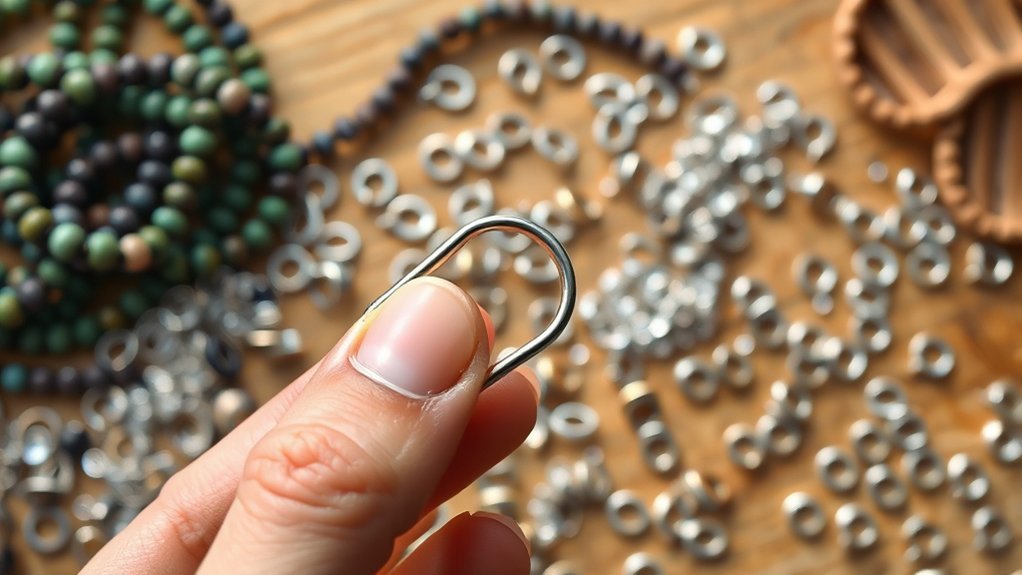
Selecting the right jump ring involves considering the size, material, and gauge to confirm it suits your project’s strength and aesthetic requirements. Begin by evaluating ring sizes: smaller rings (4-6mm) work well for delicate pieces, while larger ones handle heavier components.
Next, assess jump ring materials based on durability and appearance. Sterling silver and stainless steel offer strength and tarnish resistance, ideal for daily wear. Copper and brass provide unique looks but may require sealing to prevent oxidation.
Gauge thickness also matters; thicker gauges confirm sturdiness but might be harder to open without tools. Choose a jump ring that balances ease of handling with the necessary strength to support your design.
How To Close Jump Rings Securely Without Pliers
When you don’t have pliers on hand, closing jump rings securely requires a steady hand and the right technique to guarantee your jewelry stays intact. First, consider the jump ring materials and sizes, as softer metals like copper bend more easily, while harder metals demand firmer pressure. Use your fingers to gently push the ends together, avoiding twisting motions that can weaken the ring.
For precise closure:
- Align the jump ring ends flush, minimizing gaps.
- Apply steady, even pressure with your thumb and index finger.
- Use a flat surface to press the ring gently if needed.
This method guarantees a strong, seamless closure, essential for durable jewelry, especially when working with varying jump ring sizes and materials.
Troubleshooting Common Problems Opening Jump Rings Without Tools
If you find yourself struggling to open jump rings without tools, understanding common issues can save you time and frustration. One frequent problem is applying too much force, which can distort or weaken the ring. Instead, use gentle twisting motions to maintain the ring’s shape.
Another issue is slippery surfaces; try using textured materials like rubber bands or cloth to improve grip. When jump rings are too small or stiff, alternative methods such as leveraging a thin, sturdy object like a toothpick or needle can help pry them open without damage.
Mastering these jump ring techniques guarantees you avoid common pitfalls. By adjusting your approach and experimenting with alternative methods, you’ll open jump rings smoothly and maintain their integrity, even without traditional tools.
Quick Fixes When You Don’t Have Pliers For Jump Rings
How can you open jump rings effectively without pliers on hand? Mastering jump ring techniques with alternative methods guarantees you won’t be stalled. First, use two sturdy needles or safety pins: grip the jump ring with one and twist it open with the other to avoid distorting the shape.
Second, try small flathead screwdrivers; insert one on each side of the ring’s split and gently twist them apart. Third, employ your fingernails carefully by holding the ring steady with one hand and prying it open with a fingernail on the other, though this requires more precision.
These quick fixes provide practical solutions when pliers aren’t available, allowing you to maintain control and protect your jump rings from damage while working efficiently.
Conclusion
Remember when you tried opening a stubborn jar lid by twisting it with a butter knife? Opening jump rings without pliers works the same way—gentle twists, not pulls, keep the ring intact.
By using everyday items and following the right technique, you’ll avoid bending or breaking your jump rings. With patience and care, you can secure your jewelry pieces perfectly.
This shows that sometimes, the simplest tools reveal the best results when you need to open jump rings without pliers.