When you work with machinery or automotive parts, you’ll often encounter snap rings securing components tightly in place. Snap ring pliers are essential tools used for installing or removing these rings safely and efficiently.
Using snap ring pliers correctly helps prevent damage to the rings or surrounding parts. Understanding how these tools function and when to use them can save you time and prevent costly errors.
But before you pick up a pair, it’s important to recognize the different types of snap rings and how the corresponding pliers operate.
What Are Snap Ring Pliers and How Do They Work
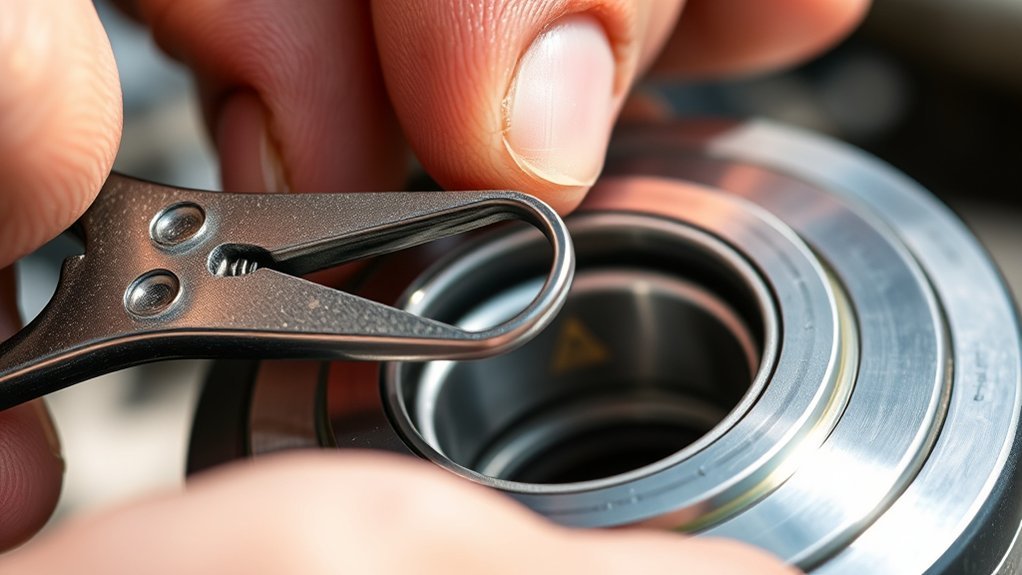
Snap ring pliers are specialized hand tools designed to install and remove snap rings, which are circular retaining rings used to secure components on shafts or inside bores. Understanding their function requires a brief look at snap ring history; these retaining rings date back to the early 20th century, revolutionizing mechanical assemblies by providing a reliable, removable locking method.
Snap ring pliers work by expanding or compressing the ring, depending on whether it’s an internal or external type. The tool’s construction is critical—plier materials typically include hardened steel for durability and corrosion resistance. Precision in the jaw tips guarantees a secure grip on the snap ring, preventing slippage during installation or removal.
You’ll find that the ergonomic design and material choice directly influence efficiency and safety in mechanical tasks.
Types of Snap Rings and When to Use Snap Ring Pliers
Although retaining rings come in various designs, the two primary types you’ll encounter are internal and external snap rings, each requiring specific pliers for proper installation and removal. Internal snap rings fit inside a bore or housing, exerting radial pressure outward to secure components.
You’ll use snap ring pliers with inward-closing tips to compress these rings for insertion or extraction. Conversely, external snap rings mount on shafts, applying inward radial force to hold parts in place. For these, you’ll need pliers with outward-expanding tips to spread the ring during handling.
Understanding the distinction lets you select the right tool, preventing deformation or damage. Using the correct pliers guarantees precise control and maintains component integrity, critical in mechanical assemblies where snap rings secure bearings, gears, and other parts.
How to Use Snap Ring Pliers for Installing and Removing Snap Rings
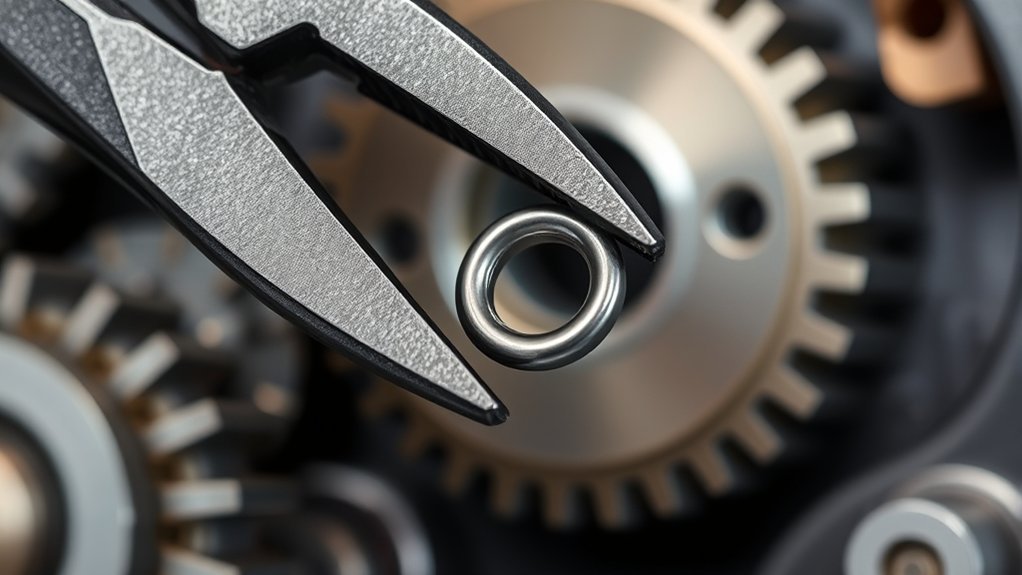
Knowing whether you’re working with an internal or external snap ring determines the type of pliers and technique you’ll use. For snap ring installation and snap ring removal, follow these steps:
Identifying internal versus external snap rings guides your choice of pliers and installation or removal technique.
- Select the correct snap ring pliers: internal pliers for internal rings, external pliers for external rings.
- Position the pliers’ tips into the snap ring’s holes or notches securely.
- Squeeze the handles to either compress (internal) or expand (external) the snap ring.
- Carefully place or remove the snap ring from its groove, guaranteeing it seats properly during installation or clears the groove in removal.
This method guarantees controlled snap ring installation and snap ring removal, minimizing damage and guaranteeing a secure fit. Always maintain steady pressure and verify the snap ring engages the groove fully.
Using Snap Ring Pliers in Automotive, Industrial, and DIY Projects
When working on automotive repairs, industrial machinery, or DIY projects, you’ll find snap ring pliers indispensable for securing fasteners in confined spaces. In automotive applications, they enable precise installation and removal of retaining rings on shafts and bearings.
Industrial uses often demand heavy-duty pliers for maintaining equipment with tight tolerances. Even in DIY projects, these pliers enhance efficiency when dealing with small components.
| Application | Snap Ring Type | Key Challenge |
|---|---|---|
| Automotive | Internal & External | Tight engine compartments |
| Industrial | Heavy-duty, Spiral | High load-bearing assemblies |
| DIY | Small internal rings | Limited workspace |
Understanding these contexts helps you select the right pliers for superior performance and safety.
Benefits of Snap Ring Pliers for DIY and Home Repairs
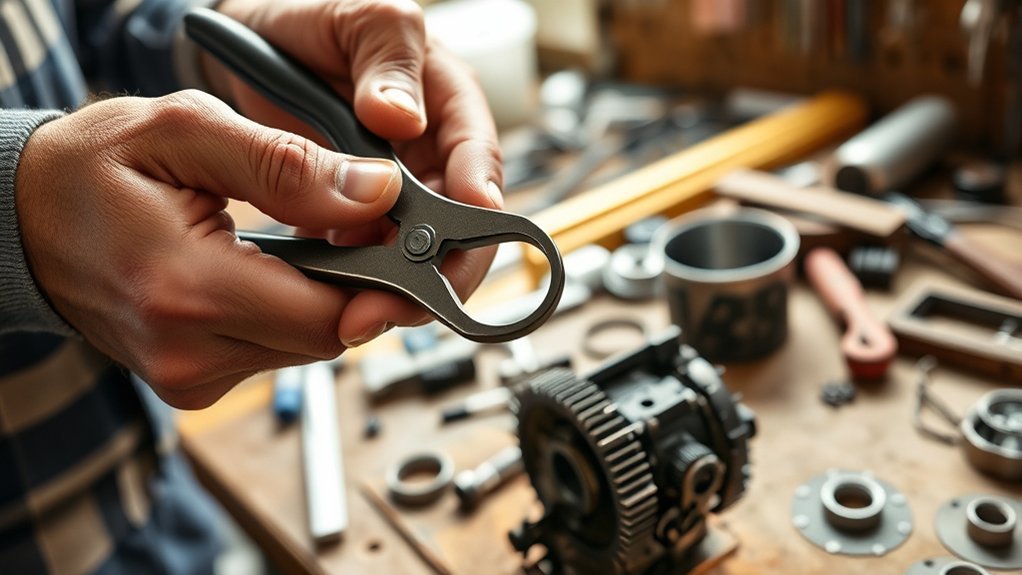
Snap ring pliers offer significant advantages for DIY and home repair tasks by providing precise control over small retaining rings in confined spaces. Their snap ring advantages directly translate to improved DIY efficiency, enabling you to complete tasks faster and with greater accuracy. Here’s how they benefit you:
- Enhanced grip and manipulation of snap rings prevent slippage and damage.
- Compact design allows access to tight or recessed components.
- Reduced risk of injury compared to makeshift tools.
- Increased tool versatility, handling both internal and external snap rings.
Choosing the Right Snap Ring Pliers for Your Needs
Selecting the right pair of snap ring pliers hinges on understanding the specific requirements of your project, including the size, type, and orientation of the snap rings you’ll be working with. You need to analyze pliers features such as tip design, internal or external, to match ring placement.
Consider whether interchangeable tips or angled jaws suit your workspace constraints. The pliers materials greatly affect durability and grip; high-grade steel with corrosion-resistant coatings guarantees longevity and precise control.
Additionally, ergonomic handles improve handling during repetitive tasks. Evaluating these factors systematically guarantees you select pliers tailored for efficiency and accuracy, preventing damage to components and minimizing user fatigue. By aligning pliers features and materials with your specific application, you assure ideal performance and reliability in your snap ring operations.
Maintaining and Safely Using Snap Ring Pliers
Proper maintenance and safe operation of Snap ring pliers are essential to guarantee their longevity and prevent accidents. To ascertain peak performance and safety, you should follow these steps:
- Regularly clean the pliers to remove debris and lubricate pivot points for smooth action.
- Inspect the tips for wear or damage; replace them if they no longer hold snap rings securely.
- Always wear safety goggles to protect your eyes from flying snap rings during installation or removal.
- Store the pliers in a dry, organized location to avoid corrosion and mechanical damage.
Troubleshooting Common Issues With Snap Ring Pliers
You’ll often encounter issues like jaw misalignment or handle stiffness that compromise the tool’s performance. Identifying these problems early lets you apply targeted fixes, such as adjusting the jaws or lubricating pivot points.
Addressing these common faults guarantees your snap ring pliers operate smoothly and maintain precision.
Identifying Common Pliers Problems
Although snap ring pliers are designed for efficiency, they can encounter issues affecting performance and safety. Identifying pliers problems early is essential to maintain tool reliability. Common pliers issues include:
- Jaw slippage causes ineffective grip on snap rings.
- Handle stiffness reduces maneuverability and user control.
- Worn or damaged tips hinder secure engagement with rings.
- Loose pivot joints lead to imprecise jaw movement.
Fixing Jaw Alignment Issues
When jaw alignment issues arise, they compromise the pliers’ ability to grip snap rings securely, leading to operational inefficiency and potential safety hazards. To fix this, first inspect the jaws for uneven wear or damage.
Misaligned jaws often result from prolonged use or manufacturing defects. Use precise plier adjustments by gently bending the jaws back into their correct position with calibrated tools or by tightening any loose pivot screws.
Confirm the jaws close flush without gaps, verifying alignment under magnification if necessary. Test the grip on a sample snap ring to confirm proper engagement.
Regular maintenance, including lubrication and calibration, prevents recurring jaw alignment problems, guaranteeing peak performance and safety during snap ring installation or removal.
Resolving Handle Stiffness
If your snap ring pliers’ handles feel stiff, it often indicates underlying mechanical issues that hinder smooth operation. You can address this stiffness by following a systematic handle adjustment and stiffness resolution process:
- Inspect the pivot joint for debris or corrosion that may restrict movement.
- Apply a suitable lubricant to the pivot and wipe off excess to guarantee smooth rotation.
- Check the tension spring (if present) for damage or misalignment and replace if necessary.
- Adjust the handle tension screw, if available, to optimize resistance without compromising control.
Conclusion
Think of snap ring pliers as the keys that release and secure the hidden gears of your mechanical world. With precise control, they let you manipulate critical fasteners that hold assemblies together. Whether you’re working on a car, machine, or home project, mastering these tools guarantees your repairs are both efficient and reliable.
By choosing and using snap ring pliers correctly, you maintain the integrity of your work—keeping every component locked in perfect harmony. Ultimately, Snap ring pliers are essential for any task that involves installing or removing snap rings, ensuring your assemblies stay secure and functional.