Finding a drill bit that is closest to 15/64 inch can be tricky since it’s not a common standard size.
You might think the closest match is obvious, but subtle differences in diameter can impact your project’s precision.
Choosing the right substitute involves understanding fractional and decimal measurements. This knowledge can save you from costly errors.
Let’s explore which drill bit sizes come nearest to 15/64 and how to decide the best option for your needs.
What’s a 15/64-Inch Drill Bit and When Should You Use It?
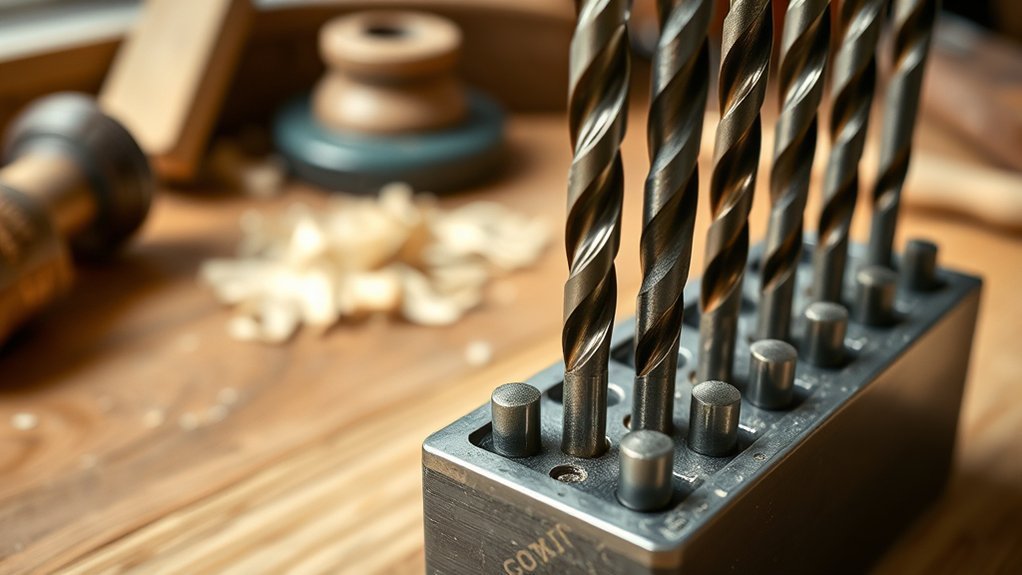
A 15/64-inch drill bit measures approximately 0.234 inches in diameter, making it suitable for drilling medium-sized holes in wood, metal, and plastic. Among drill bit types, it often comes as a twist bit, which efficiently cuts through various materials.
You’ll find this size useful when creating pilot holes for screws or bolts that require a precise fit, ensuring structural integrity. In usage scenarios involving cabinetry, metal framing, or plastic casing, the 15/64-inch bit balances hole size and material strength without over-enlarging the opening.
It’s not as common as standard fractional sizes but fills the gap between 3/16-inch and 7/32-inch bits. By selecting this size, you optimize hole accuracy for intermediate fasteners and components across multiple materials.
Which Drill Bit Sizes Are the Best Alternatives to 15/64 Inch?
When you need a drill bit size close to 15/64 inch but don’t have one on hand, selecting the right alternative depends on your project’s tolerance for fit and finish. The closest fractional alternative sizes are 7/32 inch (0.21875 inch) and 1/4 inch (0.25 inch). These provide slightly smaller or larger hole diameters, affecting clearance and tightness.
If precision is critical, consider decimal drill bit types, such as a 0.234 inch bit, which approximates 15/64 inch (0.234375 inch) closely. High-speed steel (HSS) or cobalt drill bit types are suitable for metals, while brad-point or twist bits work well for wood or plastics.
Choosing the correct alternative size and drill bit type guarantees peak performance and integrity in your drilling tasks.
Understanding Fractional vs. Decimal Drill Bit Sizes for 15/64 Inch
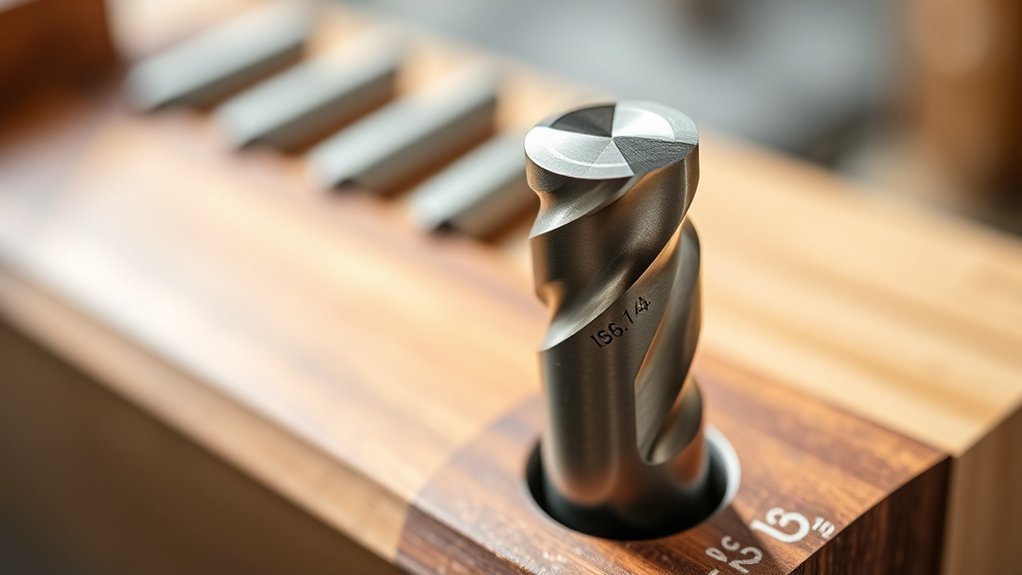
You need to understand how 15/64 inch translates between fractional and decimal drill bit sizes to choose the closest standard option.
Converting 15/64 inch to a decimal gives you approximately 0.2344 inches. From there, you can identify the nearest available drill bits in both fractional and decimal sizing systems.
Fractional And Decimal Conversion
Understanding the difference between fractional and decimal drill bit sizes helps you select the most accurate bit for a 15/64 inch measurement. Fractional conversions translate fractions like 15/64 into decimal equivalents, facilitating precise tool selection.
For 15/64, the decimal equivalent is approximately 0.234375 inches. Knowing this allows you to compare fractional sizes directly with decimal-based drill bit sizes.
| Fractional Size | Decimal Equivalent | Rounded Decimal |
|---|---|---|
| 15/64 | 0.234375 | 0.234 |
| 3/16 | 0.1875 | 0.188 |
| 1/4 | 0.25 | 0.25 |
This table highlights how fractional sizes convert to decimals, ensuring you pick the drill bit closest to the exact 15/64 inch measurement.
Closest Standard Drill Sizes
Selecting the closest standard drill size to 15/64 inches requires comparing both fractional and decimal measurements. The 15/64 inch fraction equals approximately 0.2344 inches in decimal.
Standard drill bit sizes near this value include 15/64 itself and the decimal size 3.75 mm (0.1476 inches), but 3.75 mm is considerably smaller. The closest common fractional size is 15/64, while the nearest decimal drill bit sizes fall outside typical fractional increments.
When choosing drill bits, consider drill bit types like twist, spade, or brad point, as well as drill bit materials such as high-speed steel or cobalt, which affect performance and durability. Matching the precise size with the appropriate bit type and material guarantees ideal drilling accuracy and tool longevity.
How to Choose the Right Substitute for a 15/64 Drill Bit
When working without a 15/64 drill bit, finding the closest substitute requires careful measurement and consideration of your project’s tolerance levels. Start by comparing available drill bit sizes, selecting one with a diameter nearest to 0.2344 inches.
Pay close attention to drill bit materials. High-speed steel or cobalt bits offer durability and precision, especially when drilling hard materials. Also, consider your drilling techniques; slower speeds and steady pressure reduce bit wandering and maintain hole accuracy with a slightly different size.
Verify the substitute bit’s compatibility with your material to avoid damage or imprecise holes. By balancing size proximity, bit material, and technique, you guarantee your substitute drill bit performs effectively without compromising the integrity of your project.
How to Adjust Your Project When You Don’t Have a 15/64 Drill Bit
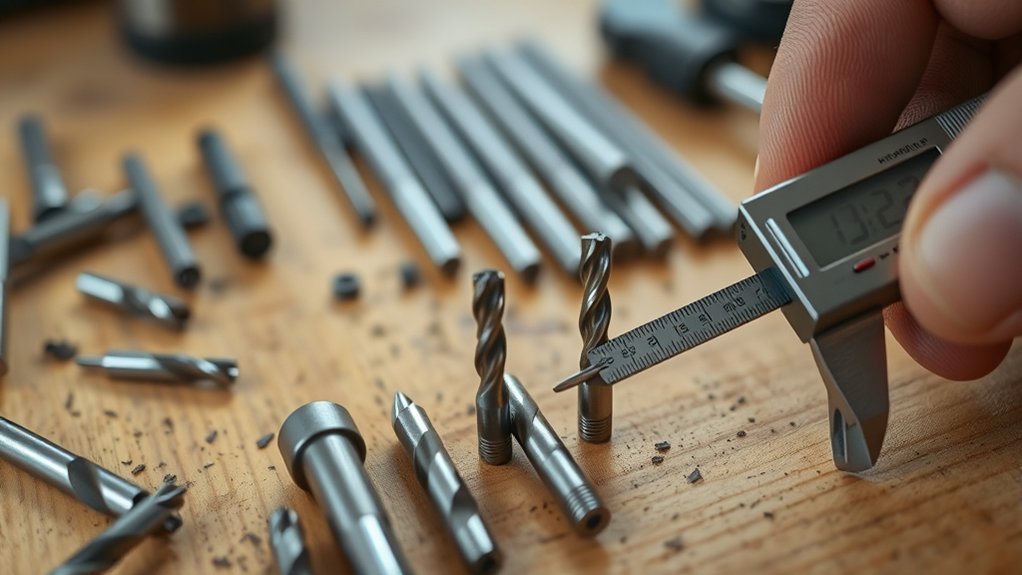
If you don’t have a 15/64 drill bit, start by identifying the nearest available sizes and determine how slight changes in hole diameter affect your project.
You can adjust your design tolerances to accommodate these differences or use combinations of smaller bits to reach the desired size.
Careful measurement and testing guarantee your modifications maintain structural integrity and fit.
Nearest Drill Bit Sizes
Two drill bit sizes sit closest to 15/64 inches: 7/32 and 1/4 inch. When you lack a 15/64 bit, choosing between these depends on your tolerance for deviation. The 7/32 inch bit measures approximately 0.21875 inches, slightly smaller than 15/64 (0.234375 inches), while the 1/4 inch bit is larger at 0.25 inches.
Selecting the right bit also involves considering drill bit materials. High-speed steel (HSS) offers durability, while cobalt or carbide bits excel in harder materials. Proper drill bit maintenance, such as regular sharpening and cleaning, guarantees consistent hole size and prolongs tool life.
Adjusting Hole Diameter
Choosing a drill bit size close to 15/64, like 7/32 or 1/4 inch, affects your hole diameter and project fit. When you don’t have a 15/64 bit, consider hole resizing techniques to achieve the desired tolerance.
For smaller holes, start with a 7/32 bit and carefully ream or sand the hole to slightly enlarge it, guaranteeing precise fit. For larger bits like 1/4 inch, you may need to fill and redrill or use inserts to reduce the hole size.
These drill bit adaptations require measuring tools such as calipers to maintain accuracy. Always test on scrap material to confirm fit and function. Proper hole resizing guarantees your project maintains structural integrity without compromising design specifications.
Using Drill Bit Combinations
When you don’t have a 15/64 drill bit on hand, combining different drill bits can help you approximate the exact hole size needed. You can use drill bit combinations by first drilling a pilot hole with a smaller bit, then gradually enlarging it with one or two alternative sizes close to 15/64.
For example, start with a 7/32-inch bit (0.21875 inches), then finish with a 1/4-inch bit (0.25 inches) to reach a size near 0.234 inches. This staged approach reduces material stress and enhances precision compared to forcing a single oversized drill bit.
When selecting alternative sizes, measure carefully and verify the combined drilled diameter matches your project’s specifications. Using drill bit combinations provides a practical solution when the exact 15/64 bit isn’t available.
Where to Find Specialty Drill Bits Close to 15/64 Inch
Finding specialty drill bits close to 15/64 inch requires knowing where to look beyond standard hardware stores. To locate precise sizes, focus on specialty suppliers and online retailers that stock uncommon drill bits.
Here’s where you should check:
- Specialty suppliers specializing in industrial or machining tools often carry fractional and metric sizes unavailable elsewhere.
- Online retailers like McMaster-Carr and Grainger provide extensive drill bit selections with detailed specs.
- Manufacturer websites sometimes offer direct purchasing options for niche sizes and custom bits.
- Auction or surplus tool stores may have rare drill bits at competitive prices.
How to Safely Enlarge or Reduce a Hole Without the Exact Drill Bit
If you can’t locate a drill bit exactly sized at 15/64 inch, you can still adjust holes safely using alternative methods. Employ hole enlargement techniques like reaming or step drilling, and for reducing holes, use inserts or epoxy fillers.
Always follow safe drilling practices: secure the workpiece, wear protective gear, and drill at appropriate speeds.
| Method | Application | Notes |
|---|---|---|
| Step Drilling | Gradually enlarge holes | Use incrementally larger bits |
| Reaming | Precise hole sizing | Smooth finish, minimal wobble |
| Inserts | Reduce hole diameter | Use metal/plastic inserts |
| Epoxy Fillers | Small size adjustment | Quick, non-metallic fix |
| Sanding/Grinding | Minor enlargements | Use carefully to avoid damage |
Using these techniques guarantees accurate hole sizing without the exact drill bit.
Conclusion
When you don’t have a 15/64-inch drill bit, choosing the closest size—like 7/32 inch (0.21875 inches) or 1/4 inch (0.25 inches)—is essential for precision. Did you know that even a 0.01-inch difference can impact your hole’s fit and strength? By understanding these small variations, you can maintain structural integrity and avoid costly mistakes.
Always measure carefully and adjust your technique when substituting drill bits to guarantee your project’s success. Knowing what drill bit is closest to 15/64 helps you make the best choice and achieve accurate results every time.