When you’re installing a hinge on a cabinet door, using a self centering drill bit is crucial. This tool ensures the pilot hole is perfectly centered, which prevents misalignment and guarantees a precise fit.
A self centering drill bit automatically positions itself at the exact center of the screw hole. Its design helps reduce errors and makes your workflow more efficient.
However, it’s important to understand how this drill bit functions and when to use it before relying on it for your projects.
This knowledge will help you get the best results every time.
What Is a Self Centering Drill Bit?
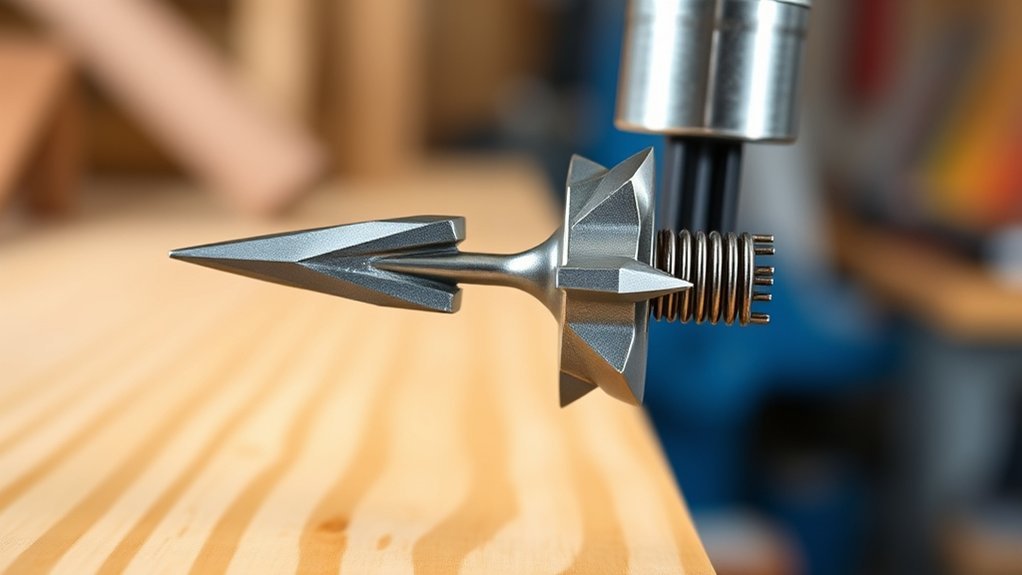
A self centering drill bit is a specialized tool designed to align itself precisely at the center of a pre-existing hole or surface, ensuring accurate drilling without the need for manual adjustment. You’ll appreciate how the self centering benefits improve precision, reduce errors, and save time during repetitive drilling tasks.
This drill bit typically features guide wings or a centering tip that stabilizes the bit, preventing lateral movement. With regard to drill bit applications, you’ll find it indispensable when installing hardware requiring exact hole placement, such as hinges or locks, and in metalworking or plastic fabrication where hole alignment is critical.
Why Use a Self Centering Drill Bit for Woodworking?
When working with wood, maintaining exact hole alignment can greatly impact the quality and functionality of your project. Using a self centering drill bit enhances woodworking accuracy by ensuring holes are precisely positioned without manual adjustments.
This precision reduces errors, preventing misaligned joints that compromise structural integrity. Additionally, the design streamlines drilling efficiency by centering itself automatically, allowing you to complete tasks faster and with consistent results. You’ll spend less time realigning or correcting mistakes, which optimizes workflow and material usage.
Employing this tool minimizes reliance on external guides or clamps, simplifying setup and reducing potential for human error. Ultimately, a self centering drill bit is essential for achieving high-quality, repeatable outcomes in woodworking projects that demand exact hole placement.
How Does a Self Centering Drill Bit Work?
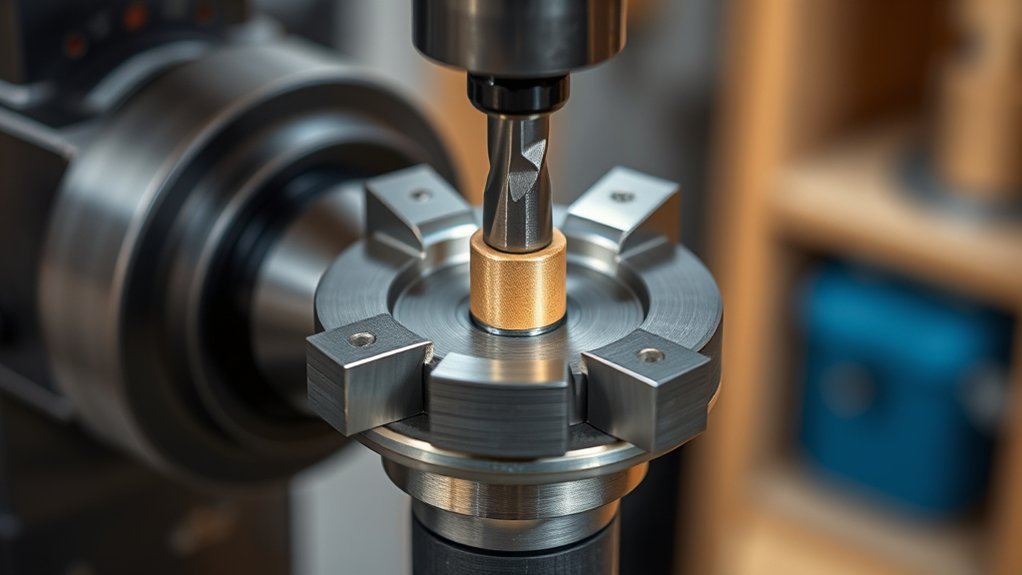
You’ll find that a self centering drill bit uses a specialized centering mechanism to align itself precisely with the hole location. Its design features, including pivoting arms and sharp cutting edges, work together to stabilize and guide the bit during drilling.
As you engage the material, these components maintain consistent contact, ensuring accurate and clean hole creation.
Centering Mechanism Explained
Although drilling accurate holes can be challenging, a self-centering drill bit simplifies this by automatically aligning itself with the center of screws, dowels, or hinges. The centering mechanism relies on a spring-loaded pilot tip that adjusts dynamically when pressed against the workpiece.
This pilot tip guarantees centering accuracy by finding and maintaining the exact midpoint, preventing lateral slippage during drilling. By stabilizing the drill bit’s position, it enhances drilling precision, reducing the risk of misaligned holes that compromise assembly integrity.
The mechanism’s responsiveness to pressure variations allows it to adapt to different surface contours and materials, maintaining consistent alignment. Understanding this centering mechanism helps you appreciate how self-centering bits deliver repeatable, precise results with minimal setup or repositioning.
Drill Bit Design Features
A self-centering drill bit integrates several key design features that work together to assure precise hole placement. Central to its function is the pivoting pilot tip, which aligns the bit before the main cutting edge engages the material. This pilot tip guarantees stability and prevents wandering, critical for accuracy.
The drill bit materials are typically high-speed steel or carbide, chosen for durability and heat resistance, allowing sharp cutting edges to maintain their form under stress. The cutting edge itself is engineered for efficient chip removal and smooth penetration.
Additionally, the bit’s geometry balances feed rate with torque, optimizing performance without sacrificing control. Together, these design elements enable you to drill centered holes consistently, even on challenging surfaces where standard bits might slip or misalign.
Material Engagement Process
The pivoting pilot tip you read about in the design features plays a central role in how the self-centering drill bit engages with the material. When you initiate drilling, this tip adapts dynamically to the material properties, such as hardness and grain structure, ensuring precise alignment.
The engagement mechanics rely on the pilot tip’s ability to pivot and self-center, reducing lateral force and minimizing wandering on uneven or hard surfaces. As you apply pressure, the surrounding cutting edges follow the pilot tip, maintaining concentricity and consistent hole placement.
This process optimizes cutting efficiency while preserving the integrity of the workpiece. Understanding these engagement mechanics helps you appreciate how the bit’s design accommodates varying material properties to deliver accurate and stable drilling performance every time.
How to Choose the Right Self Centering Drill Bit
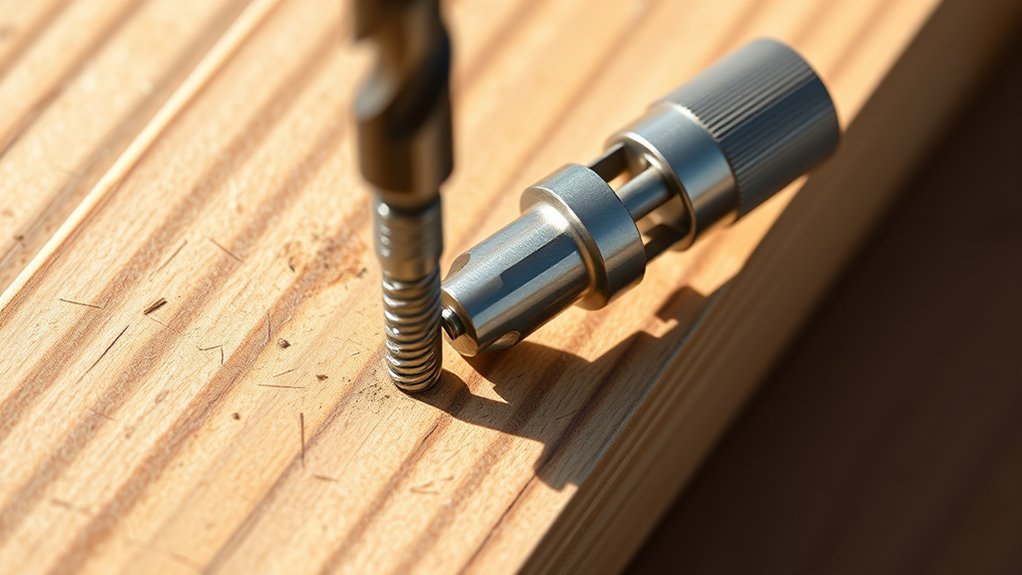
When selecting a self centering drill bit, you need to take into account the material compatibility to guarantee peak performance and durability. Choosing the correct bit size is essential for precise alignment and secure fastening.
Additionally, matching the bit to your drill type will maximize efficiency and reduce wear.
Material Compatibility
Numerous factors influence how effectively a self centering drill bit performs, with material compatibility being paramount. You must evaluate the bit’s construction and tip design to match the substrate.
For metal compatibility, choose bits made from high-speed steel (HSS) or cobalt alloys, as they withstand heat and resist wear when drilling steel or aluminum. Conversely, plastic compatibility demands bits with sharper cutting edges and reduced torque to prevent melting or cracking.
Polymer-specific bits often feature a polished finish to minimize friction. Using a bit incompatible with your material can cause poor centering, excessive wear, or damage.
As a result, always verify the bit’s specifications against your project’s material to guarantee precise, clean holes and prolong tool life, enhancing overall drilling efficiency.
Bit Size Selection
Selecting the correct bit size plays a critical role in achieving accurate and clean holes with a self centering drill bit. When deciding on bit size, you must consider the diameter of the hole required and the thickness of the material.
The size selection directly impacts the bit’s ability to center itself and maintain stability during drilling. Using a bit size that is too large can cause misalignment, while a bit too small may result in an insufficient hole or damage to the workpiece.
Precision in measuring the target hole diameter guarantees ideal engagement of the self centering mechanism. Always verify the bit size against your project specifications to ensure consistent, precise results and avoid compromising the integrity of the drilled hole.
Drill Type Matching
Although self centering drill bits are designed to improve accuracy, choosing the right drill type for your specific application is essential to optimize performance and avoid damage. You need to evaluate the material you’re working with, as different drill types, such as high-speed steel, cobalt, or carbide, offer varying durability and cutting efficiency.
Bit compatibility with your drill’s chuck size and torque capacity is equally important; mismatched bits can lead to reduced precision or tool failure. Assess whether your project demands a standard twist drill, brad point, or specialized bit to guarantee the self centering feature functions effectively.
How to Use a Self Centering Drill Bit Accurately
When you need to guarantee perfect alignment, using a self centering drill bit correctly is essential. This tool’s self centering benefits maximize drill bit accuracy, reducing errors on hinges or hardware installation.
To use it accurately, follow these steps:
Secure the workpiece firmly to prevent movement during drilling.
Position the self centering bit so the guide wings align with the screw hole.
Apply consistent, moderate pressure; avoid forcing the bit to maintain center alignment.
Start drilling at a low speed to confirm the bit self-centers before increasing speed.
Mistakes to Avoid When Using Self Centering Drill Bits
Even with proper technique, certain mistakes can undermine the accuracy and efficiency of self centering drill bits. One of the most common errors is applying excessive pressure, which can cause the bit to bind or wander, negating its self-centering advantage.
Another frequent issue is using dull or damaged bits; this reduces precision and increases the risk of material damage. Failing to secure the workpiece firmly leads to misalignment, so always clamp it tightly.
Additionally, neglecting to select the appropriate bit size for the pilot hole compromises centering accuracy. To avoid these pitfalls, follow usage tips such as maintaining steady, moderate feed rates, inspecting bits before use, and ensuring proper setup.
Avoiding these errors will enhance both the performance and lifespan of your self centering drill bits.
How to Maintain Your Self Centering Drill Bits
Proper maintenance is essential to preserve the accuracy and durability of your self centering drill bits. Neglecting drill care can cause misalignment and reduce the bit’s lifespan. Follow these maintenance tips to guarantee peak performance:
Clean the bit thoroughly after each use to remove debris and resin buildup. Inspect the centering tips regularly for wear or damage and replace if necessary.
Lubricate moving parts sparingly with appropriate oil to prevent corrosion and guarantee smooth operation. Store bits in a dry, organized case to avoid physical damage and rust formation.
Conclusion
Now that you know how a self centering drill bit delivers decisive, dependable drilling, don’t dismiss its detailed design. By choosing carefully and using it correctly, you’ll conquer common complications and create consistently clean, centered cuts.
Maintain your bit meticulously to maximize its mechanical mastery. Remember, precision promotes productivity—so prioritize proper practice to perfect your projects with powerful, precise performance every time you drill.
In conclusion, a self centering drill bit is essential for achieving accurate, reliable results and should be an integral part of your drilling toolkit.