You might assume a drill bit simply rotates to cut holes, but its effectiveness depends on precise design features like flute geometry and cutting edge angles.
These elements control debris removal and cutting efficiency, which vary greatly with material type and bit construction.
Understanding how these factors interact could change how you select and use drill bits for different tasks.
This knowledge ensures accuracy and durability in your work.
What Is a Drill Bit and How Does It Work?
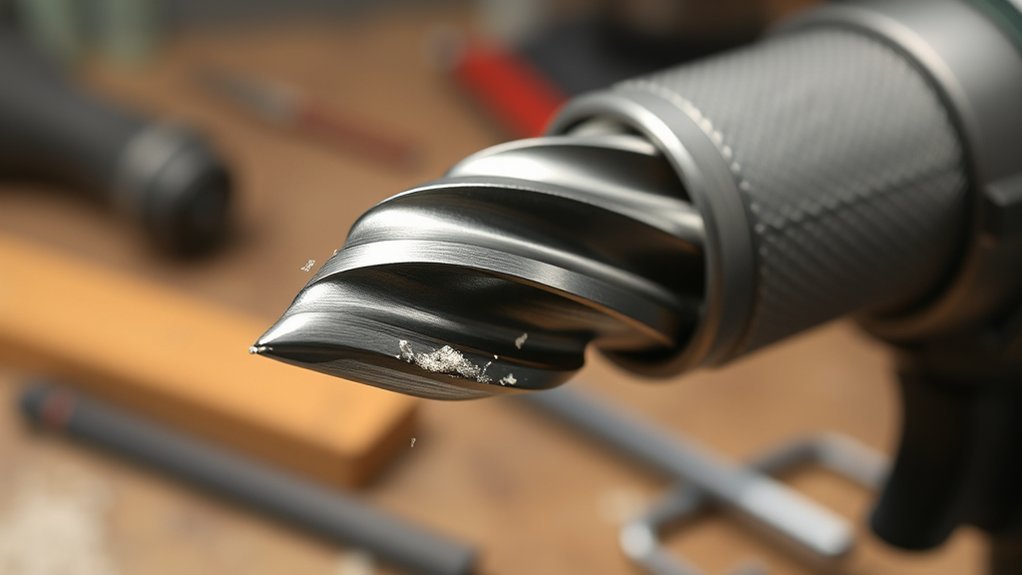
A drill bit is a cutting tool designed to create cylindrical holes by rotating rapidly against a material’s surface. Understanding drill bit anatomy helps you grasp its functionality: the shank fits into the drill, the flutes remove debris, and the cutting edges shear material efficiently.
Drill bit history reveals its evolution from simple hand tools made of bone or stone to precision-engineered steel instruments. This progression improved cutting speed and hole accuracy.
When you operate a drill bit, the rotation combined with axial force allows the cutting edges to penetrate and displace material, while the flutes evacuate chips to prevent clogging. Recognizing these components and their interaction enables you to select and use drill bits effectively for precise and efficient hole-making tasks.
Types of Drill Bits and What Materials They’re Best For
Drill bits come in various designs, each engineered to perform efficiently with specific materials and applications. When working with wood, you’ll rely on wood drill bits, such as auger bits, designed for deep, clean holes.
Different drill bits are tailored for specific materials, ensuring efficient and clean results in tasks like woodworking.
Metal drills feature harder materials and drill bit coatings like titanium to reduce heat and wear. Masonry drills incorporate carbide tips for penetrating concrete or brick.
Specialty bits, including step drills, allow you to create multiple hole sizes without changing bits, ideal for sheet metal. Drill bit sizes vary to match the hole diameter required, affecting precision and fit.
Understanding these distinctions guarantees you select bits that optimize performance, durability, and accuracy for your material, avoiding damage and inefficiency during drilling tasks.
How to Choose the Right Drill Bit for Your Project
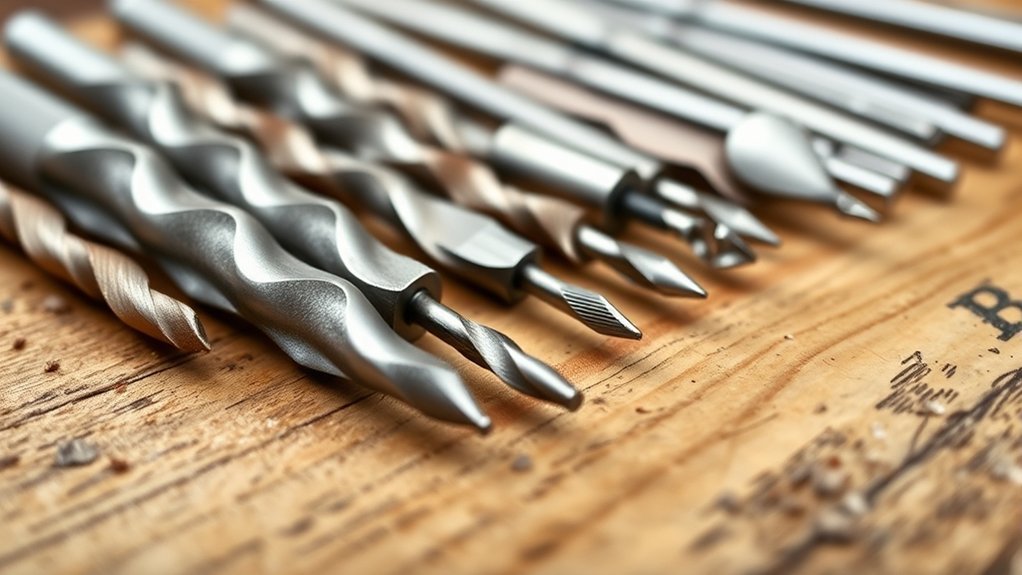
Selecting the right bit depends on understanding both the material you’re working with and the specific requirements of your project. First, assess the drill bit materials suitable for your substrate. High-speed steel excels for wood and soft metals, while carbide-tipped bits handle masonry.
Next, analyze project requirements like hole diameter, depth, and precision tolerance. For delicate tasks, choose bits with specialized coatings to reduce heat and wear. Additionally, consider the drill’s chuck size and compatibility to guarantee a secure fit.
Tips for Using and Maintaining Drill Bits
Although choosing the right bit sets the foundation, maintaining its sharpness and proper use guarantees consistent performance. Effective drill bit care involves routine cleaning, correct storage, and timely sharpening.
Applying appropriate speed and pressure prevents premature wear. Here are essential maintenance tips to maximize bit lifespan:
| Maintenance Task | Recommended Action | Frequency |
|---|---|---|
| Cleaning | Remove debris and lubricate | After each use |
| Sharpening | Use a sharpening tool | When dull |
| Storage | Store in a dry, organized case | Always |
| Usage | Apply correct speed and pressure | Every drilling job |
Implement these drill bit care practices to guarantee precision and durability in your projects.
Common Drill Bit Mistakes to Avoid
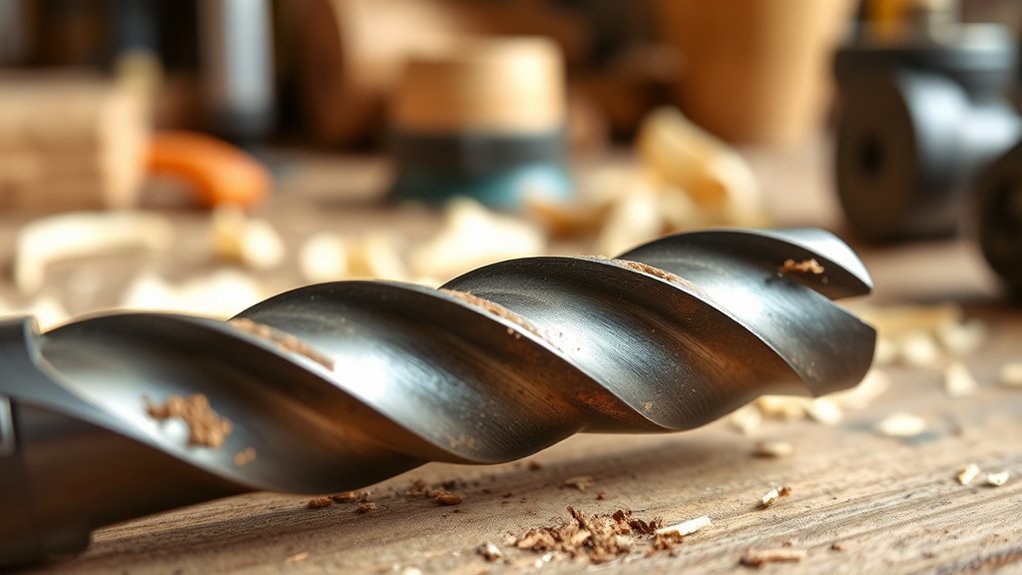
When you misuse drill bits, you risk damaging both the bit and your workpiece, reducing efficiency and increasing costs. Common drill bit errors often stem from misconceptions, such as using excessive pressure, which can cause overheating and premature dulling.
Another frequent mistake is selecting an inappropriate bit type for the material, leading to inefficient cutting and potential breakage. You should also avoid operating at incorrect speeds; too fast generates heat, while too slow may stall the drill.
Neglecting to secure the workpiece properly is another error that compromises accuracy and safety. By understanding these common misconceptions and avoiding these drill bit errors, you’ll improve tool longevity and achieve precise, clean holes without unnecessary wear or damage.
How to Drill Different Materials Safely and Effectively
You’ll need to select drill bits designed for each material’s hardness and structure to guarantee clean, efficient holes. Always wear appropriate protective gear, like safety glasses and gloves, to prevent injury from debris or bit slippage.
Adjust your drilling speed and pressure based on the material to maintain control and avoid damaging both the bit and the workpiece.
Material-Specific Drill Tips
Since different materials vary in hardness and composition, selecting the appropriate drill tip is crucial for efficient and safe drilling. Carbide tips excel in cutting through hard metals, while titanium coatings enhance durability and reduce friction. Understanding these properties helps you match drill bits to material demands precisely.
| Material | Recommended Drill Tip |
|---|---|
| Wood | High-speed steel (HSS) |
| Metal | Carbide tips with titanium coatings |
| Masonry | Carbide-tipped masonry bits |
| Plastic | Brad-point bits |
Using carbide tips on metals prevents wear, while titanium coatings prolong bit life and maintain sharpness. For masonry, robust carbide tips resist chipping. In plastics and wood, specialized bits reduce splintering and guarantee clean cuts.
Select your drill tip based on these criteria to optimize performance and tool longevity.
Safety Precautions and Gear
Although drilling different materials demands specific techniques, prioritizing safety precautions and using appropriate gear remains essential to prevent accidents and guarantee effective operation. Before you start, equip yourself with essential safety gear: safety goggles to protect eyes from debris, gloves for hand protection, and ear protection against noise.
Make certain your workspace is well-lit and free of obstructions. Use clamps to secure the material firmly, minimizing movement that could cause slippage. Select the correct drill bit and speed for the material to reduce wear and risk.
Implement preventive measures like checking the drill for damage and maintaining a steady, controlled pressure during drilling. Following these protocols, you’ll enhance both your safety and the precision of your work when tackling various materials.
Conclusion
You might think choosing the right drill bit is confusing, but once you understand the types and materials, it’s straightforward. Imagine effortlessly drilling through hardwood or metal without struggling or damaging your tools—that’s the precision the right bit provides.
By selecting and maintaining your drill bits carefully, you guarantee clean, accurate holes every time. With proper technique and bit choice, your projects will run smoothly, saving you time and frustration.
In conclusion, knowing what is a drill bit and how to choose the right one is essential for achieving professional results in any drilling task.