Imagine the clean, sharp edge of a well-maintained drill bit slicing through material with ease, saving you time and frustration. The best drill bit sharpener can make all the difference in achieving this precision.
Choosing the right sharpener ensures your tools stay effective and durable.
Whether you prefer electric speed or manual control, understanding the key features and options available will help you maintain your tools effectively.
Let’s explore what factors define the best sharpener for your specific needs.
Why Sharpening Your Drill Bits Makes a Big Difference
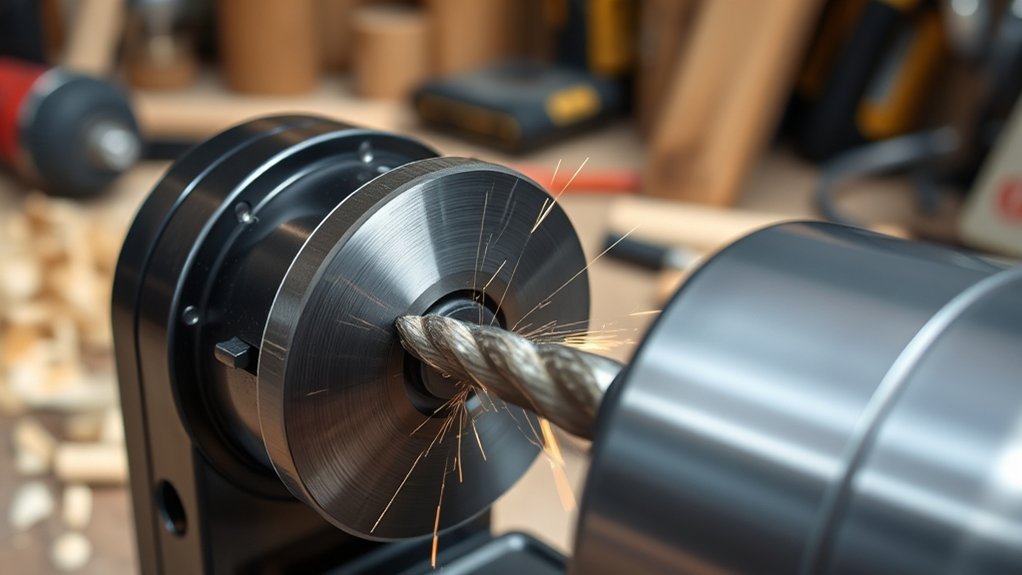
Sharpening your drill bits greatly improves their cutting efficiency and accuracy. You’ll notice the importance of maintaining a sharp edge when you consider how dull bits increase friction, generate heat, and reduce overall performance.
Regular sharpening restores the bit’s original geometry, which directly enhances drilling speed and precision. The benefits extend beyond just cleaner holes; sharp bits reduce wear on your drill motor by requiring less force, improving both efficiency and lifespan.
When you sharpen your drill bits, you also minimize the risk of material damage or bit breakage, which can be costly. Prioritizing this maintenance step guarantees consistent, high-quality results and optimizes your tool’s performance, making every drilling task smoother and more effective.
Key Features to Choose the Right Drill Bit Sharpener
Maintaining sharp drill bits is only part of the equation; selecting the right sharpener guarantees you achieve consistent, accurate results. When choosing between electric sharpeners and manual sharpeners, consider precision and ease of use.
Electric sharpeners offer automated angle control and uniform grinding, ideal for frequent use and varied bit sizes. Manual sharpeners demand more skill but provide greater control for customizing the cutting edge.
Evaluate the compatibility with different drill bit types and sizes, ensuring the sharpener can handle your specific tools. Durability of abrasive materials and adjustability of sharpening angles are critical features.
Finally, assess the sharpener’s stability during operation to prevent uneven edges. Prioritizing these technical aspects will help you select a sharpener that maintains peak bit performance efficiently.
Top Drill Bit Sharpeners: Types and Price Comparison
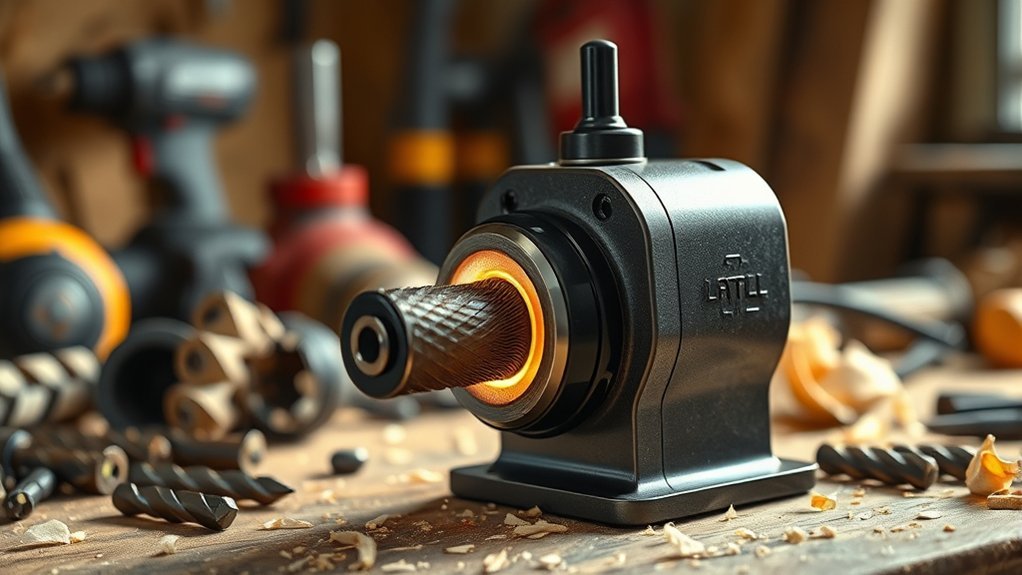
You’ll find drill bit sharpeners come in various types, including manual, electric, and bench-mounted models, each suited for different needs. Prices range from budget-friendly options under $30 to advanced sharpeners exceeding $200, reflecting their features and precision.
Understanding how features align with cost helps you select the sharpener that offers the best value for your specific projects.
Popular Sharpener Types
Although drill bit sharpeners come in various designs, understanding their types and price ranges helps you choose the right tool for your needs. Manual sharpeners require you to physically grind the bit against an abrasive surface, offering precision and control but demanding more time and skill. They’re ideal if you work occasionally or want a budget-friendly option.
Electric sharpeners automate the process, using motor-driven grinding wheels to quickly restore sharpness with consistent angles. These are perfect for frequent use, providing efficiency and uniform results.
When selecting between manual and electric sharpeners, consider your workload, accuracy requirements, and maintenance preferences. Each type supports specific drill bit sizes and materials, so verify compatibility to maximize sharpening effectiveness and prolong tool life.
Price Range Overview
When comparing drill bit sharpeners, understanding their price ranges helps you balance cost with features and performance. Entry-level sharpeners typically start around $30 to $60, catering to casual users with basic sharpening needs.
Mid-range models, priced between $80 and $150, offer enhanced precision and durability, suitable for frequent use. High-end sharpeners can exceed $200, delivering professional-grade results with advanced adjustment options.
Budget considerations are essential; you don’t want to overspend if your use is occasional. Brand comparisons reveal that reputable manufacturers often justify higher prices through build quality and customer support.
Features Versus Cost
Since drill bit sharpeners vary widely in features and price, understanding their differences helps you make an informed choice. Conducting a thorough cost analysis combined with a feature evaluation guarantees you select a sharpener that matches your needs without overspending.
High-end models often offer automated angle adjustments and multiple grinding options, while budget options provide basic manual sharpening.
Consider these points carefully:
- Precision features improve sharpening accuracy, enhancing tool longevity.
- Automated settings save time but increase cost.
- Compact, user-friendly designs enhance convenience but may limit functionality.
How to Sharpen Your Drill Bits Step-by-Step
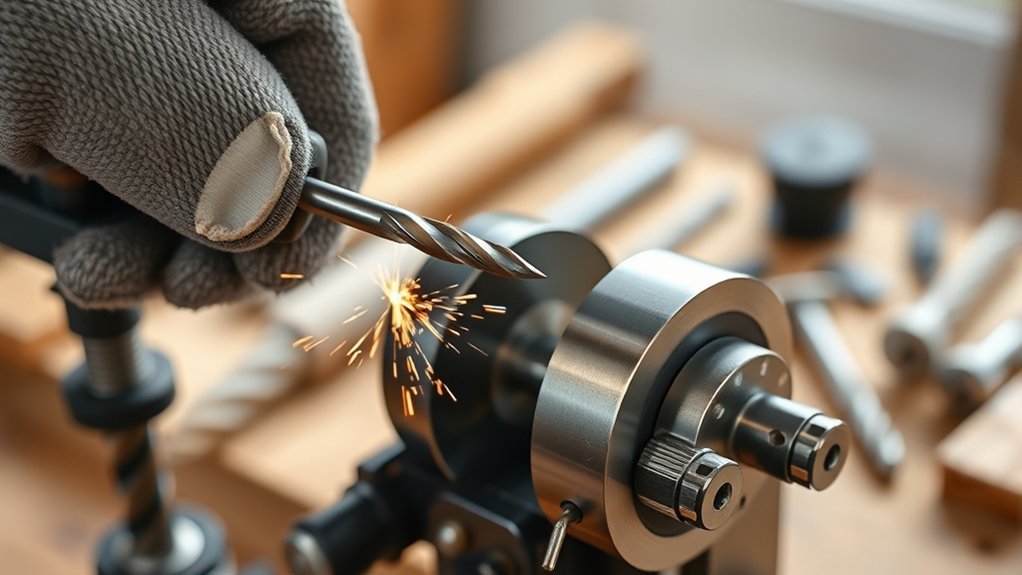
Before you start sharpening, make certain your drill bits are clean and securely clamped. Use the appropriate sharpening tool to restore the cutting edges at the correct angle.
Finally, inspect the bit’s sharpness to guarantee peak performance before use.
Preparing Drill Bits
Although sharpening drill bits requires careful attention to detail, you can achieve professional results by following a systematic approach. First, identify the drill bit types you’re working with, as each requires specific sharpening techniques.
Before sharpening, clean the bits thoroughly to remove debris and rust that might interfere with the process. Inspect the cutting edges under good lighting to spot any chips or uneven wear. Secure the bit firmly to prevent movement during sharpening.
Prepare your workspace with:
- Proper safety gear to protect your eyes and hands
- A steady, well-lit area for precision
- The right tools for the specific drill bit type
Using a Sharpening Tool
Once you’ve prepared and secured your drill bits, you can begin sharpening them using a dedicated sharpening tool. If you’re using manual sharpeners, align the bit’s cutting edge with the grinding surface, then apply consistent pressure while rotating the bit to maintain the original angle.
Manual sharpeners demand steady hands and precise control to guarantee even sharpening. For electric sharpeners, insert the bit into the guide, which automatically positions it at the correct angle. Activate the device, and the motorized grinding wheel will quickly restore the cutting edges.
Throughout, avoid overheating by intermittently dipping the bit in water to prevent metal fatigue. Whether manual or electric, maintain the original cutting angle and grind evenly on both edges for maximum performance and longevity.
Checking Bit Sharpness
How do you know when your drill bit is sharp enough to perform efficiently? Checking bit sharpness is essential to confirm your sharpening efforts restored the bit condition for peak cutting. Focus on these sharpness indicators:
Clean, crisp edges: The cutting lips should be smooth without nicks or rounded areas.
Symmetrical tip angles: Both cutting edges must align evenly, guaranteeing balanced drilling.
No excessive heat discoloration: Overheating during sharpening can weaken the bit, so avoid blue or dark spots.
Use a magnifying glass or a sharpness tester if available to inspect these details closely. Remember, a properly sharpened bit reduces effort, improves precision, and extends tool life.
How to Maintain Drill Bits After Using a Drill Bit Sharpener
After sharpening your drill bits, you’ll want to preserve their edge and functionality by following proper maintenance techniques. Effective drill bit maintenance extends tool life and guarantees peak performance. Clean bits thoroughly to remove debris, apply a light oil coating to prevent rust, and store them in a dry, organized case.
| Maintenance Step | Purpose | Recommended Frequency |
|---|---|---|
| Cleaning | Remove cutting residue | After each use |
| Lubrication | Prevent rust and corrosion | After sharpening |
| Proper Storage | Avoid damage and dulling | Always |
Adhering to these steps complements your sharpening techniques, keeping bits sharp and reliable for every drilling task.
Best Drill Bit Sharpeners for All Skills and Budgets
Maintaining your drill bits properly starts with effective sharpening, and choosing the right sharpener can greatly impact the quality and efficiency of this process. Whether you’re a beginner or a professional, selecting between manual sharpeners and electric sharpeners depends on your skill level, budget, and precision needs.
Manual sharpeners offer control and affordability, perfect for occasional use, while electric sharpeners provide speed and consistency for frequent sharpening tasks.
Consider these key points when choosing:
- Manual sharpeners deliver tactile feedback, enhancing your sharpening technique.
- Electric sharpeners save time and guarantee uniform bit angles.
- Budget-friendly options exist in both categories without sacrificing quality.
Conclusion
Choosing the best drill bit sharpener is like picking the right tool in a craftsman’s arsenal—precision and ease must align with your needs. Whether you opt for an electric model for speed or a manual one for control, maintaining sharp bits guarantees your work stays efficient and accurate.
Sharpen wisely, and your drill bits will perform like new, turning every project into a masterpiece rather than a struggle against dullness. Investing in the best drill bit sharpener ensures your tools remain in top condition, saving time and effort in the long run.