When you pick up slip joint pliers, you’re choosing a tool that adapts to different tasks by adjusting its jaw size.
Slip joint pliers are designed for versatility, making them ideal for gripping nuts, bolts, and plumbing fittings with precision. This flexibility allows you to handle a wide range of jobs efficiently.
But their uses don’t stop there—they also excel at bending wires and managing everyday repairs.
Understanding exactly how and when to use slip joint pliers can improve your work efficiency and protect your materials from damage.
Let’s explore what makes these pliers so versatile.
What Makes Slip Joint Pliers Adjustable and Useful
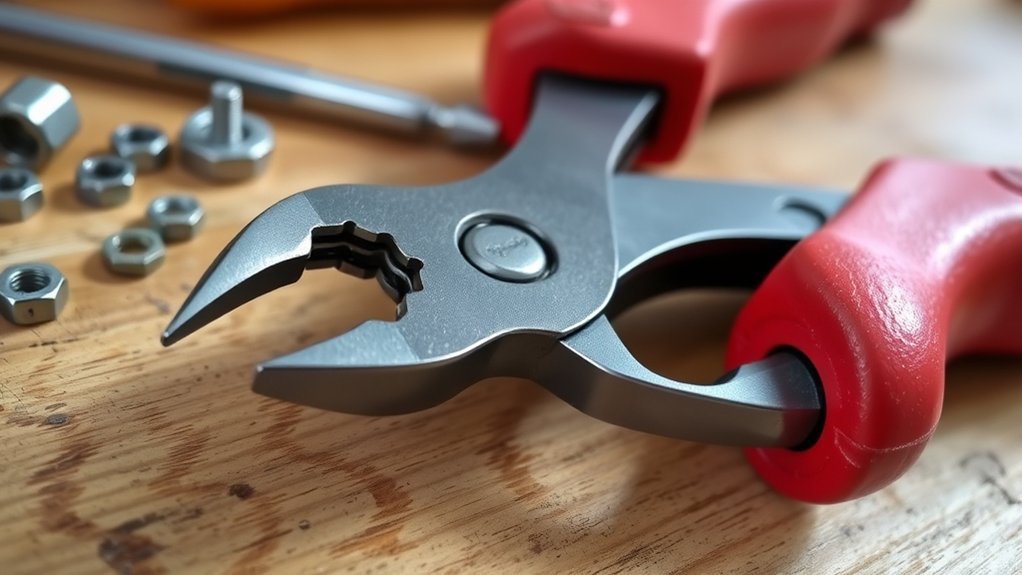
Although slip joint pliers may look simple, their adjustable pivot mechanism makes them highly versatile. You’ll notice the key design features include a pivot joint that slides between two or more positions, allowing you to expand or reduce the jaw width quickly.
This adjustability mechanics lets you handle various tasks without switching tools. The mechanism typically involves a slot or a series of notches where the pivot pin fits securely, ensuring stability during use.
Additionally, the elongated handles provide leverage, while the serrated jaws grip surfaces firmly. By understanding these design features, you can efficiently adjust the pliers to suit different object sizes with precision.
This adaptability is what sets slip joint pliers apart in general-purpose toolkits.
Gripping and Turning Nuts, Bolts, and Fasteners
You can adjust the jaw size of slip joint pliers to fit different nuts, bolts, and fasteners securely. Their versatile grip strength lets you apply the right amount of pressure without damaging the hardware. This makes them ideal for handling a variety of fasteners in tight or awkward spaces.
Adjustable Jaw Size
The adjustable jaw size of slip joint pliers lets you quickly adapt the tool to fit various nuts, bolts, and fasteners. Thanks to their adjustable features, you can modify the jaw opening by shifting the pivot point, offering precise control over the jaw mechanics. This flexibility guarantees a secure grip on different hardware sizes without switching tools.
When using slip joint pliers, consider how adjustable jaw size:
- Enables efficient handling of multiple fastener dimensions
- Reduces slippage risk by optimizing jaw fit
- Enhances tool utility in tight or awkward spaces
Understanding these adjustable features lets you leverage the pliers’ jaw mechanics effectively, improving your ability to grip and turn diverse fasteners with minimal effort and maximum control.
Versatile Grip Strength
When working with various nuts, bolts, and fasteners, slip joint pliers offer versatile grip strength that adapts to different shapes and sizes. You can apply precise grip techniques and adjust pressure application to avoid damage while maintaining control. The adjustable jaw and angled teeth guarantee a firm hold, making turning and tightening efficient.
| Grip Technique | Pressure Application |
|---|---|
| Parallel grip | Moderate, even pressure |
| Angled grip | Increased localized force |
| Pinch grip | Low pressure for delicate parts |
| Full jaw grip | Maximum strength |
| Partial jaw grip | Controlled, variable force |
Mastering these techniques lets you optimize the pliers’ grip strength, improving your ability to maneuver fasteners securely without slipping or stripping.
Handling Various Fasteners
Mastering grip techniques directly enhances your ability to handle various fasteners effectively. Slip joint pliers adapt to different fastener types, offering controlled torque and secure grip.
To optimize handling techniques, focus on these essentials:
- Adjust the jaw width to match the fastener size, ensuring a firm hold without damaging the surface.
- Position the pliers so the force aligns with the fastener’s axis to prevent slippage and rounding.
- Use the slip joint’s pivot adjustment to switch between small and large fasteners quickly, maintaining efficiency.
Holding Pipes and Fittings in Plumbing Tasks
When working with pipes and fittings, you need slip joint pliers to securely hold connections without damaging them. They let you adjust fitting sizes quickly, ensuring a tight seal during assembly or repairs.
Using them correctly helps maintain plumbing integrity and prevents leaks.
Securing Pipe Connections
Three key tasks require slip joint pliers when securing pipe connections: gripping, turning, and holding pipes or fittings firmly. During pipe installation, these pliers provide the necessary leverage and precision to tighten connections without damaging components.
Proper use helps guarantee leak prevention by securing joints effectively. When using slip joint pliers, focus on:
- Gripping pipes and fittings of varying diameters securely to prevent slippage.
- Turning nuts or threaded connectors to achieve tight seals.
- Holding components steady to allow for precise alignment before final tightening.
This versatility makes slip joint pliers indispensable in plumbing tasks, allowing you to maintain control and accuracy while minimizing the risk of leaks and loose connections. Use them to optimize your pipe installation workflow and guarantee durable, leak-free results.
Adjusting Fitting Sizes
Beyond securing pipe connections, slip joint pliers excel at adjusting fitting sizes by gripping and holding pipes and fittings firmly during plumbing tasks. Their adjustable jaws accommodate various diameters, making them ideal for manipulating adjustable fittings without damaging surfaces.
This tool versatility helps you maintain control, especially when tightening or loosening plumbing joints.
| Task | Pipe/Fitting Size | Recommended Adjustment |
|---|---|---|
| Tightening | 1/2″ to 1″ | Use mid-range jaw setting |
| Loosening | 3/4″ to 1-1/4″ | Fully open jaw for grip |
| Holding in place | 1/4″ to 3/4″ | Adjust to snug fit without slip |
| Adjusting tight seals | 1″ to 2″ | Firm grip with jaw locked |
| Working on elbows | 1/2″ to 1″ | Fine-tune with jaw increments |
You’ll find slip joint pliers indispensable for precise fitting adjustments.
Bending Wires and Electrical Uses for Slip Joint Pliers
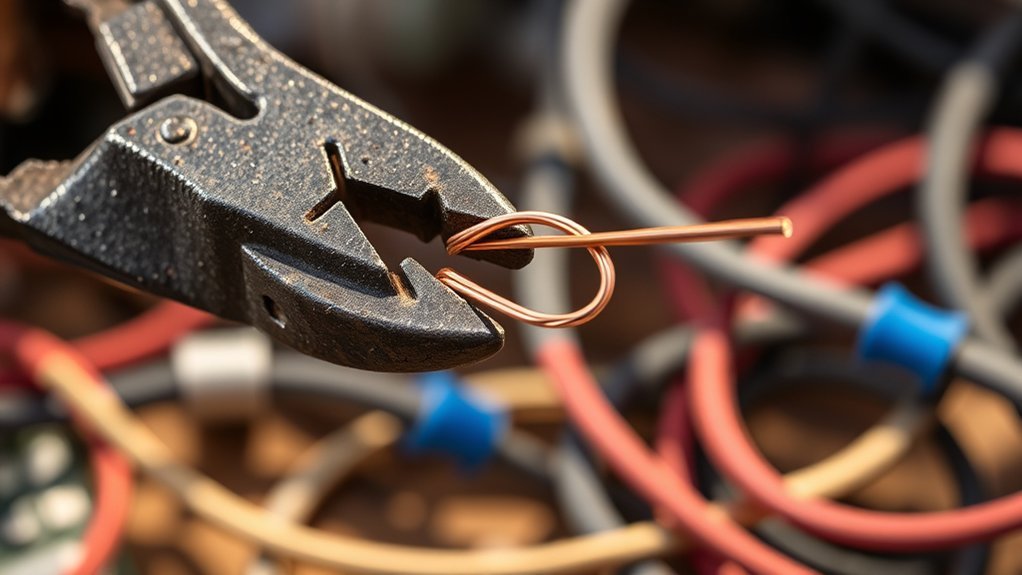
Manipulating wires requires precision and control, which slip joint pliers deliver through adjustable jaws and a secure grip. When handling wire bending tasks, these pliers enable you to shape wires accurately without damaging their integrity. For electrical connections, they provide the leverage needed to twist or hold wires firmly during installation.
Use slip joint pliers to:
- Bend wires to fit tight spaces or specific angles
- Hold wires securely while tightening or loosening connectors
- Adjust and manipulate electrical components without slipping
Their versatility makes them essential for electrical work, allowing you to maintain consistent pressure and control. By choosing slip joint pliers, you guarantee precise wire bending and secure electrical connections, improving both efficiency and safety in your projects.
How to Maintain and Safely Use Slip Joint Pliers
Although slip joint pliers are durable tools, you need to maintain them regularly to secure peak performance and safety. Start by cleaning the jaws and pivot joint after each use to remove dirt and debris. Lubricate the joint with a few drops of machine oil to guarantee smooth movement.
Check for wear or damage, especially on the gripping surfaces, and replace the pliers if they show excessive wear. When using slip joint pliers, always follow safety precautions: wear protective gloves and eye protection to prevent injuries.
Avoid applying excessive force that can damage the tool or cause slippage. Store the pliers in a dry place to prevent rust. By following these maintenance tips and safety precautions, you’ll extend the tool’s lifespan and work efficiently.
When to Choose Slip Joint Pliers Over Other Pliers
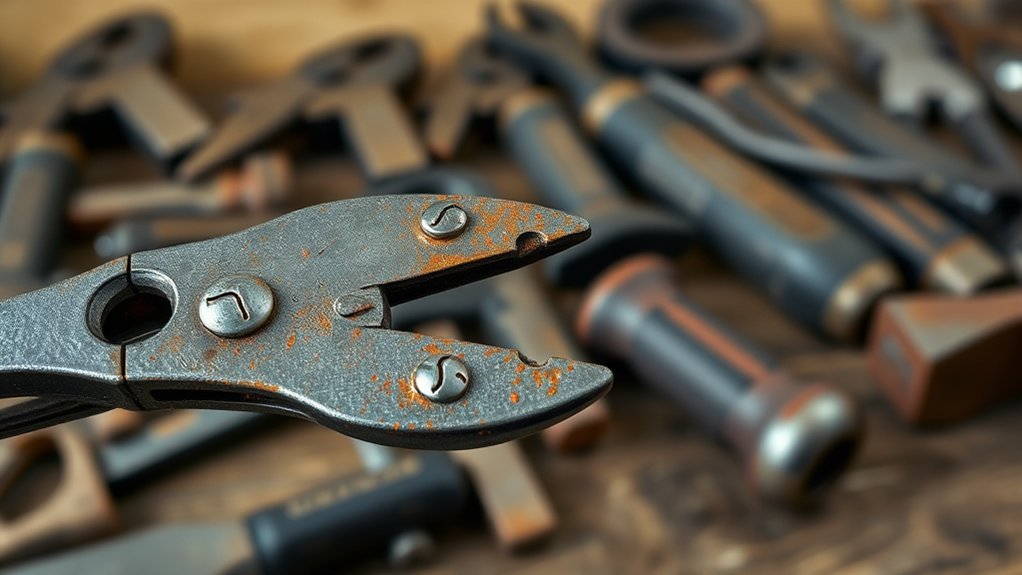
When you need a versatile tool that can adjust to different sizes quickly, slip joint pliers are often the best choice. In application scenarios requiring rapid jaw size modification without compromising grip strength, they outperform fixed-joint pliers.
Slip joint pliers excel when quick jaw adjustments and reliable grip strength are essential.
A comparison analysis reveals their practicality in:
- Handling various fasteners without switching tools.
- Adapting to irregular shapes with adjustable pivot settings.
- Providing moderate torque where locking mechanisms aren’t needed.
You should choose slip joint pliers over others when your task demands flexibility and moderate clamping force rather than high precision or extreme torque. Their dual-position pivot gives you a balance between size versatility and control, making them ideal for general-purpose gripping, twisting, or holding in both household and light industrial settings.
Everyday Projects and Repairs Perfect for Slip Joint Pliers
Slip joint pliers excel in everyday projects and repairs that require quick adjustments and reliable grip. When tackling DIY projects, you’ll find them invaluable for loosening or tightening nuts and bolts of varying sizes thanks to their adjustable pivot.
They’re perfect for gripping and bending wires, removing nails, or holding small objects firmly without slipping. In home repairs, slip joint pliers simplify plumbing tasks like tightening pipe fittings or turning valves, where access and grip vary.
Their versatility makes them a go-to tool for assembling furniture, fixing appliances, or electrical work requiring steady handling of connectors. By incorporating slip joint pliers into your toolkit, you’ll handle common repair tasks more efficiently, reducing the need for multiple specialized tools during your DIY projects and routine home repairs.
Best Practices for Using Slip Joint Pliers Effectively
To use slip joint pliers effectively, you need to adjust the pivot correctly to match the size of the object you’re working with. Proper adjustment techniques guarantee ideal leverage and prevent slippage.
Focus on these best practices for grip enhancements and efficiency:
- Select the correct jaw position by sliding the pivot to fit the object snugly.
- Apply consistent pressure, avoiding excessive force that can damage the tool or workpiece.
- Maintain clean, dry handles to improve your grip and reduce hand fatigue.
Conclusion
Now that you know how slip joint pliers adjust to handle various tasks—from gripping nuts to bending wires—you can see why they’re a staple in any toolbox.
While some think specialized tools always outperform them, slip joint pliers prove their worth through versatility and precision. By maintaining them properly and choosing them when appropriate, you’ll tackle repairs efficiently without overcomplicating the job.
Trust these pliers to deliver reliable performance every time you need a firm grip or a careful bend. Slip joint pliers are truly indispensable for a wide range of tasks, making them essential tools for both professionals and DIY enthusiasts.