Locking pliers are essential tools used for gripping objects firmly and applying consistent pressure. You might think locking pliers can fix just about anything, but their true value lies in their precise grip and consistent pressure.
When you need to hold irregular shapes firmly or apply torque without slipping, these tools become indispensable. Understanding their specific applications can transform your approach to tasks in the workshop or garage.
Let’s explore how locking pliers can enhance your efficiency and accuracy across various projects.
How Locking Pliers Work and Why They’re Handy
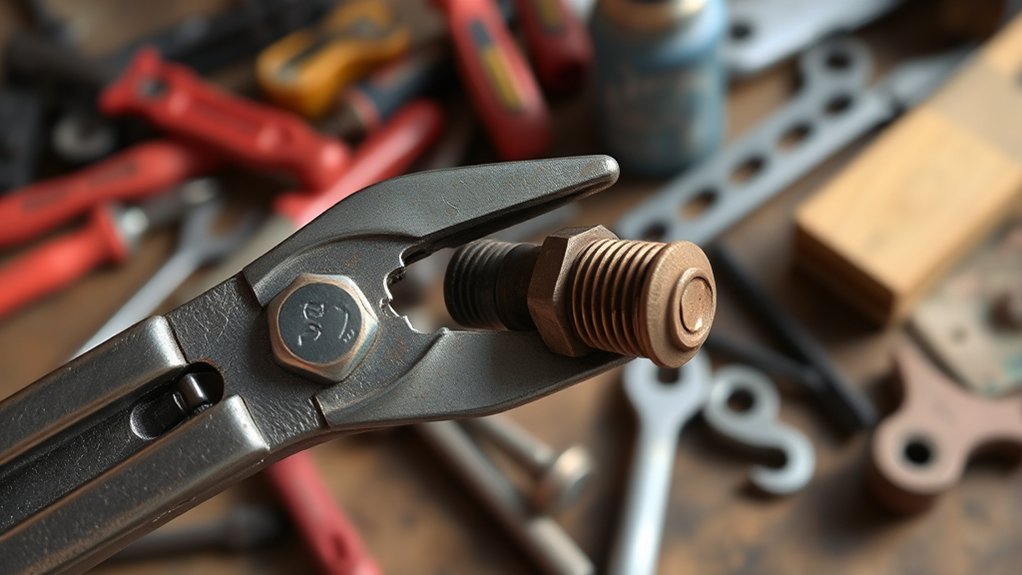
Although locking pliers resemble regular pliers, they incorporate a unique mechanism that allows you to clamp objects securely without continuous hand pressure. This mechanism utilizes a compound lever system, which multiplies your input force, enhancing mechanical advantage considerably.
When you adjust the screw at the handle’s end, you set the jaw width, which determines the grip strength once locked. The locking action relies on an over-center toggle design that maintains pressure with minimal effort, preventing slippage.
This design contrasts with standard pliers, where constant force is necessary. By maximizing mechanical advantage, locking pliers provide a stable, powerful hold on irregular or smooth surfaces, making them a valuable tool for precision tasks requiring sustained clamping force.
Common Uses for Locking Pliers at Home and Workshop
You’ll find locking pliers indispensable for at least five core tasks around the home and workshop, including gripping, clamping, twisting, and holding objects firmly in place. When tackling DIY projects, these pliers secure components tightly, allowing precise assembly without slippage. They excel in manipulating irregular shapes where standard grips fail.
Additionally, locking pliers serve as temporary clamps for gluing or welding, maintaining consistent pressure. Their strong hold aids in loosening stubborn fasteners by increasing torque. Beyond direct use, locking pliers enhance tool organization. They can temporarily hold parts or act as makeshift hooks in your workspace, optimizing accessibility.
Locking Pliers for Automotive Repairs and Maintenance
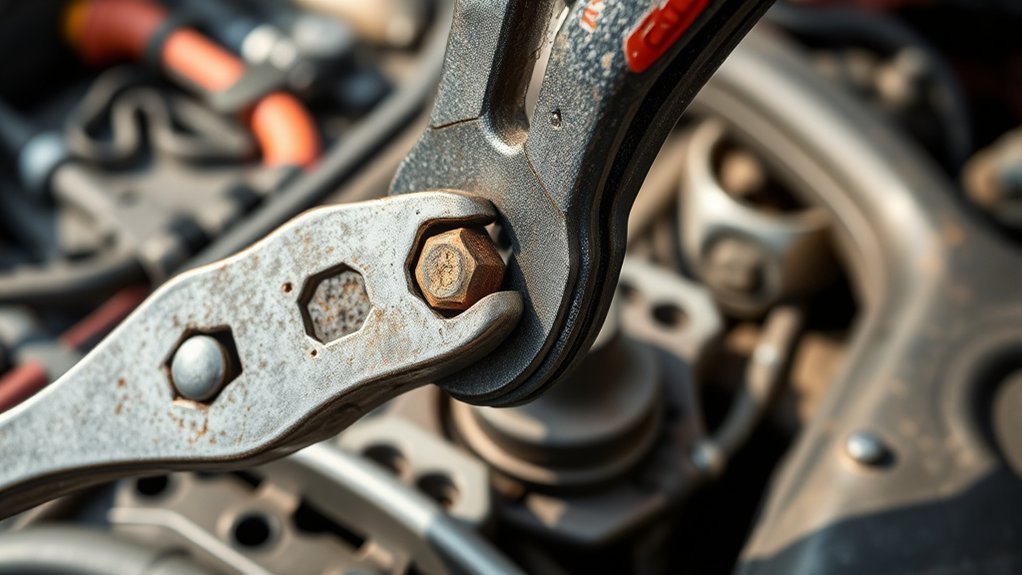
Locking pliers extend their utility beyond general gripping and clamping tasks by offering precise control in automotive repairs and maintenance. When performing brake adjustments, these pliers allow you to securely grip and manipulate components without slippage, ensuring safety-critical parts are properly aligned and tensioned.
Their locking mechanism provides consistent pressure, which is essential when adjusting brake cables or pads. Additionally, locking pliers excel in hose clamping applications; you can tightly clamp hoses to prevent fluid leaks during maintenance or replacement without damaging the hose material.
This precision reduces the risk of leaks and mechanical failure. By enabling stable, hands-free holding and controlled force application, locking pliers enhance your efficiency and accuracy in automotive tasks, making them indispensable tools for repair and maintenance operations.
Locking Pliers in Metalworking and Welding Projects
Master precise positioning and secure holding of metal pieces during welding and fabrication by employing locking pliers. These tools function as adjustable welding clamps, offering consistent clamping pressure essential for maintaining alignment throughout metal shaping processes.
Their locking mechanism prevents slippage, ensuring stability when working with varying thicknesses and complex geometries. You can rely on them to hold workpieces firmly during tack welding, minimizing distortion caused by heat.
Additionally, locking pliers facilitate hands-free operation, improving safety and efficiency on the job. Their versatility allows you to clamp irregular shapes that standard welding clamps might not accommodate effectively.
In metalworking projects, integrating locking pliers enhances control and precision, directly impacting weld quality and structural integrity. Using locking pliers strategically will optimize your workflow in metal shaping and welding tasks.
How to Choose and Care for Your Locking Pliers
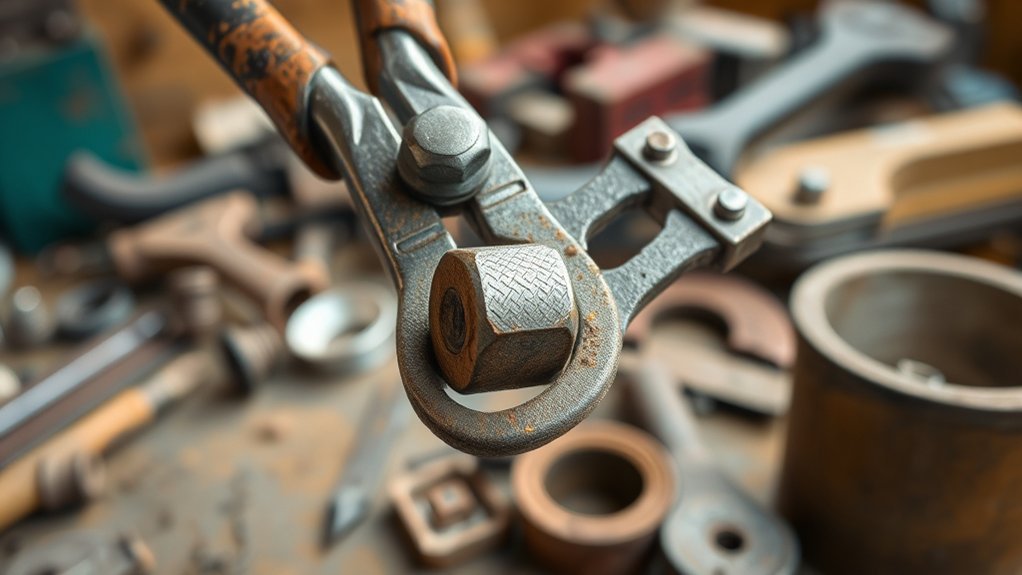
Effective use of locking pliers in metalworking hinges on selecting the right tool and maintaining it properly. When consulting a buying guide, focus on jaw design, size, and material quality to match your specific tasks.
Opt for hardened steel jaws for durability and corrosion resistance. Adjustable tension screws should offer smooth calibration for precise grip strength.
To extend tool life, follow maintenance tips: regularly clean the pliers to remove debris, apply lubricant to pivot points, and inspect for wear or damage. Proper storage in a dry environment prevents rust, while periodic tightening of screws guarantees consistent performance.
Conclusion
With locking pliers gripping like a mechanical vice from another dimension, you’ll conquer stubborn bolts, hold warped metal with unyielding precision, and clamp irregular shapes as if defying physics itself. Their unmatched locking strength transforms your hands into industrial-grade tools, making complex repairs and projects feel effortless.
Once you master choosing and maintaining them, these pliers become your indispensable mechanical ally, delivering consistent, precise force whenever you need an unbreakable grip. This is exactly what locking pliers are used for—providing a reliable, powerful hold that simplifies tough tasks and enhances your workmanship.