When you’re ready to install grommets, using the right grommet pliers can make the process efficient and precise.
You need to select the correct size for your fabric and grommet type, then prepare your material carefully to avoid damage.
Aligning the grommet components properly before applying pressure guarantees a secure fit.
However, mastering the technique requires attention to detail to prevent common errors that could compromise your work.
Let’s explore the essential steps to get it right.
How to Choose the Right Grommet Size and Material
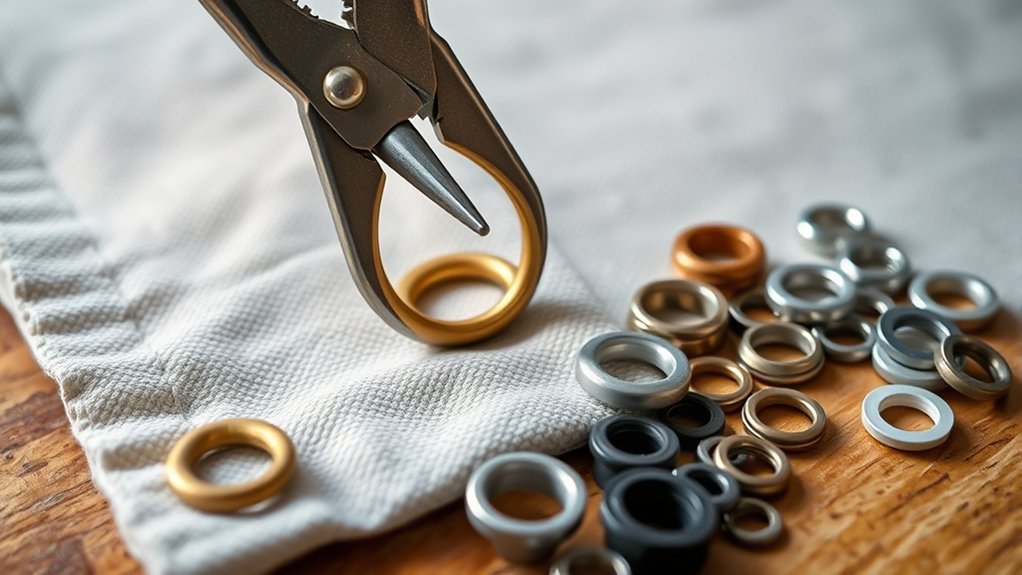
Before you start installing grommets, you need to select the correct size and material to confirm durability and proper fit. Begin by measuring the hole diameter precisely; the grommet’s inner diameter should match this measurement closely.
Consider the grommet types available: metal, plastic, or rubber. Each is suited to different applications and environments. Metal grommets offer durability for heavy-duty use, while plastic suits lighter tasks, and rubber provides flexibility. Match the material to the substrate and anticipated stress.
Evaluate installation techniques: some require hammering, others use pliers, influencing material choice. Correct selection confirms a secure fit, prevents tearing, and extends the lifespan of your project. Always verify compatibility between grommet size, material, and installation method before proceeding. This precision prevents installation errors and enhances performance.
Picking the Best Grommet Pliers for Your Project
You’ll want to select grommet pliers that match the material you’re working with to guarantee a secure fit and prevent damage. Pay close attention to the handle design, prioritizing comfort and grip to maintain control during repeated use. Choosing the right combination will improve both efficiency and precision in your project.
Material Compatibility Options
Choosing the right grommet pliers depends largely on the materials you’ll be working with, as different pliers are designed to handle specific thicknesses and types of fabric, leather, or plastic. To guarantee compatibility, consider these factors:
- Assess the fabric types. Lightweight fabrics require less force, while heavy-duty canvas or leather demands robust pliers.
- Identify the grommet materials. Metal grommets need stronger pliers than plastic ones.
- Verify the pliers’ thickness capacity, matching it to your material’s gauge.
- Confirm the plier’s die size fits your intended grommet size for secure installation.
Handle Comfort And Grip
Material compatibility guarantees your grommet pliers can handle the job, but the tool’s handle comfort and grip directly affect your control and efficiency during installation. When selecting grommet pliers, prioritize an ergonomic design that fits your hand size and reduces strain during repetitive use.
Look for handles shaped to support natural hand positioning, which prevents fatigue and enhances precision. Additionally, evaluate the grip materials; high-quality rubber or thermoplastic elastomers provide non-slip surfaces, improving stability even if your hands become sweaty. Avoid hard plastic handles that can cause discomfort or blisters over time.
Preparing Fabric or Material for Grommet Pliers Installation
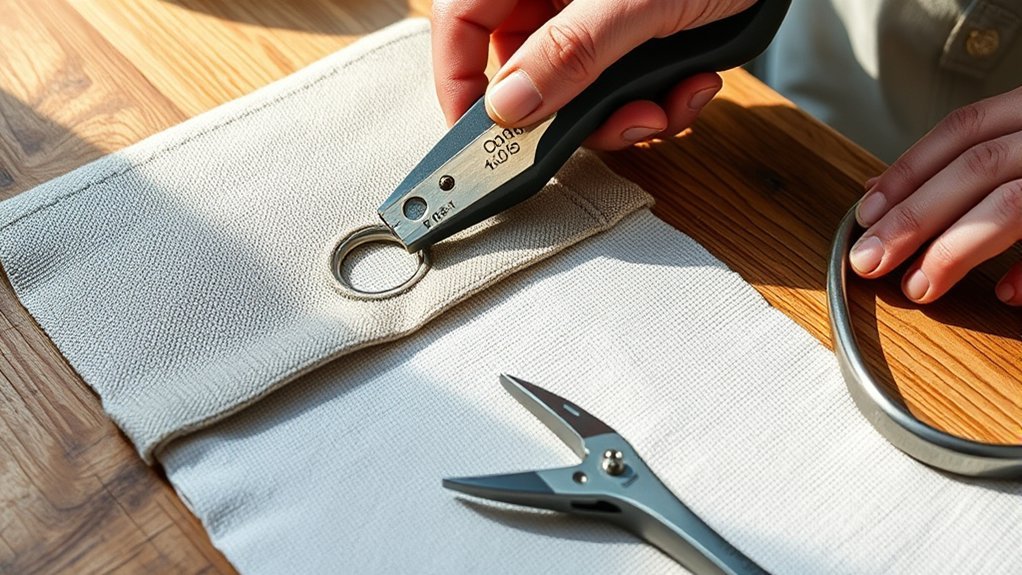
Before installing grommets, verify the fabric or material is clean and flat to achieve a secure fit. Proper fabric preparation and material selection are essential to prevent damage and guarantee durability.
Ensure fabric is clean and flat before installing grommets for a secure, durable fit.
Follow these steps carefully:
- Choose a material compatible with grommet pliers. Avoid overly thin or fragile fabrics.
- Lay the fabric on a hard, flat surface to maintain stability during installation.
- Mark grommet placement points precisely using a washable fabric marker or chalk.
- Pre-punch holes slightly smaller than the grommet diameter to create a tight grip.
How to Position and Insert Grommets Using Pliers?
First, align the grommet components carefully through the pre-cut hole in your fabric.
Next, position the material securely between the grommet’s washer and eyelet to guarantee a tight fit.
Finally, apply even pressure with the pliers to fasten the grommet firmly without damaging the fabric.
Aligning Grommet Components
When you align grommet components, you guarantee a secure and clean installation that prevents damage or misplacement. Mastering grommet alignment techniques is essential for optimizing grommet spacing and ensuring durability.
Follow these steps precisely:
- Place the grommet base on the fabric, ensuring the hole is centered and cleanly cut.
- Position the washer directly over the base, aligning the edges flush to avoid uneven pressure.
- Use the pliers to hold both parts firmly, confirming that the fabric lies flat without wrinkles.
- Apply steady pressure with the pliers to crimp the components together, maintaining consistent alignment throughout.
Securing Fabric With Grommets
Two key factors assure a secure fabric attachment using grommet pliers: accurate positioning and firm insertion. First, select the appropriate grommet type based on your fabric thickness to guarantee a snug fit without causing damage.
Mark the exact placement on the fabric, then create a clean hole that matches the grommet’s inner diameter. Insert the grommet’s male part through the hole from the front side, followed by the female backing on the reverse.
Align these components precisely within the pliers’ jaws. Position the fabric flat and taut between the grommet halves to prevent shifting. When you squeeze the pliers, the grommet flares and clamps the fabric securely.
This method accommodates various grommet types and fabric thicknesses, assuring durability and professional results every time.
Applying Pressure Evenly
Applying pressure evenly is essential to guarantee the grommet sets securely without damaging the fabric or the hardware. To confirm proper pressure distribution when positioning and inserting grommets using pliers, follow these technique tips:
- Align the grommet and washer precisely over the fabric hole, ensuring even contact.
- Position the pliers perpendicular to the fabric surface to avoid angled pressure.
- Squeeze the handles firmly and steadily, applying consistent pressure throughout the compression.
- Release the pliers slowly to prevent displacement or uneven setting of the grommet.
How to Securely Set Grommets With Grommet Pliers
A secure grommet installation depends on correctly positioning the fabric and aligning the grommet halves before using the pliers. First, select the appropriate grommet type for your fabric. Then, sandwich the fabric between the grommet’s eyelet and washer, guaranteeing alignment.
Insert the grommet into the pliers, aligning the die and punch. Apply steady pressure to crimp the grommet, avoiding deformation.
| Step | Action | Tip |
|---|---|---|
| Select Grommet | Match grommet type to fabric | Use metal for heavy fabric |
| Position Fabric | Align fabric between halves | Smooth fabric to avoid wrinkles |
| Crimp Grommet | Squeeze pliers evenly | Apply firm, steady pressure |
Following these installation techniques guarantees a durable, professional finish.
Common Mistakes to Avoid When Using Grommet Pliers
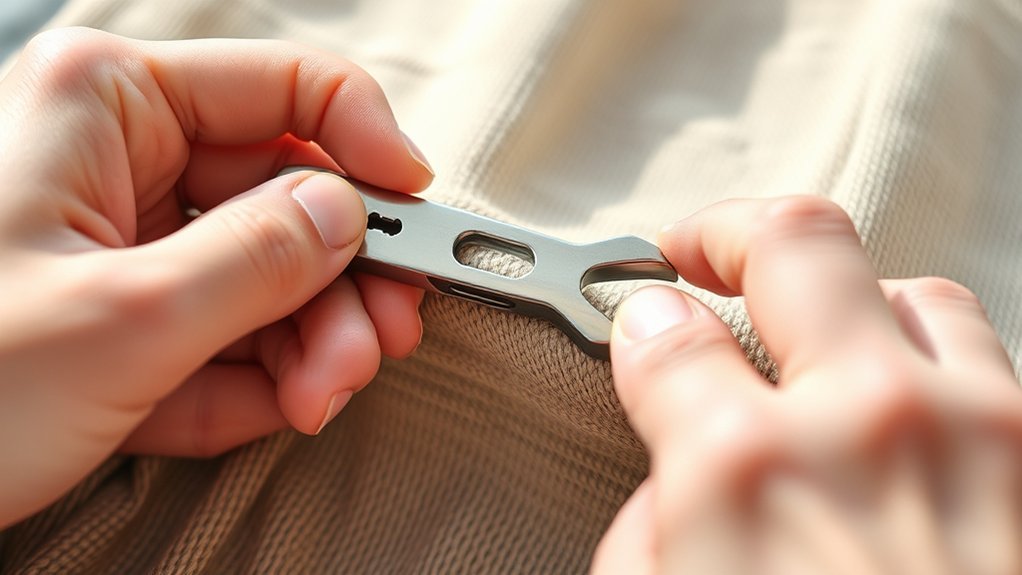
When you use grommet pliers improperly, it can lead to misaligned grommets, fabric damage, or weakened hold. To avoid common grommet errors, follow these grommet installation tips carefully:
- Don’t skip marking the fabric before punching; misalignment causes improper fitting.
- Avoid applying excessive force. Too much pressure can distort the grommet or tear the material.
- Use the correct size die for your grommet. Mismatched sizes result in loose or unstable fittings.
- Verify the fabric is flat and taut during installation to prevent wrinkles or uneven edges.
Cleaning and Maintaining Your Grommet Pliers for Long-Term Use
Since grommet pliers endure significant mechanical stress during use, regular cleaning and maintenance are essential to secure their accuracy and longevity. Begin by wiping down the jaws and pivot points with a clean cloth after each use to remove debris and residue.
Apply a light machine oil to the pivot joint to reduce friction and prevent rust. Inspect the jaws for wear or damage and replace any worn parts promptly.
Follow grommet maintenance tips by avoiding exposure to moisture and storing your pliers in a dry environment. Use proper plier storage methods, such as a dedicated tool pouch or rack, to protect the alignment and prevent accidental drops.
Consistent upkeep secures your grommet pliers function smoothly and extend their service life.
Conclusion
Now that you’ve mastered choosing the right size and prepping your fabric, it’s time to put those grommet pliers to work. Remember, aligning components perfectly and applying just the right pressure makes all the difference. Push too hard, and you risk damage; too light, and the grommet won’t hold.
Stay precise, stay steady—because the final result depends on your control. Ready to finish strong? Your project’s durability hinges on this last critical step.
Using grommet pliers correctly ensures a secure and professional finish that will last.