When you work with electrical wiring, terminal pliers become indispensable for tasks like crimping terminals, bending wires, and securing connectors.
Terminal pliers provide the precision you need to avoid damaging components or creating weak connections. Understanding their specific functions can improve both the quality and safety of your projects.
But what exactly sets terminal pliers apart from other tools? Knowing how to select the right type for your work can make a significant difference in efficiency and results.
What Are Terminal Pliers and Why Use Them?
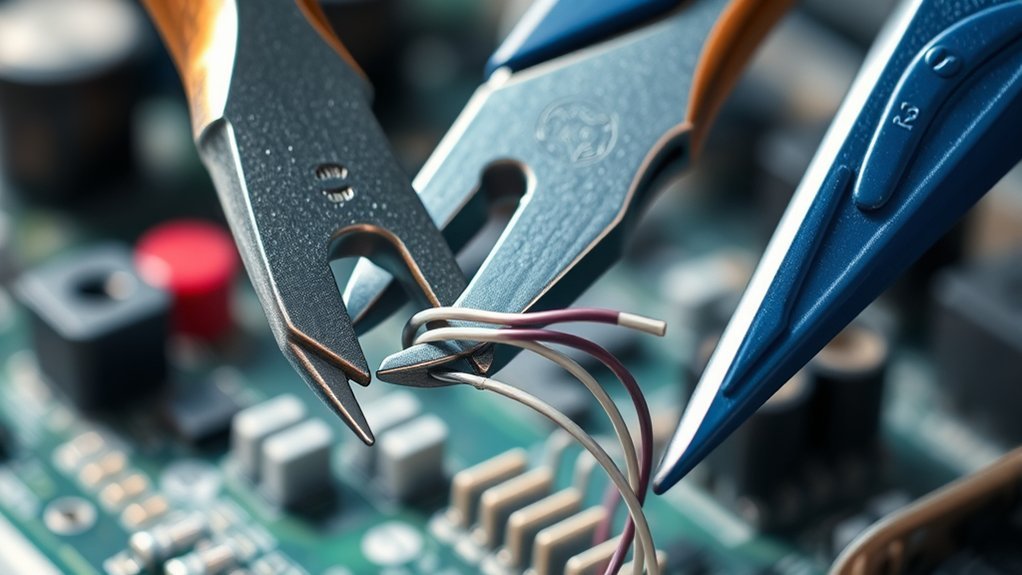
Terminal pliers serve as specialized tools designed to grip, bend, and cut electrical terminals and wires with accuracy. In this terminal pliers overview, you’ll find that they provide precise control over small components, essential for electrical work requiring exact manipulation.
The benefits of terminal pliers include improved efficiency and reduced risk of damage to terminals compared to using general-purpose pliers. They are engineered for ergonomic handling, allowing you to apply consistent force for bending or positioning terminals without slipping.
Additionally, the cutting edges on terminal pliers enable you to trim wires neatly, ensuring a clean, professional connection. By using terminal pliers, you enhance both the reliability and safety of electrical connections, making them indispensable in wiring, assembly, and repair tasks.
Crimping Electrical Terminals With Terminal Pliers
When you crimp electrical terminals with the right pliers, you guarantee a secure and stable connection that resists corrosion and mechanical stress. Mastering crimping techniques guarantees ideal electrical conductivity and longevity.
First, focus on precise terminal selection to match wire gauge and application requirements. Then, align the terminal correctly within the pliers’ jaws to apply uniform pressure. Proper technique prevents wire strand damage and maintains mechanical integrity.
Select the right terminal and align it properly in the pliers for a secure, damage-free crimp.
Key considerations include:
Choosing pliers with appropriate jaw size and shape
Verifying terminal compatibility with wire insulation
Applying consistent pressure for a reliable crimp
Inspecting crimps for deformation or loose strands
Using tools designed for specific terminal types
Following these steps, you enhance electrical system reliability and safety through effective terminal crimping.
Bending and Shaping Wires Made Easy
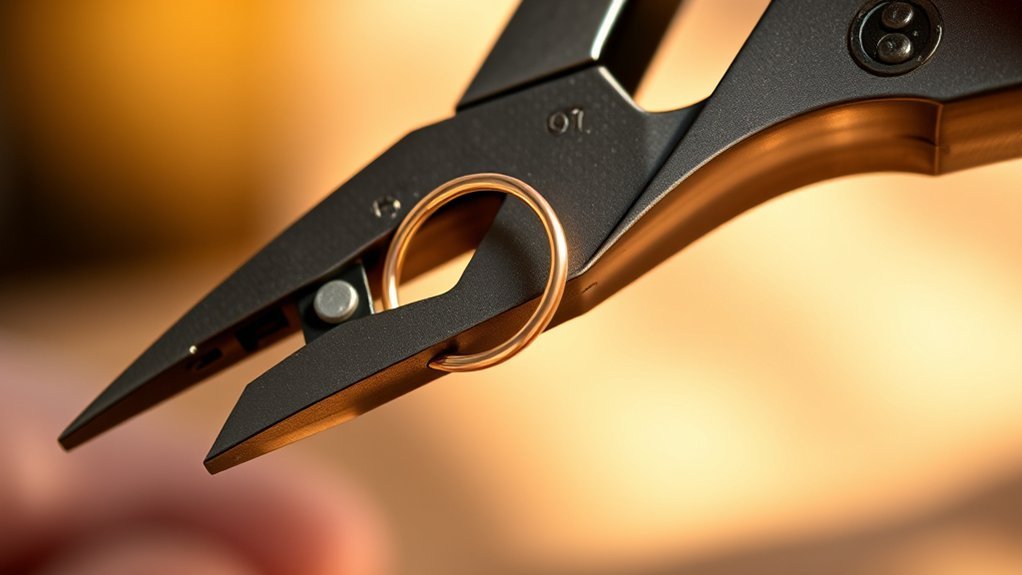
You can achieve accurate wire bends by applying controlled pressure with terminal pliers, ensuring consistent angles and shapes. Mastering specific wire bending techniques helps maintain the integrity of the conductor while shaping it precisely.
Using the right pliers enhances your ability to create clean, repeatable wire configurations essential for reliable electrical connections.
Wire Bending Techniques
Mastering wire bending techniques streamlines the process of shaping wires accurately and efficiently. When you use terminal pliers, you gain precise control over wire twisting and wire looping, essential for creating reliable electrical connections and custom shapes.
To optimize your technique, consider these key practices:
- Apply steady pressure to avoid wire deformation
- Use the pliers’ tip for tight wire looping
- Employ the flat jaw for consistent wire twisting
- Work incrementally to prevent wire fatigue
- Maintain consistent bend angles for uniformity
Shaping Wire Precision
Achieving precise wire shaping demands controlled movements and the right tools, such as terminal pliers, which allow you to execute bends and curves with accuracy. When applying wire manipulation techniques, terminal pliers provide firm grip and fine control, essential for precision shaping methods.
You can adjust wire angles incrementally, ensuring consistent geometry without deforming the material. Their ergonomic design reduces slippage, enabling you to maintain steady pressure during tight bends.
By integrating these pliers into your workflow, you streamline complex wire formations, minimizing errors and rework. Employing terminal pliers effectively enhances your ability to perform detailed wire shaping tasks, critical in electrical and crafting applications where exact wire contours dictate functionality and aesthetics.
Mastering these precision shaping methods elevates your craftsmanship and reliability in wire manipulation.
Cutting Wires Cleanly Using Terminal Pliers
When you cut wires with terminal pliers, accuracy is essential to achieve a clean edge. You need to position the wire correctly between the cutting blades to prevent fraying or deformation.
Mastering this technique guarantees the wire’s integrity remains intact for reliable connections.
Precise Wire Cutting
Although it may seem straightforward, cutting wires cleanly with terminal pliers requires careful alignment and controlled pressure to prevent frayed ends or damage to the wire strands. You must consider wire types, solid or stranded, to select appropriate cutting techniques.
Applying uneven force or misalignment risks deforming the wire, compromising connectivity.
To achieve precise wire cutting:
- Align the wire perpendicular to the cutting edge for a clean shear.
- Use terminal pliers designed for the wire gauge.
- Apply steady, moderate pressure; avoid squeezing too hard.
- Rotate the wire slightly if resistance occurs to guarantee a clean cut.
- Inspect the cut end to confirm no strands are pulled or crushed.
Mastering these steps guarantees ideal performance in electrical and mechanical applications.
Avoiding Wire Damage
Three key factors help you avoid wire damage while cutting with terminal pliers: correct alignment, appropriate pressure, and tool selection. First, align the wire precisely within the cutting jaws to prevent crushing or nicking the conductor, which compromises wire insulation.
Next, apply steady, controlled pressure; excessive force can deform the wire strands or damage surrounding insulation, undermining connector safety. Finally, select terminal pliers designed for the wire gauge you’re working with. Using tools mismatched in size or quality increases the risk of incomplete cuts or frayed ends.
Gripping Small Connectors for Precise Installation
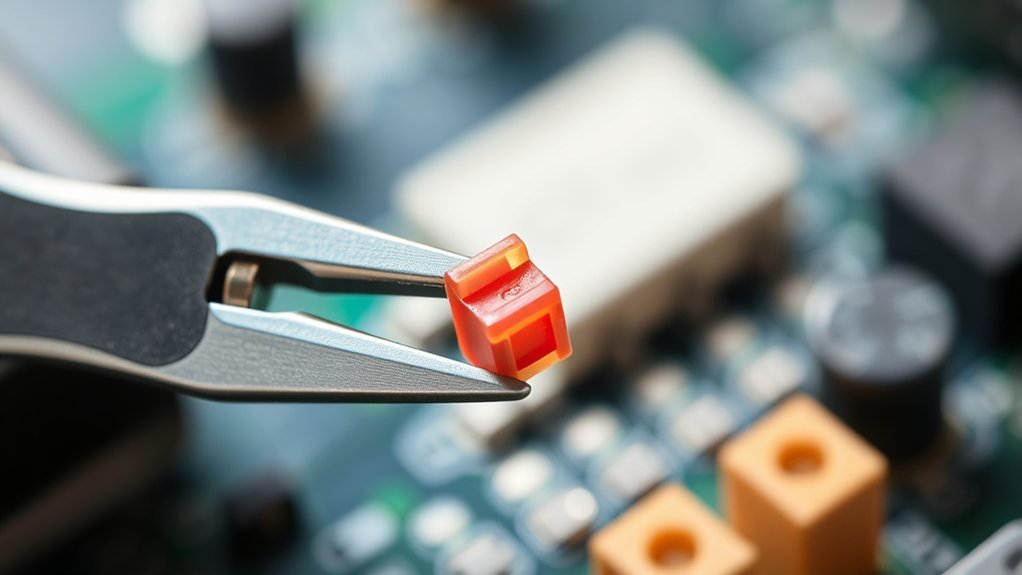
Because small connectors require exact alignment, terminal pliers provide the necessary grip and control for precise installation. You rely on their design to maintain firm contact without slipping, ensuring connector alignment is accurate and secure.
This precision enhances installation efficiency by reducing rework and minimizing damage risk. When using terminal pliers, you can:
- Stabilize connectors during assembly
- Apply consistent pressure for secure fitting
- Access tight spaces with fine tips
- Prevent connector deformation
- Streamline repetitive installation tasks
Choosing the Right Terminal Pliers for Your Needs
When selecting terminal pliers, you need to evaluate factors such as tip design, jaw material, and ergonomic features to match your specific application requirements. Different types of terminal pliers offer varied tip configurations: needle-nose, flat-nose, or crimping jaws, each suited for precise tasks like gripping, bending, or terminal crimping.
Assess the jaw material for durability and corrosion resistance, typically stainless steel or hardened alloy. Ergonomic terminal pliers features, including cushioned grips and spring-loaded handles, reduce hand fatigue during repetitive use.
Consider also the pliers’ size and weight to guarantee maneuverability in confined spaces. Matching these specifications to your task guarantees peak performance and longevity, making the selection process vital for efficiency and precision in terminal handling operations.
Applying Terminal Pliers in Automotive Wiring
Selecting terminal pliers with the appropriate tip design and ergonomic features sets the foundation for effective use in automotive wiring. When working on automotive applications, you need precision and control to handle various terminal types and wire gauges.
Terminal pliers enable you to:
- Crimp terminals securely to maintain electrical integrity
- Strip insulation without damaging wire strands
- Bend and shape terminals for tight spaces
- Cut wires accurately to length for clean connections
- Remove terminals from connectors without deformation
In wiring projects within automotive systems, these tasks require tools that provide consistent force and accessibility. Using terminal pliers designed specifically for automotive applications guarantees reliable connections, reduces wiring errors, and enhances overall system durability.
Using Terminal Pliers for Household and Electronics Work
Although household and electronics work often involves smaller components, terminal pliers remain essential tools for ensuring precise and secure connections. When tackling household projects, you use terminal pliers to crimp, cut, and manipulate wires, guaranteeing reliable electrical continuity and preventing loose connections.
In electronics repair, these pliers offer the control needed to handle delicate terminals without damaging sensitive components. Their ergonomic design allows you to apply consistent pressure, vital for creating uniform crimps that withstand mechanical stress and electrical load.
Conclusion
Think of terminal pliers as the conductor’s baton in your electrical symphony—each precise grip, bend, and cut orchestrates flawless connections. By mastering their use, you transform tangled wires into orderly pathways, ensuring reliable circuits that stand the test of time.
Whether you’re tackling automotive wiring or delicate electronics, these tools give you control and accuracy, turning complex tasks into streamlined processes. Embrace terminal pliers, and you’ll build not just connections, but confidence in every project.
In conclusion, terminal pliers can be used to create secure and efficient electrical connections, making them an essential tool for any wiring task.