When you need to secure fasteners, knowing how to use safety wire pliers is essential for ensuring a reliable hold.
Precision and proper technique are key to achieving the best results. Start by properly loading the wire into the pliers.
Then, apply steady tension as you twist to create consistent, tight coils. Each step affects the reliability of your fastening, so understanding how to maintain control and avoid common errors is crucial.
Mastering these fundamentals will make your safety wiring both effective and dependable every time.
What Safety Wire Pliers Are and Why You Need Them
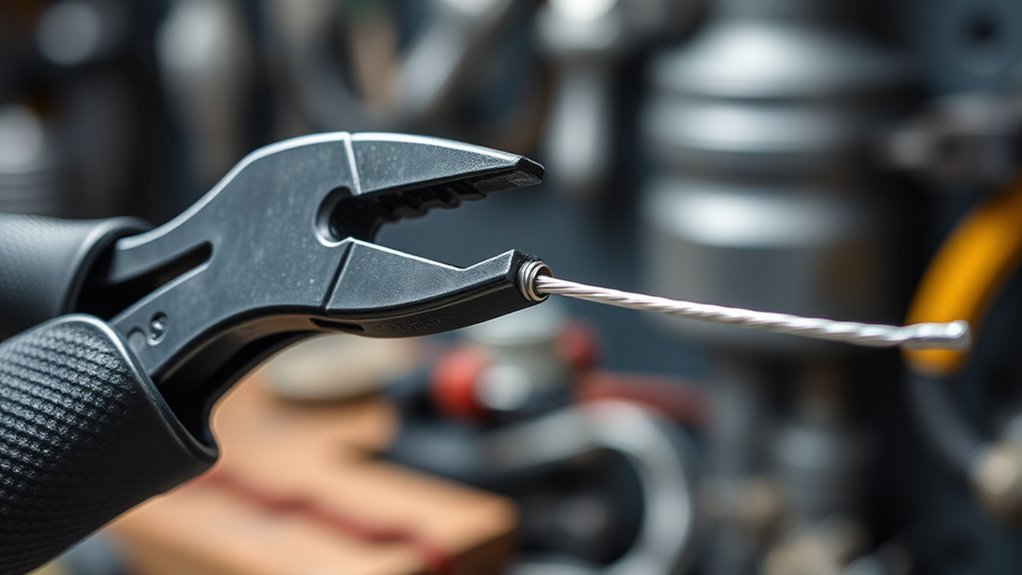
Safety wire pliers are specialized tools designed to twist and secure safety wire, ensuring that fasteners like bolts and nuts remain tight under vibration and stress. When you use safety wire, you apply it to prevent fasteners from loosening, which is critical in aerospace, automotive, and industrial applications.
The pliers provide a consistent and reliable grip, allowing you to execute precise wire twisting techniques. These techniques include pulling the wire taut and twisting it evenly to maintain tension and avoid wire fatigue. Without the proper tool, achieving uniform twists is difficult, risking failure in safety wire uses.
Choosing the Right Safety Wire for Use With Safety Wire Pliers
When selecting wire for use with safety wire pliers, you need to evaluate the material composition, diameter, and coating to confirm maximum strength and corrosion resistance. Start by considering safety wire materials such as stainless steel or Monel, both offering excellent durability and resistance to environmental factors.
Next, focus on wire gauge selection; typically, gauges between 0.020 and 0.032 inches are standard, but your choice depends on the application’s tensile requirements and clearance limitations. Thinner wires may lack sufficient strength, while thicker wires can be difficult to manipulate and thread.
Additionally, verify the coating, if any, does not compromise the wire’s grip when twisted with pliers. By methodically matching safety wire materials and wire gauge selection to your specific use case, you’ll optimize security and longevity in your safety wire installations.
Preparing Safety Wire: How to Cut and Thread It
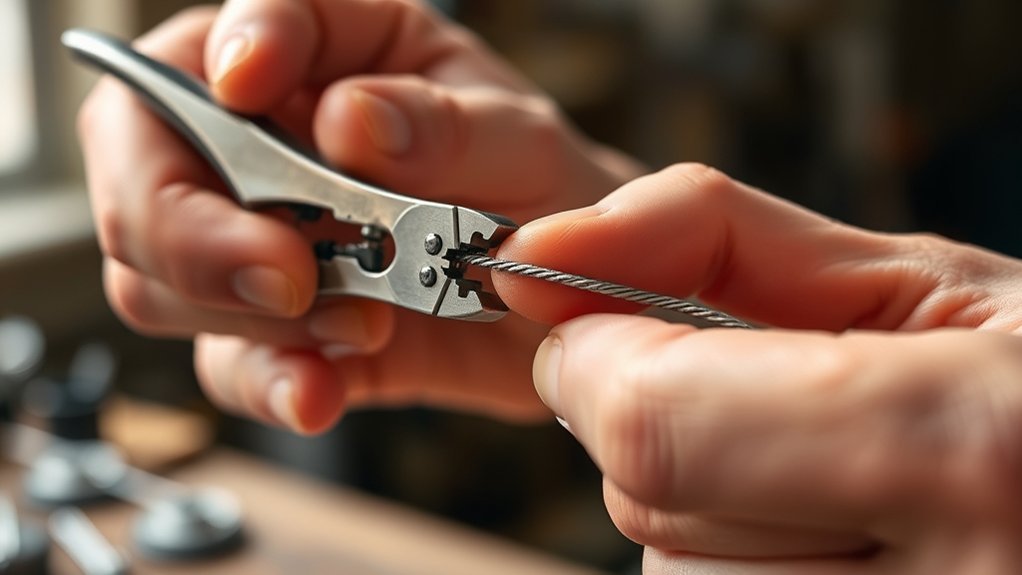
To prepare safety wire for use, start by cutting an appropriate length that allows for secure threading and twisting without excess slack. Proper handling of safety wire materials guarantees reliability in application. Follow these steps for accurate cutting and threading:
Begin by cutting safety wire to the right length for secure, reliable threading and twisting.
- Select wire cutters designed for the specific safety wire materials you’re using to avoid fraying or deformation.
- Measure twice, then cut once, using precise wire cutting techniques to achieve a clean, burr-free end.
- Thread the cut wire through the component’s holes or fasteners, making sure it passes smoothly without kinks or bends.
How to Load Safety Wire Into Your Pliers
Start by selecting the correct jaws on your pliers designed specifically for the diameter and type of safety wire you’re using. Different pliers features accommodate various safety wire types like stainless steel or copper, and wire gauges from 0.020″ to 0.032″.
Next, insert one end of the wire into the designated jaw slot, ensuring it sits securely without slipping. Tighten any locking mechanism if present to hold the wire firmly. Verify that the wire aligns smoothly through the twisting channel to prevent kinks or misfeeds.
| Pliers Feature | Wire Diameter Range | Compatible Safety Wire Types |
|---|---|---|
| Narrow Jaws | 0.020″ – 0.025″ | Stainless Steel, Copper |
| Standard Jaws | 0.025″ – 0.030″ | Stainless Steel, Aluminum |
| Heavy-Duty Jaws | 0.030″ – 0.032″ | Stainless Steel Only |
How to Twist Safety Wire With Pliers
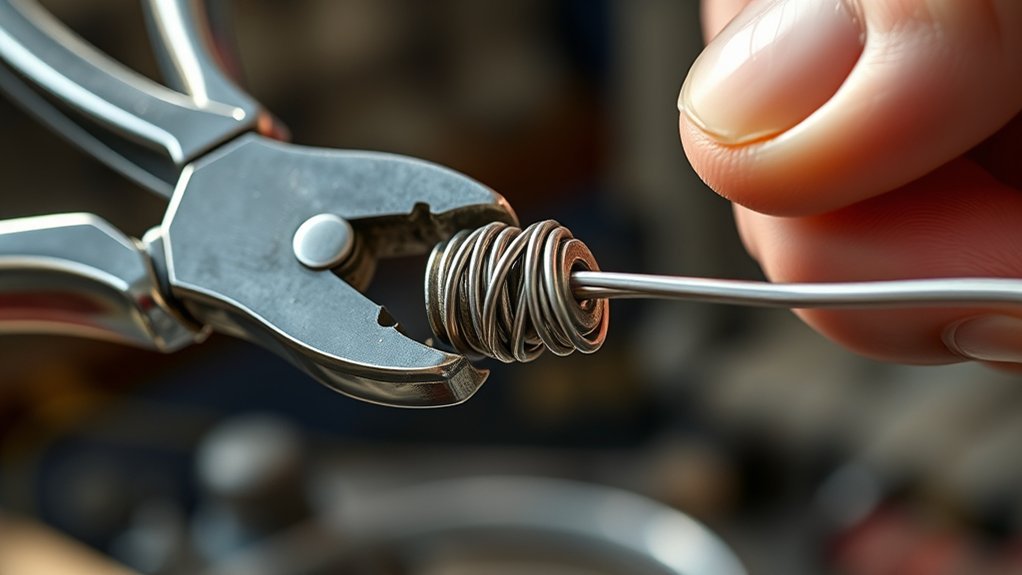
Grip the loaded safety wire pliers firmly and position the wire ends evenly. To twist the wire correctly, follow these safety wire techniques:
- Squeeze the handles steadily to engage the jaws, ensuring plier adjustments are set for ideal tension.
- Rotate the pliers in a controlled manner, maintaining consistent speed to produce uniform twists without kinks.
- Continue twisting until the wire is tight enough to secure but not so tight that it weakens or breaks.
Proper plier adjustments are critical to avoid wire slipping or uneven twisting. By methodically managing tension and twist rate, you’ll achieve a professional, reliable safety wire twist essential for secure fastening. This precision prevents loosening and maintains component integrity in your applications.
How to Secure Bolts and Nuts Using Safety Wire
When securing bolts and nuts with safety wire, you must guarantee each fastener is properly prepared and aligned to prevent loosening under vibration or stress. Begin by selecting the correct gauge of safety wire suitable for your bolt securing methods.
Thread the wire through the bolt heads or nut holes, making certain it passes through adjacent fasteners to create a locking loop. Use safety wire pliers to twist the wire tightly, maintaining consistent tension to avoid slack.
Route the wire so it opposes the natural loosening direction of each fastener, a key principle in safety wire applications. Finally, trim excess wire and bend ends flat against the fastener to prevent snagging.
Following this methodical process guarantees reliable, vibration-resistant fastening essential in critical assemblies.
Common Mistakes When Using Safety Wire Pliers
When using safety wire pliers, you must avoid applying incorrect wire tension, as it compromises the security of the fasteners. Pay close attention to proper wire placement to guarantee the wire locks appropriately without slipping.
Additionally, don’t neglect routine tool maintenance, since worn or damaged pliers can lead to improper wire installation.
Incorrect Wire Tension
Although applying the correct wire tension might seem straightforward, many users struggle to achieve the ideal tightness when using safety wire pliers. Proper tension adjustment is critical for safety wire applications to prevent loosening or wire breakage.
To avoid incorrect wire tension, follow these precise steps:
- Apply consistent force while twisting the wire; avoid over-tightening, which can damage components or the wire.
- Guarantee the wire is taut but not stretched beyond its elastic limit, preserving the wire’s integrity and function.
- Regularly check tension during installation to maintain uniform tightness across all twists.
Mastering tension adjustment guarantees reliable safety wire performance and complies with technical standards. Avoiding this common mistake enhances safety and equipment longevity.
Improper Wire Placement
Achieving proper wire tension is only part of ensuring a secure safety wire installation; placing the wire correctly is equally important. You must avoid wire placement errors that compromise the locking mechanism’s effectiveness.
Incorrect routing, such as positioning the wire over sharp edges or allowing slack where tension is critical, can lead to premature wire failure or loosening. Always route the wire so it maintains consistent contact with the fastener and adjacent components, preventing abrasion or snagging.
Improper placement can cause uneven load distribution, increasing the risk of fastener back-off. You should double-check that the wire lies flat and follows the intended path without twists or kinks.
Ignoring proper wire placement directly impacts safety by reducing the wire’s ability to prevent fastener loosening in high-vibration environments.
Neglecting Tool Maintenance
Neglecting regular maintenance on your safety wire pliers compromises their performance and longevity. To guarantee ideal tool longevity, you must establish a consistent maintenance routine. Here’s what you should focus on:
- Clean After Use: Remove debris and wire fragments to prevent corrosion and jamming.
- Lubricate Moving Parts: Apply a light machine oil to pivot points regularly to maintain smooth operation.
- Inspect for Wear: Check jaws and springs for signs of wear or damage; replace components promptly to avoid failure during critical tasks.
How to Remove Safety Wire Without Damaging Parts
To remove safety wire without damaging parts, start by securing the component firmly to prevent movement. Use proper safety wire techniques by carefully inspecting the wire’s routing and twist points.
Select a sharp, precise cutting tool suited for wire removal methods, such as flush cutters or specialized wire snips. Cut the wire close to the twist but avoid nicking the part’s surface.
Next, gently unwind or peel the wire away, maintaining steady pressure to prevent sudden slips that could scratch or deform components. Always work systematically, removing the wire in small sections rather than pulling it forcefully.
Following these steps guarantees you preserve the integrity of the parts while efficiently removing safety wire using proven wire removal methods and safety wire techniques.
How to Maintain and Store Your Safety Wire Pliers
Although safety wire pliers are built for durability, you should regularly clean and lubricate them to secure consistent performance. Proper maintenance extends their lifespan and guarantees reliable operation. Follow these steps:
Regular cleaning and lubrication ensure your safety wire pliers perform reliably and last longer.
- Use appropriate cleaning techniques such as wiping the jaws and pivot points with a solvent-soaked cloth to remove debris, followed by drying with a lint-free rag.
- Apply a light machine oil to the pivot joint to maintain smooth movement, avoiding excess lubricant that can attract dirt.
- Choose storage solutions that keep pliers dry and protected. Store them in a dedicated toolbox or hang them on a pegboard away from moisture and corrosive environments.
Adhering to these methods preserves tool precision and prevents corrosion, ensuring your safety wire pliers remain in prime condition for every use.
Tips for Achieving Tight, Even Twists Every Time
To achieve tight, even twists with safety wire pliers, you need to maintain proper wire tension throughout the process. Use a consistent twist technique to guarantee uniformity in each coil.
Position your pliers effectively to maximize control and leverage during twisting.
Proper Wire Tension
Maintaining proper wire tension is essential for creating secure, uniform twists that hold components firmly in place. In safety applications, inconsistent tension can lead to loosening or failure. To guarantee ideal wire tension, follow these steps:
- Pre-tension the wire: Before twisting, pull the wire taut to remove slack without overstressing it.
- Use controlled force: Apply steady, even pressure with the pliers to maintain tension throughout the twisting process.
- Monitor twist tightness: Stop twisting once the wire lies flat and snug against the components, avoiding overtightening that may weaken the wire.
Consistent Twist Technique
Achieving consistent twists depends on controlling the motion and placement of the safety wire during each turn. To guarantee twist consistency, maintain steady, even pressure while rotating the wire pliers.
Start by aligning the wire ends precisely, then rotate the pliers smoothly without jerking or pausing. Focus on uniform spacing between twists, which enhances strength and reliability.
Technique practice is essential; regularly rehearse the twisting motion to develop muscle memory and improve control. Avoid over-tightening, which can weaken the wire or cause breakage.
Instead, aim for tight, even twists that secure the wire firmly while preserving its integrity. By methodically controlling speed, pressure, and alignment, you’ll achieve professional-quality twists every time, guaranteeing safety and durability in your application.
Optimal Pliers Positioning
Three critical factors determine ideal pliers positioning when twisting safety wire: grip angle, tension control, and alignment. To achieve tight, even twists every time, focus on these steps:
- Pliers Grip: Position the jaws so they firmly grasp the wire without slipping. Maintain a consistent angle between the handles and wire axis for maximum control.
- Wire Alignment: Confirm the wire segments are parallel and aligned before twisting. Misalignment leads to uneven tension and weak twists.
- Tension Control: Apply steady, moderate force while rotating the pliers. Avoid excessive tension that could deform the wire or cause uneven twists.
Conclusion
By mastering safety wire pliers, you guarantee fasteners stay secure under stress. For example, a mechanic once prevented a costly engine failure by properly twisting safety wire on critical bolts, avoiding loosening during high vibrations.
Remember to maintain consistent tension and check coil uniformity for reliable results. With careful technique and regular tool maintenance, you’ll achieve tight, even twists every time.
Safeguarding your equipment with precision and confidence becomes effortless when you use safety wire pliers correctly.