You buff tung oil only after it’s fully cured—usually up to seven days—to avoid damaging the finish.
Buffing gently with a soft cloth or fine steel wool enhances smoothness, sheen, and durability by compressing the oil film and reducing surface imperfections.
Avoid buffing too soon or with harsh pressure, as this can weaken the protective layer.
Proper buffing maximizes your finish’s natural beauty and longevity.
Learn how to buff effectively, timing tips, and maintenance for ideal results.
Do You Need to Buff Tung Oil? What It Means for Your Finish
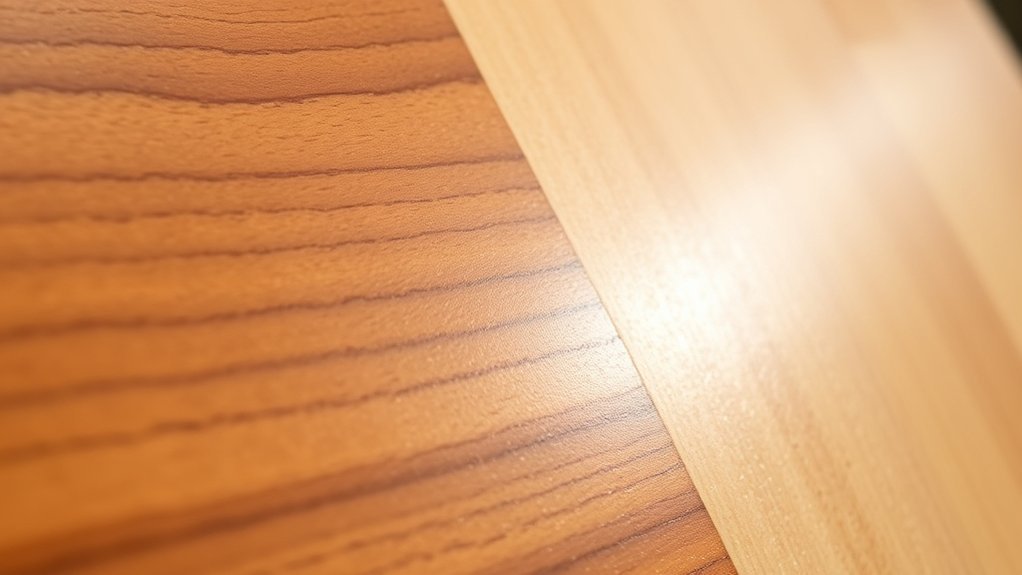
Although buffing tung oil isn’t always necessary, doing so can greatly enhance the finish’s smoothness and luster. You’ll find that the tung oil benefits extend beyond protection and water resistance to include a refined, satin sheen achieved through proper buffing techniques.
By using a soft cloth or buffing pad with gentle, circular motions, you help compress the oil film, reducing surface irregularities and increasing light reflection. This process also aids in evenly distributing the oil, preventing patchy spots and enhancing durability.
While tung oil naturally penetrates wood fibers, buffing optimizes the surface appearance without compromising the finish’s integrity. Consequently, incorporating buffing techniques after the oil has dried allows you to maximize both the aesthetic and protective qualities inherent to tung oil finishes.
When Should You Buff Tung Oil for the Best Results?
Since timing directly impacts the finish’s durability and appearance, you should buff tung oil only after it has fully cured. Proper tung oil application requires patience. Curing can take up to 7 days depending on temperature and humidity. Buffing too early may damage the finish or reduce its protective qualities.
To determine the best time for buffing, follow these steps:
- Confirm the tung oil surface feels dry to the touch with no tackiness.
- Verify the finish is hard and resistant to fingerprints or smudges.
- Perform a light test buff on a small, inconspicuous area to check for proper adhesion.
How to Buff Tung Oil Without Damaging the Finish

When buffing tung oil, you need to use a soft, lint-free cloth or a fine steel wool pad to gently work the surface without abrading it. Start by ensuring the tung oil has fully cured; premature buffing can compromise the finish.
Apply light, circular motions to enhance tung oil benefits such as increased sheen and water resistance. Avoid excessive pressure, which risks removing the protective layer. Use clean buffing tools to prevent introducing dust or grit that could scratch the finish.
If using steel wool, opt for the finest grade (#0000) and test on a small area first. Consistent, controlled buffing techniques help maintain the finish’s integrity and highlight tung oil’s natural beauty without damage.
Alternatives to Buffing Tung Oil for a Smooth Surface
If you’re aiming for a smooth tung oil finish without buffing, there are several effective alternatives to evaluate. These tung oil alternatives and smooth surface techniques can provide a refined finish while minimizing labor.
- Fine Sanding Between Coats: Use progressively finer grit sandpaper (320–600 grit) after each coat, removing imperfections and promoting smoothness before the next application.
- Applying Thin, Multiple Coats: Thin coats dry more evenly, reducing surface irregularities. Multiple layers build depth and smoothness without aggressive buffing.
- Use of Additives or Blended Oils: Some tung oil formulations blend with varnishes or drying oils, enhancing leveling properties and surface hardness, thereby naturally yielding a smoother finish.
How to Maintain and Enhance Buffed Tung Oil Finishes
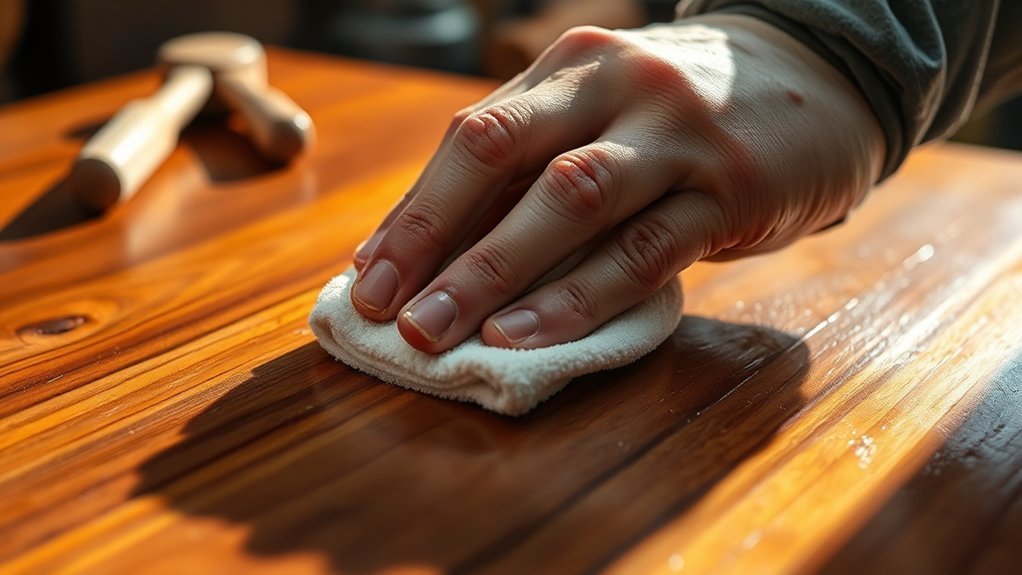
Although buffing tung oil creates a smooth, lustrous finish, maintaining and enhancing that appearance requires regular care and appropriate techniques. To preserve finish durability, clean the surface gently with a soft cloth and mild detergent, avoiding harsh chemicals that can degrade the tung oil application.
Periodically, apply a thin, even coat of tung oil to replenish the protective layer; allow sufficient drying time before buffing again to restore the sheen. When buffing, use a clean, soft cloth or a mechanical buffer with a low-speed setting to avoid damaging the finish.
Consistent maintenance not only prolongs the finish durability but also enhances the wood’s natural beauty. Properly cared-for buffed tung oil surfaces resist moisture and wear, ensuring a lasting, visually appealing finish.
Frequently Asked Questions
Is Tung Oil Food Safe for Cutting Boards?
Yes, tung oil is food safe once fully cured, offering excellent tung oil benefits like water resistance and durability. For cutting board maintenance, you’ll want to apply multiple coats and buff lightly to guarantee proper absorption and protection.
How Long Does Tung Oil Take to Fully Cure?
Tung oil’s cure time typically ranges from 7 to 30 days, depending on temperature and humidity. During the drying process, it polymerizes, forming a durable finish.
Guarantee proper ventilation and avoid moisture for best curing.
Can Tung Oil Be Applied Over Painted Surfaces?
Tung oil application on painted surfaces isn’t recommended since it may struggle to adhere properly. For superior sealing and durability, apply tung oil only on clean, bare wood, ensuring ideal absorption and finish quality.
Does Tung Oil Darken Wood Over Time?
Yes, tung oil darkens wood over time due to its penetrating tung oil properties, which enhance wood aging by deepening color and enriching grain. This results in a richer, warmer patina as the wood naturally oxidizes.
What Is the Difference Between Tung Oil and Linseed Oil?
Wondering how tung oil benefits differ from linseed oil properties? Tung oil offers superior water resistance and durability, while linseed oil provides a slower drying time and deeper penetration, making each ideal for specific wood finishing needs.
Conclusion
You might think buffing tung oil is always necessary, but it’s actually a balance between enhancing sheen and risking surface damage. While buffing can refine your finish to a smooth, lustrous glow, skipping it preserves the oil’s natural, matte resilience.
Knowing when and how to buff guarantees you don’t compromise durability for appearance.
Ultimately, your approach should align with the desired finish longevity versus immediate visual perfection. When deciding if you should buff tung oil, consider both the look you want and the protection you need.