Yes, you can use tung oil over stained wood as long as the stain is fully dry and cured, typically 24–48 hours. Applying tung oil over stain helps enhance the wood’s natural beauty while providing added protection.
Before application, lightly sand the surface with fine-grit sandpaper and clean off any dust.
Use thin, even coats of tung oil, wiping off excess after 20–30 minutes, and repeat for several layers.
This technique enhances protection and stain depth without trapping moisture. Understanding the right preparation and application steps will help you achieve the best results.
What Is Tung Oil and Why Use It?
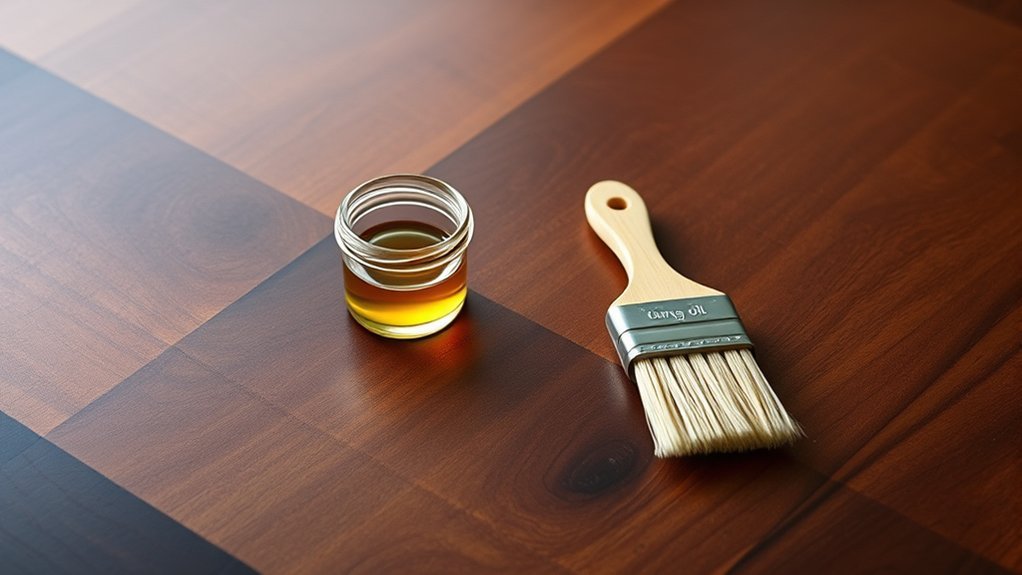
Tung oil is a natural drying oil extracted from the seeds of the tung tree, prized for its water-resistant and durable finish. When you apply tung oil, you’re utilizing its unique properties, including rapid polymerization upon exposure to air, which forms a solid, flexible, and protective film.
The tung oil benefits are significant: it penetrates deeply into wood fibers, enhancing water resistance without creating a surface build-up that can crack or peel. Its natural composition guarantees non-toxicity and compatibility with various wood types.
You’ll find tung oil improves wood’s dimensional stability and resists mildew and abrasion. Understanding these tung oil properties helps you choose it for projects needing a long-lasting, breathable, and eco-friendly wood finish that also highlights the wood’s natural grain and texture effectively.
Can You Apply Tung Oil Over Stained Wood Safely?
Since tung oil penetrates wood deeply and forms a durable protective layer, you might wonder if it’s safe to apply it over stained wood. Generally, you can apply tung oil over most stain types, especially oil-based stains, because they bond well with oil finishes. However, water-based stains may require caution, as they can repel tung oil or cause uneven absorption.
| Stain Type | Compatibility with Tung Oil | Notes |
|---|---|---|
| Oil-Based | High | Excellent penetration |
| Water-Based | Moderate | May repel or cause blotching |
| Gel Stains | Moderate | Requires even application |
| Dye Stains | Low | Might dilute or alter color |
| Lacquer Stains | Low | Tung oil may not adhere well |
Assess your stain type carefully before application to guarantee a safe and effective finish.
How to Prepare Stained Wood for Tung Oil
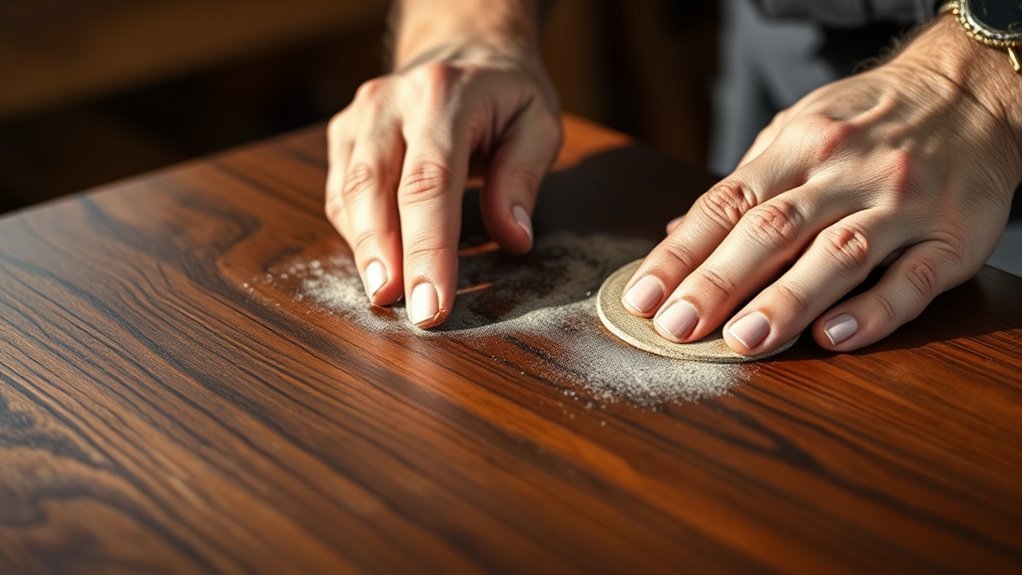
Before applying tung oil over stained wood, you’ll need to confirm the surface is properly prepared to promote ideal adhesion and finish quality. Start by identifying the stain type. Oil-based stains require different preparation than water-based stains.
For oil-based stains, confirm the surface is thoroughly dry and cured, typically 24-48 hours. Water-based stains may need a longer curing period. Next, perform wood preparation by lightly sanding the surface with fine-grit sandpaper (220-grit) to remove any sheen and open the wood pores.
Avoid aggressive sanding, which can remove the stain. Clean the surface with a tack cloth to eliminate dust and contaminants. Proper wood preparation tailored to the stain type confirms tung oil penetrates effectively and bonds well, resulting in a durable, smooth finish.
How to Apply Tung Oil Over Stain
Applying tung oil over stained wood involves several careful steps to assure even penetration and a durable finish. First, make certain the stain is fully dry, as moisture or tackiness can inhibit tung oil absorption. Select tung oil suited for your specific stain type; oil-based stains generally allow better compatibility.
Use a clean, lint-free cloth or brush to apply a thin, even coat of tung oil, working in the wood grain direction to maximize penetration. Allow the oil to soak in for 20–30 minutes, then wipe off any excess to avoid sticky residue.
Repeat application every 24 hours for 3–4 coats, lightly sanding with fine-grit paper between coats to enhance adhesion. This method leverages tung oil benefits like water resistance and enhanced wood grain depth while respecting the underlying stain’s integrity.
What Happens When You Put Tung Oil Over Stain?
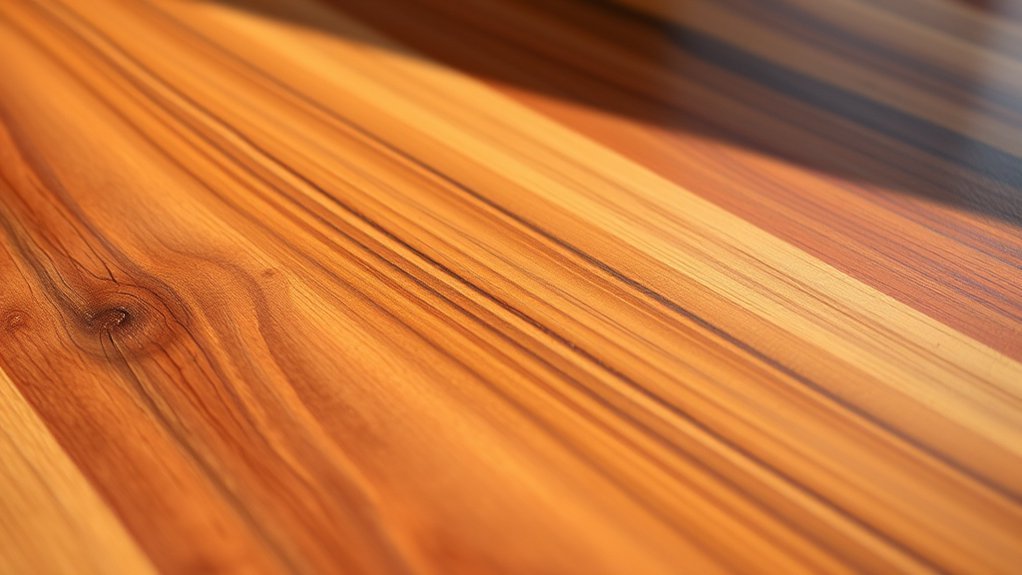
When you apply tung oil over stain, you need to make certain the stain is fully dry and compatible to prevent uneven absorption. Tung oil will enhance the wood’s natural grain and deepen the stain’s color without masking it.
However, the final appearance depends on the stain type and how the oil interacts with it, so testing on a small area is essential.
Stain Compatibility With Tung Oil
How does tung oil interact with wood stain, and what should you expect when you apply it over a stained surface? Your results depend largely on the stain types and their oil absorption properties. Tung oil penetrates differently based on these factors:
- Oil-Based Stains: These are generally compatible; tung oil absorbs well, enhancing protection without lifting the stain.
- Water-Based Stains: Less compatible, as residual moisture can impede tung oil absorption, possibly causing uneven finish.
- Gel Stains: Thickness limits penetration; tung oil mainly sits on the surface, requiring multiple coats for durability.
- Dye Stains: Since they penetrate deeply, tung oil can seal them effectively, but absorption rates vary by wood species.
Understanding these interactions helps you predict adhesion and finish quality when applying tung oil over stained wood.
Effects On Wood Appearance
Although tung oil primarily serves as a protective finish, it also greatly influences the wood’s appearance when applied over stain. When you apply tung oil, it deepens the wood color by enhancing the grain’s natural contrast, resulting in a richer, more vibrant look.
The oil penetrates the stained surface, adding warmth without noticeably altering the original hue, provided the stain is fully cured. Additionally, tung oil imparts a subtle, hand-rubbed finish sheen that ranges from matte to satin, depending on the number of coats and application method.
This finish sheen not only enhances aesthetic appeal but also improves surface tactile quality. Keep in mind that excessive coats may darken the wood color more than intended, so apply tung oil sparingly to maintain your desired stain effect.
Common Mistakes When Using Tung Oil Over Stain
When applying tung oil over stain, you can’t skip proper surface preparation, as it guarantees even absorption and adhesion.
Another common mistake is using too much tung oil, which can leave a sticky, uneven finish that takes longer to cure. Avoid these errors to achieve a smooth, durable protective layer.
Ignoring Proper Surface Prep
Since the surface condition directly affects the adhesion and finish of tung oil, neglecting proper preparation can lead to uneven absorption and blotchy results. You need to eliminate surface imperfections before applying tung oil over stain.
Proper preparation techniques guarantee a smooth, uniform finish and ideal penetration. Follow these steps:
- Inspect the stained surface for scratches, dust, or residue that may interfere with oil absorption.
- Lightly sand using fine-grit sandpaper (220-320 grit) to smooth imperfections without removing stain.
- Clean the surface thoroughly with a tack cloth or lint-free rag to remove sanding dust.
- Allow the surface to dry completely before applying tung oil.
Skipping these steps compromises adhesion and can cause blotchy or uneven finishes, undermining your project’s durability and appearance.
Applying Excessive Tung Oil
A common mistake you might make is applying too much tung oil over a stained surface. Excessive build up occurs when oil is layered before previous coats have fully penetrated and dried, leading to uneven drying and a tacky finish.
This oil saturation prevents the wood from properly curing, trapping moisture and potentially causing a cloudy or blotchy appearance. To avoid this, apply thin, even coats with a lint-free cloth, allowing sufficient drying time, typically 24 hours, between applications.
Wipe away any excess oil after 20-30 minutes to prevent pooling. Over-saturation not only compromises the finish’s durability but also increases drying time considerably. Precision in application guarantees a smooth, durable finish that enhances the stain rather than obscures it.
Other Finishes to Use Instead of Tung Oil Over Stain
Although tung oil provides a natural finish, you might want to explore other options that offer different levels of durability, drying times, or aesthetic qualities when applying over stain. Here are four varnish alternatives to evaluate:
- Polyurethane: Offers superior durability and water resistance, ideal for high-traffic surfaces.
- Shellac finishes: Provide a glossy, warm tone and dry quickly, but have limited water resistance.
- Lacquer: Dries rapidly with a hard, durable surface, suitable for fine furniture.
- Water-based finishes: Clear, low-odor, and fast-drying, preserving stain color while offering moderate protection.
Each alternative interacts differently with stained wood, so choose based on your project’s specific needs for protection, appearance, and application ease.
How to Maintain Wood Finished With Tung Oil Over Stain
When maintaining wood finished with tung oil over stain, you’ll need to periodically clean and reapply the oil to preserve its protective qualities and appearance. Start with a soft cloth dampened with mineral spirits or a mild soap solution to remove dirt and grime without damaging the finish. Allow the surface to dry thoroughly.
For tung oil maintenance, lightly sand the wood with fine-grit sandpaper (320-400 grit) to promote adhesion of the new oil layer. Apply a thin, even coat of tung oil using a lint-free cloth, working with the grain. Let it penetrate for 15-30 minutes, then wipe off excess.
Repeat as necessary, typically every 6-12 months depending on use and exposure. Consistent wood care like this guarantees durability and enhances the rich depth of the stain beneath the tung oil finish.
Frequently Asked Questions
Can Tung Oil Be Mixed With Other Oils for Staining?
You can blend tung oil with compatible oils, like linseed or walnut, for enhanced tung oil blending. Verify oil compatibility to avoid curing issues.
Test mixtures on a small area for ideal stain absorption and finish quality.
How Long Does Tung Oil Take to Fully Cure?
Tung oil’s cure time typically spans 7 days, though drying factors like temperature, humidity, and application thickness can extend this. You’ll want to guarantee ideal conditions to achieve a fully cured, durable finish efficiently.
Is Tung Oil Safe for Outdoor Furniture Use?
Yes, tung oil’s durability makes it suitable for outdoor furniture, providing a water-resistant, flexible finish that withstands weathering. However, you’ll need multiple coats and regular maintenance to guarantee long-lasting protection against outdoor elements.
Can Tung Oil Be Used on Painted Surfaces?
You can’t effectively apply tung oil on painted surfaces because its penetration relies on bare wood. Tung oil application over paint won’t bond properly, leading to poor durability and finish issues. Remove paint first for best results.
Does Tung Oil Darken the Wood Color Significantly?
About 75% of woodworkers notice tung oil effects subtly darken wood color, enhancing its natural grain without overwhelming it. You’ll find tung oil deepens hues moderately, offering rich warmth while preserving wood’s authentic appearance effectively.
Conclusion
So, you want to slather tung oil over stained wood and expect a miracle? Well, technically you can, but don’t be surprised if it behaves more like a stubborn guest than a helpful finish. Proper prep is essential—skip it, and you’re asking for blotches or peeling.
Ironically, while tung oil promises natural beauty, it demands your patience and precision. If you’re not ready for that, maybe stick to simpler finishes.
In conclusion, you can use tung oil over stain, but be prepared to take your time and follow the right steps to achieve the best results.