You can expect tung oil to protect your wood for about one to three years, depending on how well you apply it and the environment it faces.
Applying multiple thin coats and ensuring proper drying improves durability. Exposure to sunlight, moisture, and wear reduces its lifespan.
Tung oil’s natural penetration offers a warm finish but requires regular maintenance.
Understanding preparation, application, and when to reapply helps you maximize its protective qualities—there’s more to explore for best results.
How Long Does Tung Oil Last on Wood?
How long you can expect tung oil to last on wood depends primarily on factors like application method, environmental exposure, and wood type. Typically, a well-applied tung oil finish can endure between 1 to 3 years before requiring reapplication.
The tung oil benefits include its deep penetration, water resistance, and ability to enhance wood grain without forming a plastic film, unlike synthetic finishes. However, tung oil drawbacks must be considered; it cures slowly, is susceptible to wear under heavy abrasion, and offers limited UV protection, which can cause degradation over time.
If you’re aiming for longevity, multiple thin coats improve durability. Still, you’ll need consistent maintenance since environmental factors like moisture and sunlight gradually diminish the coating’s protective qualities.
What Affects How Long Tung Oil Lasts on Wood?
Although tung oil is known for its protective qualities, several factors influence how long it lasts on wood. Application factors such as the number of coats applied, drying time between coats, and the method of application directly impact the oil’s penetration and curing.
Thinner, evenly applied layers typically enhance durability, while thick or uneven applications may lead to premature wear. Environmental influences also play a critical role; exposure to UV radiation, humidity fluctuations, temperature extremes, and physical abrasion accelerate degradation.
For instance, wood in direct sunlight or moist conditions will require more frequent reapplication. Understanding these variables helps you optimize tung oil’s lifespan by adjusting your application technique and considering the wood’s environmental context, ensuring prolonged protection and aesthetic retention.
How Should You Prepare Wood Before Applying Tung Oil?
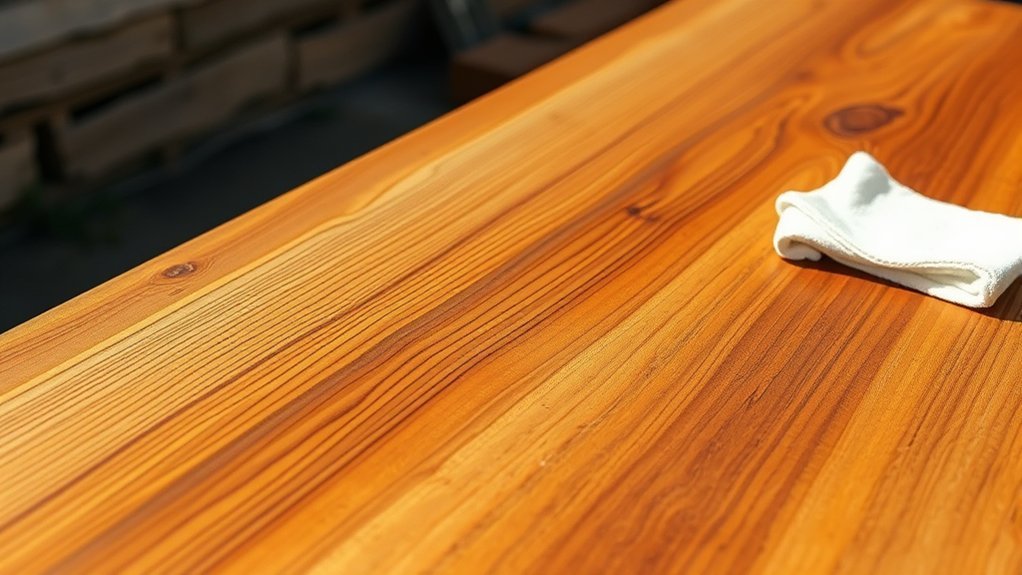
To maximize tung oil’s effectiveness and longevity, you need to properly prepare the wood surface before application. Begin with thorough wood preparation by sanding the surface progressively from 120 to 220 grit to guarantee smoothness and open pores for oil absorption.
After sanding, conduct meticulous surface cleaning to eliminate dust, oils, or residues that could impede penetration. Use a tack cloth or vacuum to remove fine particles, followed by wiping with a lint-free cloth dampened with mineral spirits to degrease and enhance adhesion.
Ascertain the wood is completely dry before applying tung oil, as moisture interferes with curing. Proper wood preparation and surface cleaning are critical for uniform oil penetration, preventing blotchiness, and maximizing the protective qualities and lifespan of the tung oil finish.
What’s the Best Way to Apply Tung Oil for Lasting Protection?
When applying tung oil for lasting protection, you’ll want to use thin, even coats to guarantee proper absorption and curing. Start by applying a small amount with a lint-free cloth or brush, working the oil into the wood grain using circular motions. Avoid pooling or excess oil, as this can prolong drying time and compromise the finish.
Tung oil application techniques recommend wiping off any surplus after 15–30 minutes to prevent tackiness. Between coats, maintain ideal drying conditions—temperatures between 65–75°F (18–24°C) and low humidity guarantee efficient polymerization. Allow each coat to dry fully, typically 24–48 hours, before applying the next.
Multiple thin layers build durable protection without trapping moisture, enhancing the wood’s natural beauty and extending the finish’s lifespan.
How Can You Tell When It’s Time to Reapply Tung Oil?
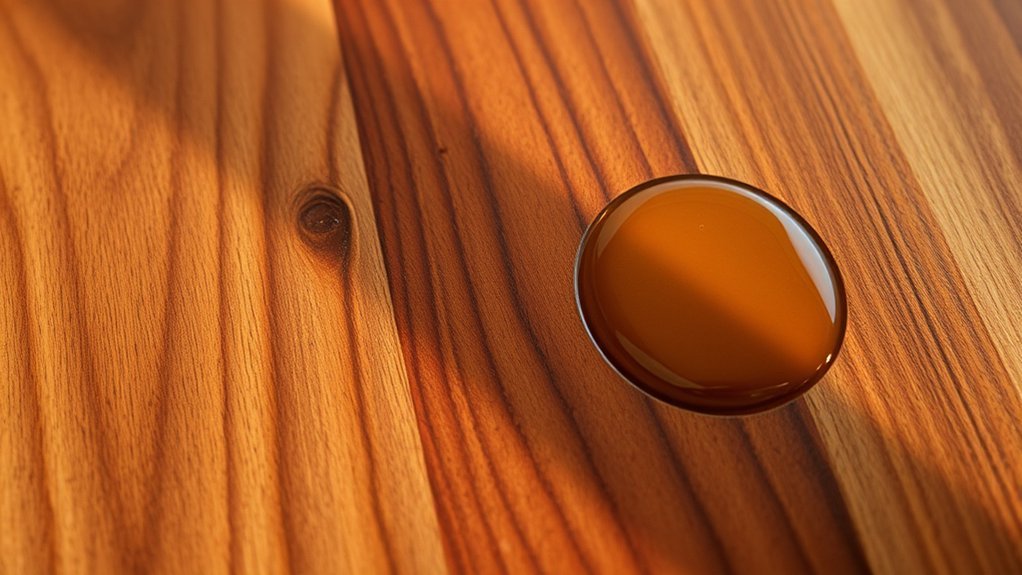
You’ll know it’s time to reapply tung oil when the wood’s surface shows visible signs of wear, such as dullness or uneven coloration. Pay close attention to changes in texture. If the finish feels rough or dry instead of smooth and supple, it indicates diminishing protection.
Additionally, test the wood’s water resistance. If water no longer beads on the surface but soaks in quickly, a fresh coat is necessary.
Visual Signs of Wear
A clear indication that it’s time to reapply tung oil is the appearance of dullness or uneven sheen on the wood surface. This visual cue signals finish deterioration, where the protective layer no longer uniformly enhances the wood’s natural grain or color.
You might notice areas where the oil has worn thin, exposing the wood to environmental factors. Additionally, spotting slight discoloration, blotchiness, or a patchy look often means the tung oil is losing its efficacy.
Fine cracks or micro-fissures in the finish can also emerge as the oil ages and breaks down. Monitoring these visual signs regularly helps you maintain ideal protection and aesthetics, ensuring the wood surface remains well-preserved and resistant to damage from light, air, and daily use.
Texture and Water Resistance
Beyond visual signs, the texture of the wood surface provides critical clues about tung oil’s condition. When properly applied and cured, tung oil creates a smooth, consistent texture variety that enhances the wood’s natural grain without roughness or tackiness.
Over time, if you notice areas becoming noticeably rougher, dry, or uneven, it indicates degradation of the protective layer. Simultaneously, test water resistance by placing a few drops on the surface; if the water beads up, the tung oil is still effective.
However, if water absorbs quickly, darkens the wood, or leaves stains, it’s a clear sign the oil has worn thin and needs reapplication. Monitoring these texture and water resistance changes guarantees the wood remains protected and maintains its aesthetic integrity.
How Do You Maintain and Extend a Tung Oil Finish?
To maintain and extend your tung oil finish, establish a regular cleaning routine using a soft cloth and mild detergent to remove dirt and oils without damaging the surface. Monitor the wood periodically for signs of wear or dullness, as these indicate when you should reapply a thin layer of tung oil.
Properly preparing the surface before each reapplication guarantees ideal adhesion and durability of the finish.
Regular Cleaning Routine
Maintaining a tung oil finish requires a consistent cleaning routine that prevents dirt buildup and preserves the wood’s natural luster. For ideal results, establish a cleaning frequency based on usage and environmental exposure. Typically, a light cleaning every two weeks suffices for indoor furniture.
Use a soft, lint-free cloth slightly dampened with water or a mild, pH-neutral soap solution to remove surface contaminants without compromising the finish. Avoid abrasive tools or harsh chemicals that degrade the oil layer. After cleaning, immediately dry the surface to prevent moisture penetration.
Regularly inspect the finish during cleaning to identify early wear signs. These maintenance tips maintain the protective qualities of tung oil remain intact, prolonging its durability and aesthetic appeal while minimizing the need for premature refinishing.
Periodic Reapplication Tips
Although tung oil provides durable protection, its finish will gradually wear down over time due to exposure and use, so you’ll need to periodically reapply it to preserve its effectiveness. The reapplication frequency depends on factors like wood type, environmental conditions, and surface wear. Generally, plan to reapply every 12 to 18 months.
Before reapplication, assess oil absorption by lightly sanding the surface with fine-grit sandpaper to remove any degraded layers and open the wood pores. Clean the surface thoroughly to remove dust and contaminants that could inhibit absorption.
Apply a thin, even coat of tung oil using a lint-free cloth or brush, allowing 24 to 48 hours for curing between coats. Multiple thin layers enhance durability by promoting deeper oil absorption, extending the finish’s lifespan and maintaining wood protection.
How Does Tung Oil Longevity Compare to Other Wood Finishes?
While tung oil offers a natural, water-resistant finish that penetrates wood fibers deeply, its longevity generally differs from synthetic finishes like polyurethane or varnish. In wood finish comparisons, synthetic options often provide a more durable, abrasion-resistant surface, lasting several years without reapplication.
Tung oil benefits include enhanced wood breathability and a warm, matte appearance, but it typically requires more frequent maintenance, often annual or biannual reapplications, to maintain protection. Unlike polyurethane’s hard film, tung oil soaks into the wood, which means it wears down gradually rather than peeling or cracking.
If you prioritize natural aesthetics and moderate durability, tung oil is ideal; however, for high-traffic surfaces demanding extended longevity, synthetic finishes outperform tung oil by providing superior resistance to moisture, chemicals, and physical wear over longer periods.
Frequently Asked Questions
Is Tung Oil Safe for Outdoor Furniture?
Yes, tung oil’s outdoor durability makes it suitable for your furniture, but you’ll need regular furniture maintenance to preserve protection. Its water-resistant finish penetrates wood, preventing moisture damage.
Reapplication guarantees long-term performance outdoors.
Can Tung Oil Be Used on Kitchen Countertops?
Sure, you can use tung oil on kitchen countertops because nothing says “durability” like a finish that needs frequent reapplication. It’s food-safe once cured, but for harsh kitchen use, consider tougher, more resilient options.
How Long Does Tung Oil Take to Dry Between Coats?
Tung oil’s drying time between coats typically ranges from 24 to 48 hours. For best results, guarantee proper ventilation, apply thin layers, and lightly sand between coats to improve adhesion and finish smoothness during application.
Does Tung Oil Darken Wood Color Permanently?
Yes, tung oil effects include a permanent darkening of wood color due to its polymerization within the wood fibers. You’ll notice enhanced grain contrast and a warm, amber hue that remains stable over time with proper application.
Can Tung Oil Be Mixed With Other Oils or Finishes?
You can blend tung oil with tung oil alternatives like linseed or walnut oil for enhanced properties, but precise oil blending ratios are essential to maintain drying times and finish durability. Avoid mixing with synthetic finishes to prevent curing issues.
Conclusion
Tung oil can last anywhere from one to several years on wood, depending on factors like wood type, application method, and exposure. Proper surface preparation is crucial to ensure the oil adheres well and provides lasting protection. Applying multiple thin coats rather than a single thick layer helps enhance durability and finish quality.
Think of tung oil as a protective armor for your wood, which requires timely reapplication and maintenance to maintain its strength. Regular upkeep can significantly extend the life of the finish and keep the wood looking its best.
By understanding these nuances and caring for your wood accordingly, you’ll guarantee that tung oil lasts on wood, providing a beautiful and resilient finish that surpasses many traditional options in both longevity and protection.