Yes, you can put polyurethane over tung oil, but it is important that the tung oil is fully cured before application. Proper surface preparation is essential to ensure good adhesion between the tung oil and polyurethane.
Start by cleaning the wood surface thoroughly. Then, lightly sand it with fine-grit sandpaper to create a mechanical bond for the polyurethane to stick to.
Apply thin, even coats of polyurethane following the grain of the wood. Allow sufficient drying time between each coat to achieve the best results.
This combination provides enhanced protection and durability compared to tung oil alone. Using the correct technique will improve the longevity and appearance of your wood finish.
What Is Tung Oil and How It Works on Wood

Tung oil is a natural drying oil derived from the seeds of the tung tree, prized for its excellent water resistance and ability to penetrate deep into wood fibers. When you apply tung oil, it polymerizes upon exposure to air, forming a durable, flexible, and water-repellent layer within the wood’s cellular structure.
This molecular bonding enhances the wood’s dimensional stability and longevity. The tung oil benefits include its non-toxic nature and ability to highlight the wood’s natural grain without creating a thick surface film like some synthetic finishes.
In wood finishing, tung oil offers a matte to satin sheen that improves tactile feel and visual depth. Its penetrating quality means you’ll get protection from within rather than on top, making it ideal for maintaining wood’s natural aesthetics while providing functional durability.
Can You Put Polyurethane Over Tung Oil?
How well does polyurethane adhere when applied over an oil-based finish like tung oil? You can put polyurethane over tung oil, but proper surface preparation is essential for ideal adhesion.
Tung oil benefits include deep wood penetration and a flexible, natural finish, which can resist moisture but remains somewhat porous. Polyurethane advantages lie in its durable, protective film that guards against scratches and chemicals.
To guarantee polyurethane bonds effectively, the tung oil must be fully cured, typically several days to weeks depending on conditions. Lightly sanding the surface to create mechanical keying is recommended to overcome the slickness of tung oil’s surface.
Skipping these steps risks poor adhesion, leading to peeling or uneven coating. When done correctly, layering polyurethane over tung oil combines the benefits of both finishes for enhanced wood protection.
Why Add Polyurethane Over Tung Oil?
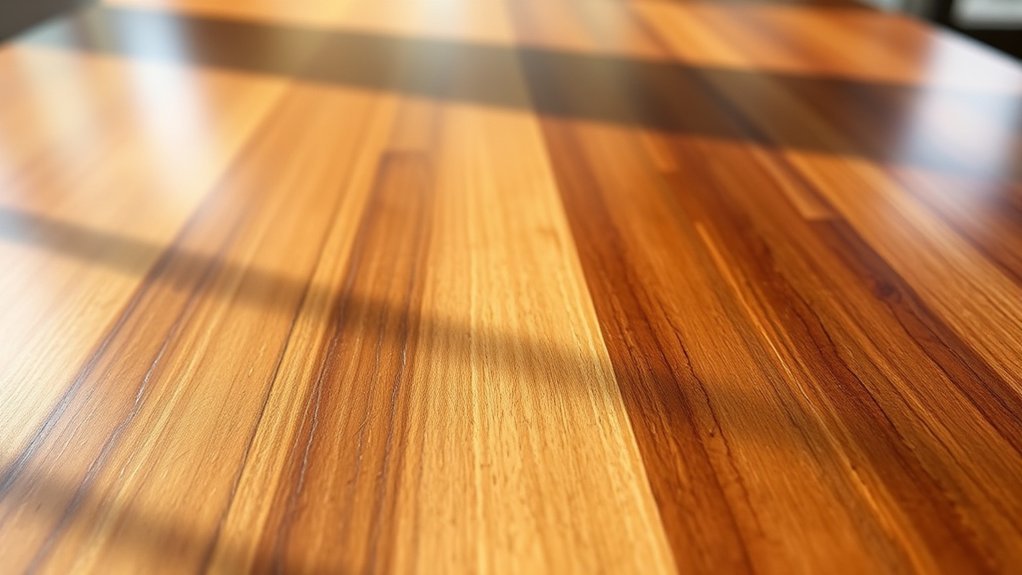
Once you’ve guaranteed the tung oil is fully cured and properly prepped, applying polyurethane adds a significant layer of protection that tung oil alone can’t provide. While tung oil enhances wood’s natural beauty and offers moderate durability, polyurethane greatly improves resistance to abrasion, moisture, and chemical exposure.
This combination leverages the tung oil durability with the benefits of polyurethane’s tough, clear finish.
| Property | Tung Oil Alone | Polyurethane Over Tung Oil |
|---|---|---|
| Durability | Moderate | High |
| Water Resistance | Moderate | Excellent |
| Chemical Resistance | Low | High |
| Finish Appearance | Natural, matte | Glossy or satin options |
How to Prepare a Tung Oil Surface for Polyurethane
Before applying polyurethane, you’ll need to confirm the tung oil finish is completely cured and the surface is properly prepared to promote adhesion. Oil curing can take several days to weeks depending on conditions; make sure the tung oil is fully hardened to avoid trapping solvents beneath the polyurethane.
Start by performing thorough surface cleaning with a lint-free cloth and a mild solvent like mineral spirits to remove dust, grease, or contaminants without damaging the oil finish. Once clean, lightly sand the surface with fine-grit (320-400) sandpaper to create a slight tooth for better polyurethane bonding.
After sanding, remove all dust through vacuuming and tack cloth wiping. Proper surface cleaning and confirming complete oil curing are critical steps to make sure polyurethane adheres well and achieves a durable, smooth finish over tung oil.
Best Types of Polyurethane to Use Over Tung Oil

Selecting the right type of polyurethane is essential for achieving a durable and compatible finish over tung oil. You’ll want to focus on polyurethane types that offer excellent adhesion and flexibility.
Oil-based polyurethanes are generally preferred because they penetrate and bond well with tung oil, enhancing durability and depth. However, some water-based formulations from the best polyurethane brands have been engineered for compatibility and faster drying times, making them viable alternatives.
When choosing, consider satin or semi-gloss sheens to avoid excessive glossiness and guarantee a natural appearance. Avoid fast-curing polyurethane types, as they may not adhere properly over tung oil.
Prioritize products with proven performance on oily substrates, which you can often find among top-rated polyurethane brands known for their quality and reliability.
Step-by-Step Guide to Applying Polyurethane Over Tung Oil
Before applying polyurethane over tung oil, you’ll need to prepare the surface meticulously to guarantee proper adhesion. This involves light sanding and cleaning to remove any residue or dust.
Then, you’ll apply the polyurethane using controlled, even strokes to achieve a smooth, durable finish.
Surface Preparation Tips
Although tung oil creates a durable finish, proper surface preparation is crucial to guarantee polyurethane adheres correctly and cures evenly. Begin by thoroughly performing surface cleaning to remove dust, grease, or contaminants that could interfere with adhesion.
Next, employ careful sanding techniques:
- Use fine-grit sandpaper (220-320 grit) to lightly scuff the tung oil finish, improving polyurethane bonding without removing the oil layer entirely.
- Wipe down the surface with a tack cloth to eliminate sanding residue.
- Confirm the surface is completely dry and free of oils before applying polyurethane.
Following these precise steps guarantees ideal surface receptivity, promoting a smooth, long-lasting polyurethane coat over tung oil.
Application Techniques
Once your tung oil surface is properly prepped and fully dry, you can move on to applying polyurethane. Focus on precise application techniques to guarantee adhesion and a smooth finish.
Use high-quality synthetic brushes for brush methods, applying thin, even coats along the wood grain. Avoid over-brushing to prevent bubbles and streaks.
Allow each coat to dry as per manufacturer instructions before lightly sanding with fine-grit paper for better adhesion.
| Step | Action | Tip |
|---|---|---|
| 1 | Stir polyurethane gently | Avoid shaking to prevent bubbles |
| 2 | Apply thin coat with brush | Follow wood grain direction |
| 3 | Let dry completely | Check manufacturer’s drying time |
| 4 | Sand lightly | Use 320-400 grit sandpaper |
| 5 | Repeat for desired finish | Usually 2-3 coats recommended |
Troubleshooting Polyurethane Over Tung Oil Finishes
Dealing with issues in polyurethane over tung oil finishes often boils down to understanding the interaction between the two materials. Troubleshooting issues requires evaluating finish compatibility, as improper curing or residual oil can cause adhesion failures.
Successful polyurethane application over tung oil hinges on proper curing and compatibility to avoid adhesion problems.
Here’s what you should check:
- Curing Time: Verify tung oil is fully cured; otherwise, polyurethane may not adhere properly, leading to bubbles or peeling.
- Surface Preparation: Lightly abrade the tung oil surface to promote mechanical bonding, improving polyurethane adhesion.
- Application Conditions: Monitor temperature and humidity; extreme conditions can disrupt the polyurethane’s film formation over tung oil.
Maintaining Finishes With Both Tung Oil and Polyurethane
When maintaining finishes that combine tung oil and polyurethane, you’ll need to address the unique properties of both materials to guarantee durability and appearance. Tung oil’s penetrating nature means it relies on oil absorption into the wood fibers for protection, while polyurethane forms a hard, protective film atop the surface.
To preserve both layers, use finishing techniques that avoid aggressive abrasion, which can compromise the oil’s embedded layer and the polyurethane’s film. Clean gently with a damp cloth and mild detergent to remove dirt without damaging the finish.
If wear is evident, lightly sand with fine-grit paper to promote adhesion before applying a fresh polyurethane coat. Avoid reapplying tung oil directly over polyurethane, as oil absorption is hindered by the polymer layer, potentially causing adhesion issues.
Other Protective Finishes Compatible With Tung Oil
While polyurethane is a common choice to protect surfaces treated with tung oil, there are other finishes that work well in combination with tung oil’s penetrating properties. If you’re exploring alternative finishes, consider the following protective oils and sealants that complement tung oil effectively:
- Danish Oil: A blend of tung oil and varnish, Danish oil enhances durability while maintaining a natural matte finish. It is ideal for moderate protection without gloss.
- Hard Wax Oils: These combine protective oils with wax, offering water resistance and a smooth surface that preserves tung oil’s tactile feel.
- Shellac: A natural resin compatible with tung oil, shellac provides a quick-drying, glossy finish that seals the wood while allowing the tung oil beneath to enhance grain depth.
Selecting these alternatives depends on your desired sheen, durability, and environmental exposure.
Frequently Asked Questions
How Long Should I Wait After Applying Tung Oil Before Applying Polyurethane?
You should wait at least 72 hours for the tung oil’s drying time to guarantee full curing before applying polyurethane. This allows proper oil compatibility and adhesion, preventing tackiness or peeling in your finish.
Can I Use Polyurethane Over Tung Oil on Outdoor Furniture?
Certainly, you can coat your outdoor furniture with polyurethane over tung oil. However, verify thorough drying for finish compatibility; this combo boosts outdoor durability by sealing tung oil’s penetrating protection beneath polyurethane’s robust, weather-resistant barrier.
Will Polyurethane Alter the Color of Tung Oil Finish?
Yes, polyurethane can cause a slight color change, typically darkening the tung oil finish. However, it considerably enhances finish durability, providing a protective layer that resists wear, moisture, and UV exposure, preserving your wood’s longevity effectively.
Is It Necessary to Sand Between Tung Oil and Polyurethane Coats?
You don’t always have to sand between tung oil and polyurethane, but employing proper sanding techniques can enhance finish durability by promoting adhesion. Lightly sanding guarantees a smoother shift, preventing peeling and improving the overall longevity of your finish.
Can I Apply Polyurethane Over Tung Oil on Previously Finished Wood?
Yes, you can apply polyurethane over tung oil on previously finished wood. Tung oil benefits include deep penetration and natural finish, while polyurethane durability adds protective hardness.
Guarantee tung oil is fully cured and lightly sanded for proper adhesion.
Conclusion
If you’ve applied tung oil and want extra protection, adding polyurethane is a smart move—just make certain the tung oil is fully cured and lightly sanded first.
For example, a furniture restorer sealed a hand-rubbed tung oil tabletop with water-based polyurethane to enhance durability without yellowing. This combo offers both tung oil’s rich finish and polyurethane’s toughness.
With proper prep and the right polyurethane, you’ll get a resilient, beautiful wood finish that lasts. So yes, you can put polyurethane over tung oil to achieve a durable and attractive surface.