You might think the hammer was invented recently, but the hammer’s origins stretch back millions of years. Early humans first used unmodified stones to pound and break objects around 3.3 million years ago.
Over time, these tools evolved—adding handles and eventually metal heads by the Bronze Age. Understanding this progression reveals how the hammer became essential to human development.
Yet the full story of its transformation is more complex than you might expect.
When Was the First Hammer Invented?
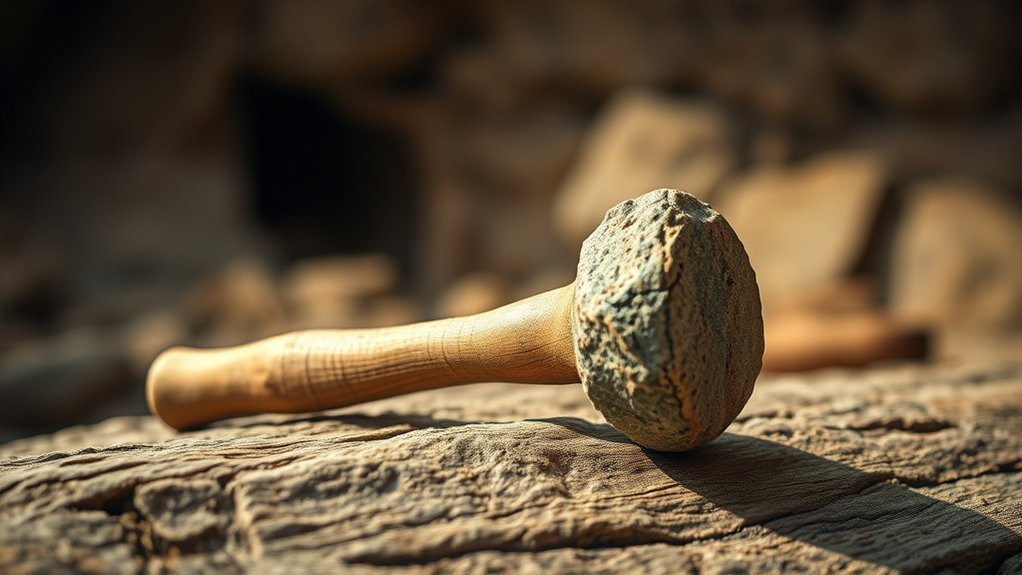
When exactly was the first hammer invented? You’ll find its origins trace back roughly 3.3 million years ago, during the Stone Age. Early humans initially used simple stone tools, gripping unmodified rocks to pound or break objects.
Over time, these primitive tools evolved, marking the woodworking origins of the hammer. By attaching stones to wooden handles, they increased efficiency and control, creating the earliest recognizable hammer forms.
This gradual development reflects a clear progression: from bare stone tools to composite tools combining wood and stone. Understanding this timeline helps you see how necessity drove innovation, shaping the hammer into a vital implement.
Why Was the Hammer So Important to Early Humans?
How did the hammer become indispensable to early humans? Initially, it served as an essential extension of your hand for stone toolmaking. By striking stones, you could shape sharp edges necessary for cutting, hunting, and processing food.
The hammer began as an essential extension of the hand, shaping sharp tools for survival.
This ability marked a significant advancement in survival strategies. Over time, the hammer’s role expanded beyond mere practicality. It took on ceremonial significance, symbolizing power and craftsmanship within your community.
Its presence in ceremonies reflected your growing understanding of tools as cultural artifacts. The hammer’s consistent utility in daily tasks and symbolic roles ensured its central place in early human life, driving technological progress and social cohesion.
You relied on it not only to manipulate your environment but also to express identity and tradition.
What Materials Were Early Hammers Made From?
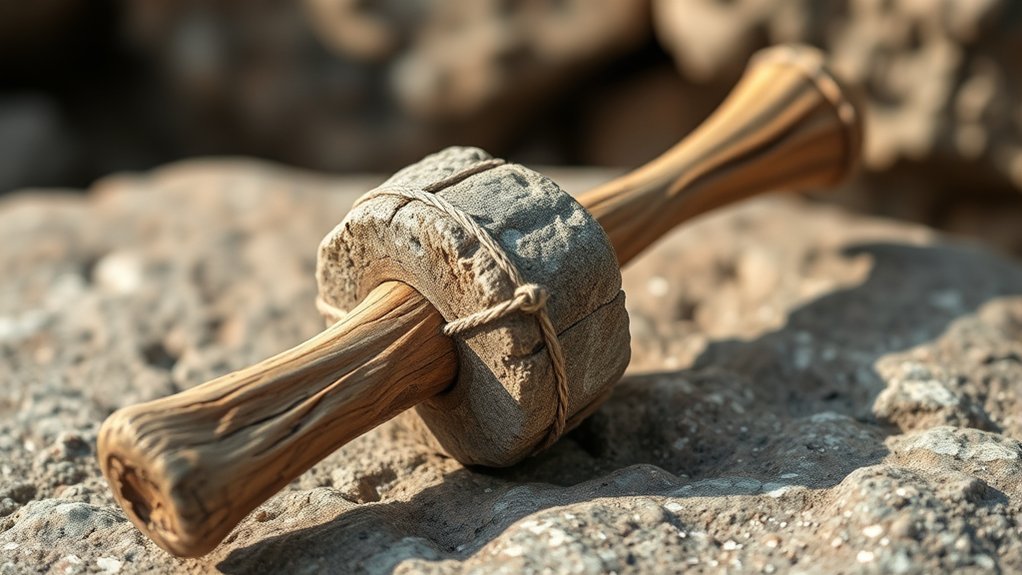
As you continued to rely on hammers for both daily tasks and symbolic purposes, the materials used to make these tools evolved to meet your needs. Initially, early hammers were simple stones or wooden clubs, chosen for their availability and durability.
Over time, prehistoric metallurgy introduced metals like copper and later bronze, allowing you to create more effective and long-lasting hammerheads. This shift not only enhanced impact force but also improved tool ergonomics, as handles were shaped for better grip and control.
You adapted materials based on task requirements: softer materials for delicate work and harder metals for heavy-duty use. This chronological progression reflects your growing understanding of material properties and tool design, setting the foundation for increasingly sophisticated hammer forms in later periods.
How Did Stone Age Hammers Evolve Over Time?
You’ll see that early Stone Age hammers started with simple stones shaped by hand, relying solely on natural materials. Over time, designs shifted as people attached wooden handles to improve grip and force, marking a key evolution.
These changes reflect a gradual but clear advancement in both materials and functionality through different eras.
Early Hammer Materials
When did humans first start shaping tools from stone? In the Stone Age, early tool making began with simple stones used as hammers. Over time, you’d notice improvements in material selection and technique, marking significant evolution in hammer construction.
Early hammer materials included:
- Unshaped stones: The first hammers were just heavy rocks held in the hand.
- Flint and other hard stones: These were shaped to improve grip and impact efficiency.
- Wooden handles combined with stone heads: This innovation allowed better control and force transfer.
Each step reflects a growing understanding of materials and craftsmanship. By experimenting with different stones and attaching handles, Stone Age humans enhanced their tool effectiveness, setting the foundation for more advanced tool making later.
Design Changes Through Eras
How did Stone Age hammers evolve from simple handheld stones to more sophisticated tools? Initially, early humans used unmodified stones, relying purely on their natural shape and weight. Over time, they began attaching stones to wooden handles, improving grip and force application. This marked the start of ergonomic considerations.
As designs progressed, hammerheads became more refined, often shaped to suit specific tasks like hunting or crafting. By the Neolithic era, polished stone hammers reflected both practical improvements and cultural symbolism, signifying status or ritual use.
You’ll notice that each design change balanced function with emerging social meanings. So, the evolution of Stone Age hammers isn’t just about utility; it also reveals how early societies integrated toolmaking with cultural identity and ergonomic efficiency.
When Did Metal Hammers First Appear?
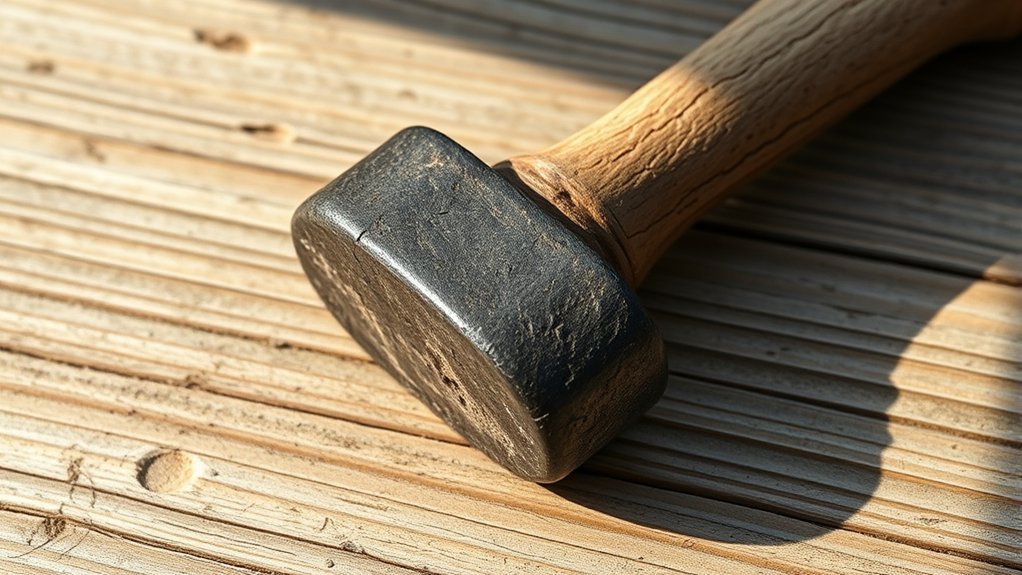
Exactly how metal hammers came into use marks a significant technological leap in human history. You’ll find that metal hammers first appeared around 3000 BCE during the Bronze Age, replacing earlier stone tools. This transition reflected advances in production methods, allowing for stronger, more durable tools.
Metal hammerheads were cast or forged, improving efficiency and precision in woodworking and metalworking.
Key developments to note include:
- Early metal hammers made from bronze, then iron.
- Shift from simple stone tools to specialized metal designs.
- Enhanced production methods enabling mass tool creation.
How the Industrial Revolution Changed Hammer Design
You’ll notice that during the Industrial Revolution, hammer design shifted dramatically due to new materials like hardened steel, which improved durability and efficiency.
Mechanization allowed for mass production, making hammers more uniform and affordable. These changes marked a clear turning point in how hammers were made and used.
Material Innovations
Why did hammer design undergo such significant changes during the Industrial Revolution? Before, you relied on primitive stone tools and ceramic anvils, which limited hammer effectiveness. The Industrial Revolution introduced new materials that transformed design and durability. You saw:
Transition from wooden to steel handles, increasing strength and longevity
Use of forged steel heads replacing brittle stone or ceramic components
Introduction of alloy steels enhancing impact resistance and reducing weight
These material innovations offered you better control, reliability, and efficiency. The availability of mass-produced steel allowed hammers to evolve from simple tools into specialized instruments tailored for various trades. This shift not only improved performance but also set the stage for future mechanization.
Understanding this material evolution helps you appreciate how far hammer technology advanced from its earliest stone tool origins.
Mechanization Impact
The introduction of stronger materials during the Industrial Revolution set the stage for mechanization to reshape hammer design. As factories emerged, the demand for more efficient tools grew, prompting mechanized production methods that replaced handcrafting.
You’d notice that hammer heads became more uniform, crafted from hardened steel, improving durability and performance compared to those used in ancient economies. Social upheaval fueled this transformation, as urbanization and industrial labor required tools suited for mass production and specialized tasks.
Mechanization also introduced interchangeable parts, making repairs easier and reducing costs. By the late 19th century, you’d find hammers tailored for specific trades, reflecting the era’s technological progress.
This evolution marked a clear shift from simple, multipurpose tools to precision instruments driven by industrial needs.
How Did Different Cultures Influence Hammer Styles?
How did different cultures shape the evolution of hammer styles over time? Early societies adapted stone shapes to suit their specific needs, influencing hammer design markedly. As cultural crossings occurred through trade and conquest, hammer styles diversified, reflecting various functional and symbolic purposes.
Ancient Egyptians refined hammerheads for woodworking, emphasizing smooth stone shapes. In Mesopotamia, metalworking introduced heavier hammers with specialized striking surfaces. Indigenous cultures in the Americas crafted hammers combining wood and stone, optimizing balance and durability.
You can see how these cultural exchanges led to a gradual yet distinct evolution in hammer styles. Each society’s unique environment and technological advancements contributed to shaping tools that matched their specific demands, illustrating the dynamic interplay between culture and tool innovation.
What Are the Main Types of Modern Hammers?
You’ll find that modern hammers come in common varieties like claw and sledgehammers, each designed for specific tasks. Over time, specialized hammers have emerged to meet unique functions in construction, woodworking, and metalwork.
The materials and handle types have also evolved to improve durability and user comfort.
Common Hammer Varieties
Which hammer suits your project best depends on understanding the main types used today. Modern hammers have evolved with a focus on hammer ergonomics and user safety to enhance effectiveness and reduce fatigue. You’ll typically encounter these common varieties:
- Claw Hammer: Ideal for driving and removing nails, its curved claw balances force and control.
- Ball Peen Hammer: Favored in metalworking, its rounded peen shapes and peens metal efficiently.
- Sledgehammer: Designed for heavy-duty demolition, it delivers powerful blows with a longer handle for leverage.
Each hammer type reflects a chronological advancement in design, emphasizing specific tasks and ergonomic improvements. Choosing the right hammer not only boosts productivity but also minimizes injury risks, ensuring safety during use. Understanding these varieties lets you pick the best tool for your needs confidently.
Specialized Hammer Functions
Why do modern hammers come in so many specialized forms? As tasks evolved, so did the hammer’s design to match specific functions.
For hand carpentry, claw hammers became essential, combining efficient nail driving with easy nail removal. In metal forging, ball-peen hammers emerged, featuring rounded heads to shape hot metal without damage.
Sledgehammers offer heavy impact for demolition, while tack hammers suit delicate upholstery work. Each type reflects a refined purpose, enhancing effectiveness and safety.
Understanding these distinctions helps you select the right tool for your project, whether you’re framing a wall or shaping metal. Over time, specialization allowed hammers to become indispensable in various trades by addressing unique demands with precision and efficiency.
Materials And Handle Types
How do the materials and handle types of hammers influence their performance and suitability? Understanding this requires tracing the evolution from historic metallurgy to modern design. Early hammers used stone heads, but advancements in metallurgy introduced durable metals like steel, enhancing impact and longevity.
Handle materials evolved alongside, focusing on ergonomic improvements to reduce user fatigue and improve control.
Today, the main types of modern hammers include:
- Steel heads with wooden handles: Classic design offering balance and shock absorption.
- Steel heads with fiberglass handles: Durable, lightweight, and resistant to weather.
- Steel heads with steel handles: Maximum strength but heavier, often with rubber grips for comfort.
Each combination reflects a balance between historic metallurgy and ergonomic advances, tailoring hammers to specific tasks and user needs.
How Has Hammer Technology Improved Efficiency?
Advancements in hammer technology have dramatically increased your productivity by enhancing design, materials, and ergonomics over time. Initially, stone tools served as rudimentary hammers, but their inefficiency limited force control and comfort.
As metallurgy developed, metal heads replaced stone, improving durability and impact precision. The introduction of wooden handles refined hammer ergonomics, reducing user fatigue and increasing swing accuracy.
Later, innovations like shock-absorbing grips and balanced weight distribution further optimized efficiency, letting you work longer with less strain. Modern hammers incorporate advanced alloys and ergonomic designs tailored to specific tasks, ensuring maximum force transfer while minimizing injury risks.
What Does the Future Hold for Hammer Innovation?
What innovations will redefine the hammer’s role in your toolkit? Future hammer innovation focuses on enhancing hammer ergonomics and integrating technology while preserving cultural symbolism.
First, ergonomic designs will reduce strain, using materials that adapt to your grip and minimize vibration. Next, smart hammers equipped with sensors may track usage and provide feedback, improving accuracy and safety.
Finally, designers will blend tradition with modernity, honoring the hammer’s cultural symbolism in tool aesthetics and marketing.
Expect these advances to shape your experience:
- Adaptive handles tailored to reduce fatigue
- Digital integration for performance monitoring
- Designs reflecting cultural heritage and modern needs
These developments promise a hammer that’s smarter, more comfortable, and culturally resonant, evolving alongside your demands.
Frequently Asked Questions
How Do You Properly Maintain and Care for a Hammer?
You maintain your hammer by cleaning it after use, checking for damage, and storing it dry. For blade care, sharpen and oil any cutting edges regularly. These maintenance basics ensure safety and prolong your hammer’s lifespan.
What Safety Precautions Should Be Taken When Using a Hammer?
You’ll reduce injury risk by following hammer safety: inspect the tool for damage first, wear protective gear, and maintain the hammer regularly.
Over 250,000 injuries yearly prove neglecting tool maintenance can lead to serious accidents.
Can Hammers Be Used for Purposes Other Than Construction?
Yes, you can use hammers beyond construction. Throughout hammer history, people have applied them for alternative uses like crafting, metalwork, and demolition.
Understanding these uses helps you appreciate the tool’s versatility and evolution.
How Do Hammer Weights Affect Their Use and Effectiveness?
You’ll find hammer weight directly affects your control and power; proper hammer balance and weight distribution help you strike efficiently without fatigue.
Heavier heads deliver more force, while lighter ones offer better precision and speed.
What Are the Environmental Impacts of Hammer Production?
You’ll find hammer production impacts the environment through raw material extraction and energy use. Considering the environmental lifecycle and supply chain ethics helps you choose responsibly, minimizing pollution and promoting sustainable manufacturing practices.
Conclusion
You’ve seen how the hammer’s journey, from simple stone tools to advanced steel designs, mirrors human progress like a timeline carved in time. Each era shaped its form and function, improving your ability to build and create.
Understanding this evolution helps you appreciate the hammer not just as a tool, but as a symbol of innovation and resilience. As you wield one today, you hold millions of years of ingenuity in your hand.
This long history highlights why the hammer is such an essential invention. Knowing when was the hammer invented deepens your connection to this timeless tool.