You’ll want a table saw that matches your biggest project size, workspace, and skill level when considering what size table saw do I need.
Larger blades (10-12 inches) and 1.5+ horsepower motors handle thick, wide stock better.
If space is tight, a smaller saw might work but limits cut capacity.
Beginners benefit from manageable sizes with basic safety features, while pros need powerful, feature-rich models.
Budget plays a big role too, balancing size and power with cost.
Keep going to uncover which saw truly fits your needs.
How Do You Decide What Size Table Saw Fits Your Projects?
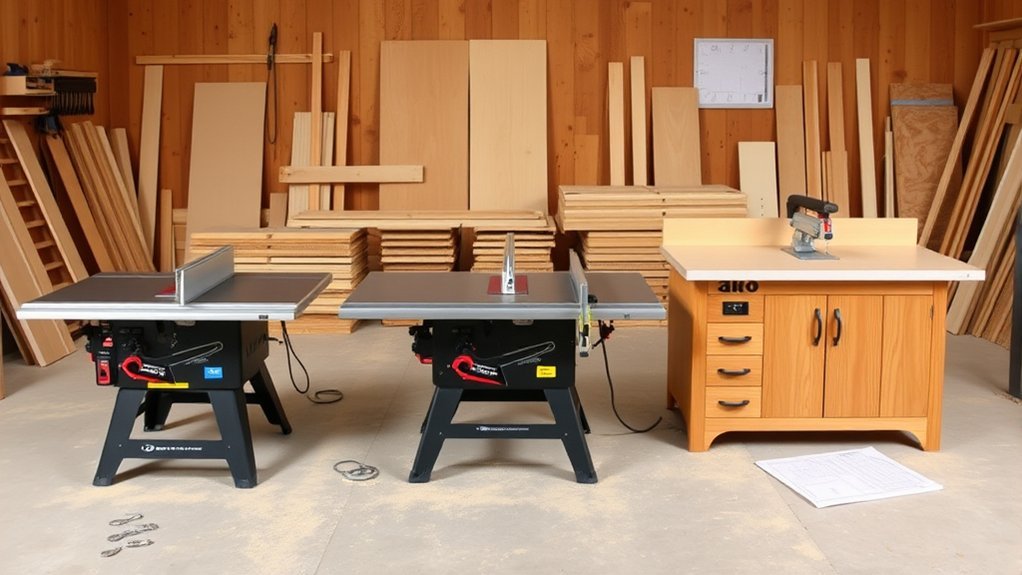
How do you determine the right table saw size for your projects? Start by evaluating your project dimensions. Think about the largest pieces you’ll cut regularly.
Begin by assessing your project sizes and the largest materials you’ll frequently cut.
If you’re working with wide plywood sheets or large slabs, a bigger table saw with ample surface area will provide better support and control. Consider the material types, too.
Hardwoods and thick materials need a stable, powerful saw that can handle tough cuts without strain. If you mostly cut smaller boards or softer materials, a compact saw might suffice.
Also, factor in your workspace size; a larger saw demands more room. By aligning the saw’s size with your typical project dimensions and material types, you guarantee efficiency, safety, and precision in your woodworking tasks.
How Does Blade Size Affect Your Table Saw Choice?
Choosing the right table saw means paying close attention to the blade size, as it directly impacts the types of cuts you can make and the materials you can handle. The blade diameter determines the maximum depth of cut your saw can achieve.
Larger blades, typically 10 to 12 inches, allow you to cut thicker stock and wider boards, offering more versatility for various projects. Smaller blades, like 8 inches, limit cut depth but often result in a lighter, more portable saw.
Beyond size, blade diameter influences cut precision; a properly matched blade guarantees cleaner cuts and reduces tear-out. When selecting your saw, consider the materials you’ll work with and the precision required, as blade size is a key factor in balancing capacity and accuracy for your woodworking needs.
How Much Motor Power Do You Really Need on a Table Saw?
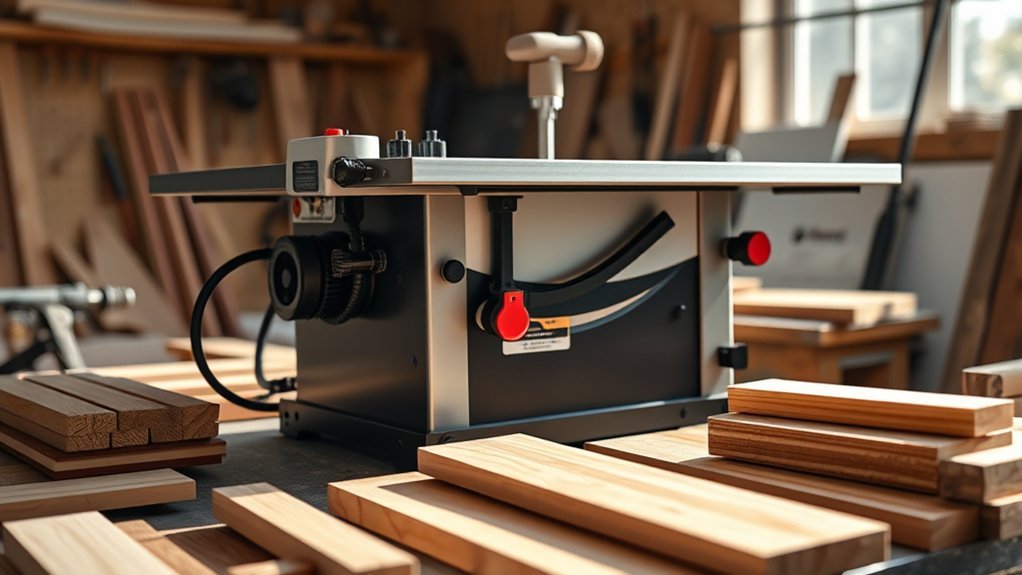
Wondering what motor power your table saw really needs to handle your projects? The key is balancing horsepower requirements with motor efficiency. A more powerful motor doesn’t always mean better performance if it wastes energy.
For typical woodworking tasks, a motor between 1.5 to 3 horsepower is usually sufficient, delivering smooth cuts without bogging down.
| Project Type | Recommended Motor Power (HP) |
|---|---|
| Light Hobby | 1 – 1.5 |
| General Woodworking | 1.5 – 2 |
| Heavy Duty | 2 – 3 |
| Professional Use | 3+ |
Choosing a motor with good efficiency guarantees consistent power delivery and prolongs motor life. Focus on matching horsepower requirements to your workload rather than just opting for the highest rating.
What Cut Capacity Should Your Table Saw Offer?
You’ll want to take into account the maximum rip width your table saw can handle to guarantee it fits the size of your typical projects. Also, check the crosscutting limitations, since they determine how wide and thick your cuts can be across the grain.
Knowing these capacities helps you pick a saw that won’t hold you back.
Maximum Rip Width
Although the size of the blade matters, the maximum rip width, the distance between the blade and the saw’s fence, is what really determines the largest piece of wood you can cut in one pass. When comparing table saws, look closely at this measurement since it dictates your workpiece size limit.
For instance, a saw with a 30-inch maximum rip width lets you handle wider boards without multiple cuts, saving time and effort. If you often work with sheet goods or wide lumber, prioritize a saw with a larger rip capacity.
A table saw comparison should focus on this feature alongside blade size and motor power to guarantee it fits your specific project needs. Ultimately, the maximum rip width is a key factor in selecting the right table saw for your workshop.
Crosscutting Limitations
When choosing a table saw, understanding its crosscutting capacity is just as important as knowing its rip width. Crosscut capacity refers to the maximum width of material you can cut across the grain, which directly impacts the size of projects you can handle.
Make certain the saw’s fence and miter gauge support the cutting angles you need, especially if you work with bevel or compound cuts. Some saws offer extended fences or sliding crosscut tables to increase capacity and accuracy.
If you frequently cut wide boards or panels, opt for a table saw that provides ample crosscut capacity without forcing you to reposition the workpiece multiple times. This guarantees safer, more precise cuts and improves your workflow efficiency.
Always check the manufacturer’s specs for exact crosscut limits before deciding.
How Does Your Workspace Size Influence Table Saw Selection?
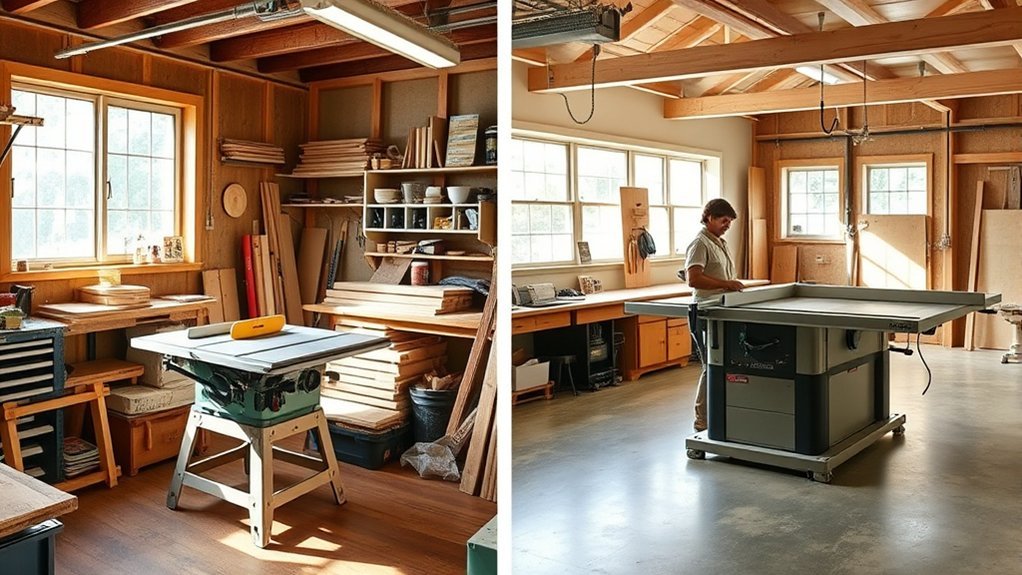
How much space you have in your workshop plays a crucial role in choosing the right table saw. Before buying, measure your workspace dimensions carefully to make certain the saw fits comfortably and allows for safe operation.
Consider table placement to maintain proper workflow and accommodate material handling.
Keep these points in mind:
- Make certain enough clearance around the saw for maneuvering large stock.
- Account for additional space needed for outfeed and side supports.
- Position the saw to avoid obstructing doorways or other tools.
Portable or Cabinet Table Saw: Which Size Is Right for You?
You’ll need to decide between a portable table saw, which offers mobility and fits smaller workspaces, or a cabinet saw that delivers more power but requires a dedicated area.
Consider the types of projects you’ll tackle. Lighter, on-the-go tasks lean toward portable models, while heavy-duty woodworking benefits from a cabinet saw’s stability. Matching your saw to your workspace and project needs guarantees you get the right balance of size, power, and convenience.
Mobility Versus Power
Although a larger cabinet table saw offers more power and stability, it isn’t always the best choice if you need to move your saw frequently or have limited space. You’ll face portability trade offs: cabinet saws excel in power requirements and precision but are heavy and bulky. Portable table saws, on the other hand, sacrifice some power for ease of transport and setup.
Consider these points when weighing mobility versus power:
- If your projects demand cutting thick hardwoods, a cabinet saw’s power is essential.
- For job sites or small workshops, a portable saw’s lighter weight and compact size improve convenience.
- Think about how often you’ll relocate the saw versus the power you need for your typical work.
Balancing these factors helps you choose a table saw size that fits your workflow efficiently.
Workspace Considerations
When choosing between a portable or cabinet table saw, the size of your workspace plays a critical role in determining which one fits best. Your workspace layout and space constraints directly affect not only where you place the saw but also how comfortably you can operate it.
Portable saws tend to be compact and easier to move, making them ideal for smaller or multipurpose work areas. Cabinet saws require more room but offer greater stability and power if your workspace allows.
| Workspace Feature | Portable Table Saw |
|---|---|
| Footprint | Small, fits tight spaces |
| Mobility | High, easy to relocate |
| Space Constraints | Suitable for limited areas |
Evaluate your layout carefully before deciding.
Project Types and Needs
Since the type of projects you plan to tackle greatly influences your table saw choice, it’s important to match the saw’s capabilities with your specific needs. If you primarily work with lighter project materials like plywood or softwoods, a portable table saw might be enough. However, for denser materials or more complex cutting techniques, a cabinet table saw offers greater power and stability.
Consider these factors:
- Project materials: heavier hardwoods require a more robust saw.
- Cutting techniques: precise bevels and rip cuts benefit from a stable, larger saw.
- Mobility needs: portable saws fit tight spaces or job sites, while cabinet saws suit permanent workshops.
Choosing the right size means balancing the demands of your projects with the saw’s features for peak performance.
How Does Your Skill Level Affect the Table Saw Size You Need?
Because your skill level directly influences how you handle and maintain a table saw, choosing the right size depends on your experience. If you’re a beginner, you’ll want to focus on beginner requirements: manageable size, straightforward controls, and basic features that let you learn without feeling overwhelmed.
Smaller or mid-sized saws often fit this need well. As you gain skill, you might want a larger saw with advanced features like greater cutting capacity, better fence systems, and enhanced dust collection. These advanced features support more complex projects and precision work but can be tricky if you’re just starting out.
Ultimately, matching your saw size and capabilities to your skill level guarantees safer operation and more satisfying results as you improve.
What Safety Features Come With Different Table Saw Sizes?
When choosing your table saw size, it’s important to evaluate the safety features that come with it. Larger saws often include advanced mechanisms like blade guards and flesh sensors, while smaller models may have more basic protections.
Knowing how these features vary by size helps you pick the right saw for both your needs and safety.
Safety Mechanisms By Size
Although all table saws prioritize user safety, the specific safety features you’ll find can vary considerably depending on the saw’s size. When you do a size comparison, larger cabinet saws often include advanced safety features like flesh-detection technology, while smaller portable models focus on basic guards and emergency stops.
Knowing what safety features come with different table saw sizes helps you choose the right fit for your needs and workspace.
Here’s a quick rundown of common safety mechanisms by size:
- Compact/Portable saws: Basic blade guards, riving knives, and push sticks.
- Contractor saws: Enhanced guards, anti-kickback pawls, and sturdier emergency shutoffs.
- Cabinet saws: Advanced flesh-sensing systems, enclosed motors, and more robust dust collection for safer operation.
Match your safety needs to the table saw size you select.
Size-Dependent Safety Features
If you’re choosing a table saw, understanding the safety features tied to each size category can help you pick the right tool for your workshop and skill level. Compact or portable table saws often include basic safety features like blade guards and riving knives, suitable for lighter-duty tasks.
Mid-sized saws add enhanced safety elements such as flesh detection technology and more robust anti-kickback pawls, reflecting important size considerations for semi-professional use. Full-sized cabinet saws typically offer the most advanced safety features, including magnetic blade stops and extensive dust collection systems that reduce hazards during heavy-duty operation.
How Does Your Budget Limit Your Table Saw Size Options?
Since table saws come in a wide range of sizes and features, your budget will play a crucial role in narrowing down your options. Budget constraints often mean you’ll need to prioritize between size, power, and additional features.
Conducting a thorough cost analysis helps guarantee you get the best value without overspending.
Keep in mind:
- Larger saws usually cost more due to bigger motors and added durability.
- Compact models fit tighter budgets but may sacrifice cutting capacity.
- Mid-range options balance size and price, offering versatility for most projects.
Where Are Different Table Saw Sizes Best Used for Projects?
When choosing the right table saw size for your projects, understanding where each size excels can make a big difference in efficiency and results.
Smaller portable table saws are ideal for basic project types like small furniture or trim work, especially if your workspace layout is limited or you need mobility. Contractor saws strike a balance, fitting medium-sized projects such as cabinetry and offering more power while still being somewhat portable.
Cabinet saws, the largest and most powerful, suit large-scale projects like professional woodworking or extensive flooring jobs, but they require a spacious, dedicated workspace layout.
Match your table saw size to your typical project types and available workspace to optimize performance, safety, and convenience. This guarantees you won’t be overwhelmed by size or underpowered for your needs.
Frequently Asked Questions
How Often Should I Maintain or Service My Table Saw?
You should perform maintenance every few months or after heavy use. Regularly clean, lubricate moving parts, check blade alignment, and tighten bolts.
Service tips include inspecting the motor and belts annually for peak performance.
What Types of Blades Are Compatible With Different Table Saw Sizes?
Don’t worry, blade types mostly depend on your saw’s arbor size and diameter. Smaller saws use 8-10” blades, while larger ones handle 12”.
Ensuring blade compatibility keeps cuts safe, precise, and efficient every time.
Can I Upgrade the Motor on a Smaller Table Saw?
You can upgrade your smaller table saw’s motor, but verify new motor specifications match your saw’s capacity to avoid damage. Properly chosen upgrades can boost performance improvements without compromising safety or overall tool function.
How Do Dust Collection Systems Vary by Table Saw Size?
Oh, dust control? Bigger table saws usually need beefier dust collection to handle more sawdust, or you’ll choke on it.
Smaller saws get by with modest systems, keeping saw performance smooth without turning your shop into a sandstorm.
Are There Specific Brands Known for Certain Table Saw Sizes?
You’ll find that Bosch excels in compact, portable saws, while SawStop is renowned for larger, safety-focused models. Comparing brand reputation helps you choose the right size and features for your specific woodworking needs.
Conclusion
Choosing the right table saw size really comes down to matching it with your project needs and workspace. Did you know that 70% of woodworking mistakes happen due to using the wrong tool size? By considering blade size, motor power, and cut capacity, you’ll avoid costly errors and work more efficiently.
Keep your skill level and budget in mind, and pick a saw that fits your space and safety requirements. That way, you’ll get the most practical and reliable results every time.
In conclusion, selecting the appropriate table saw size is essential to ensure your projects are successful and your workspace remains safe. Understanding what size table saw do I need will help you make the best choice for your woodworking needs.