Picture your arms sculpting not just with bulging biceps but with solid forearms and a thicker mid-arm muscle. When you pick up dumbbells for hammer curls, you’re engaging more than just the usual bicep brachii. Hammer curls work multiple muscles that add both strength and definition in ways traditional curls can’t.
You’re targeting muscles like the brachialis and brachioradialis, which lie beneath and alongside the biceps. Understanding which muscles are involved can change how you approach your workouts and your results. This knowledge helps you maximize the benefits of hammer curls and build balanced arm strength.
What Muscles Do Hammer Curls Target?
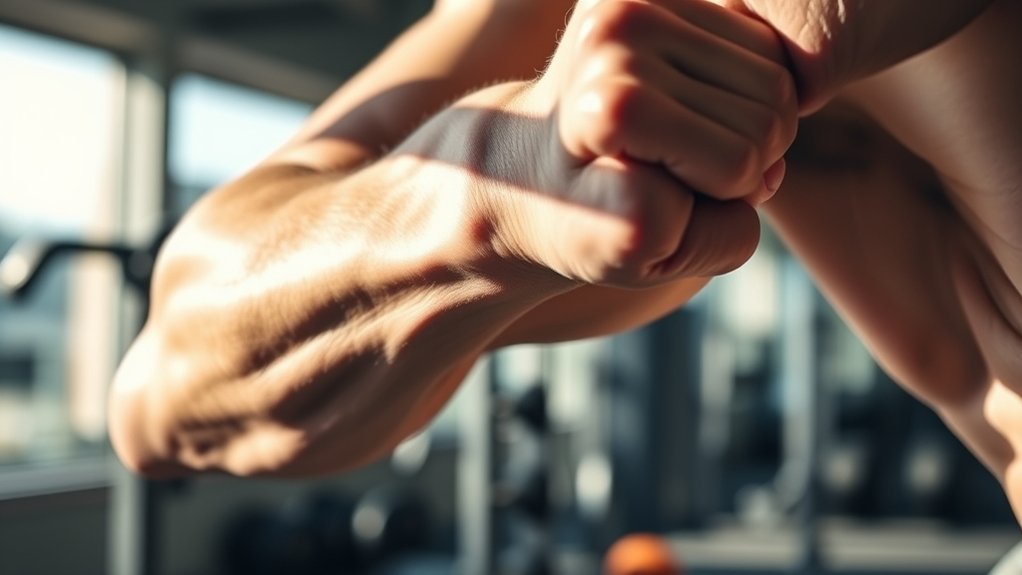
Wondering which muscles hammer curls really target? When you perform hammer curls, you primarily engage your brachioradialis, the muscle running along your forearm’s outer edge. This muscle targeting sets hammer curls apart by emphasizing forearm strength alongside your biceps.
You also activate the biceps brachii, but hammer curls focus more on the brachialis, a deeper muscle beneath the biceps that adds arm thickness. By incorporating hammer curls into your routine, you develop balanced arm strength and improve grip performance.
This exercise’s unique muscle targeting makes it a powerful tool for building both size and functional strength. So, when you want to enhance your arm’s overall muscle development, hammer curls should be a go-to move in your workout arsenal.
How Hammer Curls Differ From Traditional Bicep Curls
While both hammer curls and traditional bicep curls target your arm muscles, they engage different muscle groups and movement patterns that affect your strength and appearance in unique ways. Understanding this subtopic contrast helps you choose the right exercise for your goals.
The hammer curl history traces back to functional training emphasizing forearm and brachialis activation, unlike the traditional curl, which focuses more on the biceps brachii.
| Feature | Hammer Curls | Traditional Bicep Curls |
|---|---|---|
| Grip | Neutral (thumbs up) | Supinated (palms up) |
| Primary Muscles Worked | Brachialis & Brachioradialis | Biceps Brachii |
| Forearm Activation | Higher | Lower |
| Movement Pattern | Vertical elbow path | Elbows close to the torso |
| Strength Focus | Functional & forearm strength | Biceps peak and size |
This contrast lets you tailor your training effectively.
Why Brachialis and Brachioradialis Matter for Hammer Curl Gains
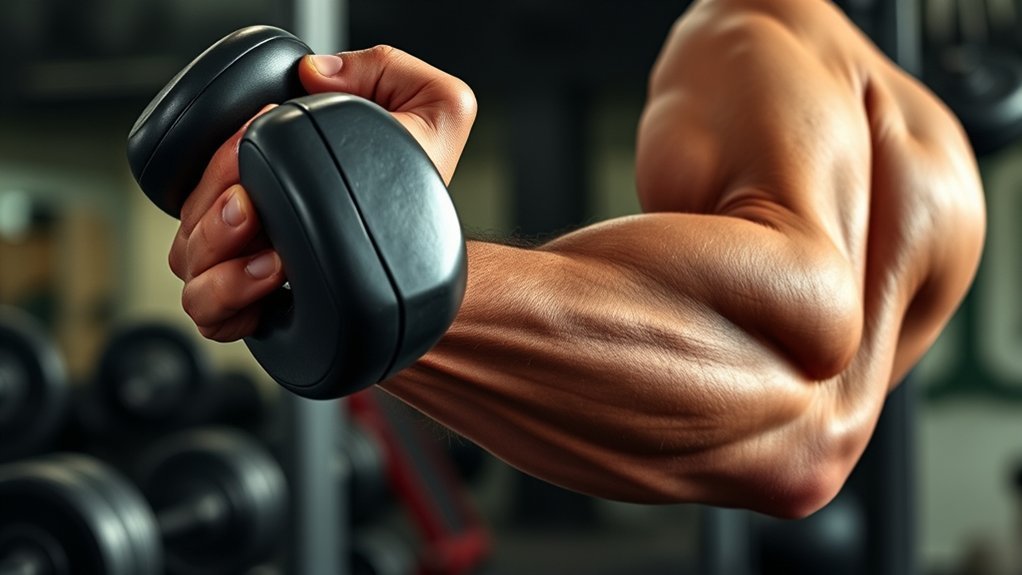
You’ll want to focus on the brachialis and brachioradialis muscles because they play an essential role in hammer curls. The brachialis lies beneath the biceps and helps increase arm thickness, while the brachioradialis enhances forearm strength and stability.
Targeting these muscles effectively boosts your hammer curl gains and overall arm development.
Brachialis Muscle Function
How do the brachialis and brachioradialis muscles contribute to your hammer curl gains? The brachialis plays a pivotal role by acting as the primary elbow flexor, working beneath the biceps. Its function is often overlooked, so don’t treat it as not relevant when pairing concepts of arm strength. Here’s why it matters:
- Elbow Flexion Power: The brachialis generates significant force to bend your elbow, boosting overall arm strength during hammer curls.
- Muscle Balance: It provides balance by working alongside the biceps brachii, preventing dominance and reducing injury risk.
- Arm Thickness: Developing the brachialis pushes the biceps outward, enhancing your arm’s size and definition.
Focusing on the brachialis elevates your hammer curl results and builds a stronger, more balanced arm.
Brachioradialis Role Benefits
Because the brachioradialis bridges your upper arm and forearm, it plays a pivotal role in hammer curls by enhancing elbow flexion with a unique twist. Understanding brachioradialis anatomy helps you grasp how this muscle supports your grip mechanics, allowing stronger, more controlled lifts.
When you engage this muscle, your forearm stability improves, translating to better hammer curl gains.
| Benefit | Explanation |
|---|---|
| Improved Elbow Flexion | Assists in bending the elbow during curls |
| Enhanced Grip Strength | Supports grip mechanics for holding weights |
| Forearm Development | Targets forearm muscles for balanced growth |
| Joint Stability | Stabilizes elbow joint under load |
Incorporating brachioradialis activation in your routine maximizes efficiency and strength gains in your arms.
Enhancing Hammer Curl Results
Although many focus solely on the biceps during hammer curls, activating both the brachialis and brachioradialis muscles considerably boosts your arm strength and definition. These muscles work together to improve your overall arm performance and forearm endurance, making your workouts more effective.
To enhance hammer curl results, focus on:
- Proper Form: Keep your wrists neutral to engage the brachialis and brachioradialis fully.
- Controlled Movement: Slow, deliberate reps maximize muscle activation and prevent injury.
- Progressive Overload: Gradually increase weight to build muscle and improve forearm endurance.
How Hammer Curls Improve Grip and Forearm Strength
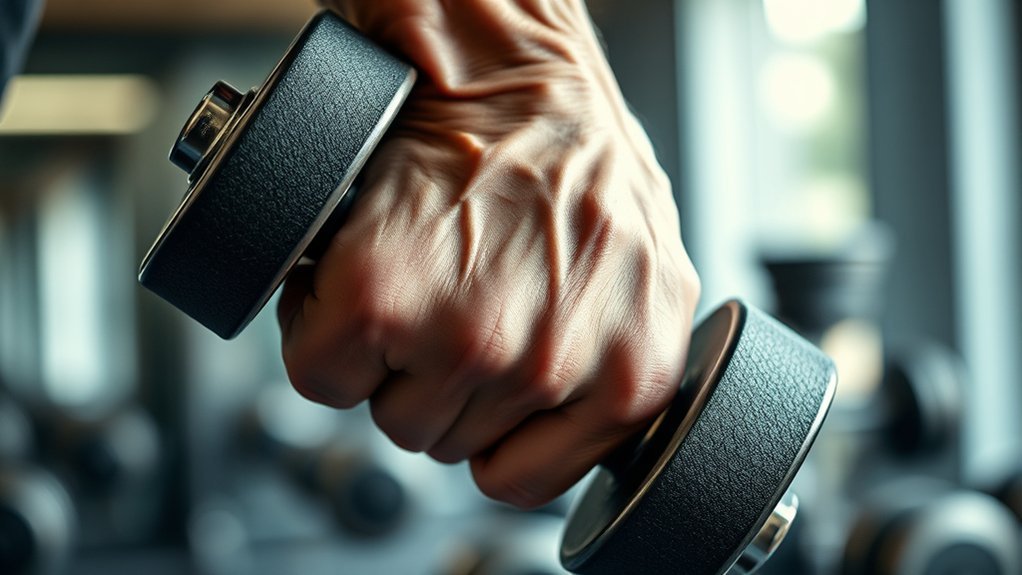
Hammer curls target the brachioradialis and other forearm muscles, boosting their activation with every rep. This increased engagement strengthens your grip, helping you hold onto weights longer and with more control.
Enhanced Forearm Muscle Activation
How exactly do hammer curls boost your grip and forearm strength? The secret lies in their hammer synergy, which targets multiple muscles simultaneously. This movement enhances forearm activation more effectively than traditional curls, giving you stronger, more resilient arms. Here’s how they work:
- Hammer curls engage the brachioradialis, a key muscle in your forearm, promoting balanced muscle development.
- The neutral grip position maximizes forearm activation, improving your wrist stability and grip power.
- This exercise recruits both the biceps and forearm muscles, creating a coordinated strength boost that translates to everyday tasks and lifts.
Increased Grip Endurance
Why does grip endurance matter when it comes to building lasting strength? Your grip is the foundation for lifting heavier weights and performing exercises longer.
Hammer curls engage a different grip than traditional curls, emphasizing wrist stability and forearm activation. This variation challenges your muscles to sustain effort, improving grip endurance over time.
With stronger grip endurance, you’ll handle heavier loads more confidently and reduce fatigue during workouts.
| Benefit | Explanation |
|---|---|
| Different Grip | Targets forearm muscles uniquely |
| Wrist Stability | Strengthens joints for better control |
| Sustained Effort | Trains muscles to resist fatigue |
| Enhanced Strength | Boosts overall lifting capacity |
Incorporate hammer curls regularly to build grip endurance and elevate your strength training.
How to Perform Hammer Curls With Proper Form
Before you start, make sure you have the right weight in each hand to maintain control throughout the movement. Performing hammer curls with proper form is key to maximizing muscle engagement and preventing injury.
Choosing the right weight ensures control and proper form for effective and safe hammer curls.
Follow these steps for effective execution:
- Stand tall with a dumbbell in each hand, palms facing your torso, and elbows close to your sides.
- Curl the weights while keeping your palms facing each other, lifting until your forearms are vertical.
- Slowly lower the dumbbells back to the starting position, keeping tension on your muscles.
Focus on controlled movements and avoid swinging your body. By mastering proper form, you’ll effectively target the brachialis and brachioradialis muscles, boosting your arm strength and definition.
Stay consistent and watch your progress soar!
Common Hammer Curl Mistakes to Avoid
Mastering proper form in hammer curls sets a strong foundation, but even experienced lifters can fall into common pitfalls that hinder progress or cause injury. One frequent mistake is swinging your body to lift heavier weights. This reduces bicep engagement and risks strain.
Avoid letting your wrists bend; keep them neutral to target the right muscles effectively. Another error is rushing through reps, which compromises form and limits growth. Stay controlled and focused, much like appreciating random trivia that requires attention to detail.
Just as fashion trends demand precision for the perfect look, your hammer curl technique needs consistent care. By steering clear of these mistakes, you’ll maximize gains and keep your arms sculpted safely. Remember, quality beats quantity every time.
Hammer Curl Variations for Your Training Goals
Wondering how to tailor your hammer curl routine to meet specific fitness goals? Choosing the right variation can maximize muscle activation and enhance grip strength. Here are three effective options to consider:
- Alternating Hammer Curls Focus on one arm at a time, improving muscle control and balanced strength development.
- Cross-Body Hammer Curls Target the brachialis muscle differently, boosting overall arm thickness and grip endurance.
- Incline Hammer Curls Performed on a bench, they increase the range of motion, intensifying muscle activation for better gains.
How Often Should You Do Hammer Curls?
Incorporating different hammer curl variations can boost your arm strength and muscle development, but knowing how often to perform them plays a key role in your progress. Aim to include hammer curls two to three times per week, allowing at least 48 hours of rest between sessions to promote muscle recovery and growth.
As you introduce new techniques, such as alternating reps or incorporating resistance bands, your muscles face fresh challenges that stimulate strength gains. Keep your diet impact in mind. Adequate protein and nutrient intake supports muscle repair and maximizes the benefits of your workouts.
Consistency combined with proper nutrition and varied hammer curl methods will help you build stronger, more defined arms efficiently without overtraining or risking injury.
Benefits of Hammer Curls for Stronger, Defined Arms
Hammer curls target multiple muscles in your arms, making them a powerful addition to your workout routine for building strength and definition. Unlike some non relevant topics, hammer curls directly engage your brachialis, brachioradialis, and biceps brachii, offering comprehensive arm development.
Hammer curls engage key arm muscles for strength and definition, supporting balanced, comprehensive arm development.
Their benefits include:
- Enhanced muscle thickness: Hammer curls stimulate the brachialis muscle, which lies beneath the biceps, creating fuller arms.
- Improved grip strength: The neutral grip used in hammer curls strengthens your forearms and wrists, supporting other lifts.
- Balanced arm development: Unlike the irrelevant concept of focusing only on biceps curls, hammer curls prevent muscle imbalances by targeting different muscle groups.
Incorporating hammer curls ensures stronger, more defined arms, helping you avoid workout pitfalls and achieve balanced muscle growth.
Frequently Asked Questions
Can Hammer Curls Help Reduce Elbow Pain?
Yes, hammer curls can help reduce elbow pain by improving elbow mechanics and strengthening supporting muscles. Using grip variations during your workout also promotes balanced muscle development, which can relieve stress and prevent further discomfort.
Keep pushing!
Are Hammer Curls Safe for Beginners With Joint Issues?
Hammer curl safety depends on your joint health; if you’re a beginner with joint issues, start light and focus on form.
Always listen to your body and consult a professional to avoid aggravating beginner joints while building strength.
How Do Hammer Curls Affect Muscle Recovery Time?
Hammer curls gently engage your muscles, so they usually don’t extend your recovery time much. You can push hard without overstraining, helping you stay consistent and motivated while building strength efficiently.
Keep progressing confidently!
Can Hammer Curls Improve Sports Performance?
Hammer curls sharpen your arm strength like a sculptor chiseling stone, boosting sports performance by enhancing grip and forearm power. You’ll move faster, hit harder, and stay stronger during every game or workout session.
What Equipment Alternatives Exist for Hammer Curls?
You can use resistance bands, dumbbells, or even kettlebells as equipment alternatives for hammer curls. These options let you train your muscles effectively, keeping your workouts versatile and challenging wherever you are.
Conclusion
Think of your arms like a toolbox—hammer curls add the sturdy grip and thick handles you need for any job. By targeting the brachialis and brachioradialis, these curls build not just size but functional strength, making daily tasks easier and workouts more effective.
Just like a well-used hammer, your arms will become reliable and powerful with consistent practice. Keep hammering away, and you’ll see stronger, more defined arms that work as hard as you do.
Understanding what muscle does hammer curls work helps you focus your efforts and maximize your results.