Imagine hammer toe as a malfunction in your toe’s delicate machinery, designed to support and balance every step you take. In this condition, one or more toes bend downward at the middle joint, disrupting normal function and causing discomfort.
Hammer toe isn’t just a minor nuisance—it can lead to stiffness, skin problems, and pain that worsen over time. Understanding what hammer toe entails is essential before exploring how it affects you and what can be done.
What Is Hammer Toe and Its Effects
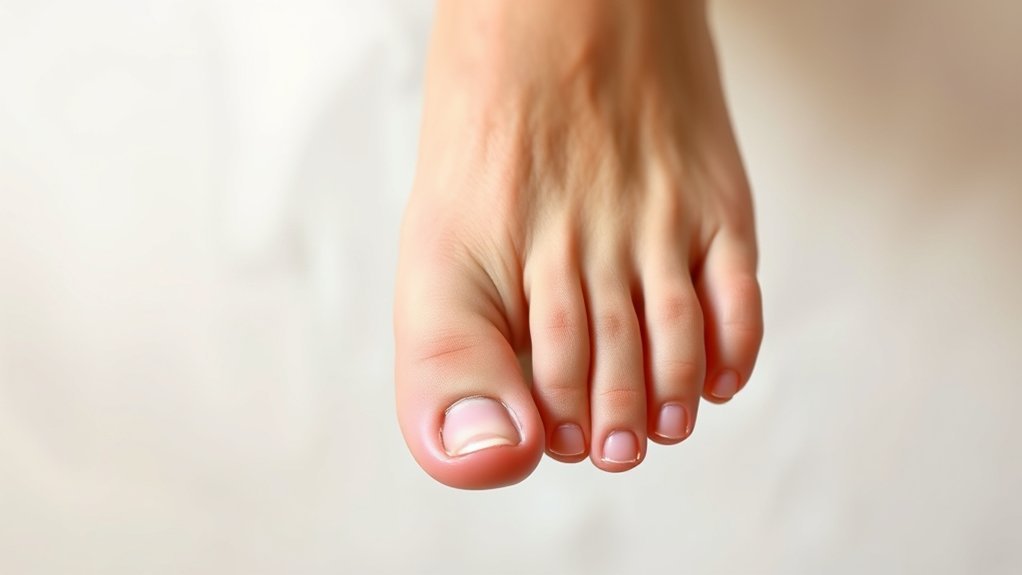
Hammer toe is a deformity that causes one or more toes to bend downward at the middle joint, resembling a hammer. You should understand that this structural abnormality results from muscle imbalance, joint instability, or improper footwear.
New research highlights how untreated hammer toe can lead to progressive joint stiffness and skin complications like corns or ulcers. Beyond physical effects, it’s important you recognize the emotional impact this condition can have.
It often affects self-esteem and social interactions due to cosmetic concerns and chronic discomfort. Early intervention and appropriate treatment strategies can prevent worsening deformity and mitigate psychological distress. By addressing hammer toe promptly, you can maintain both foot functionality and overall quality of life, according to recent clinical findings.
Symptoms of Hammer Toe to Watch For
How can you recognize the early signs of this toe deformity? Identifying symptoms precisely avoids ambiguous terminology often found in two word discussion ideas about hammer toe. Key symptoms include:
- Persistent Toe Curling – Your affected toe bends downward at the middle joint, creating a claw-like appearance.
- Pain and Discomfort – You may feel pain, especially when wearing shoes that apply pressure to the bent toe.
- Calluses or Corns – These develop on the toe’s top or tip due to friction and pressure.
Early detection relies on observing these clear indicators rather than vague descriptions. If you notice these symptoms, consult a healthcare professional promptly to prevent progression and complications associated with hammer toe.
What Causes Hammer Toe to Develop
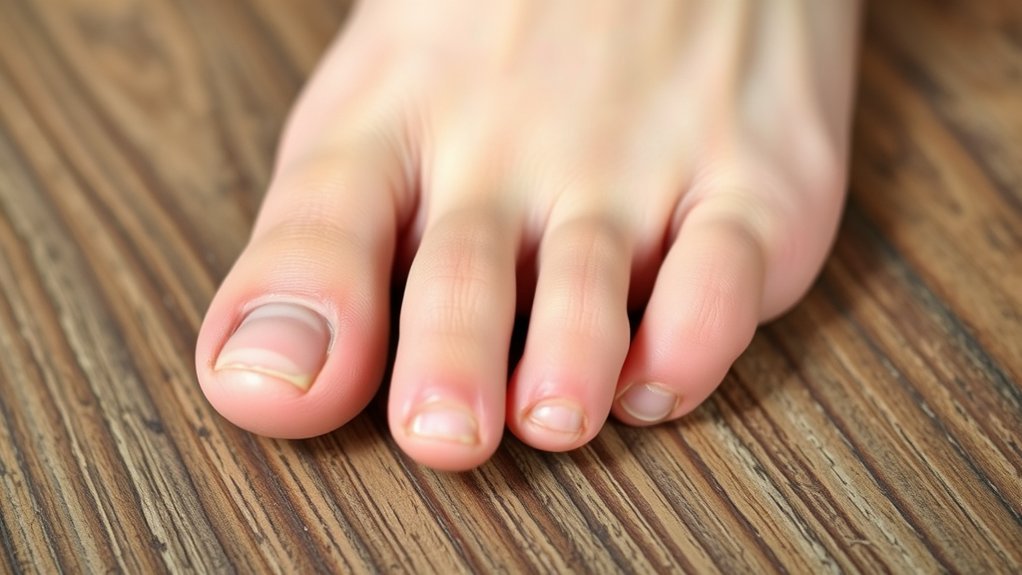
Why does this toe deformity develop in the first place? Hammer toe forms primarily due to imbalances in toe biomechanics. When the muscles, tendons, or ligaments that normally hold your toe straight become weakened or disrupted, abnormal forces cause the middle joint to bend downward. This causes linkage between muscle dysfunction and joint contracture, leading to the characteristic hammer-like appearance.
Several factors contribute to this causes linkage. Wearing poorly fitting shoes that crowd your toes alters pressure distribution and increases strain on toe tendons. Additionally, nerve damage, trauma, or arthritis can disrupt normal biomechanics, promoting deformity development. As these biomechanical stresses persist, the toe’s joints stiffen, making the deformity permanent.
Understanding these precise causes can help you address hammer toe proactively before it worsens.
How Doctors Diagnose Hammer Toe
When you visit a doctor with concerns about toe deformities, they’ll start by conducting a thorough physical examination to assess joint flexibility, alignment, and any areas of tenderness or callusing. Effective doctor-patient communication is crucial during this process to ensure symptoms and lifestyle factors are clearly understood.
A thorough physical exam and clear communication are key to understanding toe deformity symptoms and causes.
Next, the doctor may utilize medical technology such as X-rays to evaluate bone structure and joint damage. This imaging helps confirm the diagnosis and rule out other conditions.
The diagnostic process typically involves:
- Visual and manual inspection of the affected toe.
- Assessment of range of motion and deformity severity.
- Radiographic imaging to analyze bone alignment and joint integrity.
This precise approach enables your doctor to formulate an accurate diagnosis and tailor appropriate treatment strategies.
Non-Surgical Hammer Toe Treatments

What options do you have if you want to avoid surgery for hammer toe? Non-surgical treatments primarily focus on improving toe alignment and relieving discomfort. You can use shoe inserts designed to support the foot’s arch and redistribute pressure away from the affected toe.
These orthotic devices help maintain proper toe alignment, reducing strain on the joint. Additionally, wearing shoes with a wider toe box prevents crowding and further deformity. Stretching exercises targeted at the toe’s tendons and muscles can also improve flexibility and reduce contracture.
Padding or splinting the toe stabilizes it in a neutral position, preventing worsening of the deformity. While these measures don’t correct hammer toe permanently, they effectively manage symptoms and slow progression, allowing you to maintain function without immediate surgical intervention.
When Is Surgery Needed for Hammer Toe?
You should consider surgery for hammer toe if the deformity becomes severe and rigid, limiting your mobility. When persistent pain doesn’t respond to conservative treatments, surgical intervention may be necessary to restore function.
Understanding these criteria helps you make informed decisions about your care.
Severe Deformity Cases
How do you determine the need for surgery in severe hammer toe deformities? In advanced cases, conservative treatments often fail to correct the severe deformity, necessitating surgical intervention. You should consider surgery when:
- The toe is rigid, and non-surgical options no longer relieve symptoms or restore function.
- The deformity causes significant pain, impairs walking, or leads to ulcerations.
- Joint contractures become fixed, making realignment impossible without operative correction.
Surgery aims to realign the affected toe, restore balance, and alleviate discomfort. In severe deformity cases, delaying surgery may worsen joint damage and complicate treatment outcomes. Therefore, identifying these criteria early helps optimize your recovery and foot functionality in advanced hammer toe presentations.
Persistent Pain Management
Managing persistent pain in hammer toe cases demands a careful assessment of symptom severity and treatment response. If conservative measures such as orthotic devices, physical therapy, and anti-inflammatory medications fail to alleviate chronic discomfort, surgery may become necessary.
You should consider surgical intervention when persistent pain interferes with daily activities or when deformity progression exacerbates joint stiffness and inflammation. Surgery aims to correct the toe’s alignment, relieve pressure on adjacent tissues, and restore function.
Procedures range from tendon lengthening to joint fusion or resection arthroplasty, depending on deformity severity. It’s essential to consult a specialist who will evaluate your specific symptoms, imaging results, and overall health status before recommending surgery as the optimal approach for managing your persistent pain and chronic discomfort associated with hammer toe.
Preventing Hammer Toe From Getting Worse
To prevent hammer toe from worsening, you need to choose proper footwear that provides adequate toe space and support. Incorporating regular toe exercises can maintain joint flexibility and muscle strength.
Additionally, seeking early medical intervention helps address symptoms before they progress.
Proper Footwear Choices
Why does choosing the right footwear matter when dealing with hammer toe? Proper footwear plays a crucial role in preventing the condition from worsening by reducing pressure and accommodating toe deformities.
Ensuring an optimal shoe fit is essential to avoid exacerbating pain or deformity.
To select proper footwear, focus on:
- Toe box width: Choose shoes with a wide and deep toe box to avoid crowding and pressure on the toes.
- Heel height: Opt for low heels (less than 2 inches) to minimize forefoot strain.
- Material flexibility: Select shoes made of soft, stretchable materials to conform to the foot’s shape without causing friction.
Regular Toe Exercises
Selecting the right footwear reduces pressure on your toes, but incorporating regular toe exercises further helps prevent hammer toe from worsening. Toe stretches and balance drills enhance flexibility and strengthen muscles controlling toe alignment.
Perform exercises daily to maintain joint mobility and reduce deformity progression.
| Exercise | Purpose | Instructions |
|---|---|---|
| Toe stretches | Increase flexibility | Gently pull toes upward and hold 10s |
| Towel curls | Strengthen toe muscles | Use toes to scrunch towel toward you |
| Marble pickup | Enhance dexterity | Pick marbles using toes, 10 reps |
| Balance drills | Improve stability | Stand on one foot, 30s per side |
| Toe taps | Promote circulation | Tap toes rapidly for 20 seconds |
Consistent practice of these exercises supports toe health and helps slow hammer toe progression.
Early Medical Intervention
Although regular exercises and proper footwear can slow hammer toe progression, early medical intervention is essential to prevent permanent deformity and pain. You should prioritize early detection to address symptoms before they worsen.
While home remedies like toe splints and padding offer temporary relief, they don’t correct underlying joint issues. Consulting a podiatrist early ensures targeted treatment.
To effectively prevent hammer toe from getting worse, focus on:
- Accurate diagnosis through clinical evaluation and imaging.
- Customized orthotic devices to realign toes and alleviate pressure.
- Pharmacological management to reduce inflammation and discomfort.
Recovering From Hammer Toe Treatment: What to Expect
How long does it take to recover from hammer toe treatment? Recovery expectations vary depending on the treatment method. If surgery is involved, expect an initial healing period of 2 to 6 weeks.
During this time, post surgery rehab focuses on reducing swelling, managing pain, and preventing infection. You’ll likely need to keep weight off the affected foot and use specialized footwear or braces.
Physical therapy exercises will help restore range of motion and strengthen toe muscles. Full functional recovery typically occurs within 6 to 12 weeks but can vary based on individual health and adherence to rehab protocols.
Following your healthcare provider’s instructions precisely ensures the best outcomes and minimizes complications during your recovery from hammer toe treatment.
Frequently Asked Questions
Can Hammer Toe Affect Balance or Walking Gait?
Yes, hammer toe can cause balance impact and gait changes by altering foot mechanics. You’ll experience discomfort and instability, leading to compensatory movements that disrupt your natural walking pattern.
These changes increase the risk of falls or further injury.
Are Certain Sports More Likely to Cause Hammer Toe?
Running, soccer, and ballet increase your activity risk for hammer toe due to repetitive toe flexion and pressure.
Understanding the sports etiology helps you identify high-risk activities and modify training to prevent deformities effectively.
How Does Hammer Toe Impact Footwear Choices?
Hammer toe forces you to prioritize shoes fit, focusing on extra toe box space to accommodate altered toe shape. You’ll need footwear with soft, flexible materials that reduce pressure and prevent worsening deformities for comfort and protection.
Is Hammer Toe Hereditary or Linked to Family History?
Like a telegraph transmitting signals, hereditary factors do influence hammer toe development. You’ll find family history plays a role, but environmental aspects and footwear choices also contribute considerably to its manifestation and severity.
Can Physical Therapy Fully Correct Hammer Toe Deformities?
You can’t fully correct hammer toe deformities with physical therapy alone; it helps manage symptoms and improve flexibility.
For permanent correction, surgical options are typically necessary, especially in advanced or rigid cases.
Conclusion
Hammer toe can sneak up on you like a quiet shadow, gradually affecting your comfort and mobility. By recognizing symptoms early and seeking a thorough diagnosis, you can explore non-surgical treatments to correct muscle imbalances and improve joint alignment.
Proper footwear and exercises are key to prevention. If surgery becomes necessary, understanding the process helps set realistic recovery expectations.
Taking prompt action ensures you maintain foot health and avoid permanent deformity related to hammer toe.