You might not realize that a rotary hammer uses a piston mechanism to deliver rapid, powerful hammering impacts combined with rotation—a method far more effective than your typical drill for penetrating concrete and masonry.
This rotary hammer action provides the strength and speed needed for tough materials.
This dual action allows you to switch seamlessly between drilling and chiseling modes, making it a versatile tool for heavy-duty tasks.
Understanding how this mechanism works can considerably improve your efficiency and project outcomes.
What Is a Rotary Hammer and How Does It Work?
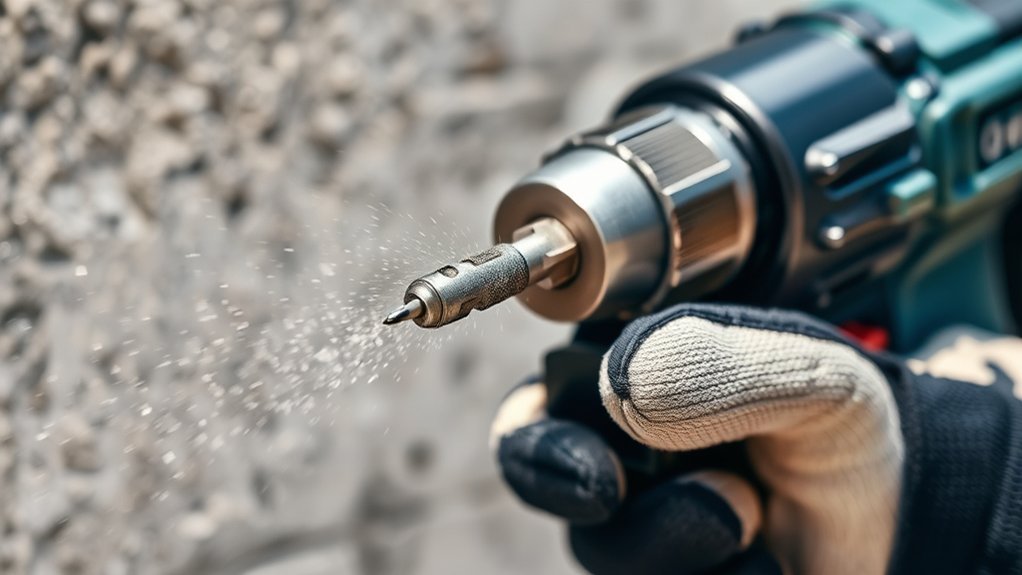
How does a rotary hammer differ from a regular drill? While that’s a detailed topic on its own, you should first understand what a rotary hammer is and how it works.
A rotary hammer combines rotation with a powerful hammering action, delivering rapid blows that penetrate tough materials like concrete and masonry. Inside, a piston mechanism generates this hammering force, unlike a drill’s simple rotary motion.
You can switch between drilling and chiseling methods, making it versatile for construction tasks. The chiseling function allows you to break or chip away material without rotating, which is essential for demolition or surface preparation.
Knowing these operational details helps you select the right tool and apply it effectively in demanding applications.
How Is a Rotary Hammer Different From a Regular Drill?
A rotary hammer’s combination of rotation and powerful hammering sets it apart from a regular drill, which relies solely on rotary motion. You’ll notice that a rotary hammer uses a piston mechanism to generate rapid hammering impacts, significantly increasing drilling efficiency in hard materials.
In contrast, a regular drill’s chuck only rotates the bit without delivering percussive force. The drilling physics behind a rotary hammer involve converting motor energy into both rotational and linear hammering forces, enabling it to break through dense surfaces like concrete more effectively.
When you use a regular drill on tough materials, the lack of hammering action causes slower progress and higher wear. Understanding this key difference helps you select the right tool based on the demands of your project.
What Materials Can You Drill With a Rotary Hammer?
You can use a rotary hammer to efficiently drill through tough materials like concrete and masonry, as well as brick and stone. It also handles softer materials such as wood and metal, though it’s designed primarily for heavy-duty tasks.
Understanding these capabilities ensures you select the right tool for your specific drilling needs.
Concrete And Masonry
Which materials can a rotary hammer tackle most effectively? When working with concrete and masonry, this tool excels due to its powerful hammering action combined with rotation. You’ll find it ideal for drilling into dense surfaces while managing concrete dust and minimizing operator fatigue through vibration control.
Here are three key materials you can drill with a rotary hammer:
- Reinforced Concrete The rotary hammer efficiently penetrates tough aggregates and rebar with specialized bits.
- Concrete Blocks It creates clean, precise holes without excessive chipping.
- Mortar Joints You can remove or drill through mortar while maintaining control and reducing dust exposure.
Brick And Stone
Drilling through brick and stone demands a tool that combines impact power with rotational force, qualities that a rotary hammer delivers efficiently. When working with brick, you’ll appreciate how the rotary hammer accommodates brick durability, preventing unnecessary cracking while maintaining precision.
Its hammering action breaks down the dense structure, allowing clean holes without compromising the material’s integrity. Stone, valued for its aesthetics and toughness, requires consistent impact energy to penetrate without damaging the surface appearance.
The rotary hammer’s adjustable settings let you tailor the force, preserving stone aesthetics while achieving accurate drilling. Using appropriate carbide-tipped bits designed for masonry, you’ll maximize efficiency on both brick and stone.
Wood And Metal
How effectively can a rotary hammer handle wood and metal? While rotary hammers excel in masonry, their woodworking versatility and metalworking compatibility are more limited. You can drill both materials, but the tool’s impact function isn’t ideal for these softer substrates.
- Woodworking versatility: Rotary hammers can drill wood using a standard drill bit, but the hammer action should be turned off to avoid splintering or damage.
- Metalworking compatibility: You can drill metal with a rotary hammer by disabling the hammer mode and using appropriate metal drill bits for clean, precise holes.
- Tool optimization: For frequent wood or metal drilling, a dedicated drill or impact driver provides better control and efficiency than a rotary hammer.
When Should You Use a Rotary Hammer Instead of Other Tools?
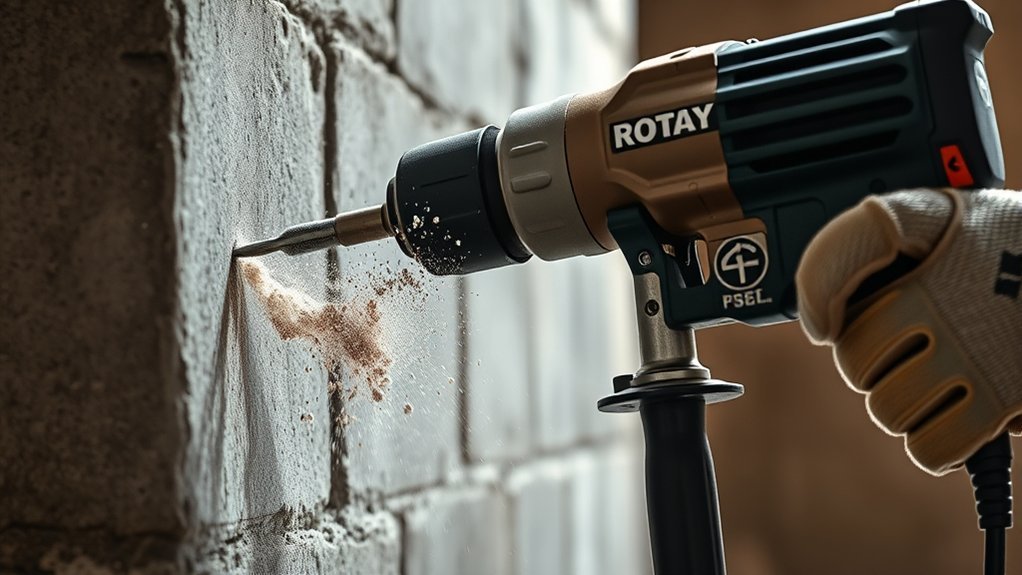
You should use a rotary hammer when tackling heavy-duty drilling tasks, especially in concrete and masonry. It delivers more power and impact energy than standard power drills, making it ideal for tough materials.
However, if your job requires precision over brute force, consider whether a rotary hammer or a different tool suits your needs better.
Heavy-Duty Drilling Needs
When do you need a rotary hammer instead of a standard drill or hammer drill? You turn to a rotary hammer when your heavy-duty drilling needs exceed what standard tools can handle efficiently. Rotary hammers deliver higher impact energy and sustained power, making them essential for tough jobs.
Consider using a rotary hammer when:
- You require deep drilling into dense materials where standard drills stall or overheat.
- Your project demands prolonged drilling sessions, and tool durability is critical.
- You need fast, efficient penetration without sacrificing control or precision.
Concrete and Masonry Tasks
Many concrete and masonry tasks demand power and precision that only a rotary hammer can provide. When you face dense materials like reinforced concrete or tough brick, a rotary hammer delivers superior impact energy combined with rotary motion, making concrete drilling efficient and less labor-intensive.
Unlike standard drills, a rotary hammer uses a piston mechanism to generate rapid hammering action, allowing you to bore through hard surfaces quickly and with minimal effort. You should choose a rotary hammer over other tools when working on large-scale demolition, installing anchors, or running electrical conduit through concrete walls.
Its design reduces operator fatigue and increases accuracy in tough conditions. In short, whenever concrete drilling requires both power and control, a rotary hammer is your most effective tool.
Precision Versus Power Tools
How do you decide between a rotary hammer and other power tools for a specific job? You balance the need for precision tools against power performance. Rotary hammers excel in delivering high-impact force, making them ideal for heavy-duty drilling and chiseling in concrete or masonry. Yet, they’re not always the best choice when fine control is paramount.
Consider these factors:
- Material hardness: Use a rotary hammer for dense materials where power performance overcomes resistance efficiently.
- Task precision: Choose precision tools like standard drills when working on delicate surfaces or small-diameter holes.
- Job scale: For large-scale demolition or deep drilling, the rotary hammer’s impact mechanism provides unmatched efficiency.
Ultimately, select the tool that aligns with your project’s precision requirements and power demands.
Different Types of Rotary Hammers and Their Uses
Which rotary hammer suits your project depends on the specific tasks and materials you’ll encounter. For light-duty work, a compact rotary hammer with lower impact energy excels at drilling through softer materials. Imagine scaling rock climbing routes, where precision and control matter most.
Medium-duty models offer enhanced power for frequent drilling and chiseling in concrete or masonry, ideal for general construction. Heavy-duty rotary hammers provide maximum impact energy and durability for demanding demolition, breaking through tough surfaces like reinforced concrete.
You won’t use a rotary hammer for gourmet ice cream tasks, but understanding its specialized applications helps you select the proper tool. Each type’s mechanism, SDS-plus or SDS-max, dictates bit compatibility, influencing efficiency and control based on project scale and material hardness.
Choosing the Best Rotary Hammer for Your Needs
When choosing a rotary hammer, consider the power and performance needed for your specific tasks to guarantee efficiency. You’ll also want to evaluate the tool’s size and weight for comfortable handling during extended use.
Additionally, look at extra features like vibration control and adjustable speed to enhance precision and user experience.
Power and Performance
Although rotary hammers come in various sizes and designs, their power and performance directly determine how effectively they handle demanding materials like concrete and masonry. When selecting a rotary hammer, focus on these critical factors:
- Impact Energy: Measured in joules, higher impact energy enables faster drilling and chiseling through tough surfaces, improving overall efficiency.
- Motor Power: A robust motor delivers consistent performance, ensuring the tool doesn’t stall under heavy loads, while balancing energy efficiency to reduce power consumption.
- Noise Reduction: Advanced models incorporate noise reduction technologies, minimizing operator fatigue and complying with safety standards.
Tool Size and Weight
How much does the size and weight of a rotary hammer impact your work? These two factors directly affect maneuverability, fatigue, and precision during operation. Lighter models, typically under 10 pounds, offer enhanced control for overhead or extended use, reducing strain without sacrificing basic performance.
Conversely, heavier units provide greater stability and power for heavy-duty tasks but can tire you quickly. When choosing, balance tool size and weight with your project demands. Compact rotary hammers excel in confined spaces, while larger ones suit demolition or extensive drilling.
This two word discussion ideas approach—“size” and “weight”—helps you focus on ergonomics and efficiency. Keep in mind, this Subtopic not relevant to the Other H2s listed above ensures you prioritize physical characteristics before exploring additional features.
Additional Features
Beyond size and weight, the additional features of a rotary hammer play a significant role in optimizing performance for specific applications. When choosing your tool, avoid irrelevant or off-topic discussion that doesn’t directly impact functionality. Focus instead on these key features:
- Variable Speed Control allows you to adjust drilling speed for different materials, enhancing precision and efficiency.
- Anti-Vibration Technology reduces operator fatigue by minimizing vibrations during prolonged use, improving comfort and control.
- Depth Gauge enables consistent drilling depth, critical for tasks requiring precision and repeatability.
Main Parts of a Rotary Hammer and Their Functions
Since understanding the main parts of a rotary hammer helps you operate it efficiently, it’s important to familiarize yourself with its key components. The motor generates the power necessary for drilling, while the piston mechanism converts this power into rapid hammering action.
The chuck securely holds drill bits, ensuring precision during operation. The trigger controls speed, giving you variable power depending on the task. The auxiliary handle provides stability and control, enhancing safety and accuracy.
These two-word components, motor, piston, chuck, trigger, handle, form the core of the rotary hammer’s functionality. Discussion ideas around these parts focus on maintenance and performance optimization.
Recognizing their subtopic relevance allows you to troubleshoot effectively and use the tool to its full potential. Understanding these parts is foundational before exploring safety protocols.
Essential Safety Tips for Using a Rotary Hammer
Knowing the main parts of a rotary hammer helps you understand how to handle the tool safely. To operate it correctly and protect yourself, follow these essential safety tips:
Understanding your rotary hammer’s parts is key to safe and effective operation.
- Always wear safety gloves to protect your hands from vibrations and accidental contact with sharp or hot surfaces. Ensure they fit well and provide adequate grip.
- Use ear protection to guard against the high noise levels generated during operation. Prolonged exposure can damage your hearing, so choose earmuffs or earplugs rated for construction noise.
- Maintain a firm, two-handed grip on the tool to control torque and reduce kickback risks. Position yourself securely to handle sudden movements.
Maintenance and Care for Your Rotary Hammer
How often should you perform maintenance on your rotary hammer to keep it operating at peak performance? Ideally, conduct rotary hammer maintenance after every 20 hours of use or monthly if used less frequently.
Start by cleaning dust and debris from vents and the chuck with a dry brush or compressed air. Lubricate the chuck and moving parts as specified in your user manual to reduce wear and friction.
Regularly inspect carbon brushes and replace them when worn down to maintain motor efficiency. Check the power cord and plug for damage to prevent electrical hazards.
Following these care tips ensures reliability and prolongs the tool’s lifespan. Proper and timely maintenance not only enhances performance but also safeguards your investment in this essential power tool.
Troubleshooting Common Rotary Hammer Issues
Maintaining your rotary hammer regularly helps prevent many common problems, but issues can still arise during operation. You should focus on these key troubleshooting areas to keep your tool running smoothly:
- Inconsistent Torque: If you notice fluctuating torque consistency, inspect the clutch mechanism and gearbox for wear or damage. Replacing worn parts restores stable power transmission.
- Chuck Misalignment: Poor chuck alignment causes bit wobble and inefficient drilling. Check for debris or damage in the chuck and spindle, and realign or replace components as needed.
- Reduced Hammering Efficiency: A decline in hammer performance often results from air leaks or worn piston seals. Examine internal seals and replace any that appear compromised to regain full impact force.
Addressing these issues promptly ensures your rotary hammer operates at peak efficiency.
Frequently Asked Questions
Can a Rotary Hammer Be Used for Metalworking Tasks?
You can’t rely on a rotary hammer for metalworking tasks since its metalworking suitability is limited. Its design focuses on concrete, affecting precision and durability lifespan when used on metal.
Choose specialized tools for metalwork instead.
What Is the Average Lifespan of a Rotary Hammer?
You’ll find the average lifespan of a rotary hammer lasts around 5 to 10 years, depending on durability testing results and usage intensity.
Regular maintenance guarantees it keeps going strong without throwing in the towel prematurely.
Are There Cordless Rotary Hammers Available?
Yes, you’ll find cordless rotary hammers that leverage advanced battery technology for powerful cordless power. They deliver impressive performance and mobility, letting you work efficiently without being tethered to a power outlet or extension cord.
Can Rotary Hammers Be Rented Instead of Purchased?
Sure, you can rent rotary hammers because who doesn’t love paying for a tool only when you need it? Comparing prices, rental options often save money versus buying, especially for short-term or occasional heavy-duty drilling tasks.
What Accessories Are Compatible With Most Rotary Hammers?
You’ll find accessory compatibility with SDS-plus and SDS-max drill bits, chisels, and core bits enhancing tool versatility. These attachments fit most rotary hammers, letting you tackle drilling, chiseling, and demolition tasks efficiently and precisely.
Conclusion
Now that you know how a rotary hammer powers through concrete like a tiny demolition crew, you’re ready to tackle the toughest jobs with ease. Don’t confuse it with a regular drill—it’s built to smash, drill, and chisel through masonry that would make standard tools scream for mercy.
Use it wisely, follow safety protocols, and maintain it well. This powerhouse will be your go-to for heavy-duty projects, turning impossible tasks into straightforward wins.
With the right care and attention, a rotary hammer becomes an indispensable tool in your arsenal for demanding construction and renovation work.