When you pick up a palm sander, you’re handling a compact tool designed for precision smoothing.
A palm sander uses rapid, controlled vibrations to remove material evenly from surfaces, all while fitting comfortably in one hand.
Understanding how it operates and what sets it apart can help you decide if it’s the right choice for your project.
But before you make that call, it’s important to know exactly how this tool works.
What Is a Palm Sander? How Does It Work?
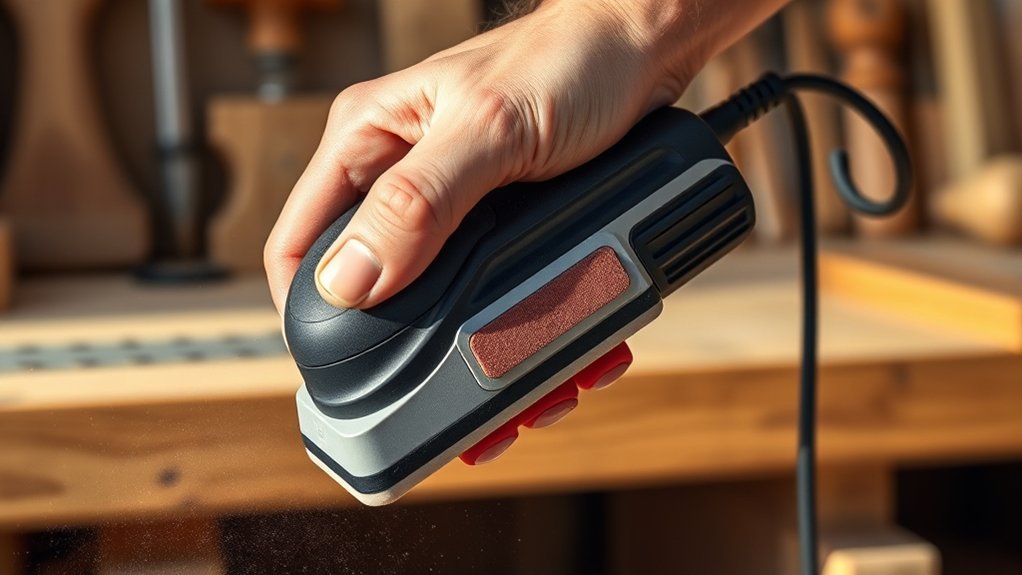
What exactly is a palm sander, and how does it function? A palm sander is a compact power tool designed for sanding surfaces smoothly and efficiently.
It operates by vibrating a square or rectangular sanding pad rapidly in small, circular or orbital motions. This motion removes material evenly without gouging the surface.
When you use a palm sander, you hold it with one hand, allowing precise control over the sanding process.
To ensure safe operation, always wear proper safety gear, including eye protection, a dust mask, and hearing protection.
The built-in dust collection system or an attached vacuum helps minimize airborne particles.
Understanding these basics lets you prepare effectively for your sanding tasks while maintaining safety and achieving consistent results.
What Makes Palm Sanders Stand Out
Several key features make palm sanders stand out as essential tools for detailed sanding tasks. You’ll appreciate their compact design, allowing precise control and reduced fatigue during use.
Unlike unrelated topic tools, palm sanders focus on precision rather than heavy material removal. Their fine-grit sanding pads minimize surface damage, making them ideal for delicate finishes.
Avoiding off topic ideas like large-scale sanding, these tools excel in tight spaces and curved surfaces.
| Feature | Benefit |
|---|---|
| Compact Size | Enhanced maneuverability |
| Orbital Motion | Smooth, swirl-free finish |
| Lightweight | Less user fatigue |
| Dust Collection | Cleaner workspace |
| Variable Speed | Control over sanding intensity |
Types of Palm Sanders

You’ll encounter several types of palm sanders, each designed for specific tasks and levels of precision. Orbital palm sanders provide smooth, broad sanding, while detail palm sanders excel in tight spaces and intricate work.
Additionally, deciding between corded and cordless models will impact your mobility and power options.
Orbital Palm Sanders
How does an orbital palm sander differ from other types of palm sanders? Unlike those focused on irrelevant topic or random chatter, orbital palm sanders prioritize efficient, controlled sanding. They operate by moving the sanding pad in small circular orbits, preventing swirl marks and delivering a smooth finish.
When you use an orbital palm sander, you’ll notice:
- Uniform abrasion due to consistent orbital patterns
- Versatility on various materials, from wood to plastic
- Reduced risk of gouging surfaces, enhancing precision
This design makes orbital palm sanders ideal for general-purpose sanding tasks where a fine finish is crucial. You’ll find them user-friendly, lightweight, and effective for both beginners and professionals, distinguishing them clearly from other palm sander types.
Detail Palm Sanders
While orbital palm sanders excel at broad, smooth finishes, detail palm sanders focus on precision in tight spaces and intricate areas. You’ll find them indispensable when working on corners, carvings, or small furniture parts where an unrelated topic like large surface sanding would be off topic discussion.
Their pointed or triangular pads allow you to reach areas that standard sanders can’t.
| Feature | Detail Palm Sander | Benefit |
|---|---|---|
| Pad Shape | Triangular or pointed | Accesses corners and edges |
| Motor Speed | High RPM | Smooth, fine sanding |
| Size & Weight | Compact and lightweight | Reduces user fatigue |
| Application | Precision sanding | Ideal for intricate woodworking |
Corded Vs. Cordless
When choosing between corded and cordless palm sanders, consider your work environment and power needs. Corded models provide consistent power, ideal for extended tasks without interruption. Cordless sanders offer mobility and ease of use but require battery management. Avoid mixing non sanding topics or unrelated tools when evaluating options, as these can confuse your decision.
Key differences include:
- Power Consistency: Corded delivers steady power; cordless may weaken as battery drains.
- Portability: Cordless excels in tight or remote spaces; corded limits movement.
- Runtime: Corded runs indefinitely; cordless depends on battery life and recharge time.
When to Choose a Palm Sander Over Other Sanders
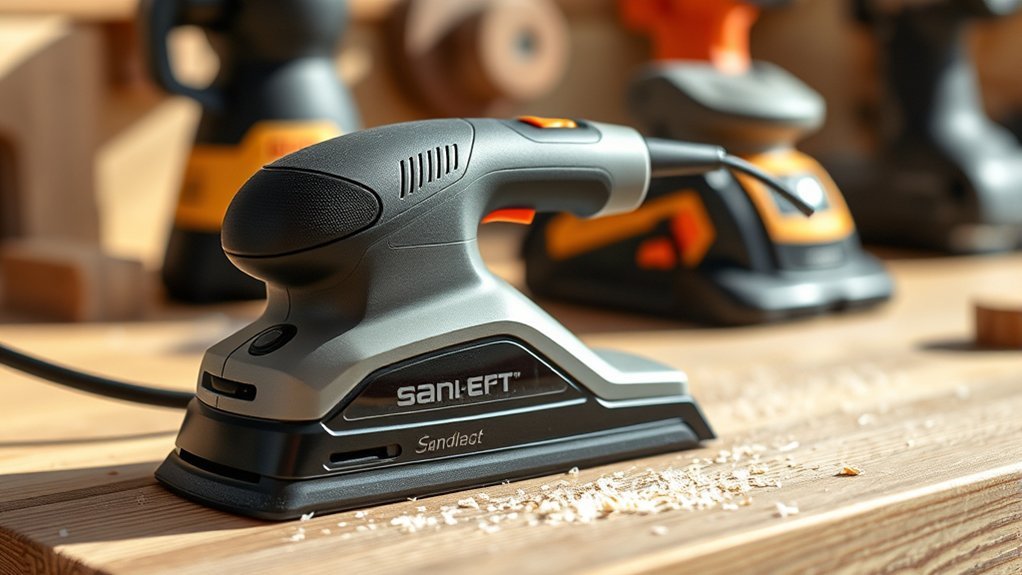
Why should you choose a palm sander instead of other types? When you need precise control on smaller surfaces or detailed edges, a palm sander offers superior maneuverability compared to larger orbital or belt sanders.
Its compact size lets you work effectively in tight spaces without sacrificing finish quality. Additionally, palm sanders often include integrated dust collection systems, minimizing airborne particles and keeping your workspace cleaner.
If you opt for a cordless model, battery charging times and runtime become critical; palm sanders typically balance power with efficient energy use, reducing downtime. Choose a palm sander when your project demands fine finishing, portability, and effective dust management, especially if you want to avoid the bulk and aggressive sanding action of larger tools.
What Materials Can You Use a Palm Sander On?
You can use a palm sander on a variety of materials, including wood, metal, and plastic. Each material requires specific sanding techniques and grit choices to achieve the best results.
Understanding these differences helps you avoid damage and guarantees a smooth finish.
Wood Surface Applications
Several types of wood surfaces respond well to palm sanding, making this tool versatile for various woodworking projects. You can efficiently smooth, shape, and prepare wood surfaces without veering into unrelated topics like metalwork or tangential ideas about abrasive materials. Palm sanders excel on:
- Softwoods such as pine and cedar, where controlled abrasion prevents gouging.
- Hardwoods including oak and maple, allowing fine surface finishing without excessive material removal.
- Plywood and veneer surfaces, where gentle sanding preserves the integrity of thin layers.
When using a palm sander on wood, ensure you select the appropriate grit to avoid damaging the surface. Proper technique guarantees a uniform finish, essential for staining or painting. This targeted application keeps your workflow efficient and focused, avoiding distractions from unrelated or tangential sanding applications.
Metal Sanding Uses
How effectively can a palm sander handle metal surfaces? When sanding metal, you must ensure abrasive compatibility by selecting sandpaper designed specifically for metalworking, like aluminum oxide or zirconia alumina grits. These abrasives withstand the hardness of metals without clogging or deteriorating prematurely.
Using the wrong abrasive risks inefficient sanding and damage to both the material and tool. Always prioritize metalworking safety: wear appropriate protective gear, secure the metal firmly, and avoid excessive pressure that can cause the sander to overheat or the surface to warp.
Palm sanders excel at removing rust, smoothing welds, and preparing metal for paint or finish. Keep the sander moving steadily to prevent gouges and maintain a consistent finish. Proper abrasive choice and safety practices will maximize your results on metal surfaces.
Plastic Material Compatibility
When working with plastic materials, what types can a palm sander effectively handle? Understanding plastic compatibility is essential to avoid surface damage or melting caused by excessive friction. Palm sanders work well on plastics with moderate hardness and heat resistance.
You should use them on:
- Acrylic and polycarbonate sheets, where controlled abrasion smooths imperfections without cracking.
- Fiberglass surfaces coated with gel coat, enabling you to refine the finish without compromising the protective layer.
- PVC and ABS plastics, as these respond well to the gentle, uniform sanding action.
Avoid using a palm sander on very soft or thin plastics, which may deform under heat or pressure. Selecting the correct grit and maintaining steady motion guarantees optimal results, preserving the material’s integrity while achieving a smooth finish.
How to Choose the Best Palm Sander for Your Project
What factors should you prioritize to find the ideal palm sander for your specific project? Start by evaluating the sander’s power and speed settings to match your material and finish requirements.
Prioritize power and speed settings to match your material and achieve the perfect finish for your project
Consider the size and weight; a lightweight model offers better control during prolonged use. Check the dust collection efficiency to maintain a clean workspace and prolong the tool’s life.
Avoid unrelated discussion about features irrelevant to sanding, such as unrelated topic like unrelated tool attachments. Also, evaluate the sanding pad size to ensure it suits your project’s surface area.
Finally, review user ergonomics and vibration levels to reduce fatigue and improve precision. By focusing on these technical aspects, you’ll select a palm sander that optimizes performance and efficiency for your task.
Must-Have Accessories and Sandpaper for Palm Sanders
Why settle for basic sanding when the right accessories and sandpaper can dramatically improve your results? Mastering woodcraft basics means equipping your palm sander with essential components that enhance performance and maintain dust control.
First, choose the correct grit sandpaper. Start coarse for shaping, then fine for finishing. Next, invest in a high-quality dust collection bag or adapter to keep your workspace clean and prolong the sander’s life.
Finally, consider replacement sanding pads designed for durability and optimal grip, ensuring consistent pressure and smooth finishes.
- Variety of sandpaper grits (60 to 220) tailored for different stages
- Efficient dust collection system for cleaner operation
- Durable sanding pads matching your sander model
These essentials streamline your sanding process and improve overall craftsmanship.
How to Use a Palm Sander Safely and Effectively
You’ll need to wear proper safety gear like goggles and a dust mask to protect yourself during sanding. Hold the palm sander firmly with both hands and keep it flat against the surface to maintain control.
Use steady, even pressure and move the sander in overlapping motions for consistent results without gouging the material.
Proper Safety Gear
A essential step before operating a palm sander is equipping yourself with the proper safety gear. This protects you from debris, dust, and noise hazards inherent in sanding tasks.
Always wear:
- Safety goggles to shield your eyes from flying particles and fine dust.
- Hearing protection, such as earplugs or earmuffs, to reduce noise exposure and prevent hearing damage.
- A dust mask or respirator to avoid inhaling harmful dust, especially when sanding treated wood or materials containing chemicals.
Ensure your gear fits snugly and doesn’t obstruct your movement or vision. Using the right safety equipment minimizes risk and lets you focus on precise, effective sanding.
Prioritizing safety gear is essential before handling the palm sander itself, setting the foundation for a secure, efficient work process.
Correct Handling Techniques
How should you hold and maneuver a palm sander to achieve smooth, consistent results? Grip the sander firmly with both hands, applying even pressure without forcing it down. Let the tool’s weight do the work, moving it in steady, overlapping strokes.
Avoid tilting the sander to prevent uneven sanding or gouges. Follow proper sanding etiquette by keeping the sander flat and moving continuously to avoid heat buildup and surface damage.
Use care tips such as regularly checking and replacing sandpaper to maintain efficiency. Always disconnect power before changing pads or cleaning.
Store the sander in a dry, dust-free area to prolong its lifespan. Adhering to these handling techniques ensures safety and effective sanding, delivering professional-quality finishes while preserving your tool.
Effective Sanding Tips
Maintaining a firm, even grip and consistent movement sets the foundation for effective sanding with a palm sander. Avoid distracted motions or applying excessive pressure, which can lead to uneven surfaces or damage.
Steer clear of unrelated topic discussions or off topic ideas while sanding. Focus solely on the task to ensure precision and safety. To maximize efficiency and results:
- Choose the correct grit sandpaper for your material and project phase.
- Move the sander in overlapping, smooth strokes to prevent swirl marks.
- Regularly check and replace worn sandpaper to maintain optimal sanding performance.
Troubleshooting Common Palm Sander Issues
Why does your palm sander sometimes fail to deliver smooth results or stop working altogether? Common issues include worn-out sandpaper, clogged dust ports, or motor malfunctions.
First, check if the sandpaper is properly attached and not worn; replacing it often resolves sanding inconsistency. Next, inspect dust collection. If ports are clogged, debris reduces efficiency and causes overheating.
Motor problems may stem from electrical faults or brushes needing replacement. Avoid getting caught up in irrelevant topics like offshoot debates on sander brands or models when troubleshooting. Focus on diagnosing specific mechanical issues.
How to Maintain and Extend the Life of Your Palm Sander
After identifying and fixing common issues like worn sandpaper or clogged dust ports, keeping your palm sander in optimal condition involves regular upkeep. Prioritize palm sander safety by unplugging the tool before maintenance.
Clean the dust collection system frequently to prevent motor strain. Lubricate moving parts as specified in the manufacturer’s manual to maintain smooth operation. To extend the tool’s lifespan, follow these key practices:
Replace sanding pads promptly to avoid uneven wear and maintain effective sanding technique. Store the sander in a dry, dust-free environment to prevent corrosion and electrical issues. Inspect power cords regularly for damage to avoid electrical hazards and ensure consistent performance.
Consistent maintenance ensures safe operation, preserves sanding efficiency, and maximizes the longevity of your palm sander.
Frequently Asked Questions
Can a Palm Sander Be Used for Automotive Paint Removal?
You can use a palm sander for automotive paint removal, but its palm sander usage suits light sanding and smoothing.
For heavy paint stripping, consider more aggressive tools to avoid damaging the surface or wasting time.
What Is the Average Noise Level of a Palm Sander?
Wondering about the average decibels of a palm sander? You’ll find it typically emits 75-85 dB, which means the noise impact is moderate but still requires hearing protection during prolonged use to prevent damage.
Are Palm Sanders Suitable for Left-Handed Users?
Yes, palm sanders often feature ergonomic design that supports left handed usability. You’ll find many models symmetrical or ambidextrous, allowing comfortable grip and control, so you can work efficiently regardless of your dominant hand.
Can Palm Sanders Be Used for Wet Sanding?
When it comes to wet sanding, you generally can’t use palm sanders designed for dry use. They aren’t built for moisture and may fail. Instead, choose models with proper dust control and waterproof features to avoid damage.
How Do Palm Sanders Compare in Energy Consumption?
You’ll find palm sanders generally offer better energy efficiency and lower power usage compared to larger sanders. Their compact motors consume less electricity, making them practical for small projects while conserving energy effectively during operation.
Conclusion
Using a palm sander is like wielding a finely tuned brush—precision and control are in your hands. By choosing the right type, grit, and speed, you’ll achieve smooth, professional finishes on wood, plastics, and composites.
Remember to follow safety guidelines and maintain your tool regularly to ensure consistent performance and longevity. With careful use and upkeep, your palm sander becomes an indispensable extension of your craftsmanship.
It delivers reliable, efficient results every time, making the palm sander an essential tool for any woodworking or finishing project.