Like a sculptor’s chisel, a ball peen hammer is essential when you need precision shaping and controlled impact on metal. This versatile tool is designed specifically for metalworking tasks, making it a must-have in any machinist’s or metalworker’s toolkit.
You’ll rely on its flat face for solid strikes and its rounded peen to form, spread, or peen metal surfaces without causing damage. Understanding these dual functions is key to mastering metalwork tasks.
But there’s more to how it outperforms other hammers for specific jobs.
What Is a Ball Peen Hammer and What Is It Used For?
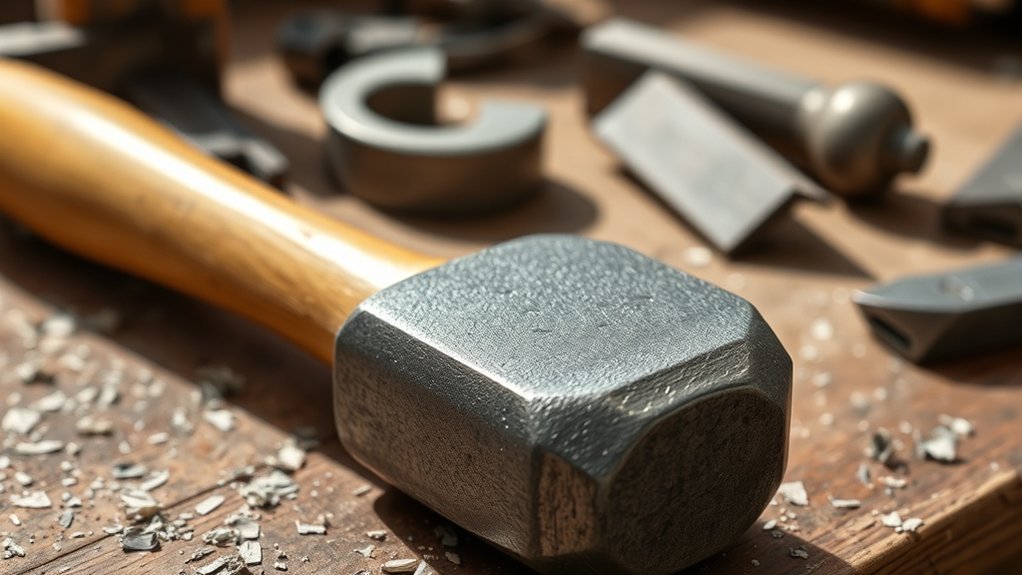
How exactly does a ball peen hammer differ from other hammers you might use? A ball peen hammer features a flat striking face on one end and a rounded, or “peen,” head on the other. This design allows you to perform tasks like metal shaping, riveting, and peening with precision.
You’ll find it essential for metalworking and fabrication, where controlled impact is critical. When using a ball peen hammer, prioritize hammer safety by wearing protective eyewear and ensuring your grip is firm to avoid slips.
The steel head must be securely attached to the handle to prevent accidental detachment. Using the ball peen correctly helps you avoid damaging materials or causing injury, making it a specialized tool distinct from general-purpose hammers.
Differences Between Ball Peen and Claw Hammers
A ball peen hammer and a claw hammer serve distinct purposes, each tailored to specific tasks in metalworking and carpentry respectively. When you choose between ball peen and claw hammers, understanding their design and function is critical.
- Ball peen hammers have a rounded, hemispherical peen opposite a flat face, ideal for shaping metal.
- Claw hammers feature a flat face and a curved, forked claw for nail removal.
- Ball peen handles are typically shorter with a heavier head to deliver controlled force.
- Claw hammers offer longer handles for leverage and ease in prying.
- Ball peen hammers resist chipping on metal surfaces; claw hammers focus on woodwork durability.
Knowing these distinctions helps you select the right hammer for metal shaping versus carpentry tasks.
Shaping and Forming Metal With a Ball Peen Hammer
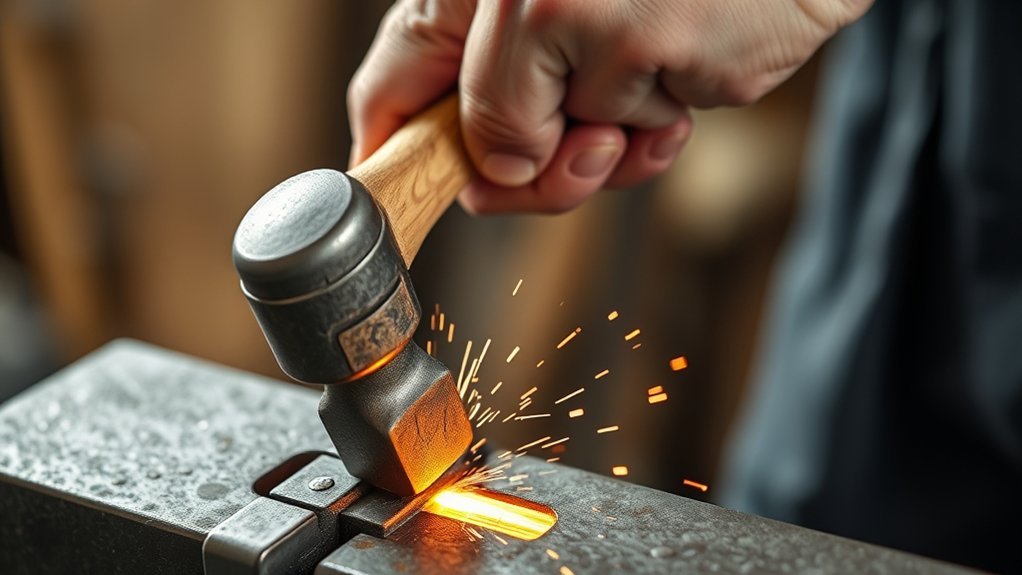
Why does the ball peen hammer excel at shaping and forming metal? Its unique design features a rounded peen opposite the flat face, allowing you to manipulate metal surfaces with precision.
When shaping metal, you use the ball end to create gentle curves or to spread metal evenly without causing cracks or fractures. This controlled impact is crucial for forming surfaces that require subtle deformation, such as rounding edges or tapering parts.
The hammer’s weight and balance give you the ability to apply consistent force, enabling accurate adjustments to the metal’s shape. Whether you’re working on thin sheet metal or thicker stock, the ball peen hammer helps you refine forms by directing force precisely, making it an indispensable tool for detailed metal shaping and forming tasks.
Peening Rivets and Fasteners With a Ball Peen Hammer
Where do you turn when you need to secure rivets firmly in place? You rely on the ball peen hammer to peen rivets precisely, shaping metal to lock fasteners tightly. The rounded peen end allows you to expand and deform the rivet head, creating a mechanical lock that resists loosening under stress.
When peening rivets and fasteners with a ball peen hammer, you:
- Position the rivet correctly in the hole
- Strike the rivet head with controlled force
- Use the ball end to spread and shape metal evenly
- Avoid over-hammering to prevent weakening the joint
- Inspect the deformed rivet head for uniformity and tightness
This technique ensures a durable, permanent fastening by effectively shaping metal around the rivet shaft.
How Mechanics Use Ball Peen Hammers for Punching and Chiseling
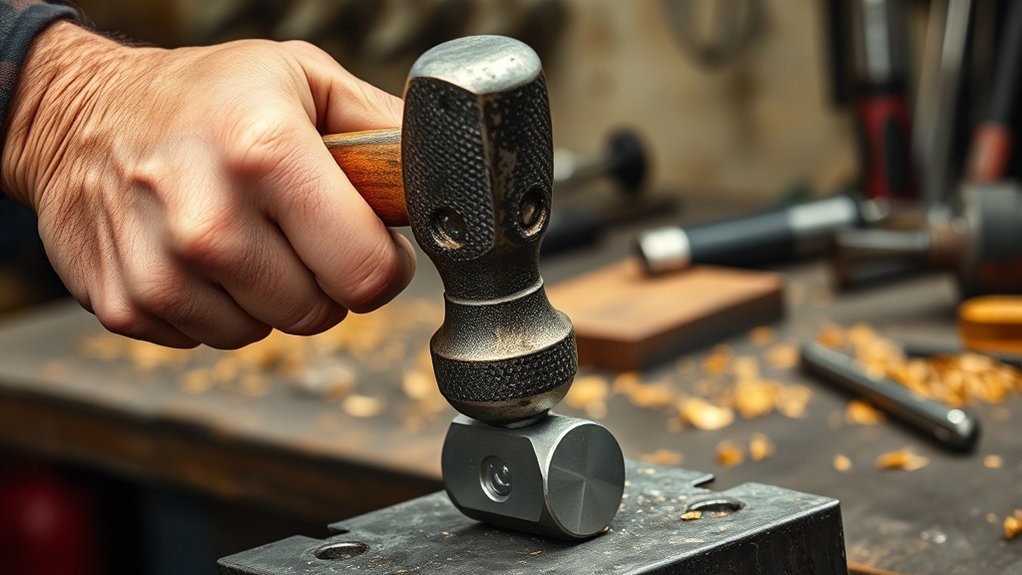
How exactly do mechanics utilize ball peen hammers for punching and chiseling tasks? You rely on the hammer’s rounded peen to strike punches, driving them through metal with controlled force. The ball end delivers precise blows that prevent tool damage while shaping or piercing sheets.
For chiseling, you use the flat face to direct force onto a chisel’s edge, enabling clean cuts or groove creation in metal parts. This precision lets you remove welds, cut bolts, or shape components efficiently.
While discussion ideas around unrelated to mechanics or hammer use don’t apply here, understanding this dual functionality enhances your technique. Mastering these tasks ensures you can manipulate metal effectively without compromising the integrity of the materials or tools involved.
Choosing the Right Ball Peen Hammer for Your Projects
Selecting the right ball peen hammer depends on the specific demands of your project, including the material type, hammer weight, and handle design. You want a hammer that matches the metal hardness and thickness you’re working on, avoiding unnecessary force or damage. Don’t get distracted by unrelated topic or random chatter when making your choice.
Consider these critical factors:
- Hammer head weight: lighter for delicate tasks, heavier for shaping tougher metals
- Handle material: fiberglass for shock absorption, wood for traditional feel
- Head finish: polished for precision, raw for rougher work
- Balance and grip comfort: essential for control and reducing fatigue
- Size and length: ensure it fits your project workspace without compromising leverage
Choosing precisely helps optimize efficiency and results in your metalworking projects.
Using a Ball Peen Hammer Safely and Effectively
When using a ball peen hammer, do you prioritize both safety and accuracy? Begin by selecting a hammer with an appropriate weight and handle length to maintain control. Always wear safety goggles to protect your eyes from flying debris.
Prioritize safety and accuracy by choosing the right hammer and always wearing safety goggles.
Inspect the hammer before use; ensure the head is securely attached to the handle to prevent accidents. Use a firm grip, positioning your hand near the end of the handle for maximum leverage.
Strike the workpiece with controlled, deliberate blows, avoiding excessive force that could cause the hammer to slip. Maintain a clear workspace, keeping bystanders at a safe distance.
Adhering to ball peen hammer safety reduces injury risk and improves precision, ensuring each task, whether shaping metal or driving punches, is executed effectively.
Caring for Your Ball Peen Hammer to Ensure Longevity
To keep your ball peen hammer in optimal condition, you’ll need to clean it properly after each use, removing debris and preventing rust buildup. Store it in a dry, secure place to avoid moisture exposure and handle damage.
Regularly inspect the head and handle for cracks or wear to ensure safe, reliable performance over time.
Proper Cleaning Techniques
A clean ball peen hammer performs more reliably and lasts longer, so you should regularly remove dirt, grease, and metal shavings from the head and handle. Employ effective cleaning techniques to maintain optimal function and prevent corrosion.
Start by wiping the hammer down with a dry cloth to remove loose debris. Use a degreaser or mild solvent for stubborn grease. For rust removal, apply a rust remover or use fine steel wool to gently scrub affected areas without damaging the steel. Finally, dry the hammer thoroughly to avoid moisture buildup.
- Wipe head and handle with a clean cloth
- Apply degreaser for persistent grease
- Use rust remover for oxidation spots
- Gently scrub with fine steel wool
- Thoroughly dry after cleaning to prevent rust
These steps ensure your hammer remains precise and durable.
Storage Best Practices
Maintaining your ball peen hammer’s cleanliness is only part of preserving its functionality; proper storage plays a significant role in preventing damage and extending its lifespan. You should store your hammer in a dedicated area with adequate storage organization, such as a pegboard or tool chest equipped with foam inserts.
This setup minimizes exposure to moisture and physical impact. Use tool labeling to clearly identify the hammer’s designated spot, which aids in quick retrieval and reduces the risk of misplacement or damage from improper stacking.
Avoid leaving your hammer in damp or cluttered environments, as corrosion and handle degradation can occur. By implementing systematic storage organization and consistent tool labeling, you ensure your ball peen hammer remains in optimal condition and ready for precise, reliable use when needed.
Regular Inspection Tips
How often should you inspect your ball peen hammer to assure it performs reliably? Conduct regular inspection and safety checks before each use to identify wear or damage early. Focus on these critical areas:
- Check the hammerhead for cracks, chips, or deformation.
- Inspect the peen and face for excessive wear or mushrooming.
- Ensure the handle is securely attached with no looseness or splits.
- Verify the handle surface is free of splinters and maintains a solid grip.
- Confirm there’s no rust or corrosion on metal components.
These regular inspection steps help prevent accidents and maintain tool efficiency. Address any defects immediately by repair or replacement to extend your hammer’s longevity and ensure safe, effective operation.
Frequently Asked Questions
Can a Ball Peen Hammer Be Used for Woodworking?
You can use a ball peen hammer for woodworking, but it’s not ideal. Its design suits metalwork better.
Left handed use works fine, but precision tasks in woodworking typically require specialized hammers for best results.
What Materials Are Ball Peen Hammer Heads Made From?
You’re wielding a star forged in fire. Ball peen hammer heads are crafted from high-carbon steel or heat-treated hammer head alloys, ensuring durability and precise materials composition for impact resistance and long-lasting performance in metalwork tasks.
How Heavy Is a Typical Ball Peen Hammer?
You’ll find a typical ball peen hammer weighs between 8 to 32 ounces, balancing heavy construction needs with precision. Its forged steel head ensures durability, letting you deliver controlled, effective impacts without excessive fatigue during use.
Are Ball Peen Hammers Suitable for Left-Handed Users?
About 10% of users are left-handed, and ball peen hammers are generally ambidextrous. You’ll find left-handed ergonomics depend on hammer grip orientation, so choosing a balanced, symmetrical handle improves comfort and control for you.
Can Ball Peen Hammers Be Used for Jewelry Making?
You can use a ball peen hammer for jewelry making, especially in ball peen jewelry crafting. Its rounded end allows precise shaping and texturing of metals, making it ideal for detailed hammer crafting tasks in small-scale metalwork.
Conclusion
So, next time you pick up a ball peen hammer, remember: it’s not just a glorified metal mallet. You’re wielding a precision tool designed for shaping, peening, and riveting with surgical finesse—because smashing things blindly is so last century.
Embrace its dual faces wisely, and you’ll avoid turning your project into a metal disaster. Treat it right, and this hammer won’t just last; it might even outlive your questionable DIY decisions.
In the end, understanding what a ball peen hammer is used for will help you use it effectively and keep your metalwork looking sharp and professional.