Imagine holding a diamond drill bit, a tool that looks like a miniature fortress. Its steel body is crowned with a gritty, sparkling edge that hints at raw cutting power.
This is no ordinary drill bit—it’s precisely engineered for durability and performance.
But the appearance alone doesn’t reveal the full story behind its design nuances and material choices.
To truly understand its form and function, you’ll need to explore how these features come together.
What Does a Diamond Drill Bit Look Like?
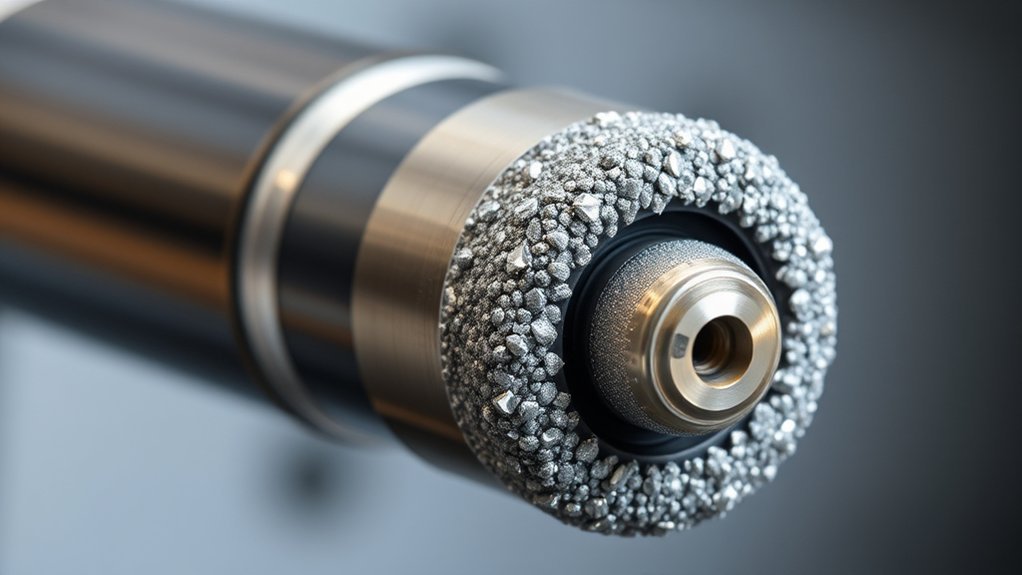
A diamond drill bit features a cylindrical steel body embedded with industrial diamonds on its cutting edge, designed to grind through hard materials like concrete, stone, and glass. When examining diamond bit types, you’ll notice variations in segment design, bond hardness, and diamond concentration, each tailored for specific drilling applications.
The drill bit features typically include a hollow core to facilitate dust removal and cooling during use, along with a segmented or continuous rim depending on the material’s abrasiveness. You’ll find that the cutting edge’s diamond particles are bonded via a metal matrix, ensuring durability and efficient material removal.
Understanding these drill bit features helps you select the right diamond bit type for your project, optimizing performance and bit lifespan.
How Does the Diamond Coating Affect Appearance?
The diamond coating directly influences the drill bit’s visual characteristics by determining the texture, color, and reflectivity of the cutting edge. When you examine the bit, you’ll notice the diamond coating creates a distinct, often gritty surface that contrasts sharply with the smoother metal beneath.
This coating typically appears silvery to gray, sometimes with a subtle sparkle due to the crystalline structure of the diamonds embedded. The visual impact is significant; the diamond coating’s roughness and light-scattering properties enhance the drill bit’s appearance, signaling its enhanced cutting capability.
You’ll also observe that the coating’s uniformity affects how consistently light reflects, contributing to the bit’s overall sheen and making it visually stand out compared to non-coated drill bits.
Why Do Diamond Drill Bits Have Rough, Sparkling Edges?
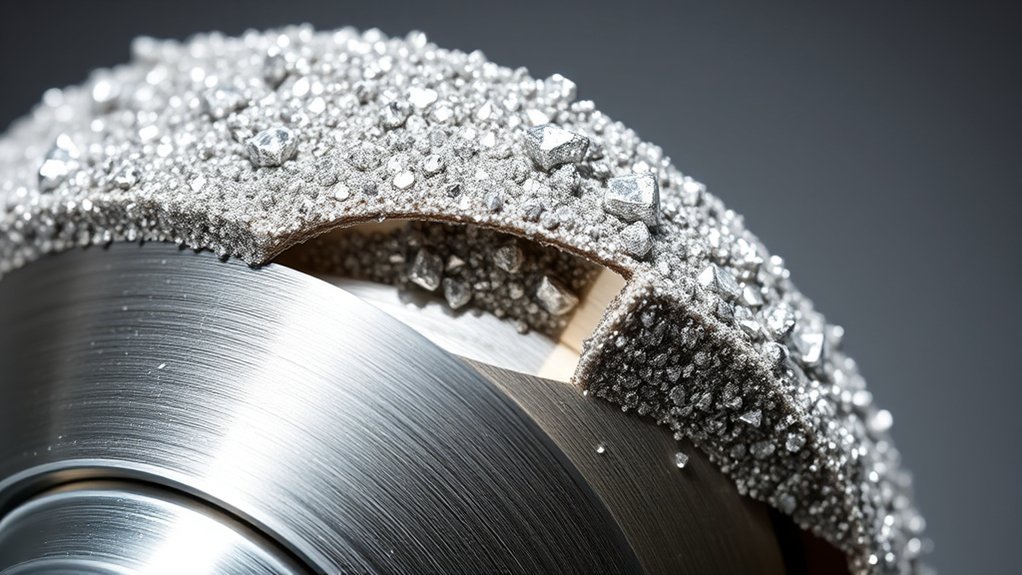
Because diamond drill bits are designed to cut through extremely hard materials, their edges feature a rough, sparkling texture that enhances abrasion and cutting efficiency. This roughness arises from the embedded industrial diamonds, whose irregular surfaces provide multiple cutting points.
When you apply diamond cutting drilling techniques, these textured edges grip and fracture the substrate more effectively than smooth edges would. The sparkling appearance results from light reflecting off the many diamond facets exposed at the bit’s edge.
This design maximizes material removal rates and prolongs tool life by distributing wear evenly across the cutting surface. So, when you observe a diamond drill bit, its rough, sparkling edges aren’t just aesthetic; they’re critical to peak performance in demanding drilling applications.
What Shapes and Sizes Do Diamond Drill Bits Come In?
When selecting a diamond drill bit, you’ll find they come in a variety of shapes and sizes tailored to different applications. Understanding diamond bit types is essential, as each shape suits specific drill bit applications. Common shapes include cylindrical, conical, and segmented, each designed to optimize cutting efficiency on materials like glass, tile, or concrete.
| Shape | Diameter Range (mm) | Typical Application |
|---|---|---|
| Cylindrical | 4 – 50 | Precision hole drilling |
| Conical | 6 – 30 | Angled or tapered holes |
| Segmented | 20 – 150 | Core drilling in concrete |
Choosing the right size guarantees efficient material removal, while the shape aligns with the cutting path and material hardness.
How Can You Tell If a Diamond Drill Bit Is High Quality?
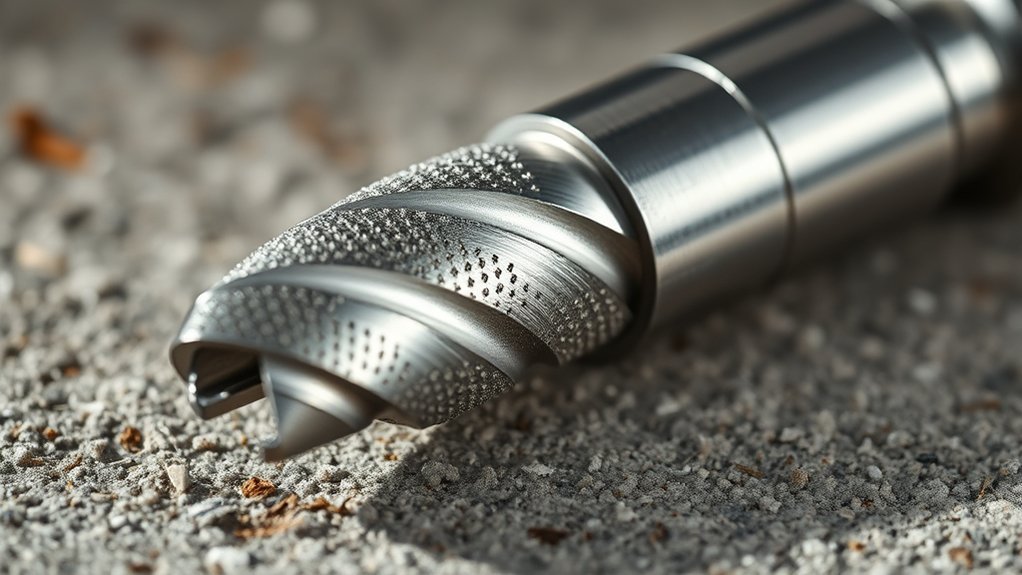
How can you quickly identify a high-quality diamond drill bit? Focus on key quality indicators such as consistent diamond grit distribution and bonding material integrity. High-quality bits feature evenly embedded synthetic diamonds within a metal matrix, ensuring durability and effective cutting performance.
Check the material composition. Premium bits use industrial-grade diamonds fused to a robust alloy, often cobalt or nickel-based, enhancing wear resistance. Examine the bit’s surface finish; it should be smooth without visible defects or irregularities.
Additionally, inspect the shank for secure attachment and precise dimensions, which prevent wobbling during use. By evaluating these technical aspects—grit uniformity, bonding strength, material composition, and manufacturing precision—you can confidently select a diamond drill bit designed for ideal longevity and cutting efficiency.
Conclusion
When you hold a diamond drill bit, you’re gripping a tool that looks like a rugged, silver-gray cylinder studded with sparkling industrial diamonds—like tiny stars embedded in steel. Its rough, gritty edges aren’t just for show; they’re engineered for precise, efficient cutting.
Whether segmented or continuous, the design speaks to quality and purpose. By observing these features closely, you can easily spot a high-quality bit ready to tackle tough drilling tasks with precision.
Understanding what a diamond drill bit looks like helps you choose the right tool for your project, ensuring durability and performance.