Imagine wearing a pair of shoes that slowly squeeze your toes into a cramped, unnatural pose—this is one of the primary causes of hammer toes. Over time, this pressure can permanently reshape your toes, leading to discomfort and deformity.
You might not realize it, but factors like tight footwear, inherited foot structure, certain health conditions, muscle imbalances, and past injuries all play a role in causing hammer toes.
Understanding these causes is essential if you want to prevent or manage this common deformity effectively.
How Tight Shoes and High Heels Cause Hammer Toes
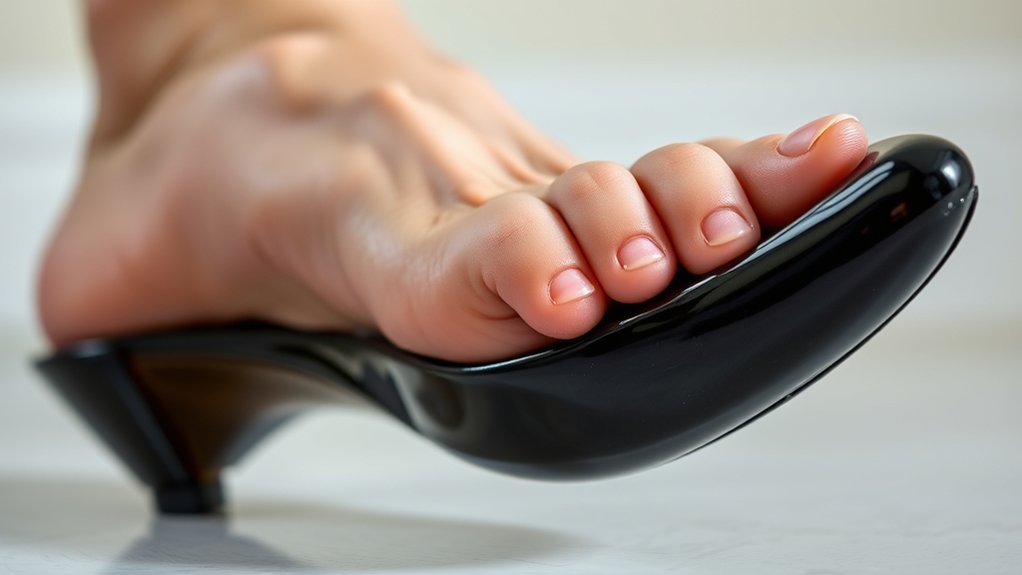
How exactly do tight shoes and high heels contribute to the development of hammer toes? When you wear tight shoes or high heels, your toes are forced into unnatural positions, causing muscle imbalance and increased pressure on the toe joints. This persistent pressure can lead to deformities, such as hammer toes.
While genetics and medical conditions can predispose you to this condition, the mechanical stress from improper footwear plays a crucial role in its onset. Tight shoes restrict toe movement, exacerbating muscle imbalance, while high heels shift your body weight forward, increasing strain on the toes.
Additionally, foot injuries sustained while wearing such footwear can further damage tendons and joints, accelerating hammer toe formation. Therefore, avoiding tight shoes and high heels is essential to prevent these structural changes.
How Genetics Affect Hammer Toes
Why do some people develop hammer toes despite wearing proper footwear? Your genetic predisposition plays a significant role. Inheritance patterns can influence the structure of your foot, affecting pressure distribution and making you more susceptible to hammer toes even without footwear related risk.
Understanding your genetic background helps identify your vulnerability to this deformity independent of external factors.
| Factor | Impact on Hammer Toes |
|---|---|
| Genetic Predisposition | Alters foot structure and muscle balance |
| Inheritance Patterns | Family history increases risk |
| Footwear Related Risk | Exacerbates existing genetic tendencies |
| Pressure Distribution | Uneven load triggers toe deformity |
While genetics set the stage, they interact with external forces and other medical risk factors influencing hammer toe development.
Which Medical Conditions Raise Your Risk for Hammer Toes?
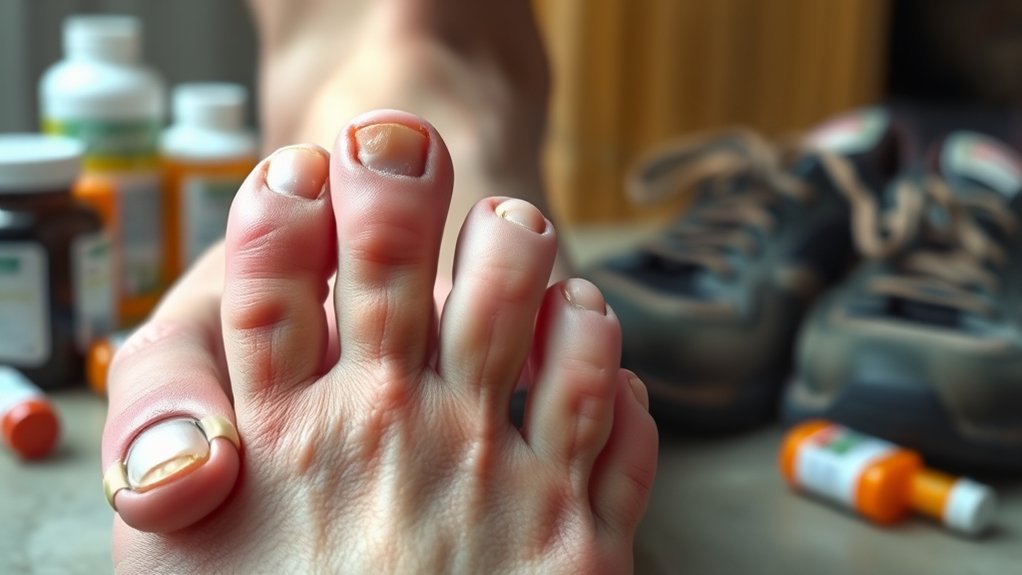
Which medical conditions increase your risk of developing hammer toes? Several medical conditions act as significant risk factors by affecting the nerves, muscles, or joints of your feet.
Peripheral neuropathy, often linked to diabetes, diminishes sensation and muscle control, increasing hammer toe risks. Rheumatoid arthritis and other inflammatory joint diseases cause joint damage and deformities that raise your risk.
Additionally, conditions like stroke or Charcot-Marie-Tooth disease, which impair nerve function, contribute to muscle weakness and imbalance, leading to hammer toes. These associated diseases alter foot structure and function, increasing vulnerability to deformities.
Understanding these medical conditions as risk factors helps you recognize your susceptibility and seek early intervention to prevent or manage hammer toes effectively.
How Muscle Imbalance Causes Hammer Toes
When muscles in your foot and lower leg become imbalanced, they can pull unevenly on your toes, leading to the characteristic curling seen in hammer toes. This muscle imbalance disrupts the natural toe alignment, causing some muscles to overpower others.
Over time, this uneven tension forces your toe joints to bend abnormally. The imbalance often involves weakened intrinsic foot muscles and tighter extensor or flexor muscles. As a result, your toes may stay in a bent position, which eventually becomes fixed due to joint contractures.
Correct toe alignment relies on balanced muscle forces; when that balance is lost, hammer toes develop progressively. Addressing muscle imbalance early through targeted exercises or orthotic support can help restore proper toe alignment and prevent worsening deformity.
How Foot Injuries Can Cause Hammer Toes
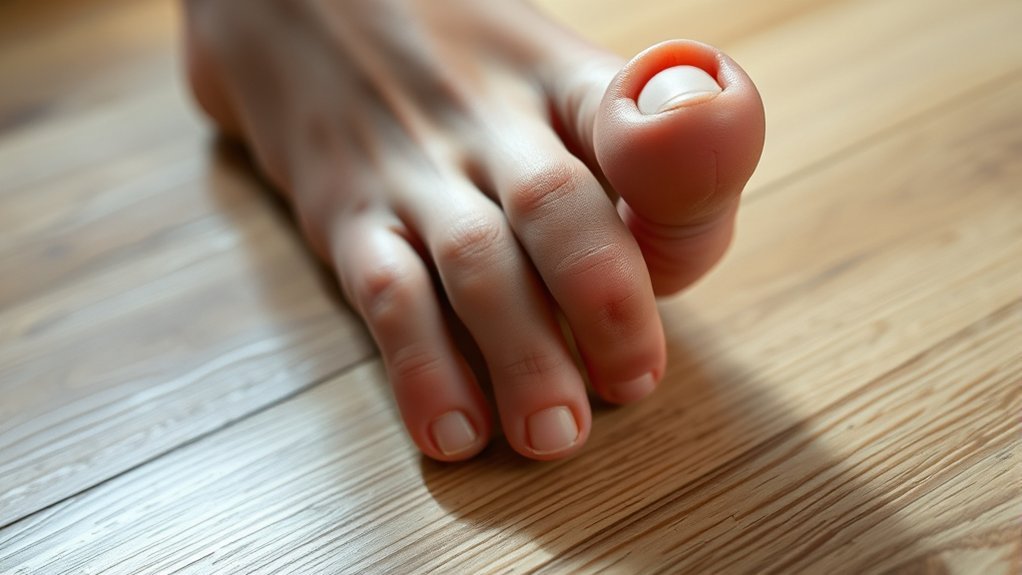
A foot injury can markedly alter the structure and function of your toes, leading to the development of hammer toes. Injuries such as fractures, sprains, or tendon damage disrupt the balance of muscles and joints, causing foot deformities.
These changes affect toe alignment and mobility. Additionally, the footwear impact after injury can worsen deformities if shoes don’t accommodate swelling or altered gait.
| Injury Type | Effect on Toe Structure |
|---|---|
| Fractures | Joint misalignment |
| Tendon injuries | Muscle imbalance |
| Sprains | Ligament laxity |
| Poor footwear | Aggravated deformities |
Recognizing how injuries and inappropriate footwear contribute to hammer toes helps you seek timely intervention and prevent progression.
Frequently Asked Questions
Can Hammer Toes Be Corrected Without Surgery?
Yes, you can correct hammer toes with non surgical options like toe exercises, splints, and proper footwear.
Consistent self care strategies help reduce pain and improve alignment, delaying or preventing the need for surgery.
What Are the Early Symptoms of Hammer Toes?
Like a hidden fault line beneath calm earth, early hammer toe symptoms include mild toe curling, stiffness, and discomfort during movement. These signs reveal shifts in toe joint mechanics, marking the subtle onset of hammer toe origins.
Are There Specific Exercises to Prevent Hammer Toes?
Yes, you can use specific exercises for prevention, focusing on toe muscle strengthening. Regularly curling your toes, picking up objects with them, and stretching can improve flexibility and reduce hammer toe risk effectively.
How Does Age Affect the Development of Hammer Toes?
As you age, age-related risk factors like reduced muscle strength and joint flexibility increase hammer toe risk. Additionally, footwear influence such as wearing tight or ill-fitting shoes can exacerbate deformities, making proper shoe choice vital for prevention.
Can Hammer Toes Cause Problems With Balance?
Sure, hammer toes won’t improve your balance. Actually, they cause balance problems by altering foot mechanics. You’ll find that these deformities reduce stability, increasing your risk of falls and making everyday movements more challenging than you’d expect.
Conclusion
If you find your toes curling in ways they shouldn’t, it’s often a sign that your footwear choices, genetics, or underlying health conditions are nudging your feet out of alignment. Muscle imbalances and past injuries might be quietly tipping the scales, too.
By understanding these subtle influences, you can take proactive steps to ease pressure and support proper toe positioning. This approach can help you maintain comfort and prevent further changes in your foot’s natural structure.
Taking these measures early on is key to managing and potentially avoiding hammer toes.