Just like a chef chooses the right knife for each task, having the right tools is essential to get your projects done efficiently. When it comes to smoothing surfaces, you might wonder: is an electric sander worth it?
The answer depends on several factors, including the type of work you tackle and the finish you want to achieve. Hand sanding might work for small jobs, but an electric sander can save you time and effort on larger projects.
Let’s explore what makes an electric sander a potentially valuable addition to your toolkit.
What Exactly Is an Electric Sander?
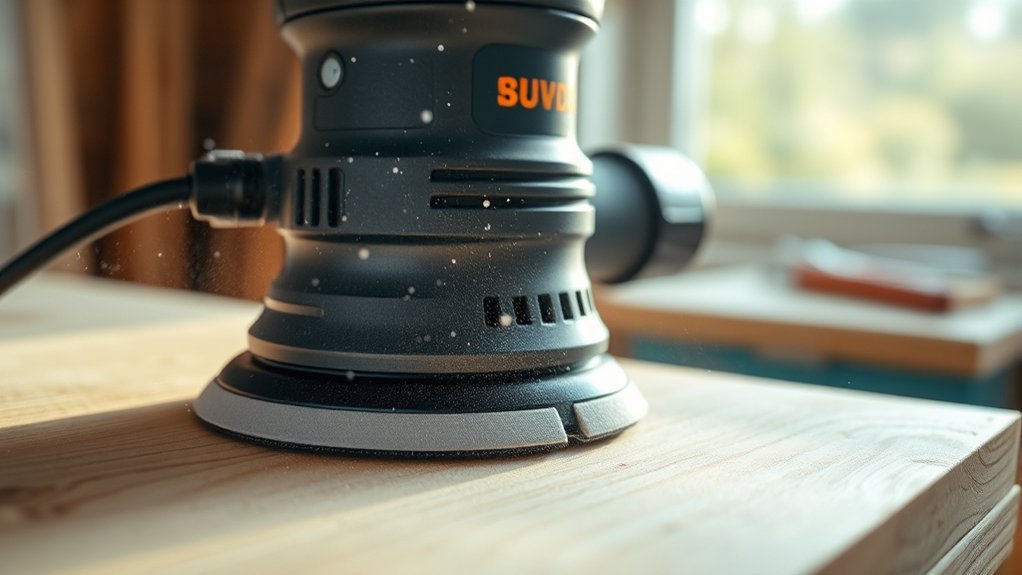
What makes an electric sander different from traditional sanding tools? Unlike manual sanding, electric sanding uses a motorized device to rapidly move abrasive surfaces, saving you time and effort. You’ll find various types—orbital, belt, and detail sanders—each designed for specific tasks and surfaces.
Electric sanders offer consistent pressure and speed, which helps achieve smoother finishes compared to hand sanding. While primarily meant for sanding wood, metal, or plastic, you can also use some electric sanders for non sanding projects like polishing or removing paint with the right attachments.
Understanding the tool’s capabilities ensures you pick the right sander for your needs, whether you’re prepping surfaces or performing precision work. This clarity helps you decide if electric sanding suits your project demands.
Why Use an Electric Sander for Your DIY Projects?
When you use an electric sander, you save significant time compared to sanding by hand. It delivers a consistently smooth finish that’s hard to achieve manually.
Understanding these benefits helps you decide if this tool suits your DIY needs.
Time-Saving Efficiency
How quickly can you complete your sanding tasks without compromising quality? An electric sander significantly cuts down your work time compared to manual sanding. It delivers consistent, high-speed abrasion that’s hard to match by hand, allowing you to tackle large surfaces efficiently.
While some might consider the unused topic of whether sanding speed impacts finish quality an unrelated concept here, it’s important to note that electric sanders balance speed and control well. You avoid the fatigue and uneven results often seen with hand sanding, freeing you to focus on other project details.
Ultimately, if saving time is a priority, an electric sander offers a practical advantage, helping you complete your DIY projects faster without sacrificing the quality you need.
Smooth Finish Results
Beyond saving time, an electric sander helps you achieve a consistently smooth finish that’s difficult to replicate by hand. With its even pressure and controlled motion, you get uniform results on various surfaces.
This two word tool reduces imperfections, making your DIY projects look professionally done. It’s especially useful for finishing wood, metal, or painted surfaces, where a two word smooth finish is crucial.
Using an electric sander also minimizes hand fatigue, so you can work longer and maintain quality. Here’s a quick comparison of finish quality and effort levels:
| Surface Type | Manual Sanding | Electric Sanding |
|---|---|---|
| Wood | Uneven | Consistent |
| Metal | Labor-intensive | Smooth |
| Paint | Rough edges | Even coat |
| Time Spent | High | Low |
| Effort Level | High | Moderate |
Types of Electric Sanders and When to Use Them
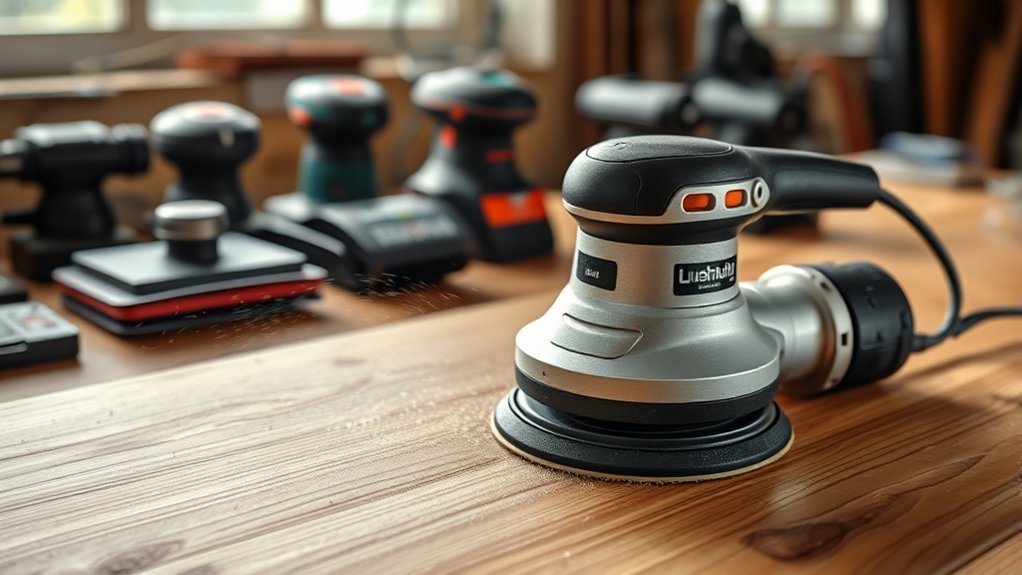
You’ll find several types of electric sanders, each designed for specific tasks. Orbital sanders are great for smooth, fine finishes, while belt sanders handle heavy material removal quickly.
Detail sanders reach tight corners and intricate areas where larger tools can’t fit.
Orbital Sanders Overview
Orbital sanders offer a versatile solution for smoothing surfaces, but choosing the right type depends on your specific project needs. There are primarily two types: the finishing orbital sander and the random orbital sander.
The finishing orbital sander moves in a consistent circular motion, ideal for light sanding and fine finishing. The random orbital sander combines circular and elliptical motions, reducing swirl marks and delivering a smoother finish, especially on larger areas.
When you’re chatting with fellow DIYers or during small talk, durability often comes up. Random orbital sanders usually boast more robust construction due to their versatile use. Both types are user-friendly and effective, but your choice should align with the surface and finish quality you want, ensuring efficient work without compromising on the final appearance.
Belt Sanders Applications
When should you reach for a belt sander instead of other types? Use a belt sander when you need to remove a lot of material quickly on large, flat surfaces. It excels at leveling rough wood, stripping paint, or smoothing hardwood floors.
Unlike orbital sanders, belt sanders generate more sanding noise due to their powerful continuous belt motion, so prepare for a louder work environment. Dust control is crucial since these sanders produce a significant amount of debris; many models include built-in dust collection systems or attachments to connect vacuum hoses, helping keep your workspace cleaner.
While belt sanders are aggressive and efficient, they’re less suited for delicate or curved surfaces where finer control is necessary, so choose them when speed and material removal outweigh precision.
Detail Sanders Advantages
How can you achieve precise sanding in tight spaces and on intricate surfaces? Detail sanders are designed exactly for that purpose. Their small, triangular pads reach corners and contoured areas where larger sanders can’t.
You’ll find corded models that offer continuous power without worrying about battery life, which can be crucial for longer projects. However, cordless detail sanders provide greater mobility, though you’ll need to monitor battery life to avoid interruptions.
While electricity cost for corded options is generally low, cordless models save you from cords but require charging. These sanders excel in tasks like smoothing furniture edges or prepping small wooden pieces.
Choosing between types depends on your project demands and workspace. Both offer efficiency without compromising control or precision.
Electric Sanders vs. Hand Sanding: Which Is Better?
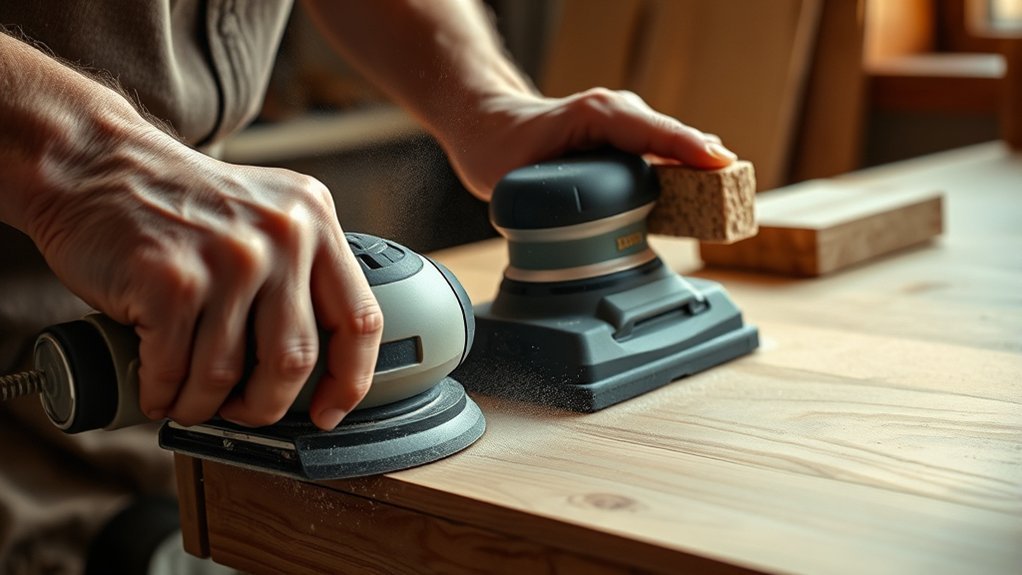
Why choose between electric sanders and hand sanding when both offer unique advantages? Electric sanders speed up projects and reduce dust with built-in collection systems, but they can be noisy. Hand sanding offers precise control and quiet operation but takes more effort and time.
| Feature | Electric Sanders | Hand Sanding |
|---|---|---|
| Speed | Fast | Slow |
| Dust Reduction | Effective with dust collection | Minimal |
| Noise Considerations | Loud | Quiet |
| Control | Less precise on intricate spots | High precision |
| Effort | Low | High |
Depending on your project, balancing speed, dust reduction, noise considerations, and control helps you decide which method suits you best.
When Isn’t an Electric Sander the Right Tool?
While electric sanders offer speed and efficiency for many tasks, they aren’t always the best choice for every project. You might find that the cost benefit doesn’t justify using one in certain situations. Here are three instances when an electric sander might not be right for you:
1. Delicate or Small Surfaces
You risk damaging fine details or small areas where precision and control are critical.
2. Noise Impact Concerns
If you’re working in a noise-sensitive environment, the loud motor could be disruptive or even prohibited.
3. Minimal Sanding Needs
For quick touch-ups or very light sanding, hand sanding may be more practical and cost-effective.
In these cases, opting for manual methods or alternative tools could save you time, money, and headaches.
How Much Does an Electric Sander Cost? Is It Worth It?
Wondering if an electric sander fits your budget and project needs? Prices vary widely, typically ranging from $30 for basic models to over $200 for professional-grade tools. A thorough cost analysis shows entry-level sanders offer decent performance for light tasks, while higher-end models provide greater durability and power.
When you consider power comparison, more expensive sanders usually deliver stronger motors and better speed control, making them efficient for tougher jobs. However, if your projects are occasional or small-scale, a budget sander might be sufficient. Ultimately, whether it’s worth it depends on how often you’ll use it and the type of work involved.
Investing in the right sander can save time and effort, but overspending on features you don’t need won’t add value.
What to Look for When Buying an Electric Sander
How do you choose the right electric sander for your needs? Focus on key factors to make an informed decision.
- Sanding Type: Determine if you need an orbital, belt, or detail sander based on your project. Each offers different precision and power.
- Noise Levels: Check decibel ratings to find a model that balances power and quieter operation, especially if you work indoors or for extended periods.
- Cost Comparison: Compare prices alongside features and durability. A higher upfront cost might mean better longevity and performance, saving money long-term.
How to Use an Electric Sander Safely and Effectively
Before you start sanding, make sure you wear proper protective gear like safety glasses and a dust mask to protect your eyes and lungs.
Use the right sanding technique by applying even pressure and moving the sander steadily across the surface to avoid gouges or uneven spots.
Following these steps will help you work safely and achieve a smooth, professional finish.
Proper Protective Gear
Why should you never skip proper protective gear when using an electric sander? Because it safeguards your health and ensures a safer working environment.
Dust and debris can cause respiratory issues and skin irritation. To protect yourself effectively, prioritize these three items:
- Dust Mask: Wear a high-quality dust mask to prevent inhaling fine particles that sanding generates, which can harm your lungs.
- Safety Gloves: Use durable safety gloves to protect your hands from abrasions, splinters, and prolonged vibration exposure.
- Eye Protection: Always wear safety goggles to shield your eyes from flying debris and dust that can cause irritation or injury.
Using this protective gear minimizes risks and lets you work confidently. Skipping it compromises your safety and can lead to long-term health problems.
Correct Sanding Techniques
When should you apply steady pressure while moving an electric sander? You should maintain firm, even pressure without forcing the tool, allowing the sander’s weight and vibration to do the work. Proper techniques etiquette means avoiding prolonged pressure in one spot to prevent uneven surfaces or gouges.
Keep the sander moving smoothly in overlapping strokes, adjusting your speed based on the material and humidity, which affects sanding efficiency. Excessive vibration can cause fatigue and reduce control, so take breaks to manage this and ensure safety.
Always start with a coarser grit and progress to finer ones for a smooth finish. By following these guidelines, you’ll use your electric sander safely and effectively, achieving professional results while minimizing wear on both the tool and your project.
How to Maintain Your Electric Sander for Long-Term Use
How often do you take the time to care for your electric sander properly? Regular maintenance not only extends its life but also guarantees your safety. Don’t fall for common maintenance myths, like thinking sanding belts don’t need frequent checks or that dust buildup is harmless.
Proper care of your electric sander ensures safety and longevity—don’t ignore dust buildup or belt inspections.
Follow these simple steps for long-term use:
- Clean the sander after each use, focusing on dust collection areas to prevent clogging and overheating.
- Inspect sanding belts or discs regularly and replace them when worn to maintain efficiency.
- Check electrical cords and switches for damage, adhering to safety reminders to avoid accidents.
Should You Buy an Electric Sander? Final Verdict
Deciding whether to buy an electric sander depends on the types of projects you tackle and your expectations for efficiency and finish quality. If you frequently work on wood, metal, or drywall, an electric sander can save time and deliver a smoother finish compared to manual sanding.
However, budget constraints play a significant role; quality sanders vary widely in price, and lower-cost models might compromise durability or performance. Noise considerations are also important. Electric sanders can be loud, so if you work in noise-sensitive environments, you may need to invest in quieter models or hearing protection.
Ultimately, if you value speed, consistency, and have regular sanding needs, an electric sander is a worthwhile investment. If your use is occasional or budget is tight, manual sanding might suffice.
Frequently Asked Questions
Can an Electric Sander Be Used on Metal Surfaces?
Yes, you can use an electric sander for metal sanding, especially on non-ferrous metals like aluminum. Just ensure you select the right abrasive pads designed for metal surfaces to avoid damage and achieve smooth, even results efficiently.
What Are the Common Accessories for Electric Sanders?
Common accessories for electric sanders include sanding belts, sanding discs, and sanding pads. You’ll also find dust collection bags and replacement plates, helping you adapt your sander for different materials and improve cleanup efficiency.
How Noisy Is an Electric Sander During Operation?
You’ll find electric sanders produce moderate noise levels, often between 70-90 decibels. Using models with dust control features helps minimize airborne particles, making the work environment cleaner and somewhat less irritating during operation.
Are Electric Sanders Suitable for Outdoor Use?
You might worry about dust swirling everywhere, but electric sanders with outdoor dust management work well outside. Just ensure your sander has weather resistance, so it handles moisture and keeps performing reliably during your outdoor projects.
Can Electric Sanders Be Used for Detailed or Intricate Sanding?
You can use electric sanders for detailed sanding, but they’re best for moderate intricacy.
For very intricate workouts, smaller, specialized tools or hand sanding often provide better control and precision than most electric sanders.
Conclusion
If you often work on large wood surfaces like your backyard deck, an electric sander can save you hours and deliver a smoother finish than hand sanding. However, for delicate furniture or tight corners, you might still prefer hand tools.
Weigh your project size, noise tolerance, and budget before buying.
Ultimately, an electric sander’s efficiency and consistency make it worth it for frequent DIYers, but it’s not a one-size-fits-all solution. When deciding, consider whether an electric sander is worth it for your specific needs and projects.