When it comes to sanding, choosing the right tool—whether a palm sander or orbital sander—can make all the difference between a decent job and a professional finish.
You might find that what seems like a minor choice actually affects your control, speed, and the final look of your project.
Understanding how each sander works and suits different tasks will help you avoid common pitfalls.
This knowledge ensures you get the best results every time.
How Palm and Orbital Sanders Work Differently
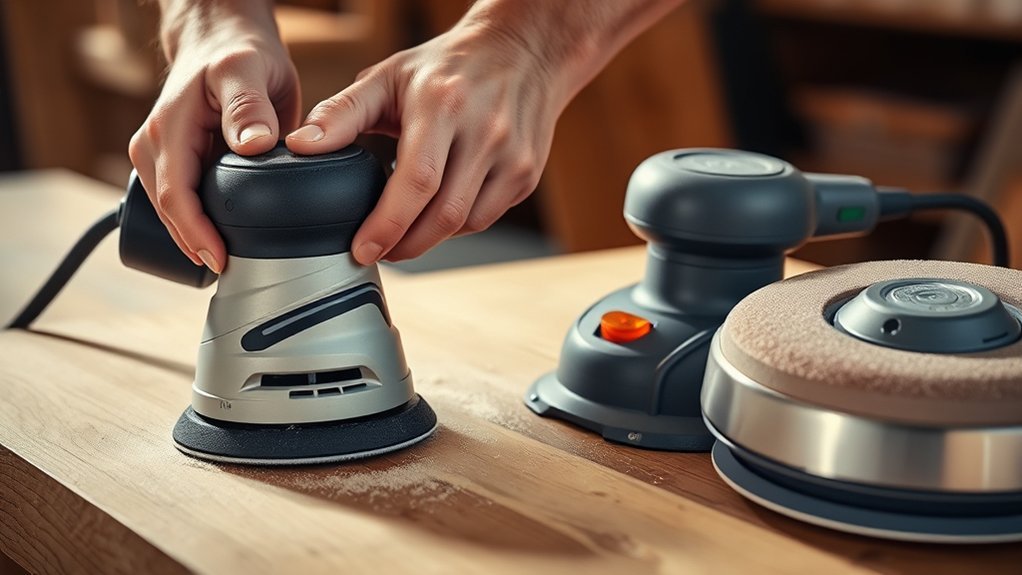
How exactly do palm and orbital sanders differ in operation? You’ll find palm sanders use a simple, linear back-and-forth motion, which makes them perfect for smoothing edges without causing excessive edge wear. They’re compact, letting you control pressure easily.
Orbital sanders, on the other hand, move in small, rapid circular orbits. This random orbital motion reduces swirl marks and distributes wear evenly across the sanding pad, minimizing edge wear further.
When it comes to dust control, both models come with dust collection systems, but orbital sanders usually have more efficient dust extraction due to their higher speed and consistent motion. This keeps your workspace cleaner and prolongs the life of your sandpaper.
Knowing these operational differences helps you pick the right tool for your specific sanding needs.
Best Sanders for Fine Detail vs. Large Surfaces
When tackling fine detail work, you’ll want a sander that offers precision and control, while large surfaces demand speed and coverage. Choosing the right tool directly impacts finish quality and dust management. For fine details, focus on sanders that let you maneuver easily and avoid gouging.
For bigger projects, efficiency and consistent sanding are key.
Consider these factors:
- Palm sanders excel in tight spots and intricate contours.
- Orbital sanders cover broad areas quickly and evenly.
- Look for models with effective dust management systems to keep your workspace clean.
- Finer grit options improve finish quality on delicate surfaces.
- Ergonomic design reduces fatigue during extended use.
Selecting the right sander depends on your project’s scale and detail requirements.
Speed and Control: Comparing Palm and Orbital Sanders
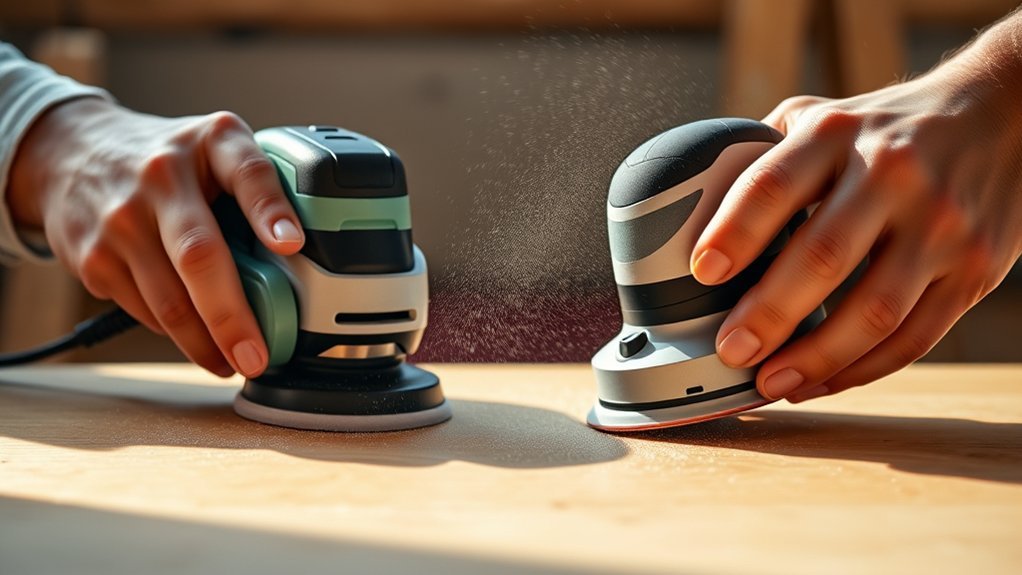
Choosing the right sander means balancing speed with control to match your project’s demands. Palm sanders offer excellent precision control, allowing you to maneuver easily in tight spots and on detailed edges. Their compact size and ergonomic design make them ideal when you need steady, guided movements.
On the other hand, orbital sanders excel in speed, covering larger surfaces quickly without sacrificing too much control. Thanks to their vibration dampening features, you can work longer with less fatigue and maintain consistent pressure.
If your project requires fast material removal with moderate control, an orbital sander is your go-to. But if you prioritize fine adjustments and steady hands, a palm sander delivers superior precision control with less vibration. Your choice hinges on whether speed or meticulous handling takes priority.
How Sandpaper Choices Impact Palm and Orbital Sanders
Why does sandpaper selection matter so much for palm and orbital sanders? Because the right sandpaper ensures optimal sandpaper compatibility and reduces vibration impact, improving both efficiency and finish quality. Using incompatible grit or material can damage your sander’s pad or lead to uneven sanding.
Consider these factors when choosing sandpaper for your sander:
- Grit size matching your project’s needs
- Hook-and-loop backing for secure attachment
- Durable materials like aluminum oxide or silicon carbide
- Thickness affecting flexibility and sanding pressure
- Compatibility with your sander’s motion type
Choosing sandpaper thoughtfully helps you control vibration impact and maximize your sander’s lifespan. It also guarantees smoother results with less effort, whether you’re using a palm or orbital sander.
Which Sander Fits Your Project Best?
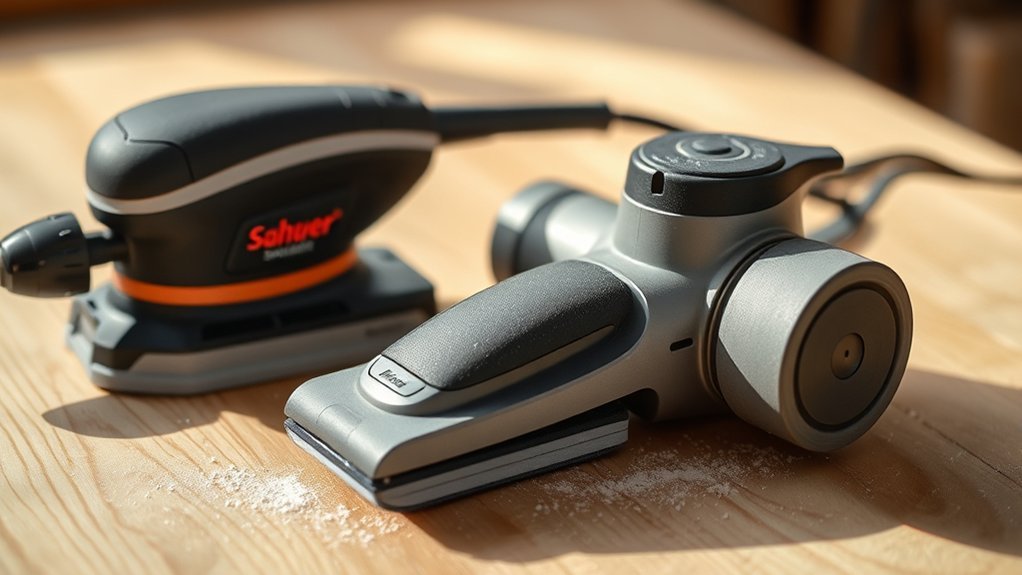
You’ll want to match your sander to the size of your project for efficiency and control. Palm sanders work best on smaller, detailed areas, while orbital sanders cover larger surfaces quickly.
Keep in mind the finish you want. Orbital sanders leave a smoother surface, whereas palm sanders are great for light touch-ups.
Project Size Considerations
How do you determine which sander fits your project best? It largely depends on the project scale and dust management needs. For smaller, detailed tasks, a palm sander offers precision and control.
Larger surfaces often call for the efficiency of an orbital sander. Consider these factors:
- Size and complexity of the workpiece
- Amount of surface area to cover
- Required speed and sanding power
- Dust collection system effectiveness
- Workspace ventilation and cleanup convenience
Choosing the right sander means matching tool capability to project demands. If you’re tackling a small furniture piece, the palm sander’s compactness and dust control are ideal.
For decks or floors, an orbital sander’s broader coverage saves time and effort while managing dust on a larger scale. Always weigh project scale against dust management for the best results.
Surface Finish Differences
What kind of surface finish do you need for your project? If you’re after a smooth, swirl-free finish, an orbital sander is your best bet. Its random orbital motion minimizes visible sanding marks, leaving a fine surface finish ideal for finishing work.
On the other hand, a palm sander offers more control for detailed sanding but may leave subtle patterns that need extra sanding. Also, consider noise levels: orbital sanders tend to be louder due to their aggressive motion, while palm sanders run quieter, which matters if you’re working indoors or in noise-sensitive environments.
Ultimately, choose the sander that matches your surface finish goals and workspace constraints. Knowing these differences helps you get the best results efficiently.
Budget and Maintenance Tips for Palm and Orbital Sanders
When choosing between a palm and orbital sander, consider both the upfront cost and ongoing maintenance expenses. You’ll save money by keeping your sander clean and storing it properly to prevent damage.
Simple habits like wiping dust off after each use and using appropriate storage cases can extend your tool’s life substantially.
Cost Comparison Overview
Why should you consider cost before choosing between a palm and orbital sander? Understanding the price differences helps you balance orbital efficiency with palm maneuverability without overspending. Orbital sanders usually cost more upfront but offer faster coverage, while palm sanders are budget-friendly and excel in tight spots.
Maintenance also affects your total expense.
Keep these cost factors in mind:
- Initial purchase price: palm sanders generally cheaper
- Replacement sandpaper costs
- Motor durability and repair frequency
- Energy efficiency impacting electricity bills
- Availability and price of accessories
Cleaning And Storage Tips
Managing your sander’s upkeep goes beyond just the initial cost and replacement parts. Proper cleaning and storage are key to extending its lifespan. After each use, follow cleaning tips like wiping down the exterior, removing dust from vents with compressed air, and clearing sanding pads of residue.
This prevents buildup that can impair performance. For storage solutions, keep your sander in a dry, dust-free environment, ideally in a protective case or toolbox to avoid damage. Avoid leaving it where moisture or extreme temperatures can cause rust or weaken components.
Regular maintenance combined with these cleaning tips and smart storage solutions will save you money and keep your palm or orbital sander running smoothly for years.
Final Thoughts: Choosing the Right Sander for Your Needs
How do you decide which sander suits your project best? When weighing final thoughts: choosing the right sander for your needs, focus on palm vs orbital suitability considerations. Think about the task’s scale, surface type, and finish quality.
Here’s what to consider:
- Surface area size: small? Palm’s your friend.
- Detail work: palm offers better control.
- Large, flat surfaces: orbital excels.
- Finish smoothness: orbital provides a swirl-free finish.
- Comfort during extended use: palm is lighter.
Frequently Asked Questions
Can I Use a Palm Sander for Metal Surfaces?
You can use a palm sander on metal surfaces, but be cautious with grit choice to avoid damage.
An orbital sander offers more control and less swirl, making it often better for smooth, even metal finishes.
Are Orbital Sanders Safe for Beginners?
Like a knight wielding a trusty sword, you’ll find orbital sanders safe for beginners if you prioritize beginner safety and dust control. Always wear protective gear, work steadily, and use dust bags or vacuums to keep your workspace clean.
How Do I Replace the Sanding Pad on Each Sander?
To replace the sanding pad, release the pad release lever or unscrew the pad on your sander. Align the new pad, press it firmly, and fasten it.
Regular pad replacement guarantees smooth, effective sanding performance.
Do Palm or Orbital Sanders Produce More Dust?
You’ll find orbital sanders produce more dust quantity due to their larger sanding surface, but they often run quieter than palm sanders.
Palm sanders generate less dust but usually come with higher noise levels during use.
Can I Use Both Sanders Interchangeably on the Same Project?
You can use both sanders interchangeably, but keep in mind their different strengths. For detailed work, rely on palm sanders; for broader smoothing, use orbital sanders.
Discussing palm vs orbital performance helps optimize your results.
Conclusion
You can’t just grab any sander and expect magic—orbital sanders turn giant, flat surfaces into silky smooth canvases faster than you can blink, while palm sanders slip into tight spots like a ninja for those impossible-to-reach details.
Pick the wrong one, and you’ll wrestle with frustration and uneven finishes. So, trust your project’s vibe: big, flat, orbital; tiny, twisty, palm.
Nail that choice, and your sanding game will be unstoppable. When deciding which tool to use, remember the main keyword: is a palm or orbital sander better? Choose wisely for the best results.