Sanding concrete by hand is slower and more labor-intensive than using power tools, but it gives you precise control over the finish. Hand sanding concrete allows you to carefully shape and smooth the surface at your own pace.
If you skip important steps like choosing the right grit or preparing the surface properly, you risk uneven results or damage.
By following a clear process and using the right materials, you can achieve a smooth, professional-looking finish without specialized equipment. Here’s what you need to know to get started.
Tools You’ll Need to Sand Concrete by Hand
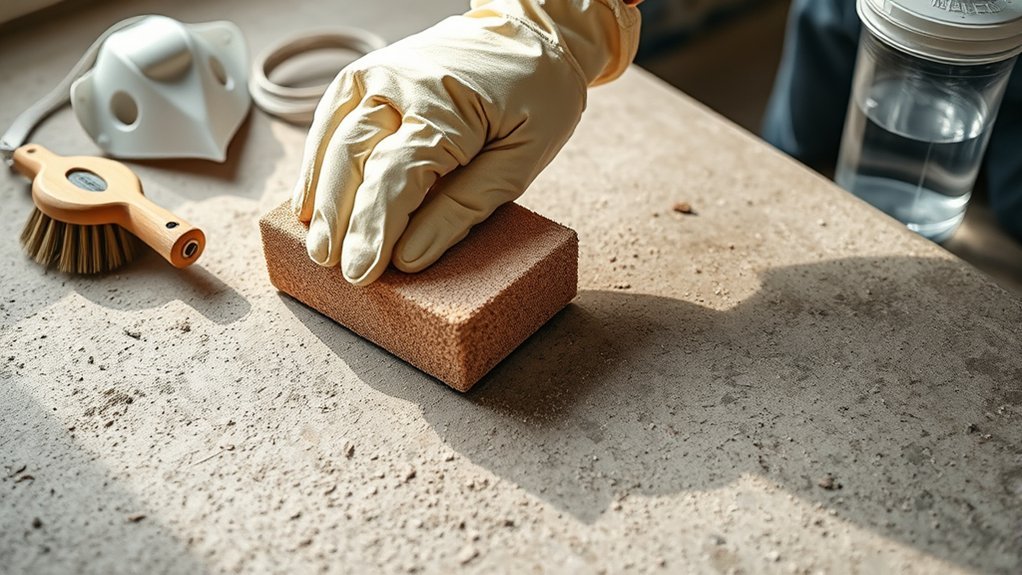
To sand concrete by hand, you’ll need a few essential tools that make the job manageable and effective. Start with a sanding block or hand sander paired with coarse to fine-grit sandpaper designed for concrete.
Begin concrete sanding with a sanding block or hand sander and concrete-specific coarse to fine-grit sandpaper.
You’ll also want a sturdy dust mask and safety goggles to protect yourself from dust. A vacuum or broom helps keep the area clean, but remember to maintain careful ventilation to avoid inhaling dust particles.
Ear protection is equally important due to noise considerations; sanding can get loud, especially with power tools. Gloves will protect your hands from abrasions.
Having these tools on hand guarantees you work efficiently and safely, minimizing discomfort and health risks throughout the sanding process.
How to Prepare Your Concrete Surface Before Sanding
Why should you prepare your concrete surface before sanding? Proper preparation ensures you get an even, smooth finish and prevents damage to your tools.
Start by cleaning the surface thoroughly. Remove dirt, grease, and debris using a stiff brush and detergent.
If your concrete has epoxy coatings, you’ll need to strip or sand them down first because they can clog your sandpaper and affect the sanding process.
Also, check for cracks or loose patches and repair them to avoid uneven sanding. Be mindful of freezing temperatures; avoid sanding if the concrete is exposed to frost, as it can cause surface damage or make the concrete brittle.
Preparing the surface correctly sets you up for efficient, effective hand sanding with better results.
Pick the Right Sandpaper Grit for Sanding Concrete
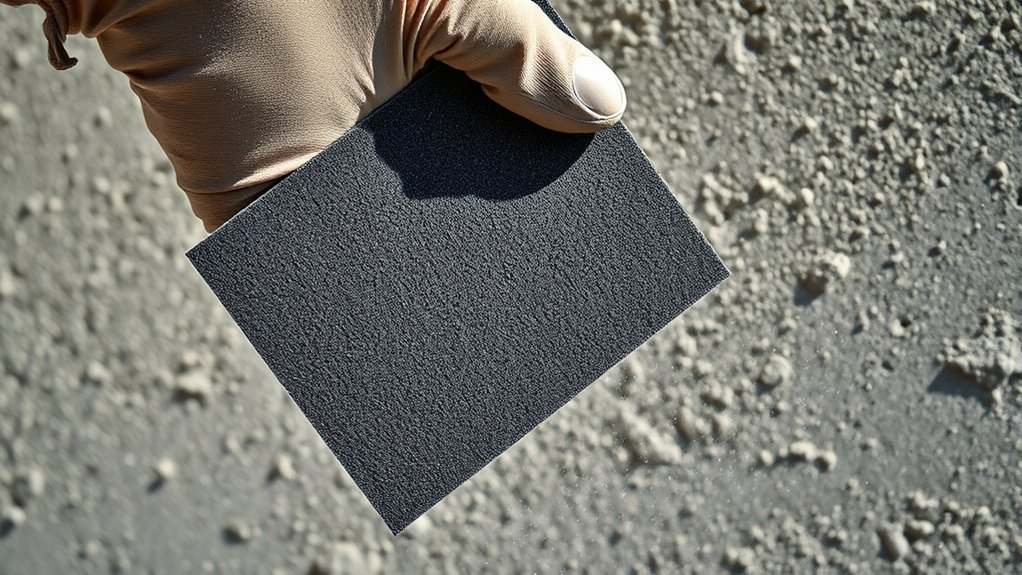
How coarse or fine should your sandpaper be for concrete? Start with a coarse grit, typically between 40 and 60, to tackle rough surfaces and remove imperfections. This initial grit helps you work efficiently without wearing out your sandpaper too quickly.
Sandpaper durability is crucial since concrete is tough; choose high-quality silicon carbide or diamond-grit paper designed for heavy-duty use. After the rough sanding, follow a grit progression by moving to medium grits like 80 or 100, then finish with finer grits around 120 to 150 for a smooth surface.
Sticking to this progression prevents uneven sanding and extends the life of your sandpaper. Picking the right grit ensures you don’t waste time or damage the concrete’s surface.
How to Sand Concrete by Hand: Step-by-Step Guide
First, make sure your concrete surface is clean and dry before you start sanding. Next, pick the right sandpaper grit based on the job’s needs.
Finally, use proper sanding techniques to work efficiently and get a smooth finish.
Preparing Concrete Surface
Where do you begin when prepping a concrete surface for hand sanding? Start by cleaning the area thoroughly. Sweep away loose debris, then scrub stubborn dirt or stains with a stiff brush and mild detergent.
Rinse well and let it dry completely to avoid trapping moisture under the sandpaper. Next, inspect the surface for cracks or uneven spots. Address these issues before sanding if you plan concrete resurfacing. Repairing damaged areas ensures a smooth finish.
Keep in mind two word discussion ideas like “surface preparation” and “repair techniques” when planning your work. Removing any sealers or coatings is crucial too, as they can prevent effective sanding.
Proper preparation sets the foundation for effective sanding, making the entire process smoother and more efficient.
Choosing Sandpaper Grit
Selecting the right sandpaper grit is essential for effective concrete sanding. Start with coarse grit, like 40 or 60, to tackle rough patches and remove imperfections quickly. This two word idea1 approach saves time by addressing the toughest areas first.
After that, move to medium grit, such as 80 or 120, to smooth the surface without causing deep scratches. Finally, finish with fine grit around 220 for a polished look. This two word idea2 strategy ensures your concrete surface is even and ready for sealing or painting.
Choosing the proper grit progression prevents wasted effort and damage. Stick to this sequence, and you’ll achieve smooth, professional results while maintaining control over your sanding process.
Sanding Techniques And Tips
A solid sanding technique makes all the difference when working on concrete by hand. Start with a coarse grit to remove rough spots, then gradually move to finer grits for a smooth finish.
Keep your sanding motion consistent, using circular or back-and-forth strokes to avoid uneven surfaces. Maintain steady pressure; pressing too hard wastes material and wears out sandpaper faster.
Monitor your material usage closely to avoid over-sanding. Keep a damp cloth nearby to wipe away dust; this helps you see your progress clearly.
Remember to change sandpaper as soon as it clogs, ensuring effective sanding. These practical tips are great conversation starters when discussing concrete projects with others, helping you share insights on efficient sanding techniques and smart material usage.
How to Sand Concrete Safely and Get Great Results
How can you sand concrete effectively without risking injury or damage? First, discuss safety by always wearing protective gear: goggles, gloves, and a dust mask to shield yourself from concrete dust and debris. Work in a well-ventilated area to reduce inhalation risks.
Use proper sanding tools with firm, controlled pressure to avoid gouging the surface. Discuss cost by choosing hand sanding over power tools if you want to save money, but expect it to take more time and effort. Invest in quality sandpaper designed for concrete to get better results and reduce replacement frequency.
Stay patient, sanding evenly and checking progress regularly. By prioritizing safety and balancing cost with effort, you’ll achieve a smooth, professional finish without unnecessary risks or expenses.
Fixing Tough Spots and Uneven Concrete
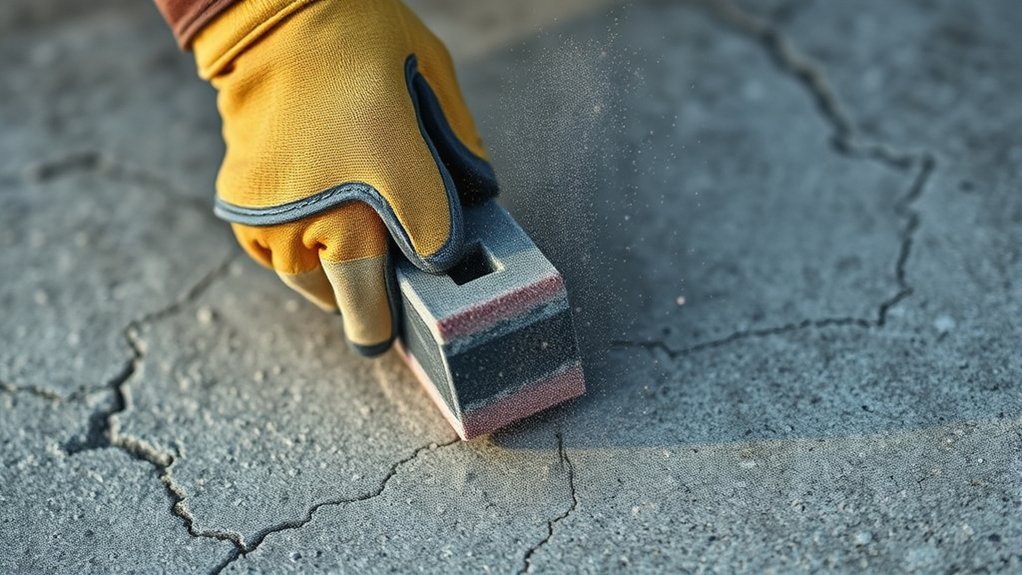
Once you’ve established a smooth base by sanding, you’ll likely encounter tough spots and uneven areas that need extra attention. To fix these, focus on these steps:
After sanding a smooth base, tackle tough spots and uneven areas with focused care for the best finish.
- Identify the toughest spots and uneven patches by running your hand over the surface. Mark them lightly with chalk.
- Use a coarser grit sandpaper or a sanding block to target these areas specifically. Apply steady pressure to break down stubborn roughness without damaging surrounding concrete.
- For deeper uneven patches, consider filling with a concrete patching compound, allowing it to dry fully before sanding it flush with the rest of the surface.
Addressing tough spots and uneven patches this way ensures an even finish and prevents problems when you move on to final smoothing. Don’t rush; patience here pays off in a professional-looking result.
Finishing Techniques for a Smooth Concrete Surface
Why settle for anything less than perfectly smooth concrete? After surface preparation, apply finishing techniques to achieve that flawless look.
Start with a medium-grit sandpaper to even out any remaining rough patches, then switch to fine-grit for a polished finish. Keep your sanding motion consistent and circular to avoid uneven spots.
Use a damp cloth to wipe away dust between sanding stages. This helps you see the surface clearly and prevents grit from scratching.
For edges and corners, use a hand sanding block or detail sander to reach tight spots. Remember, patience during finishing techniques pays off; rushing can leave your concrete uneven or scratched.
Follow these steps, and your surface will be smooth, ready for whatever comes next.
How to Maintain and Protect Sanded Concrete Over Time
What steps do you need to take to keep your sanded concrete looking its best? Start by creating a maintenance schedule to regularly inspect and clean the surface. Always wear appropriate safety gear, such as gloves and a dust mask, when performing upkeep. Follow these three key steps:
- Clean the surface weekly using a broom or vacuum to remove dirt and debris.
- Apply a concrete sealer every 1-2 years to protect against stains and moisture.
- Address cracks or chips immediately by patching them to prevent further damage.
Sticking to this routine prolongs your concrete’s lifespan and maintains its smooth finish. Regular care ensures your hard work pays off over time without costly repairs.
Frequently Asked Questions
Can I Sand Concrete Outdoors in Rainy Weather?
You shouldn’t sand concrete outdoors in rainy weather because wet surfaces reduce effectiveness and safety.
Wait for dry outdoor weather, and always wear protective gear like gloves and goggles to avoid injury and ensure better results.
How Long Does Hand Sanding Concrete Typically Take?
Hand sanding concrete can take hours, like crawling through molasses. You’ll need long-term dust control and proper safety training to protect yourself.
Staying patient and cautious keeps the process effective and safe throughout.
Is It Possible to Sand Colored or Stained Concrete by Hand?
Yes, it is possible to sand colored concrete or stained concrete by hand, but you’ll need fine-grit sandpaper to avoid removing too much color.
Be gentle and work slowly to preserve the finish and avoid damage.
What Are the Best Alternatives to Hand Sanding Concrete?
You can choose alternative methods like power sanding with an angle grinder or a floor sander, use diamond hand pads, or try chemical etching. These options save time, reduce effort, and deliver smoother concrete surfaces effectively.
Can Hand Sanding Concrete Be Done Without Protective Gear?
You shouldn’t sand concrete without protective gear. Dust and debris pose serious health risks.
Prioritize safety considerations by wearing a mask, goggles, gloves, and long sleeves to protect your lungs, eyes, and skin during the process.
Conclusion
Sanding concrete by hand might seem tough and dusty, but with the right grit progression and steady pressure, you’ll transform rough, uneven surfaces into smooth, polished finishes. It’s a gritty, hands-on process that rewards patience and care.
By prepping well, working safely, and finishing carefully, you’ll turn stubborn concrete into a sleek, durable surface that looks and feels professionally done—no power tools required.
With persistence and the correct technique, sanding concrete by hand is entirely achievable, giving you a satisfying, high-quality result every time. You’ve got this!