You want to build strength, improve arm definition, and avoid injury by mastering hammer curls. Hammer curls are a powerful exercise that targets your arms in a unique way compared to traditional curls. Start with a neutral grip, keep your elbows close, and focus on controlled movements.
This exercise targets key muscles differently than traditional curls, making it a valuable addition to your routine. But to truly benefit, you need to understand the proper form, common mistakes, and how to progress safely. These details can make all the difference in your results.
How Hammer Curls Target Different Arm Muscles
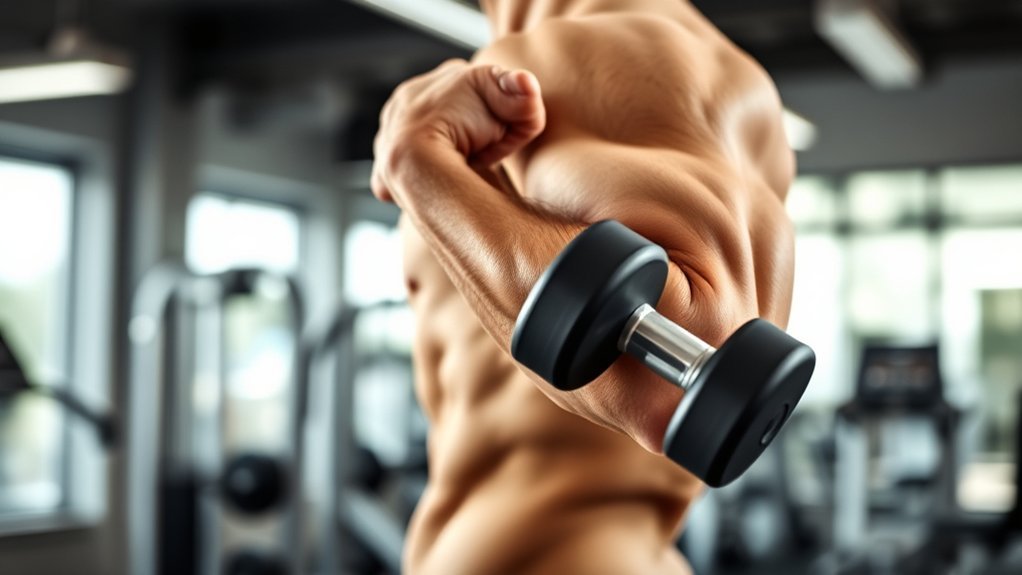
How exactly do hammer curls work your arms differently from regular curls? Unlike traditional curls that focus primarily on bicep isolation, hammer curls engage not only the biceps brachii but also the brachialis and brachioradialis muscles.
Hammer curls uniquely target the biceps brachii, brachialis, and brachioradialis for balanced arm strength.
When you maintain proper hammer curl form, holding the dumbbells with a neutral grip, you shift the emphasis to these often underworked muscles. This balanced muscle activation helps build overall arm thickness and strength.
By targeting multiple muscles simultaneously, hammer curls promote functional strength and prevent imbalances. So, when you include hammer curls in your routine, you’re ensuring comprehensive arm development, beyond just the peak of your biceps.
Mastering the hammer curl form sets the foundation for efficient muscle engagement and better results.
How to Do Hammer Curls: Grip and Step-by-Step Technique
Building strength in both the brachialis and brachioradialis requires more than just understanding their role. You need to execute hammer curls with the right grip and technique.
Start by choosing dumbbells and holding them with a grip neutral position, meaning your palms face each other throughout the movement. This grip neutral stance ensures suitable forearm alignment, reducing strain and maximizing muscle engagement.
Stand tall with your arms fully extended by your sides. Slowly curl the weights upward, keeping your elbows close to your torso and maintaining that neutral grip.
Pause briefly at the top, then lower the dumbbells back down in a controlled manner. Focus on smooth, deliberate movements to engage your targeted muscles effectively and build consistent strength.
Common Hammer Curl Mistakes and How to Fix Them
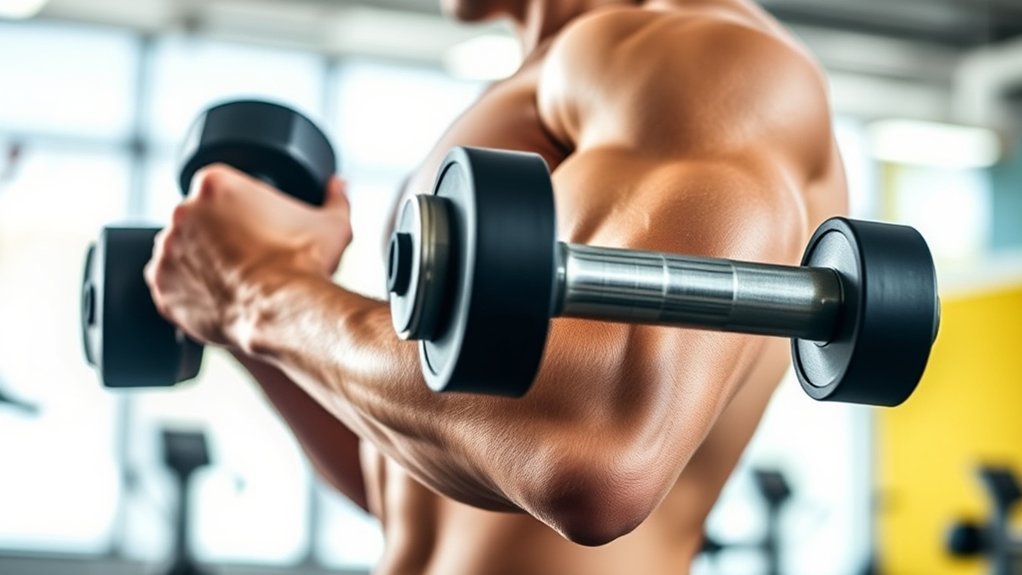
To get the most from your hammer curls, you need to watch your wrist position and avoid using excessive momentum. Keeping your wrists neutral prevents strain and keeps the focus on your muscles.
Don’t let your body swing the weights. Control every movement for maximum results.
Improper Wrist Position
Why does your wrist hurt or feel unstable during hammer curls? It’s often due to an improper wrist position, which strains your joints and limits your progress. Avoid wrist alignment mistakes by keeping your wrists neutral throughout the movement. Don’t let them bend forward or backward. This helps you target the right muscles and prevents injury.
| Common Mistake | How to Fix It |
|---|---|
| Wrists bent forward | Keep wrists straight, aligned |
| Wrists bent backward | Maintain neutral wrist position |
| Excessive wrist twisting | Hold dumbbells firmly, steady |
| Loose grip | Squeeze dumbbells tightly |
Focus on wrist stability, and you’ll feel stronger and safer with every rep. You’ve got this!
Using Excessive Momentum
Keeping your wrists stable sets a solid foundation, but it’s just as important to control your entire movement. Using excessive momentum during hammer curls often happens when you rush or lift weights too heavy for your current strength level.
This mistake reduces muscle engagement and increases injury risk. To fix it, ensure you perform an adequate warmup to prepare your muscles and joints, improving control. Also, focus on equipment selection. Choose a weight that challenges you without forcing you to swing your body.
Slow, deliberate reps maximize muscle activation and build strength efficiently. Remember, quality beats quantity. Control every phase of the curl, avoid jerky motions, and keep your core engaged. This disciplined approach helps you get the most from your hammer curls safely.
Hammer Curl Variations to Boost Your Workout
Although the basic hammer curl is effective, incorporating variations can challenge your muscles in new ways and accelerate your progress. Adjusting your hammer curl grip or using a bench variation can target different parts of your arms and improve overall strength.
Try these hammer curl variations to boost your workout:
- Reverse Hammer Curl: Flip your hammer curl grip so your palms face down, emphasizing forearm muscles.
- Incline Bench Variation: Perform curls seated on an incline bench to isolate the biceps and reduce momentum.
- Cross-Body Hammer Curl: Curl the dumbbell across your body towards the opposite shoulder, engaging the brachialis muscle more intensely.
Incorporating these variations keeps your routine fresh and maximizes muscle growth. Keep challenging yourself!
Training and Safety Tips for Hammer Curls
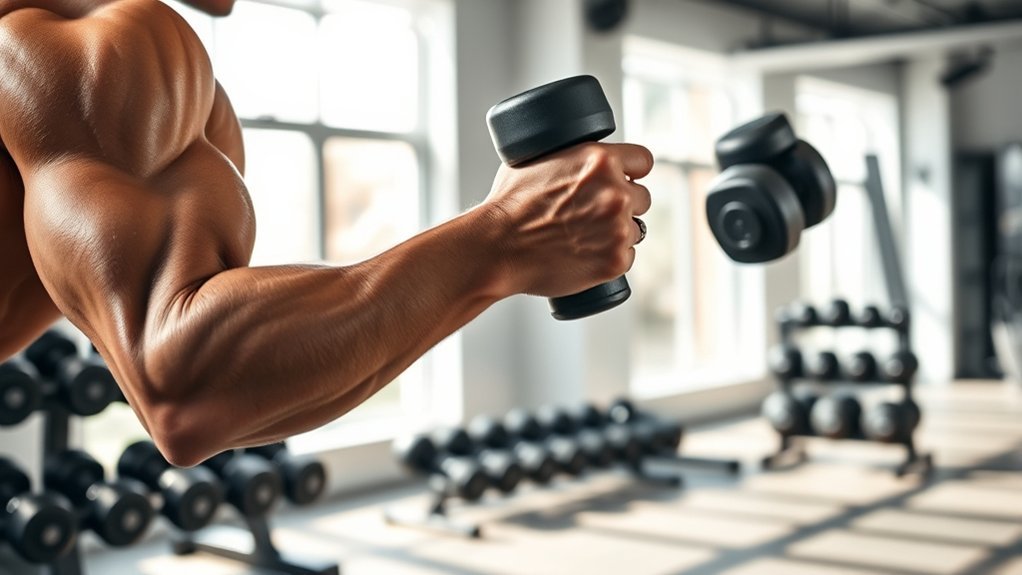
When you focus on proper form and controlled movement during hammer curls, you’ll maximize muscle gains while minimizing injury risk. Prioritize risk management by starting with lighter weights to master your technique before increasing load.
Keep your rep tempo steady—lift for two seconds, pause briefly at the top, and lower for three seconds. This controlled pace enhances muscle engagement and reduces momentum, preventing strain. Avoid swinging your body or using jerky motions; stay mindful of your posture to protect your wrists and elbows.
Always warm up thoroughly to prepare your muscles and joints. Listen to your body. If you feel pain beyond typical muscle fatigue, stop and reassess. Following these training and safety tips ensures you build strength effectively and safely.
How to Progress and Increase Strength With Hammer Curls
How can you steadily increase your strength with hammer curls? The key lies in smart progression planning and incorporating variety. Start by gradually increasing the weight or reps to challenge your muscles without risking injury.
Consistency is crucial, so track your progress to know when to push harder. Additionally, mixing up your grip variations, such as using neutral, reverse, or alternating grips, targets different muscle fibers and prevents plateaus.
To progress effectively, focus on:
- Gradually increasing resistance or repetitions each week
- Incorporating grip variations to engage muscles differently
- Maintaining proper form to maximize gains and avoid injury
Frequently Asked Questions
Can Hammer Curls Help Improve Grip Strength?
Yes, hammer curls boost your grip endurance by targeting forearm muscles, promoting forearm hypertrophy. When you consistently train with them, you’ll notice stronger, more resilient hands that improve overall lifting and daily tasks. Keep pushing!
What Equipment Is Best for Hammer Curls at Home?
Like a craftsman selecting tools, you’ll find dumbbells offer the best equipment variety for hammer curls at home, letting you master grip mechanics precisely.
Adjustable weights keep your progress steady and your workouts motivating.
How Often Should I Do Hammer Curls Each Week?
You should do hammer curls 2-3 times weekly, following guidelines that balance grip strength and recovery.
Beginners with joint issues can start lighter, using home equipment, to build muscle and help reduce arm fat effectively.
Are Hammer Curls Suitable for Beginners With Joint Issues?
Sure, hammer curls are beginners’ safety champions if you pick joint friendly variations. Don’t just plunge in; listen to your body, start slow, and watch those elbows thank you. You’ve got this, pain-free and strong!
Can Hammer Curls Reduce Arm Fat Effectively?
Hammer curls alone won’t directly reduce arm fat, but by improving muscle biomechanics and directivity, they boost your strength and metabolism. This helps you burn fat more effectively when combined with cardio and a healthy diet.
Conclusion
Now that you know how to master hammer curls, don’t let your arms settle for ordinary—make every rep count. Like a sculptor chiseling marble, your consistent effort shapes strength and definition. Keep your form tight, avoid common mistakes, and gradually push your limits.
With dedication and control, you’ll build powerful, balanced arms that stand out. Remember, progress isn’t just about lifting heavier; it’s about lifting smarter.
Your stronger arms await—grab those dumbbells and own it with hammer curls!