You might not realize that catching sand fleas by hand requires understanding their sensitivity to movement and moisture levels in their environment. To catch them, you need to identify their shallow burrow openings in damp sand near the waterline and approach very slowly.
A precise, gentle pinching technique near their head is essential to avoid harm. Mastering this technique requires attention to detail and careful handling, which can make all the difference in a successful catch.
Best Beach Spots to Find Sand Fleas
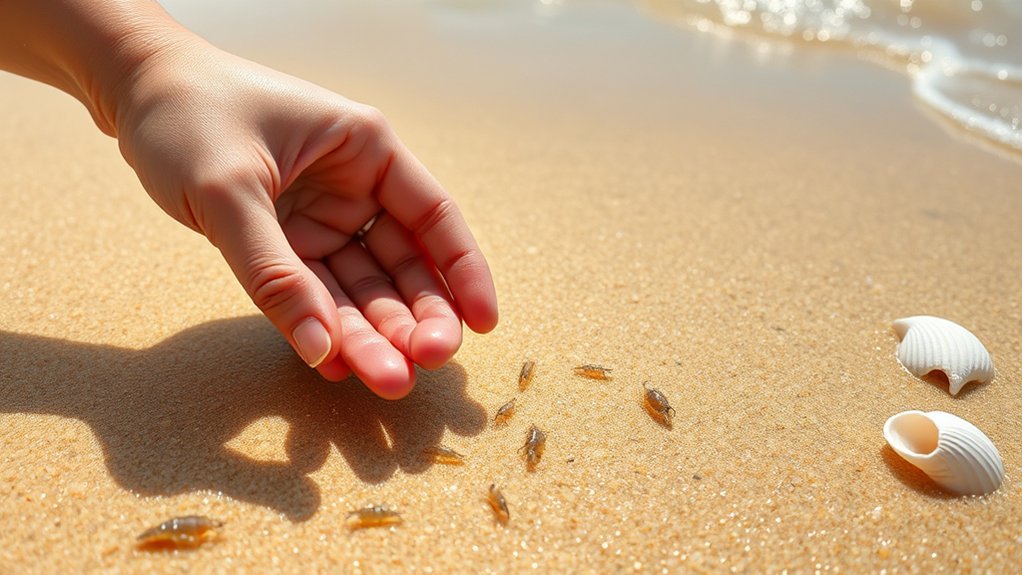
Where exactly should you look to find sand fleas efficiently? Focus on the intertidal zone of the best beach locations, where moist, loose sand meets the waterline. Sand fleas thrive in these damp environments, burrowing just beneath the surface.
Target areas with gentle wave action and organic debris, like seaweed or driftwood, which provide ideal habitat. Avoid dry or heavily compacted sand; sand fleas won’t be present there. Look for small, irregular holes or dimples in the sand—these indicate recent sand flea activity.
Beaches with fine, clean sand and moderate tidal flow are optimal. You’ll want to avoid rocky or heavily populated beaches, as sand fleas prefer undisturbed substrates. By focusing your search on these precise conditions at the best beach spots, you’ll maximize your chances of locating sand fleas quickly and effectively.
Best Times to Catch Sand Fleas
When do sand fleas become most active for catching by hand? The best times are during low tide periods, particularly early morning and late afternoon. Sand fleas avoid intense sun exposure, so you’ll find them burrowing deeper during midday heat.
Target the hours just after sunrise and before sunset when the sand is cooler but still moist. These conditions stimulate their surface activity, increasing your chances of catching them by hand. Additionally, overcast days or times with indirect sun exposure can extend their active periods.
Avoid peak sun hours between 10 a.m. and 4 p.m., as sand fleas retreat to cooler, deeper sand layers to prevent desiccation. Timing your efforts with tidal and sun exposure patterns ensures maximum efficiency in locating and capturing sand fleas manually.
How to Spot Sand Fleas Quickly
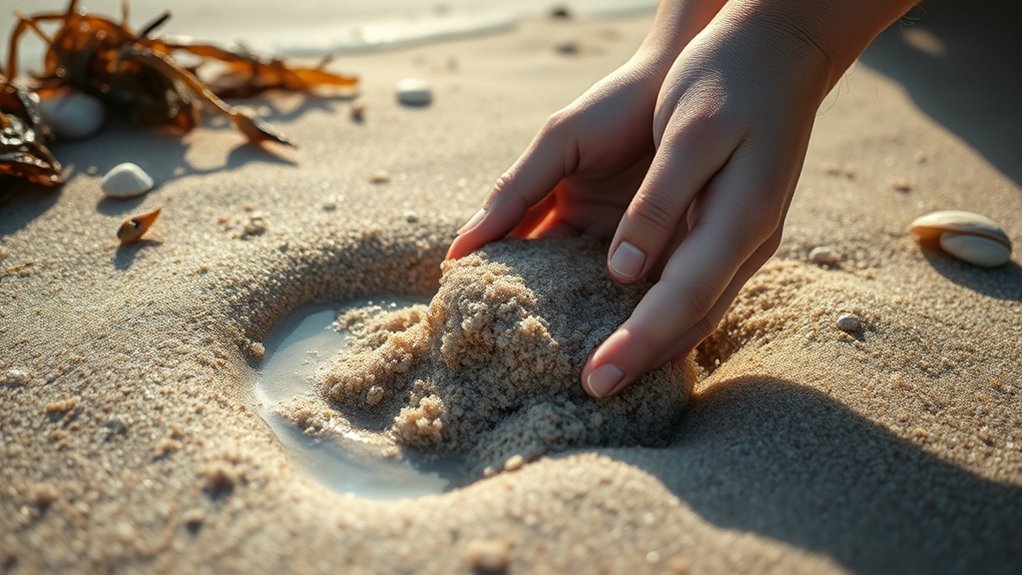
How can you quickly identify sand fleas amidst shifting sand and debris? Start by honing in on key spotting cues: small, dark, and agile, these crustaceans leave subtle imprints near moist sand areas.
Avoid common habitat myths like assuming they only appear near seaweed piles. Instead, focus on damp, shaded spots where sand is firm yet moist.
Use this table to streamline your visual scan:
| Cue Type | Description | Common Mistake |
|---|---|---|
| Movement | Quick, hopping jumps | Confusing with insects |
| Location | Moist, shaded sand | Only near seaweed |
| Markings | Tiny holes or trails | Overlooking subtle cues |
How to Catch Sand Fleas by Hand
Why does hand-catching sand fleas require a careful approach? Because these small creatures are delicate, and improper handling can harm them or expose you to safety risks like bites or skin irritation.
Hand-catching sand fleas demands care to protect these delicate creatures and avoid bites or skin irritation.
To catch sand fleas by hand, start by identifying their burrow openings in wet sand. Approach slowly to avoid startling them.
Use a gentle pinching motion between your thumb and forefinger to grasp the flea near the head to prevent injury.
Respect catching ethics by limiting your catch to what you need and releasing non-target organisms immediately.
Avoid excessive force or digging, which disrupts their habitat.
Always be aware of your surroundings to minimize hazards such as sharp shells or unstable sand that could lead to injury while you focus on catching.
Handling Sand Fleas Safely
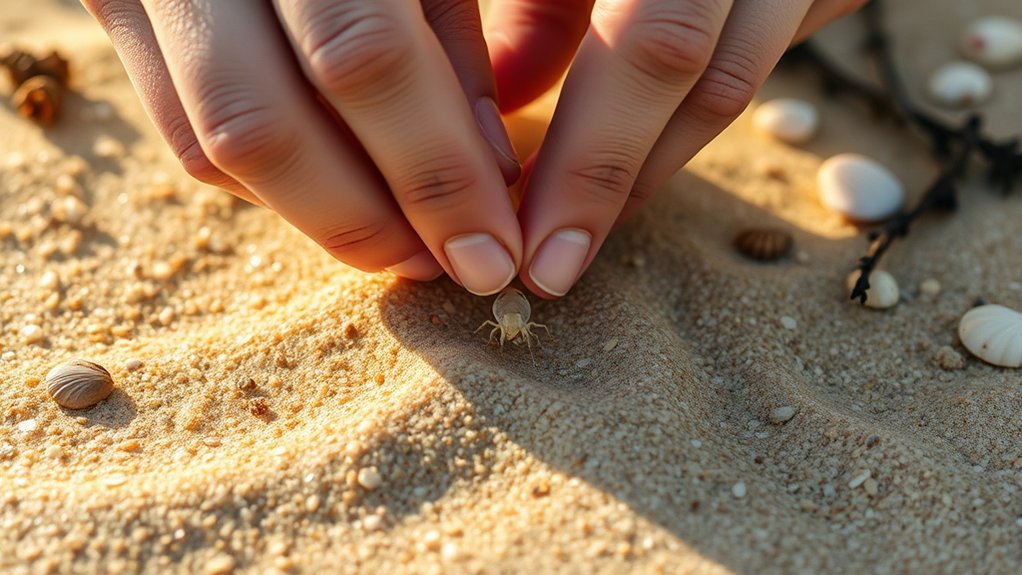
Where should you focus your attention to handle sand fleas safely? Prioritize handling safety by wearing fine-mesh gloves to prevent bites and skin irritation.
Use tweezers or a small container to minimize direct contact, reducing the risk of injury or contamination. When transporting sand fleas, ensure the container is secure and ventilated to avoid escape or suffocation.
For disposal ethics, never release captured sand fleas back into the wild, as this disrupts local ecosystems. Instead, euthanize them humanely using freezing or alcohol immersion.
Dispose of remains in sealed bags to prevent environmental contamination. Maintain hygiene by washing your hands thoroughly after handling.
Following these precise protocols ensures your safety and respects ecological balance during sand flea collection.
Common Sand Flea Catching Mistakes
You often misjudge sand flea habitats by searching in dry, compact sand instead of moist, loose areas near the waterline.
Using ineffective techniques like slow hand movements reduces your chances of a successful catch. Avoid these common errors to improve your efficiency and accuracy when catching sand fleas by hand.
Misjudging Sand Flea Habitat
How can you accurately identify the ideal environment for sand fleas before attempting to catch them? Misjudging sand flea habitat often results from habitat misinterpretation and pursuing misleading habitats.
Sand fleas prefer moist, compact sand near the high tide line, not dry or overly saturated zones. Avoid areas with excessive seaweed or debris, as these can be misleading habitats that don’t support sand fleas.
| Habitat Factor | Ideal Condition | Common Misinterpretation |
|---|---|---|
| Sand Moisture | Slightly damp, compact | Dry or waterlogged sand |
| Tide Proximity | Just above high tide line | Far above or below tide line |
| Organic Material | Minimal seaweed/debris | Excessive seaweed accumulation |
Focus on these parameters to increase your success rate.
Using Ineffective Catching Techniques
Accurately identifying the right sand flea habitat lays the groundwork, but even with ideal conditions, using improper catching techniques can severely limit your success. Employing an incorrect technique, such as grasping sand fleas aggressively or attempting to catch them during their rapid burrowing phase, reduces capture efficiency and risks injury to both you and the flea.
Avoid unsafe handling practices, like pinching too tightly or using bare hands without protective barriers, which can result in bites or contamination. Instead, apply gentle, deliberate motions, focusing on the fleas’ movement patterns and timing your approach when they surface briefly.
Precise coordination and steady hands improve your chances, while hasty or forceful attempts typically lead to failure. Mastery demands adapting your technique to sand flea behavior to ensure safe and effective capture.
Sand Fleas for Bait and Observation
To use sand fleas effectively as bait or for observation, you need to accurately identify the species based on size and coloration. Focus on locating them in their preferred habitat: moist, sandy areas near the high tide line with organic debris.
When handling, keep them cool and moist to maintain their activity and survival for extended periods.
Identifying Sand Flea Species
Where can you find the most effective sand fleas for bait or observation? Accurate identification is essential despite widespread taxonomic confusion in sand flea species. You’ll want to distinguish between similar species by noting their physical traits and behaviors to avoid misidentification.
Focus on these identifying alternatives:
- Body segmentation: Examine the number and shape of segments under magnification.
- Antennae length and structure: Different species exhibit distinct antennae morphologies.
- Coloration patterns: Subtle color differences can indicate species variation.
Ideal Habitat Conditions
How do you pinpoint the best environments for locating sand fleas that serve well as bait or for observation? Focus on habitat specifics: sandy, moist zones near tidal lines are prime.
Seasonal behavior affects their presence; they’re most active during warmer months when tides recede. Look for areas with organic debris, as sand fleas thrive beneath.
| Habitat Factor | Optimal Condition |
|---|---|
| Substrate | Fine, damp sand |
| Tidal Influence | Recently exposed by low tide |
| Organic Material | Decaying seaweed or detritus |
Handling and Care Tips
When handling sand fleas for bait or observation, what key practices guarantee their survival and effectiveness? Proper handling care and adherence to safety tips are essential. First, use damp sand or seawater to keep them moist and mimic their natural environment.
Second, avoid excessive handling to reduce stress and physical damage. Use gentle, minimal contact. Third, store them in a well-ventilated container with a layer of moist sand at the bottom to maintain humidity and temperature.
- Keep handling time under five minutes to prevent dehydration
- Use soft gloves or wet hands to protect their delicate exoskeleton
- Maintain temperature near 70–75°F to prevent lethargy or overheating
Frequently Asked Questions
What Do Sand Fleas Eat in Their Natural Habitat?
You’ll find sand fleas primarily consume organic detritus, microalgae, and decomposing seaweed within their beach ecology. Their sand flea diet plays a crucial role in nutrient cycling and maintaining the shoreline’s ecological balance.
Can Sand Fleas Transmit Diseases to Humans?
You shouldn’t worry much about sand flea disease transmission, as they’re rarely vectors for human illnesses. However, distinguishing them from beach hoppers is essential since both can cause skin irritation but differ in their disease risks.
How Long Do Sand Fleas Live on Average?
Picture tiny creatures burrowing beneath your feet. Sand fleas live about 2 to 6 weeks on average.
Their lifespan depends on environmental factors like temperature and humidity, influencing their survival and reproductive cycles with precise biological timing.
Are Sand Fleas the Same as Beach Hoppers?
You’ll find that sand fleas vs beach hoppers are often confused; both are amphipods and jump, but sand fleas typically bite humans, while beach hoppers mainly scavenge, showing distinct behaviors and habitat preferences.
What Predators Commonly Eat Sand Fleas?
Did you know shorebirds consume up to 60% of sand fleas in coastal areas? Predator-prey dynamics and habitat-specific foraging drive their selective feeding, targeting sand fleas as essential energy sources within intertidal ecosystems.
Conclusion
Now that you know how to catch sand fleas by hand—spotting their burrows, approaching gently, and pinching carefully—you can test the theory that minimal disturbance improves capture rates. Handle them briefly with moist hands or fine-mesh gloves to avoid irritation, and release non-targets promptly.
By applying these precise techniques, you’ll increase your success while ensuring the fleas remain viable for bait or observation. This careful, controlled handling truly makes a difference in sand flea collection, confirming that knowing how to catch sand fleas by hand is key to effective and humane capture.