When you notice patches of moss creeping into your lawn, applying lawn sand by hand can be an effective solution.
Lawn sand helps eliminate moss while nourishing your grass at the same time.
You’ll want to prepare properly—clear debris, wear protective gear, and measure your application carefully to avoid overuse.
Spreading it evenly is key to ensuring the moss killer works without damaging your grass.
But how exactly do you achieve that balance and care for your lawn afterward?
With the right technique and aftercare, your lawn will recover and look healthy in no time.
Why Use Lawn Sand
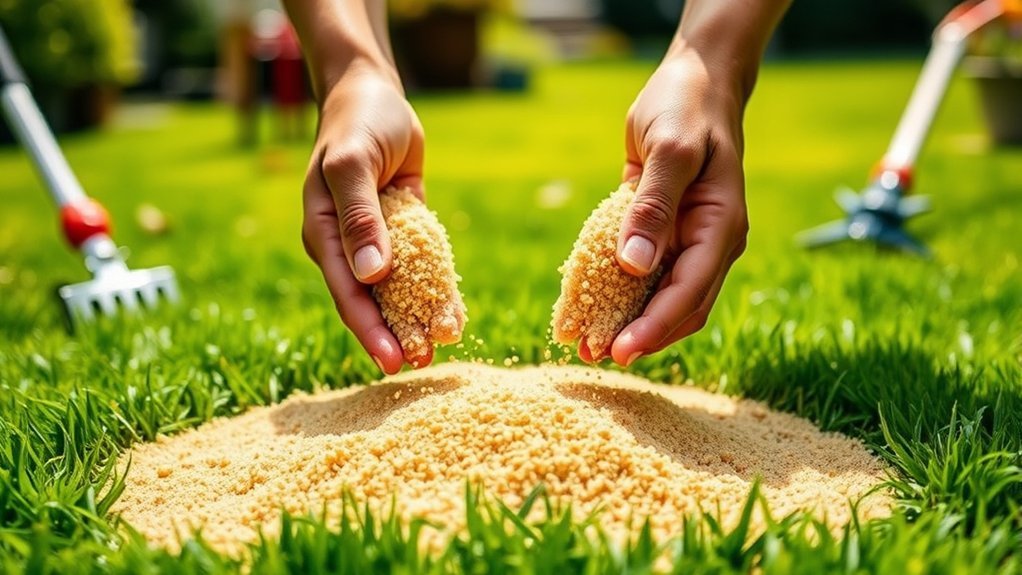
Why should you use lawn sand on your turf? Lawn sand is a practical solution for controlling moss and weeds while feeding your grass with essential nutrients.
When you understand why use lawn sand, you’ll see it balances soil pH and improves turf health. It contains a mix of sand, fertilizer, and moss killer, which helps your lawn stay green and thick.
Applying lawn sand prevents moss from overtaking weak spots and discourages weed growth by creating unfavorable conditions. Using lawn sand also strengthens the grass roots, making your turf more resilient to stress and wear.
Best Time To Apply Lawn Sand
You’ll want to apply lawn sand when the weather is dry and calm to ensure even coverage without clumping. The best seasons are typically spring and early autumn, when your lawn is actively growing and can recover quickly.
Aim to spread it in the morning or late afternoon to avoid the midday heat, which can reduce effectiveness.
Ideal Weather Conditions
When should you apply lawn sand to achieve the best results? The ideal weather for applying lawn sand is during dry conditions, with no rain forecasted for at least 24 hours. Moisture can cause the sand to clump, making it harder to spread evenly and reducing its effectiveness.
Choose a day when the grass is dry, ideally in the morning after dew has evaporated, so the sand adheres properly to the lawn surface. Avoid windy days to prevent sand from blowing away, which wastes product and creates uneven coverage.
Applying lawn sand in these ideal weather conditions ensures optimal absorption and prevents damage to your lawn. By timing your application carefully, you’ll promote a healthier, weed-free lawn with minimal effort.
Optimal Season Timing
Applying lawn sand during the right season can substantially improve its effectiveness and protect your lawn from weeds and moss. The optimal season to apply lawn sand is during early spring or autumn when the grass is actively growing.
This timing allows the sand’s nutrients and moss-killing agents to work efficiently. Avoid applying lawn sand in winter or mid-summer, as subtopic irrelevance might lead you to consider unrelated considerations like extreme temperatures or rainfall, which reduce effectiveness.
Focus on periods with moderate temperatures and consistent moisture for best results. By timing your application properly, you ensure better lawn health and avoid wasting product.
Best Time Of Day
What’s the best time of day to apply lawn sand for maximum effectiveness? The best timing is early morning, right after the dew has dried but before the sun is too intense. This helps the lawn sand settle evenly without burning your grass or evaporating too quickly.
Here’s a quick guide on timing benefits:
| Time of Day | Benefit |
|---|---|
| Early Morning | Sand absorbs moisture, less dust |
| Midday | Risk of sunburn and evaporation |
| Evening | Moisture can cause clumping |
Applying lawn sand in the early morning ensures optimal absorption and prevents damage. Avoid midday heat and evening moisture to maintain effectiveness. Stick to early morning applications for the best results every time.
How Much Lawn Sand To Use
How much lawn sand should you use to achieve the best results without overdoing it? Generally, you want to apply about 30 to 50 grams of lawn sand per square meter. Using too much can damage your grass, while too little won’t effectively control moss or weeds.
Keep these points in mind when measuring how much lawn sand to use:
- Estimate your lawn’s total square meters.
- Check product instructions for specific coverage rates.
- Use a handheld spreader for even distribution.
- Apply in dry conditions to avoid clumping.
- Avoid overlapping to prevent over-application.
Preparing Your Lawn Before Application
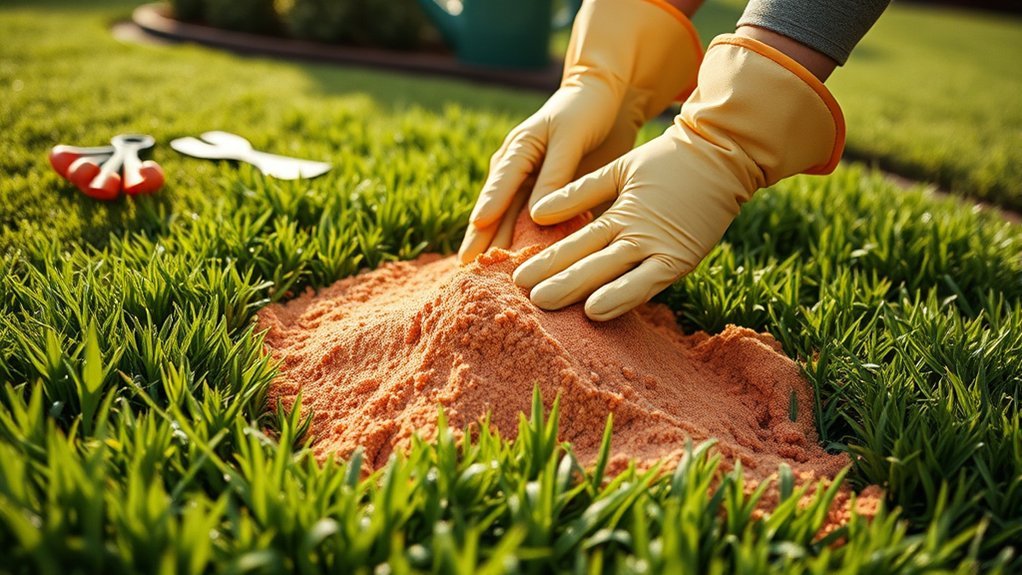
Before applying lawn sand, make sure to clear away any debris and weeds that could block even coverage. Mow your lawn evenly to create a smooth surface for the sand to settle properly.
Also, check soil moisture levels to ensure the ground isn’t too dry or saturated, which can affect the sand’s effectiveness.
Clear Debris And Weeds
Why should you clear debris and weeds thoroughly before applying lawn sand? You want an even surface where the lawn sand can reach the grass and soil directly, maximizing its effectiveness.
When you clear debris, you remove sticks, leaves, and stones that could block the sand. Ensuring weeds are absent prevents competition for nutrients and stops them from interfering with the treatment.
To get your lawn ready, focus on removing:
- Fallen branches and twigs
- Dry leaves and grass clippings
- Stones and gravel
- Visible weeds and invasive plants
- Pet waste or other organic matter
Mow Lawn Evenly
When should you mow your lawn to ensure the lawn sand applies effectively? Ideally, mow your lawn a day or two before applying the lawn sand. This gives the grass blades time to recover and stand upright, allowing the sand to reach the soil surface evenly.
Maintain a consistent mowing rhythm to avoid scalping or uneven cuts, which can create bare spots that complicate patch repair. Aim for a moderate height; too short can stress grass, too long may block sand from penetrating.
An even cut not only improves sand distribution but also enhances your lawn’s overall appearance. If you notice any damaged patches during mowing, address patch repair promptly to ensure the lawn sand works where it’s needed most.
Proper mowing sets the stage for effective lawn sand application.
Check Soil Moisture Levels
How moist should your soil be before applying lawn sand? You want it damp but not soggy. Checking soil moisture levels ensures the sand adheres properly, preventing it from washing away or clumping.
To check soil, insert a screwdriver or moisture meter about 2 inches deep. If it slides in easily and the soil feels cool and slightly damp, you’re good to go. Avoid applying lawn sand on dry or waterlogged soil to maximize effectiveness.
Visualize your soil:
- Dark, crumbly texture with slight stickiness
- No standing water or puddles
- Soil holds shape but breaks apart easily
- Grass blades feel firm, not brittle
- Moisture meter reads moderate moisture
Checking soil moisture levels is key to a successful lawn sand application.
How To Spread Lawn Sand Evenly By Hand
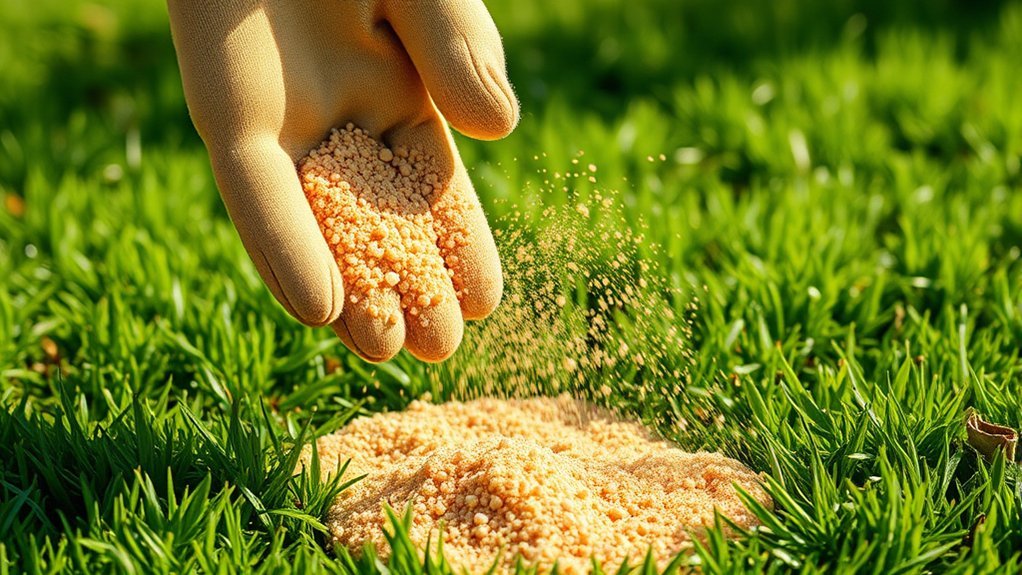
Where should you start to ensure an even spread of lawn sand by hand? Begin at one corner of your lawn and work methodically across in straight, overlapping lines. This hand technique helps you maintain consistent coverage, essential for effective lawn care.
Use your fingers to pinch the sand and distribute it evenly, avoiding clumps. Keep your pace steady and watch for missed spots.
| Step | Action |
|---|---|
| 1 | Start at a corner |
| 2 | Pinch sand between fingers |
| 3 | Spread in straight lines |
| 4 | Overlap passes slightly |
| 5 | Check for uniform coverage |
Following this approach ensures even application, helping your lawn thrive.
Staying Safe When Applying Lawn Sand
Why should you prioritize safety while applying lawn sand? Because lawn sand contains chemicals that can irritate your skin, eyes, and respiratory system. Using proper safety equipment is essential to protect yourself during application.
Prioritize safety when applying lawn sand to protect your skin, eyes, and lungs from harmful chemicals.
Before you start, put on gloves, a dust mask, safety goggles, and long sleeves to minimize exposure.
Maintain a steady hand technique to avoid spills and inhaling dust. Apply the sand gently, spreading it evenly without tossing it into the air.
Keep the following in mind:
- Wear gloves to protect your skin from irritants
- Use a dust mask to prevent inhaling particles
- Don safety goggles to shield your eyes
- Apply sand with a controlled hand technique
- Avoid windy conditions to reduce dust spread
Caring For Your Lawn After Applying Lawn Sand
Once you’ve applied lawn sand, you’ll want to monitor your lawn closely to ensure the treatment works effectively. Keep an eye out for any discoloration or stress signs in the grass, adjusting watering schedules to avoid over-saturation.
Water your lawn lightly after applying lawn sand to activate the weed-killing agents but avoid heavy watering, which can wash away the product.
Maintain regular lawn maintenance routines, such as mowing at the proper height and removing debris, to support healthy grass growth. Avoid fertilizing immediately after application, as this can interfere with lawn sand’s effectiveness.
Frequently Asked Questions
Can Lawn Sand Be Used on Newly Seeded Lawns?
You shouldn’t use lawn sand on newly seeded lawns because it can hinder seed germination and disrupt lawn maintenance.
Wait until grass is established before applying lawn sand to avoid damaging young seedlings and guarantee healthy growth.
How Long Does Lawn Sand Take to Show Results?
Like dawn breaking over a green field, lawn sand shows results within 7 to 14 days. You’ll notice improved seeding efficacy as it tackles moss and weeds, giving your lawn a healthier, more vibrant growth.
Is Lawn Sand Safe for Pets and Children?
Lawn sand can be harmful if ingested, so ensure lawn safety by keeping pets and children away during application. Always use child supervision and allow the lawn to dry completely before letting them play outside.
Can Lawn Sand Be Combined With Other Fertilizers?
Yes, you can combine lawn sand with other fertilizers, but ensure you check compatibility to maintain lawn sand safety. Mixing improperly might harm your grass or reduce effectiveness, so always follow product guidelines and test a small area first.
What Is the Shelf Life of Lawn Sand?
Don’t worry if your lawn sand’s been sitting a while; its shelf life can last several years if you keep it dry and sealed. Proper storage conditions prevent clumping and maintain effectiveness for your lawn care needs.
Conclusion
Now that you know why to use lawn sand, when to apply it, and how much to use, you’re ready to prepare your lawn properly.
Spread the sand evenly by hand, and stay safe throughout the process. Remember to wear protective gear, work in calm weather, and water lightly afterward.
By following these steps carefully, you’ll keep your lawn healthy, free of moss, and looking its best all season long. Proper application of lawn sand by hand is key to achieving these great results.