You develop hammer toe when mechanical stress and muscle imbalances cause your toe to bend abnormally over time. Hammer toe occurs as overactive flexor muscles overpower weakened extensors, leading to the characteristic bending.
Factors like tight or narrow shoes, high heels, and certain health conditions add strain to the toes. Injuries and genetics can also increase your risk.
Understanding these causes is crucial because early signs often go unnoticed. Yet, they determine how effectively you can prevent the condition from worsening.
What Is Hammer Toe and How Does It Develop?
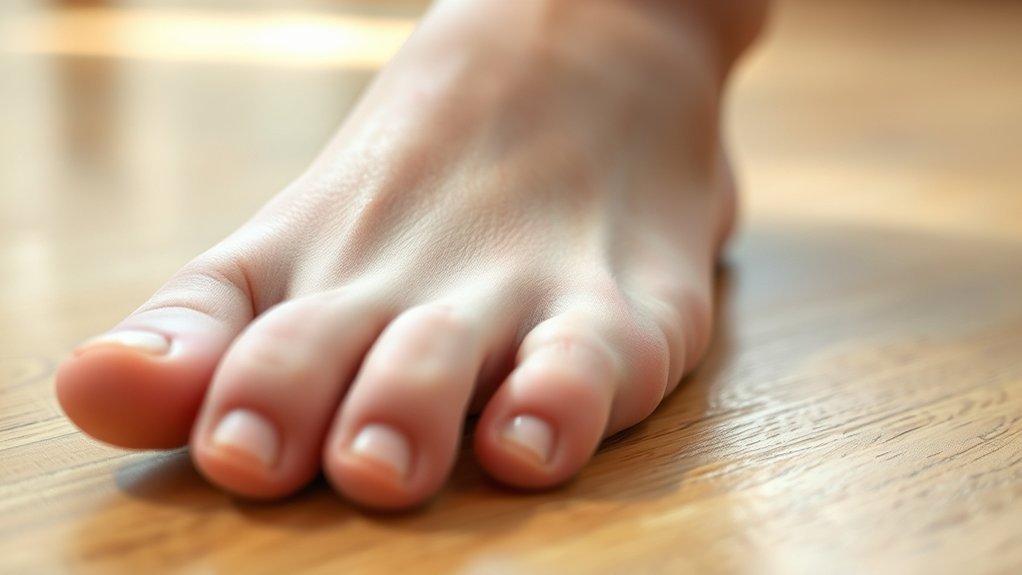
How exactly does hammer toe develop, and what does it entail? Hammer toe is a deformity where one or more toe joints bend abnormally, creating a claw-like appearance. This condition arises from muscle imbalance, often due to tendon and ligament shortening, causing the toe to contract downward.
You might believe certain footwear choices cause hammer toe, but many footwear myths exaggerate this link. While tight shoes can aggravate it, the root cause lies in biomechanical issues or nerve damage.
For hammer toe prevention, you should focus on maintaining muscle balance and choosing properly fitting shoes that offer support without constriction. Early intervention, including corrective exercises and avoiding prolonged pressure on toes, plays a vital role in preventing progression and maintaining foot function.
Early Hammer Toe Signs and Symptoms to Watch For
You’ll often notice early hammer toe through common toe discomfort, such as pain or irritation when wearing shoes.
Pay close attention to visible changes like toe curling or stiffness that limit movement. Recognizing these symptoms early can help you address the condition before it worsens.
Common Toe Discomfort
Toe discomfort often signals the early stages of hammer toe development. You might experience persistent aching, especially around the middle joint of your toe, or notice increased sensitivity when wearing tight shoes.
This discomfort arises from muscle imbalances and joint strain, which, if ignored, can accelerate deformity progression. Early identification is crucial for hammer toe prevention. You should monitor any stiffness, cramping, or mild swelling, as these symptoms indicate compromised toe function.
Incorporating targeted toe strength exercises can restore muscular balance, alleviate discomfort, and slow deformity advancement. Performing exercises like toe curls and spreading can improve tendon flexibility and joint alignment.
Addressing common toe discomfort promptly allows you to intervene before significant structural changes occur, reducing the need for surgical correction and improving overall foot health.
Visible Toe Changes
Persistent discomfort and muscle imbalances often lead to noticeable physical changes in your toes. Early signs of hammer toe include curling or clawing of the affected toe, typically the second, third, or fourth.
You might observe joint stiffness and swelling at the proximal interphalangeal joint, causing a visible bend. These deformities can cause abnormal pressure points, increasing the need for toe padding to prevent skin irritation and calluses.
Nail care becomes essential, as the altered toe shape may cause nails to press against footwear, leading to ingrown nails or infections. Monitoring these visible changes allows for early intervention, reducing progression.
Addressing symptoms promptly through proper footwear, toe padding, and nail care can help manage discomfort and maintain toe alignment.
How Shoes That Don’t Fit Right Cause Hammer Toe
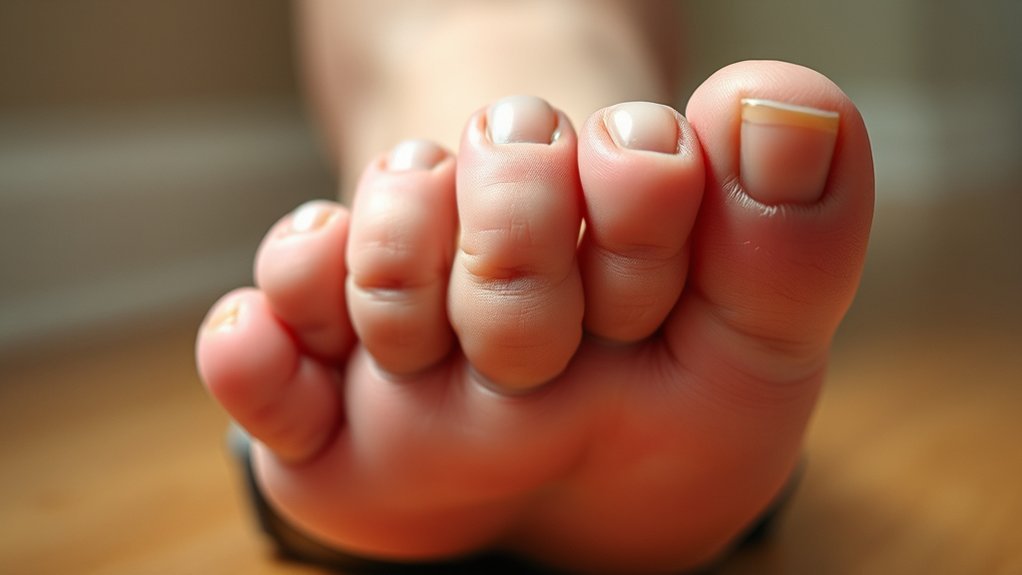
When you wear shoes with a tight toe box, your toes are forced into unnatural positions, increasing the risk of hammer toe. High heels shift pressure forward, compressing your toes against the shoe’s narrow design.
These factors combine to deform toe joints over time and cause hammer toe development.
Tight Toe Box
How exactly does a tight toe box contribute to hammer toe development? When your shoes squeeze the front of your foot, your toes can’t lie flat, increasing pressure on the toe joints. This constant compression forces the middle joint of the toe to bend abnormally, leading to hammer toe.
The hammer toe discussion often highlights improper shoe design, especially narrow toe boxes, as a primary cause. In foot fashion, prioritizing style over fit can exacerbate this problem.
Consider how a tight toe box:
- Limits toe movement, causing muscle imbalance
- Increases pressure on the proximal interphalangeal joint
- Forces toes into unnatural, curled positions
- Reduces circulation, promoting joint stiffness
Understanding these mechanics helps you avoid hammer toe by choosing properly fitted footwear.
High Heel Pressure
Why does wearing high heels contribute to hammer toe development? High heels shift your body weight forward, increasing pressure on the toes and forcing them into a flexed position. This constant pressure shortens the tendons and muscles, causing the toe joints to bend abnormally over time.
If you don’t counteract this, the deformity can become permanent. Incorporating calf stretches can relieve tension in the lower leg, improving foot alignment and reducing toe strain. Additionally, maintaining proper nail care prevents discomfort that may alter your gait, indirectly affecting toe positioning.
Narrow Shoe Design
What happens when your shoes squeeze your toes into an unnatural position? Narrow shoe design forces your toes into cramped spaces, disrupting their natural alignment and increasing the risk of developing hammer toe. This deformity occurs when the middle joint of a toe bends downward, often due to prolonged pressure from ill-fitting footwear.
Key factors in narrow shoe design contributing to hammer toe include:
- Toe box width that compresses toes laterally
- Rigid materials that restrict toe movement
- Lack of adequate cushioning causing localized pressure
- Pointed toe shapes that curl toes unnaturally
How High Heels Cause Hammer Toe

Ever wondered what makes high heels a common culprit in developing hammer toe? When you wear high heels, your foot shifts forward, forcing your toes into a cramped, pointed position. This unnatural posture increases pressure on the toe joints, particularly the middle joint, causing the characteristic bending seen in hammer toe.
High heels also limit toe movement, which contributes to joint stiffness and muscle shortening over time. The combination of excessive pressure and restricted motion disrupts the normal alignment of toes, promoting deformity.
Additionally, the elevated heel alters your weight distribution, intensifying stress on the forefoot where hammer toe forms. If you frequently wear high heels without adequate toe space or support, you increase your risk of developing hammer toe due to these mechanical and anatomical stresses.
How Muscle Imbalances Lead to Hammer Toe
How exactly do muscle imbalances contribute to hammer toe development? When the muscles controlling your toes lose proper muscle balance, certain tendons overpower others, causing abnormal toe positioning.
This imbalance creates persistent neural tension within the toe’s musculature, disrupting normal joint alignment. Over time, this leads to the characteristic curling seen in hammer toe.
You may experience:
- Overactive flexor muscles pulling the toe downward
- Weakened extensor muscles failing to counteract flexion
- Increased neural tension restricting normal tendon glide
- Altered gait mechanics reinforcing muscle imbalance
These factors combine to maintain the toe in a bent position, promoting deformity. Addressing muscle balance and reducing neural tension early can help prevent hammer toe progression.
How Injuries Can Trigger Hammer Toe
Muscle imbalances set the stage for hammer toe by disrupting normal toe alignment, but injuries can directly initiate or exacerbate this condition. When you sustain trauma to the foot, such as a toe fracture, ligament sprain, or tendon rupture, the delicate balance of toe mechanics is compromised.
This disruption can cause abnormal bending and contracture of the toe joints, leading to hammer toe deformity. Inadequate healing or immobilization after injury increases this risk.
To minimize your chances, prioritize injury prevention strategies like proper footwear, cautious activity, and prompt treatment of foot trauma. Understanding how injuries affect toe mechanics helps you address the root cause early and prevents progression, allowing you to maintain optimal toe function and alignment.
Arthritis and Other Health Conditions That Raise Hammer Toe Risk
Chronic conditions like arthritis markedly increase your risk of developing hammer toe by causing joint inflammation and deformity. When we discuss arthritis, particularly rheumatoid arthritis and osteoarthritis, you’ll see how they deteriorate the joints, leading to muscle imbalance and toe contracture.
Arthritis drives hammer toe risk by inflaming joints and causing muscle imbalance and deformity.
Beyond arthritis, it’s important to explore other health conditions that raise hammer toe risk. These conditions compromise muscle control or joint integrity, accelerating deformity.
Consider these factors:
- Diabetes, which can cause peripheral neuropathy and muscle weakness
- Stroke or neurological disorders affecting muscle coordination
- Tendon or ligament injuries altering toe alignment
- Inflammatory diseases like gout, inducing joint swelling and damage
How Your Genes and Foot Shape Affect Hammer Toe Risk
Why do some people develop hammer toe more easily than others? Genetic links play a significant role in your risk. If your family history includes hammer toe or other foot deformities, you may inherit structural traits that predispose you to this condition.
Additionally, your foot shape directly influences the likelihood of developing hammer toe. For example, having a high arch or an unusually long second toe can increase pressure on the middle joints, causing them to bend abnormally over time.
These inherited anatomical factors alter the balance of muscles and tendons in your foot, making certain toes more susceptible to deformities. Understanding your genetic background and foot shape helps explain why hammer toe risk varies among individuals, guiding you toward tailored monitoring and care.
How to Prevent Hammer Toe From Getting Worse
Although hammer toe is often progressive, you can take specific measures to prevent it from worsening. Understanding how to prevent further deformity involves addressing both mechanical stress and muscular imbalance. Regular toe stretches improve flexibility and reduce contracture risk, while appropriate footwear alleviates pressure on affected joints. You should also consider orthotic devices to support proper foot alignment and reduce strain on toes.
To effectively prevent progression, you can:
- Perform daily toe stretches targeting the affected joints
- Choose shoes with a wide toe box and low heels
- Use custom orthotics or padding to redistribute pressure
- Avoid activities that excessively stress the toes or require tight footwear
Implementing these strategies helps maintain joint mobility and minimizes further structural damage.
Frequently Asked Questions
Can Hammer Toe Be Corrected Without Surgery?
Yes, you can correct hammer toe with non surgical options like splints, toe exercises, and orthotic devices. Conservative treatment reduces pain and improves flexibility, but severe cases might still require surgery for full correction.
What Types of Doctors Treat Hammer Toe?
You should consult a podiatrist or orthopedic specialist for hammer toe treatment. They’ll guide you on footwear modifications and proper footwear fitting to alleviate discomfort and prevent worsening.
They use precise, evidence-based methods to ensure effective care.
Are There Specific Exercises to Relieve Hammer Toe Pain?
Yes, you can achieve relief through stretches targeting toe mobility. Exercises like towel scrunches and toe curls strengthen muscles, improve joint flexibility, and reduce hammer toe pain by enhancing overall toe alignment and function.
How Long Does It Take to Recover From Hammer Toe Surgery?
Your recovery from hammer toe surgery typically takes 6 to 8 weeks, like a clock meticulously rewinding.
While you wait, explore non-surgical options like splints or exercises to ease pain and improve flexibility.
Can Children Develop Hammer Toe?
Yes, children can develop hammer toe. You should consider pediatric factors like growth patterns and footwear.
Hammer toe risks in kids include muscle imbalances and congenital deformities, so early diagnosis and intervention are essential for effective treatment.
Conclusion
You hold the power to stop hammer toe from tightening its grip on your toes. By choosing well-fitted shoes, stretching your muscles, and monitoring early signs, you can outsmart the mechanical forces and imbalances that twist your toes.
Think of your feet as delicate instruments—treat them with care to maintain perfect alignment. Act early, and you’ll keep your stride strong, flexible, and pain-free.
Taking these steps can help prevent this deformity from taking root and reduce the risk of how do u get hammer toe.