Imagine you’ve been doing hammer curls for months, hoping to see noticeable growth in your triceps. However, hammer curls do not effectively work triceps, and that’s why the gains just aren’t there.
Hammer curls primarily target your brachialis and brachioradialis muscles using a neutral grip. They focus on elbow flexion—not extension, which is where the triceps come in.
Understanding why hammer curls can’t replace dedicated triceps exercises is key to building balanced, stronger arms.
Which Muscles Do Hammer Curls Target?
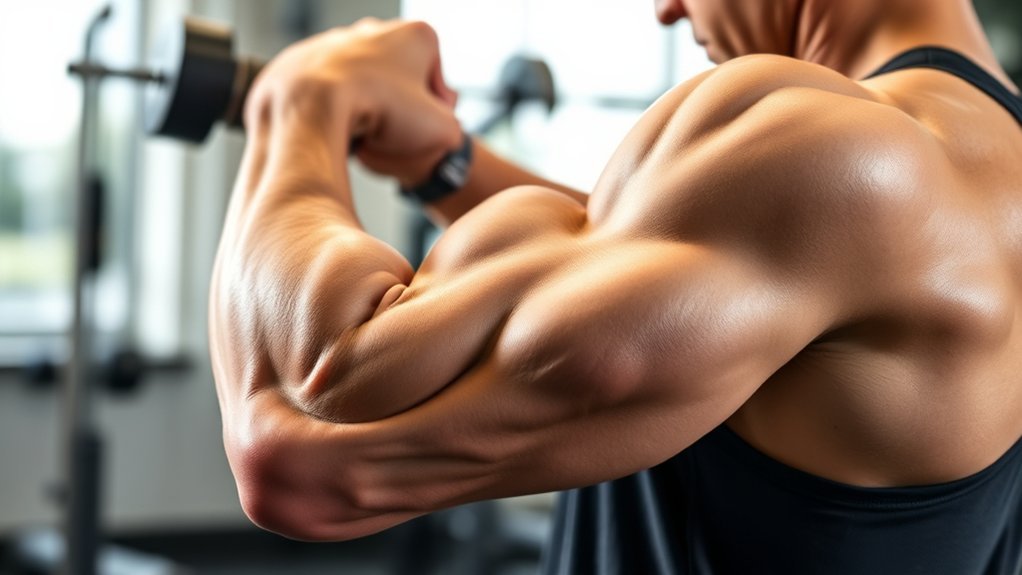
Hammer curls primarily target the brachialis and brachioradialis muscles, which lie underneath and alongside the biceps brachii. When you perform hammer curls, you hold the dumbbells with a neutral grip, palms facing each other, engaging the hammer cuff muscles around the forearm.
This grip emphasizes elbow flexion, allowing you to strengthen these specific muscles more effectively than a traditional curl. The brachialis plays a key role in elbow flexion, contributing to arm strength and size, while the brachioradialis improves forearm stability and function.
Why Hammer Curls Don’t Build Your Triceps
You might expect hammer curls to work your triceps, but they primarily target the brachialis and biceps brachii muscles. The triceps activation during hammer curls is minimal, so they don’t effectively stimulate triceps growth.
Understanding this helps you choose exercises that specifically engage your triceps.
Primary Muscles Targeted
The primary muscles targeted during hammer curls are the brachialis and brachioradialis, both located in the forearm and upper arm region. When you perform hammer curls, these muscles do most of the work, which is why hammer curls don’t effectively contribute to triceps growth.
The triceps, positioned at the back of your upper arm, remain mostly inactive during this exercise.
| Muscle Name | Location | Role in Hammer Curls |
|---|---|---|
| Brachialis | Upper arm | Primary elbow flexor |
| Brachioradialis | Forearm | Assists elbow flexion |
| Triceps | Back of upper arm | Minimal involvement |
Understanding these primary muscles helps you realize why hammer curls aren’t suitable for triceps development.
Triceps Activation Levels
How much do hammer curls really engage your triceps? Despite your grip tension and even jaw flexion from focusing hard, hammer curls primarily target the brachialis and biceps brachii rather than the triceps.
The movement involves elbow flexion without significant elbow extension, which is essential for activating the triceps. While you might feel some secondary activation due to stabilizing muscles, the triceps don’t receive enough stimulus to promote growth.
The grip tension you maintain during hammer curls helps stabilize the forearm but doesn’t translate into effective triceps recruitment. Similarly, jaw flexion, often an involuntary response to exertion, doesn’t influence triceps activation.
If your goal is to build triceps strength and size, exercises involving elbow extension, like triceps pushdowns or skull crushers, will be far more effective than hammer curls.
Biceps and Triceps: How They Work Together
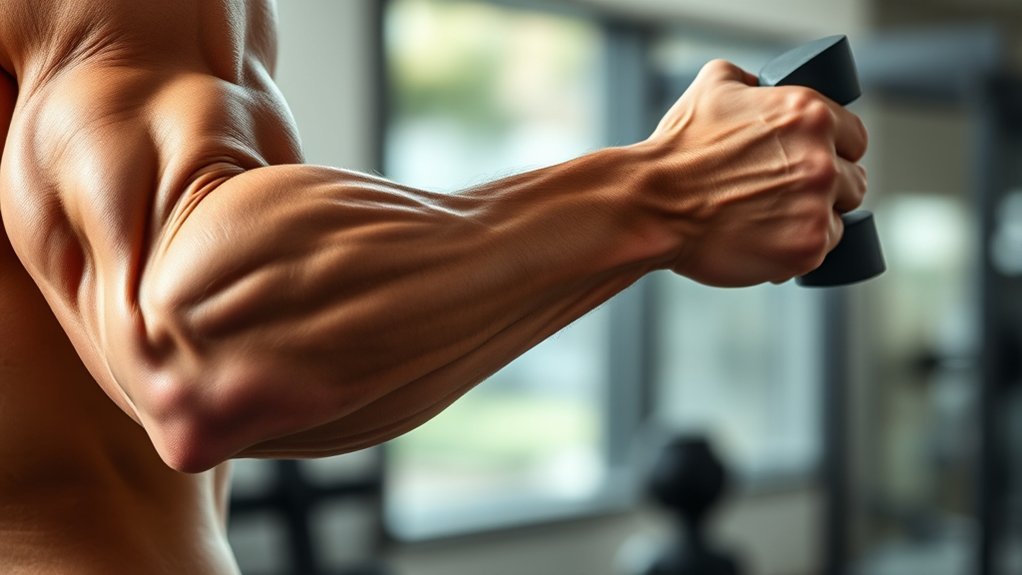
Although they perform opposite actions, biceps and triceps work together to enable smooth and controlled arm movements. When you perform hammer curls, your biceps brachii and brachialis muscles contract to flex the elbow, but your triceps also play a crucial role by relaxing and lengthening to allow this motion. This coordinated effort prevents joint strain and supports stability.
While hammer curls primarily target the biceps, they don’t significantly engage the triceps, which require focused triceps isolation exercises to develop. Understanding this interplay helps you design balanced workouts that prevent muscle imbalances and enhance overall arm function.
Best Exercises to Build Strong Triceps
To build strong triceps, you need to focus on both effective isolation exercises and compound movements that engage multiple muscle groups. Isolation moves like tricep pushdowns target the muscle directly, while compound exercises such as close-grip bench presses provide overall arm strength.
Balancing these approaches will help you develop well-rounded triceps strength and size.
Effective Triceps Isolation
Why focus on isolation exercises when building strong triceps? Isolation targets the muscle more directly, allowing you to emphasize the triceps without involving other muscles. This approach helps you refine muscle definition and correct imbalances efficiently.
When performing isolation movements, pay attention to which grip variation you use; for example, a neutral grip in triceps kickbacks can better engage certain triceps heads. Starting with unweighted training is smart. It allows you to master form and control before adding resistance.
Exercises like triceps pushdowns, overhead extensions, and kickbacks are excellent for isolation. They let you concentrate on the triceps’ contraction and extension, ensuring optimal muscle fiber recruitment. Incorporating these techniques into your routine will accelerate your progress in building strong, well-defined triceps.
Compound Movements Benefits
Isolation exercises help you target the triceps directly, but incorporating compound movements can noticeably enhance your overall arm strength and muscle development. Compound exercises, like close-grip bench presses and dips, engage multiple muscle groups, including the triceps, shoulders, and chest.
Understanding arm anatomy clarifies why these movements work so well: the triceps cross the elbow joint, playing a key role in elbow extension, which these exercises heavily involve. By recruiting stabilizer muscles around the elbow joint, compound movements improve functional strength and joint stability.
When you include these exercises in your routine, you promote balanced muscle growth and increase your capacity for heavier lifts. So, while isolation has its place, compound movements are essential for building strong, well-rounded triceps and enhancing overall arm performance.
Designing Balanced Arm Workouts With Hammer Curls and Triceps
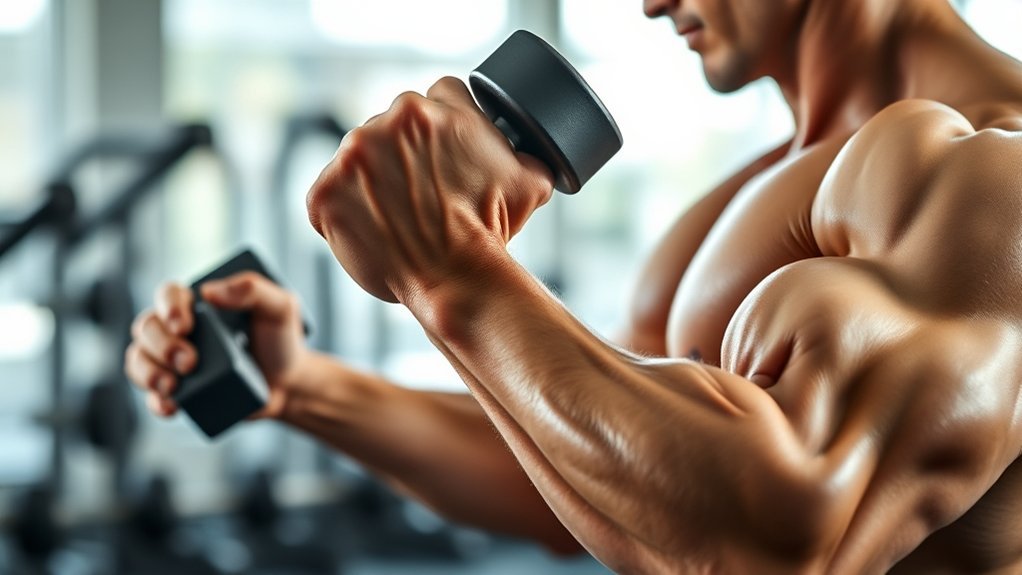
How can you create a balanced arm workout that effectively targets both the biceps and triceps? Start by incorporating hammer curls, which primarily engage the biceps brachii and brachialis muscles, into your routine.
To complement this, include specific triceps exercises like tricep dips or overhead extensions to ensure balanced muscle development. Remember, training alone isn’t enough; a proper tricep diet rich in protein supports muscle repair and growth, enhancing your workout results.
Structure your sessions to alternate between biceps and triceps exercises, allowing adequate rest for each muscle group. This approach prevents imbalances and maximizes overall arm strength and definition.
Consistency in combining hammer curls with targeted triceps moves and nutrition will help you achieve well-rounded arm development efficiently.
Common Arm Training Mistakes That Hinder Triceps Growth
Although many focus on biceps exercises like hammer curls, neglecting proper triceps training techniques can markedly hinder your arm development. One common mistake is falling for hammer curl fallacies, assuming these curls significantly work your triceps.
Focusing solely on hammer curls overlooks essential triceps training, limiting your arm growth potential.
In reality, hammer curls primarily target the brachialis and biceps brachii, leaving your triceps under-stimulated. Triceps neglect is another major error; many skip dedicated triceps exercises, limiting overall arm growth.
Additionally, poor form during triceps extensions or pushdowns reduces effectiveness and increases injury risk. To maximize triceps growth, you need focused, consistent training with exercises like close-grip bench presses, dips, and overhead extensions.
Avoid these mistakes, balance your routine, and prioritize triceps-specific movements to ensure comprehensive arm development.
Frequently Asked Questions
Can Hammer Curls Improve Grip Strength?
Yes, hammer curls can improve your grip strength by engaging forearm muscles and enhancing elbow stability. They help you maintain control during lifts, making your grip stronger and more reliable for various exercises and daily activities.
How Often Should I Do Hammer Curls Weekly?
You should do hammer curls two to three times weekly, respecting weekly limits to avoid overtraining. Space sessions evenly, allow recovery, and focus on form to build strength effectively without risking injury or fatigue.
Do Hammer Curls Help With Elbow Joint Stability?
Yes, hammer curls help improve elbow stability by strengthening the surrounding muscles, which supports joint protection. Incorporating them into your routine enhances muscle balance, reducing strain and lowering the risk of elbow injuries during activities.
Are Hammer Curls Safe for Beginners?
Yes, hammer curl safety is solid for beginners if you use light weights and focus on proper form. Avoid beginner mistakes like swinging or jerking motions to prevent injury and ensure effective muscle engagement during your workout.
Should I Use Dumbbells or Cables for Hammer Curls?
You should use dumbbells for hammer curls if you want to improve grip strength focus, while cables offer constant tension. Dumbbells vs cables depends on your training goal; dumbbells provide natural movement, cables ensure steady resistance.
Conclusion
While hammer curls give your biceps and forearms a solid workout, they gently sidestep your triceps. To truly sculpt balanced arms, you’ll want to invite dedicated triceps exercises like pushdowns or overhead extensions into your routine.
By blending these moves thoughtfully, you create harmony between muscle groups, promoting overall strength and shape. Remember, smart variety and consistent effort are your best allies on the journey to well-rounded, impressive arm development.
In conclusion, hammer curls work your biceps and forearms well, but if you want to know do hammer curls work triceps effectively, the answer is no—they require complementary triceps exercises for balanced arm growth.