Imagine you’ve been doing traditional curls for months but want to add size and strength to your arms in a more balanced way. Do hammer curls work biceps? Yes, they do, but they also target other important muscles.
Hammer curls engage not just the biceps brachii but also the brachialis and forearm muscles, enhancing overall arm development. This variation helps improve arm thickness and strength in a different way than traditional curls.
Understanding how hammer curls differ and why it matters can help you decide if they deserve a spot in your routine. Adding them could be the key to more balanced and effective arm training.
Which Muscles Do Hammer Curls Work?
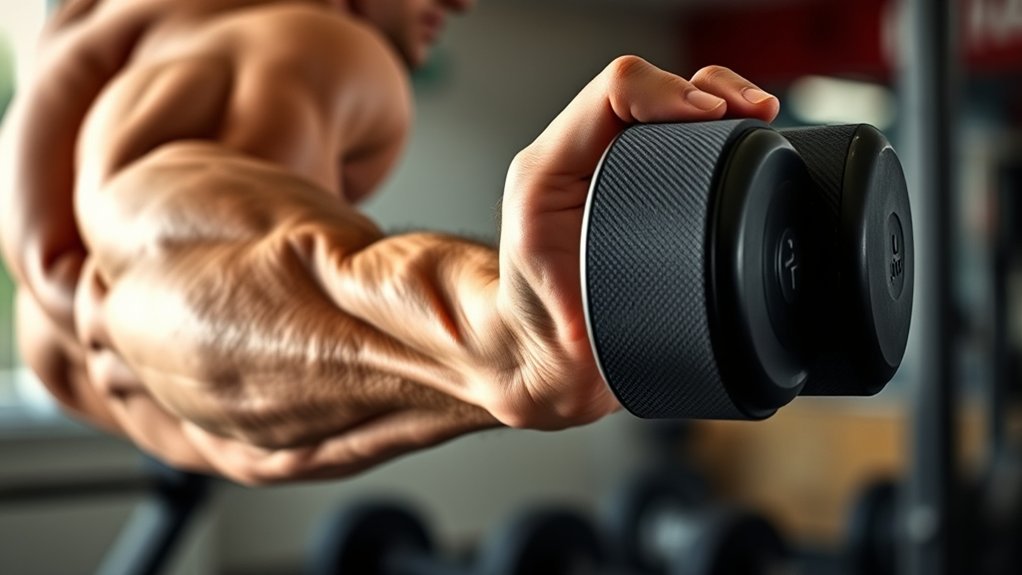
Wondering which muscles hammer curls target? Hammer curls primarily focus on your biceps brachii, but they also engage the brachialis and brachioradialis muscles.
Hammer curls target the biceps brachii, brachialis, and brachioradialis for balanced arm strength.
When you perform hammer curls, you hold the dumbbells with a neutral grip, which shifts emphasis slightly away from the traditional biceps peak and instead enhances overall biceps activation. This grip recruits more muscle fibers around your upper arm, helping you build balanced arm strength and size.
Incorporating hammer curls into your routine not only strengthens your biceps but also improves your forearm muscles, making your arms more functional and resilient. So, if you want to maximize biceps activation and develop well-rounded arm muscles, hammer curls are a powerful addition to your workout.
Keep your form strict and watch your gains grow.
Hammer Curls vs. Traditional Bicep Curls: What’s the Difference?
You’ll notice that grip position plays a big role in how hammer curls and traditional bicep curls target your muscles. Each variation activates different parts of your arms and affects your range of motion.
Understanding these differences can help you choose the best curl for your goals.
Grip Position Impact
How does your grip position influence the effectiveness of hammer curls compared to traditional bicep curls? Your grip position directly impacts forearm positioning, which in turn changes muscle focus and joint movement.
Hammer curls use a neutral grip (palms facing each other), keeping your forearms aligned with your torso. This grip reduces wrist strain and emphasizes the brachialis muscle. Traditional bicep curls use a supinated grip (palms up), which maximizes biceps brachii engagement by fully supinating the forearm.
| Exercise Type | Grip Position | Forearm Positioning | Wrist Position | Muscle Emphasis |
|---|---|---|---|---|
| Hammer Curl | Neutral | Vertical | Neutral | Brachialis |
| Traditional Bicep Curl | Supinated | Rotated outward | Supinated | Biceps Brachii |
Choosing the right grip helps you target specific muscles effectively.
Muscle Activation Differences
What sets hammer curls apart from traditional bicep curls is the way they activate different muscles in your arms. Hammer curls target not only the biceps brachii but also engage the brachialis and brachioradialis muscles more effectively. This broader activation can help you build overall arm strength and size.
Don’t fall for technique myths that claim one curl type is superior; each serves a unique role in your training. Incorporating both can optimize muscle development and balance.
Plus, hammer curls often reduce strain on your wrists and elbows, supporting injury prevention during your workouts. By understanding these muscle activation differences, you can tailor your routine to hit all key arm muscles, making your training more efficient and less prone to injury.
Range Of Motion
When comparing hammer curls to traditional bicep curls, how you move through the range of motion plays a vital role in targeting your muscles effectively. Hammer curls keep your wrists in a neutral position, which can enhance joint health by minimizing strain.
Traditional curls involve supination, rotating your palms upward, which increases bicep peak activation but demands more from your wrist joints.
To optimize your range of motion and protect joint health, consider:
- Start with your arms fully extended to engage the full muscle length.
- Curl the weight smoothly without swinging to maintain tension.
- Pause briefly at the top for maximum contraction.
- Lower the weight slowly to avoid joint stress and control the eccentric phase.
Mastering these ensures balanced muscle activation and long-term joint safety.
Benefits of Hammer Curls for Arm Size, Biceps, and Grip Strength
Why should you include hammer curls in your arm workout? Hammer curl benefits go beyond just targeting your biceps. This exercise uniquely engages the brachialis muscle, which lies beneath your biceps, helping to push your arms outward and increase overall arm size.
In addition, hammer curls emphasize forearm development, strengthening the brachioradialis, essential for grip strength. Enhancing your grip strength not only improves performance in other lifts but also supports daily activities requiring strong hands.
Consistently incorporating hammer curls will build balanced arm muscles, preventing imbalances that could lead to injury. By focusing on both biceps and forearms, you maximize your arm’s functional and aesthetic potential.
How to Perform Hammer Curls Correctly for Best Biceps Gains
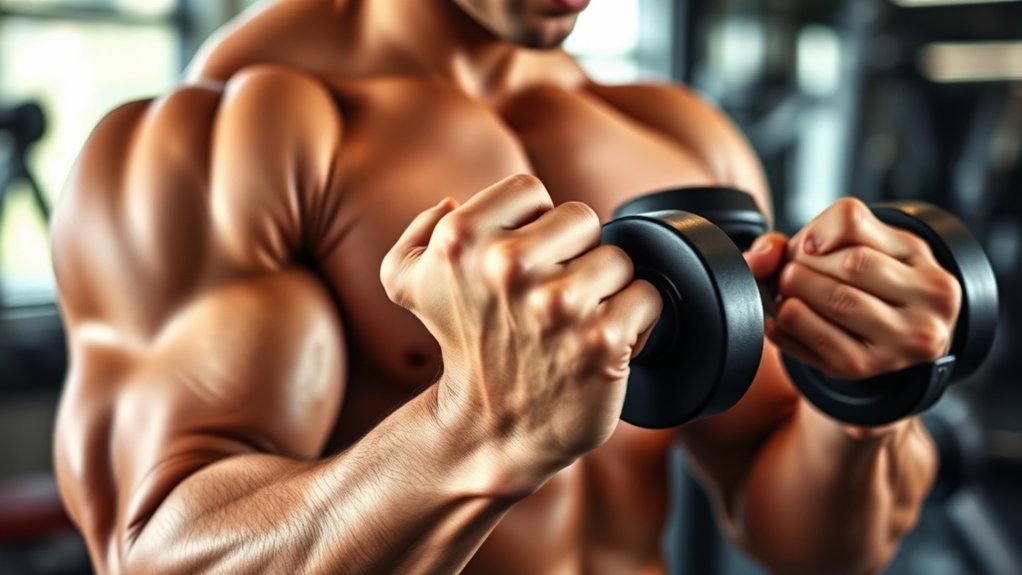
How can you guarantee hammer curls deliver the best results for your biceps? Focus on technique, consistency, and recovery. Follow these steps to maximize gains:
- Keep your elbows close to your torso and wrists neutral throughout each curl to target the biceps and brachialis effectively.
- Lift the weights in a controlled motion, avoiding momentum to ensure muscle engagement.
- Perform 3-4 sets of 8-12 reps, adjusting weight to challenge your muscles without sacrificing form.
- Prioritize muscle recovery by incorporating proper nutrition timing. Consume protein and carbs within 30 minutes post-workout to fuel repair and growth.
Common Hammer Curl Mistakes to Avoid
Mastering hammer curls takes more than just following the right steps; avoiding common mistakes is key to maximizing your biceps gains and preventing injury. One frequent error is using momentum instead of controlled movement, which reduces muscle engagement and increases injury risk.
Master hammer curls by focusing on controlled movement to maximize gains and prevent injury.
Don’t let nutrition myths distract you. Proper protein intake fuels muscle growth better than quick fixes. Also, avoid neglecting rest between sets; rushing can hinder muscle recovery.
Another pitfall is swapping hammer curls for excessive cardio swaps that don’t target your biceps effectively. While cardio is important, balance it with strength training to see real arm development.
Focus on form, steady pace, and consistent effort. By steering clear of these mistakes, you’ll optimize your hammer curl routine and build stronger, more defined biceps.
Best Hammer Curl Variations for Bigger Biceps
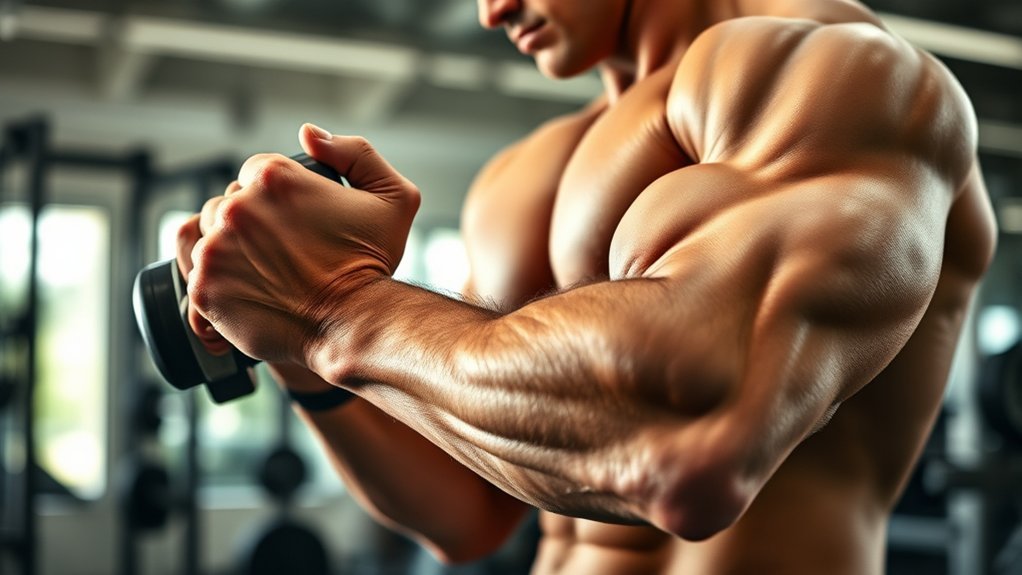
Selecting the best hammer curl variations can supercharge your biceps growth by targeting muscles from different angles and increasing overall engagement. Incorporating hammer curl progressions will help you steadily build strength and size while emphasizing forearm isolation for balanced development.
Try these four effective variations:
1. Standard Hammer Curls
Keep your elbows close to maximize biceps and brachialis activation.
2. Cross-Body Hammer Curls
Target the brachialis and add forearm work by curling across your body.
3. Incline Hammer Curls
Perform on an incline bench to increase stretch and recruit more muscle fibers.
4. Hammer Curl with Static Hold
Pause at peak contraction to intensify muscle engagement and improve forearm isolation.
Mix these into your routine to challenge your muscles differently and boost biceps size efficiently.
When to Include Hammer Curls in Your Workout Routine
When should you slot hammer curls into your workout routine for maximum benefit? Consider your overall training split and energy tradeoffs first. Hammer curls work well as a supplementary exercise after your main biceps and back moves because they target muscles differently, offering a balanced arm workout.
If you’re focusing on strength, include them early when your energy levels are high. For muscle endurance or definition, adding them later during your session can be effective. Avoid overloading your routine. Two word discussion ideas like “workout balance” and “energy allocation” help you decide when to prioritize hammer curls without compromising other lifts.
Do Hammer Curls Improve Your Grip and Forearm Strength?
After deciding the best time to include hammer curls in your workout, you might wonder how they affect your grip and forearm strength. Hammer curls use a hammer grip, which naturally engages your forearms more than traditional curls. This grip increases forearm activation, helping you build stronger, more resilient muscles in that area.
Here’s how hammer curls improve your grip and forearm strength:
- Enhance wrist stability through sustained hammer grip.
- Target brachioradialis, a key forearm muscle.
- Improve your ability to hold and control heavier weights.
- Boost overall forearm endurance, aiding other lifts.
Incorporate hammer curls regularly to develop a powerful grip and well-rounded forearms that support your entire upper body strength.
Frequently Asked Questions
Can Hammer Curls Help With Tendonitis or Elbow Pain?
Hammer curls can aid tendonitis care by strengthening muscles around your elbow, reducing strain. Start light, focus on form, and avoid pain.
Consistent, careful hammer curls support recovery and help prevent further elbow pain.
Are Hammer Curls Safe for Beginners With Joint Issues?
About 30% of beginners experience joint discomfort, but hammer curl safety improves when you focus on proper form and light weights.
Prioritize beginner joint care by starting slow, warming up, and listening to your body to prevent injury.
How Do Hammer Curls Affect Muscle Imbalances Between Arms?
Hammer curls help you correct muscle imbalances between arms by targeting both equally, ensuring balanced strength development. You’ll build symmetrical tone and improve coordination, which boosts overall arm function and appearance without favoring one side repeatedly.
Can Hammer Curls Improve Performance in Sports or Climbing?
Hammer curl benefits are like adding fuel to your performance engine. They boost grip strength and forearm endurance, giving you a solid performance transfer to sports and climbing.
This helps you climb higher and push harder every time.
What Equipment Alternatives Exist if I Don’T Have Dumbbells?
You can use equipment alternatives like resistance bands or water bottles as dumbbell substitutes. These options let you perform hammer curls effectively, keeping your workouts versatile and motivating you to stay consistent without needing traditional weights.
Conclusion
When it comes to building balanced arm strength, hammer curls are your secret weapon. They don’t just target your biceps—they also boost your forearm and grip power, making your lifts stronger and joints more stable.
Remember, “slow and steady wins the race.” Consistently adding hammer curls to your routine will help you sculpt bigger, more functional arms while enhancing overall performance.
Stay dedicated, and you’ll see the gains you want. In conclusion, hammer curls work biceps effectively while also improving other aspects of arm strength.