You might wonder if you can wet sand with an electric sander without damaging the tool or risking safety hazards. While wet sanding is a common technique, using an electric sander for this purpose requires specific equipment designed to handle moisture. It also calls for careful technique and important precautions.
Using the wrong type of sander or applying too much water could lead to motor failure or even electrical shock. Before you start, it’s crucial to understand the right tools and methods. This knowledge will help you avoid costly mistakes and keep your work safe and effective.
Is It Safe to Wet Sand With an Electric Sander?
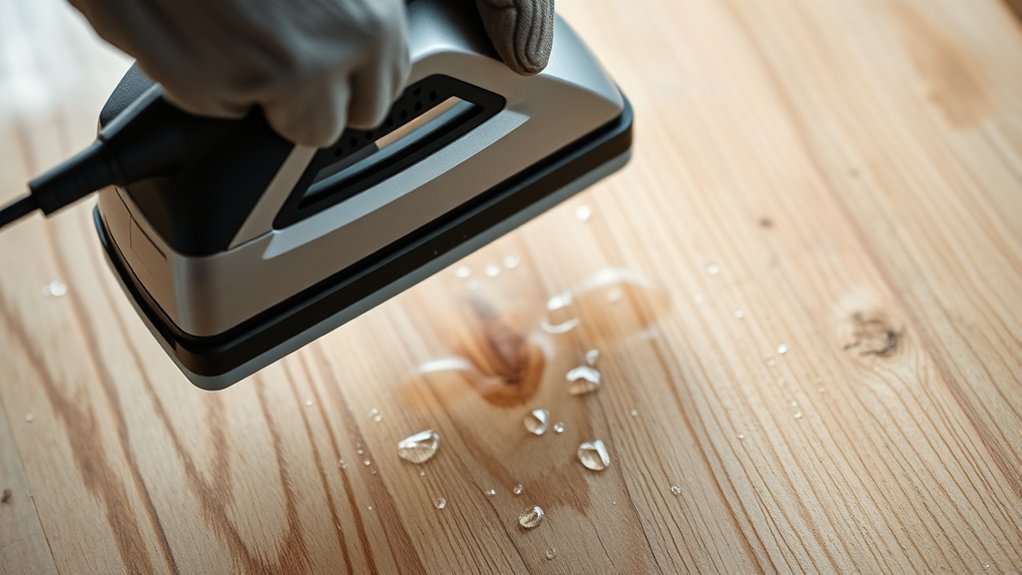
When it comes to wet sanding with an electric sander, safety hinges on the tool’s design and your approach. You need to ensure the sander is explicitly rated for wet use; otherwise, water can breach electrical components, causing hazards.
Prioritize sanding ergonomics by selecting a tool that offers secure grip and balanced weight distribution, reducing fatigue and enhancing control when working with slippery surfaces. Maintain solvent safety by using water or compatible solutions only. Avoid flammable or volatile solvents near electrical tools.
Additionally, always inspect the power cord and housing for damage before starting. By combining proper tool selection with disciplined technique, you minimize risks and ensure a safer wet sanding process with your electric sander.
Best Electric Sanders for Wet Sanding
Which electric sanders deliver ideal performance for wet sanding tasks? You’ll want to focus on orbital or random orbital sanders equipped with sealed motors and corrosion-resistant components. These models handle moisture exposure without compromising functionality.
Two word ideas like “waterproof seals” and “dust extraction” become critical features here. Avoid unrelated topics like belt sanders, as their aggressive action and open motor designs don’t suit wet conditions.
Prioritize waterproof seals and dust extraction; avoid belt sanders with open motors unsuitable for wet sanding conditions.
Look for sanders with variable speed control to fine-tune sanding pressure, ensuring smooth finishes without gouging. Additionally, models with ergonomic grips help maintain control during slippery, wet sanding tasks.
Selecting the right sander means prioritizing durability and precision engineering tailored for wet environments, rather than adapting tools designed solely for dry applications. This approach guarantees efficiency and extends tool lifespan.
Risks of Wet Sanding With Electric Sanders
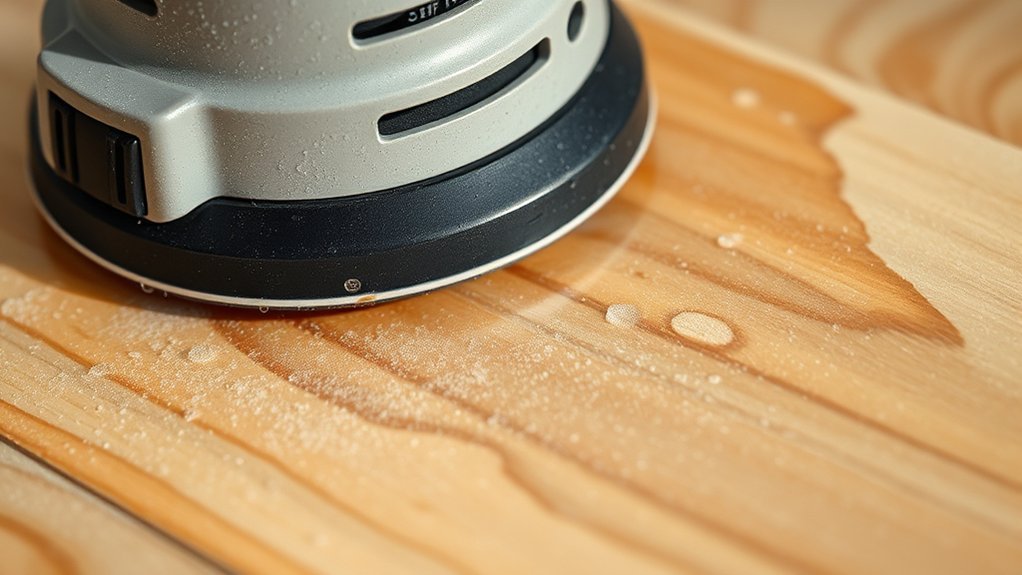
When you wet sand with an electric sander, you face significant electrical hazard risks due to water exposure. The tool’s internal components can suffer damage if moisture penetrates, shortening its lifespan.
To avoid these issues, you must follow strict safety precautions and use equipment designed for wet conditions.
Electrical Hazard Risks
Although electric sanders are designed for dry use, exposing them to water during wet sanding creates significant electrical hazards. You risk electric shock due to water ingress, which can short-circuit internal components. Water compromises insulation, increasing the chance of current leakage.
Always assume wet sanding with an electric sander can lead to fatal outcomes if precautions aren’t taken.
| Hazard Type | Description |
|---|---|
| Electric Shock | Water creates conductive paths, risking shocks |
| Water Ingress | Moisture penetrates motor and wiring |
| Short Circuit | Internal circuits can fail due to moisture |
| Insulation Failure | Wet conditions degrade protective barriers |
| Ground Fault | Increased risk of unintended grounding paths |
Understanding these hazards helps you avoid dangerous situations when using electric sanders near water.
Tool Damage Possibility
The risk of tool damage increases considerably if you use an electric sander for wet sanding. Most electric sanders aren’t designed with tool compatibility for moisture exposure in mind. Water can infiltrate electrical components, causing corrosion and short circuits, which significantly reduce the tool’s lifespan.
Additionally, wet sanding accelerates wear on bearings and motor brushes due to increased friction and potential rust. You’ll also face higher maintenance implications, as frequent disassembly and cleaning become necessary to prevent long-term damage.
Unless your sander explicitly states it’s water-resistant or built for wet environments, using it for wet sanding is likely to void warranties and cause costly repairs. To preserve your tool’s integrity, always verify compatibility before attempting wet sanding with an electric sander.
Safety Precaution Measures
Why should you approach wet sanding with an electric sander cautiously? Because water and electricity don’t mix well, you risk electric shock or short-circuiting the tool. Ignoring safety precautions isn’t just an irrelevant topic; it’s critical.
Always ensure your sander is designed for wet use, featuring waterproof seals and proper insulation. Avoid off topic distractions like assuming any sander suits wet sanding; not all models do.
Use a Ground Fault Circuit Interrupter (GFCI) outlet and wear rubber-soled shoes and insulated gloves to reduce shock risk. Keep cords dry and away from water pools.
Never submerge the sander or expose its motor housing to moisture. These measures protect you and your tool, preventing injury and costly damage during wet sanding.
Getting Your Electric Sander Ready for Wet Sanding
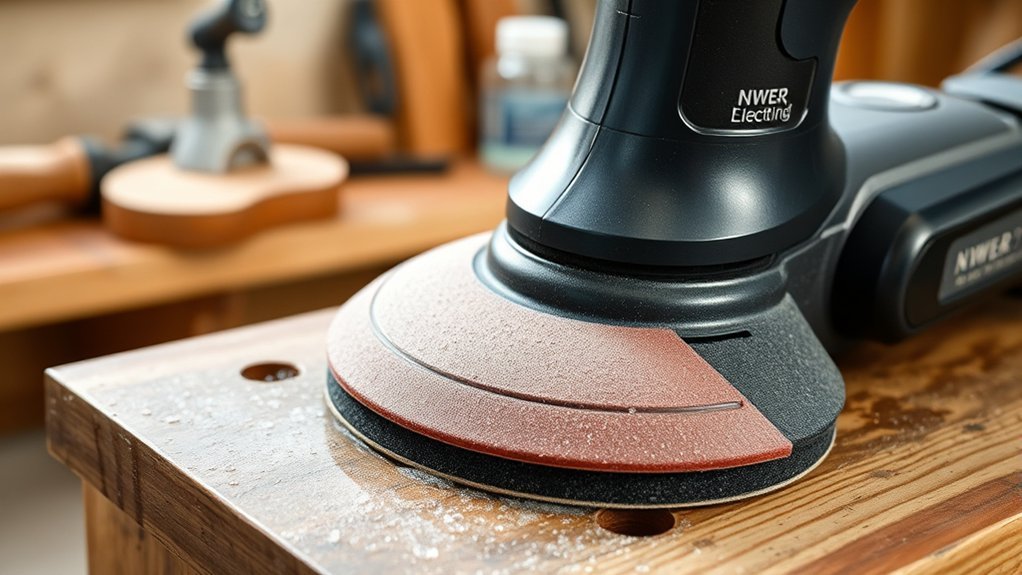
You’ll need to select waterproof sanding pads designed to withstand moisture without degrading. Before starting, ensure your electric sander is fully dry and free of dust or debris. Consider sealing any exposed electrical components.
Proper preparation minimizes damage risk and ensures consistent performance during wet sanding.
Choosing Waterproof Sanding Pads
How do you guarantee your electric sander can handle wet sanding without damage? The key lies in selecting waterproof sanding pads specifically designed for moisture exposure. Standard pads absorb water, compromising adhesion and causing premature wear.
Opt for pads made with closed-cell foam or rubber backings that resist water penetration. Avoid irrelevant topic or unrelated discussion about general sandpaper types, as not all are suitable for wet use. Ensure the grit abrasive is bonded with waterproof resin to maintain integrity during wet sanding.
Using these specialized pads ensures optimal performance, prevents delamination, and protects your sander’s motor from moisture damage. By focusing strictly on pad waterproofing properties, you enhance both safety and sanding efficiency during wet applications.
Preparing Your Sander Properly
When preparing your electric sander for wet sanding, start by thoroughly inspecting its seals and casing to ensure they’re intact and water-resistant. Any compromised seals can allow moisture to penetrate internal components, risking damage.
Next, verify the material compatibility of your sanding pads and backing plate; use waterproof or wet/dry pads specifically designed for wet sanding to maintain performance and longevity. Remove or adjust any dust control attachments, as wet sanding minimizes airborne particles, but residual dust can interfere with pad adhesion and finish quality.
Finally, ensure your sander’s power cord and switch are dry and properly insulated to prevent electrical hazards. Taking these precise steps will optimize your sander’s function and durability under wet sanding conditions while maintaining effective dust control where applicable.
How to Wet Sand With an Electric Sander
Why choose wet sanding with an electric sander over traditional dry methods? Wet sanding reduces dust, minimizes clogging, and produces a smoother finish.
To start, select waterproof sandpaper compatible with your sander. Secure it firmly to avoid slippage. Lightly moisten the surface and sandpaper with distilled water. Avoid excessive moisture to protect the tool.
Choose waterproof sandpaper, secure it well, and lightly moisten with distilled water to protect your sander.
Maintain a steady, gentle pressure to prevent gouging. Continuously add small amounts of water to keep the area wet and flush away debris.
Electrical safety is critical: ensure your sander has proper insulation and a ground fault circuit interrupter (GFCI) on the power supply. Never allow water to enter the motor housing.
After finishing, disconnect power before cleaning and drying the sander thoroughly to prevent corrosion and electrical hazards.
Best Alternatives to Electric Sanders for Wet Sanding
Often, you’ll find that electric sanders aren’t the most practical choice for wet sanding due to potential electrical risks and tool limitations. To achieve optimal results without compromising safety, consider these alternatives:
- Hand Sanding Blocks Provide precise control and eliminate electrical hazards, making them ideal for delicate wet sanding tasks.
- Non-Powered Orbital Sanders These manual tools mimic electric orbital sanders’ motion, allowing consistent pressure and smooth finishes without the risk of water exposure.
- Foam Sanding Pads Flexible and conforming, these pads work well on contoured surfaces during wet sanding, enhancing surface uniformity without the need for electric tools.
Frequently Asked Questions
Can Wet Sanding Improve Paint Durability?
Yes, wet sanding can improve paint durability by creating a smoother surface that enhances adhesion and reduces imperfections.
You’ll reduce the risk of peeling or chipping, ensuring your paint lasts longer under various conditions.
How Does Wet Sanding Affect Different Wood Types?
Oh, sure, just douse your electric sander and watch it weep. Wet sanding varies wildly: hardwoods tolerate moisture better, while softwoods swell or gum up.
Use caution; water plus electric tools demands expert control and precise technique.
What Grit Sandpaper Is Best for Wet Sanding?
You’ll want to use 800 to 2000 grit sandpaper for wet sanding with an electric sander. This range ensures smooth finishes without clogging, maintaining control and minimizing damage to the surface during wet sanding.
Can Wet Sanding Remove Deep Scratches?
When it comes to wet sanding, you can remove deep scratches, but don’t expect miracles overnight. Using progressively finer grits with wet sanding gradually smooths imperfections, restoring surfaces by carefully wearing down damaged layers without causing further harm.
How Often Should I Wet Sand Automotive Paint?
You should wet sand automotive paint sparingly, typically once every few years. Wet sanding benefits include smoother finishes, but overdoing it risks thinning paint and causing damage.
Proceed cautiously and assess surface condition first.
Conclusion
You can wet sand with an electric sander, but only if you treat it like handling lightning—respecting the power and taking every precaution. Use waterproof tools, minimal water, and steady pressure to keep sparks at bay.
When done right, your finish will gleam like polished glass. If uncertainty clouds your path, opt for manual alternatives to avoid electrical storms.
Precision and safety aren’t just options—they’re your guiding stars when you want to wet sand with an electric sander.