You might be tempted to pull your own tooth out with pliers, especially if it’s causing pain or feels loose.
Pulling your own tooth out with pliers can seem like a quick fix, but it carries serious risks. These include infection, excessive bleeding, and potential damage to nearby teeth or nerves.
Before you consider handling this yourself, it’s important to understand why professional care is safer.
Dentists have the tools and expertise to remove teeth safely and manage any complications.
You should also know the signs that indicate a tooth truly needs removal.
Let’s explore what you should know before taking any action.
Why Pulling Your Own Tooth With Pliers Is Dangerous
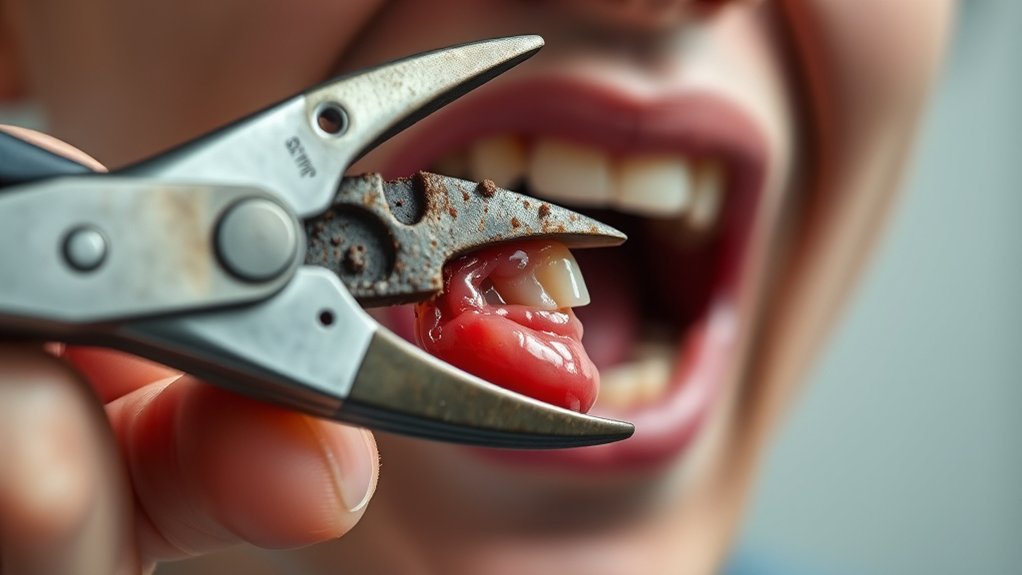
Although it might seem like a quick fix, pulling your own tooth with pliers poses serious risks. Tooth extraction performed without professional care can lead to incomplete removal, excessive bleeding, and severe pain.
Pulling your own tooth with pliers risks incomplete removal, heavy bleeding, and intense pain—professional care is essential.
You might also damage surrounding teeth or cause infections by introducing bacteria into the wound. Proper oral hygiene is essential before and after an extraction to prevent complications, but DIY methods often neglect this, increasing your risk of abscesses or prolonged healing times.
Dentists use sterile tools and precise techniques to guarantee safe removal and minimize trauma. Attempting a tooth extraction at home not only compromises your oral health but may also require emergency medical intervention later.
It’s best to consult a dental professional to protect your overall well-being.
Health Problems From DIY Tooth Pulling
When you pull your own tooth, you put yourself at risk for serious health problems such as infections, nerve damage, and excessive bleeding. Tooth extraction performed outside a professional setting often lacks the sterile environment necessary to prevent bacteria from entering the wound, increasing infection risk.
Improper technique can damage surrounding nerves, causing numbness or chronic pain. You may also experience excessive bleeding, which is difficult to control without proper medical tools.
Neglecting proper dental hygiene before and after extraction further raises the chance of complications. Maintaining good dental hygiene is crucial to support healing and reduce infection risk.
Instead of attempting DIY tooth extraction, it’s safer to seek professional dental care where trained practitioners can manage these risks effectively and guarantee a safe procedure.
How Do You Know If a Tooth Needs Pulling?
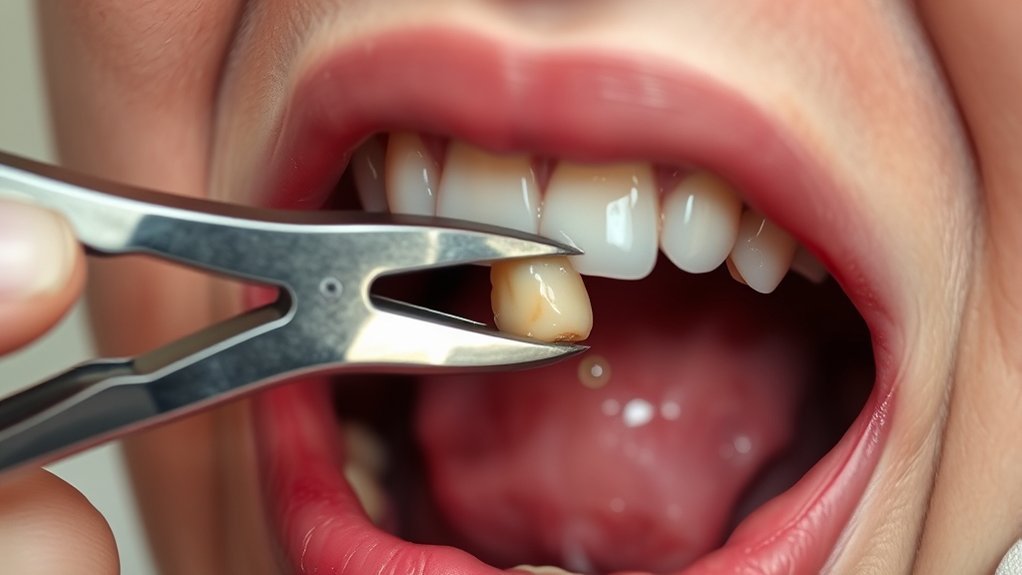
How can you tell if a tooth needs pulling? You may notice persistent dental symptoms such as severe pain, swelling, or a loose tooth. Tooth decay that has progressed deeply into the tooth structure, causing infection or abscess, often signals the need for extraction.
If your tooth is fractured beyond repair or severely damaged, pulling it might become necessary to prevent further complications. Sometimes, overcrowding or impacted teeth require removal to maintain oral health.
However, these signs don’t always mean immediate extraction is the best choice. You should consult a dental professional to evaluate the extent of tooth decay and associated symptoms. Only a qualified dentist can determine if pulling your tooth is the safest and most effective option based on a thorough examination.
Safe Alternatives to Pulling Teeth Yourself
Before considering pulling your own tooth, you should explore safer options like professional dental care. Dentists have the tools and expertise to manage extractions safely and reduce complications.
Meanwhile, you can manage pain at home with recommended methods until you see a professional.
Professional Dental Care
Although the idea of pulling your own tooth might seem straightforward, professional dental care offers safer and more effective alternatives that protect your oral health. When you visit a dentist, they assess your dental hygiene and the overall condition of your teeth and gums before deciding on the best treatment.
Dentists use sterile tools and anesthesia to minimize pain and prevent infection, guaranteeing the procedure is as safe as possible. They also provide guidance on maintaining proper dental hygiene post-treatment to promote healing and avoid complications.
Attempting to remove a tooth yourself risks damaging surrounding teeth, causing infections, and worsening oral health. Trusting a dental professional guarantees that your oral health is prioritized, and any necessary treatment is handled with care and expertise.
At-Home Pain Management
If you’re experiencing tooth pain, managing it safely at home can provide relief while you arrange professional care. Start by using over the counter medications like ibuprofen or acetaminophen to reduce pain and inflammation. These are effective and generally safe when taken as directed.
Additionally, natural remedies such as rinsing your mouth with warm salt water can help reduce swelling and cleanse the area. Applying a cold compress to your cheek may also alleviate discomfort. Avoid using any sharp objects or attempting to pull the tooth yourself, as this can cause further damage or infection.
When You Should See a Dentist Instead
When should you skip pulling your own tooth and head straight to a dentist? If you’re facing severe pain, swelling, or signs of infection, it’s vital to seek professional care. Attempting tooth extraction on your own during dental emergencies can worsen the situation, leading to complications like excessive bleeding or damage to surrounding tissue.
You should also avoid self-extraction if the tooth isn’t loose or if you have underlying health conditions that affect healing. Dentists have the training and tools to perform safe, controlled tooth extraction, minimizing risks and managing pain effectively.
Don’t put yourself at unnecessary risk. Contact a dental professional when symptoms escalate or when you’re unsure about the severity of your dental issue. Your health is too important to gamble on DIY methods.
How Dentists Safely Remove Teeth (Not With Pliers!)
When a dentist removes a tooth, they use specialized tools designed for precision and safety, not simple pliers. You’ll receive anesthesia to numb the area, ensuring you don’t feel pain during the procedure.
These safety measures help prevent complications and promote proper healing.
Professional Tools Used
Dentists rely on specialized instruments designed to safely and effectively remove teeth without causing unnecessary damage. These dental tools are crafted to support precise extraction techniques, minimizing trauma to surrounding tissues. Unlike household pliers, these professional tools are sterilized and ergonomically designed for controlled grip and leverage.
| Tool Name | Purpose |
|---|---|
| Dental Elevator | Loosens teeth before extraction |
| Extraction Forceps | Grips and removes the tooth securely |
| Periosteal Elevator | Separates gum tissue from bone for access |
Using these instruments, dentists carefully manipulate teeth to guarantee a safe, efficient removal process. They follow established protocols that protect your oral health, unlike the risks involved in attempting self-extraction with improper tools.
Anesthesia and Safety Measures
Although extracting a tooth might seem straightforward, safeguarding your comfort and safety requires precise anesthesia and strict safety protocols. Dentists administer local anesthesia to numb the targeted area, blocking pain signals so you won’t feel discomfort during the procedure.
This step is essential for patient safety, as it allows the dentist to work efficiently without causing unnecessary pain or distress. Additionally, dentists follow rigorous safety measures, including sterilizing instruments and monitoring your critical signs throughout the extraction.
They carefully assess your medical history to avoid complications and guarantee a smooth process. Unlike using pliers on your own, professional tooth removal with local anesthesia and safety protocols minimizes risks such as infection, excessive bleeding, or nerve damage, protecting your overall health.
What to Do If Your Tooth Is Loose or Painful
If you notice your tooth feeling loose or experiencing persistent pain, it’s important to evaluate the situation carefully before taking any action. A loose tooth or tooth pain can result from various issues, and addressing them properly is essential.
- Avoid wiggling the loose tooth excessively to prevent further damage.
- Rinse your mouth gently with warm salt water to reduce bacteria and soothe discomfort.
- Inspect the area for swelling, bleeding, or signs of infection that require prompt dental attention.
- Schedule an appointment with your dentist to diagnose the cause and discuss appropriate treatment options.
Managing Pain and Infection Before You Get Help
While waiting for professional care, you can take steps to manage pain and reduce infection risk effectively. Use over-the-counter pain relief medications like ibuprofen or acetaminophen to ease discomfort, but follow the recommended dosage carefully.
Rinsing your mouth gently with warm salt water several times a day can help cleanse the area and support infection prevention. Avoid applying aspirin directly to the gums, as this can cause irritation.
Maintain good oral hygiene by brushing and flossing gently around the affected tooth to minimize bacteria buildup. Refrain from eating hard or sticky foods that might worsen pain or cause further damage.
Conclusion
You might be tempted to grab pliers and pull that troublesome tooth yourself, but imagine the risks—pain, infection, or worse, permanent damage. Don’t let impatience lead you down a dangerous path.
Instead, pause and choose the safer route: consult a dentist who knows exactly how to handle it. Your health and smile deserve professional care.
Because when it comes to pulling teeth, especially if you’re thinking, “Can I pull my own tooth out with pliers?” it’s always best to leave it to the experts.