Orbital sander pads are the puzzle pieces of your sanding setup, but not every piece fits every tool. Are orbital sander pads universal? You might assume pads are interchangeable, yet differences in attachment systems, hole patterns, and sizes create compatibility challenges.
Choosing the wrong pad can lead to uneven sanding or even damage. Before you swap pads, understanding these subtle variations is vital to maintain performance and protect your equipment.
What Are Orbital Sander Pads?
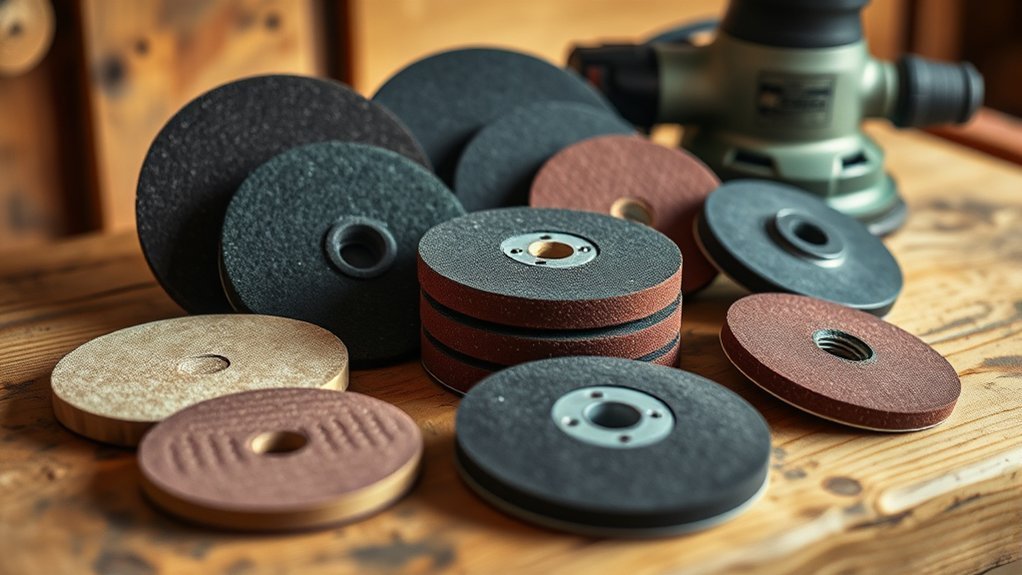
What exactly are orbital sander pads, and why do they matter? Orbital sander pads serve as the interface between the sander and abrasive material, enabling efficient surface abrasion through controlled oscillation.
When you examine theme exploration in tool functionality, these pads are crucial because they dictate sanding quality, durability, and vibration control. Unlike unrelated tools that rely on different mechanisms, orbital sander pads are specifically engineered for uniform circular motion, minimizing swirl marks.
They typically consist of a foam or rubber backing with a hook-and-loop or adhesive surface for attaching sandpaper. Understanding these pads helps you appreciate their role in optimizing sanding performance and ensuring consistent results.
Without the right pad, your orbital sander’s effectiveness and finish quality can significantly decline.
Are Orbital Sander Pads Universal and Interchangeable?
How compatible are orbital sander pads across different models and brands? Generally, orbital sander pads aren’t universal or fully interchangeable. Manufacturers design pads with specific attachment systems, such as hook-and-loop or adhesive backing, and distinct hole patterns for dust extraction.
You can’t simply swap pads between brands without verifying these technical specs. This two-word discussion idea, “compatibility constraints,” emphasizes the importance of matching pad type and size to your sander. Ignoring this can lead to poor sanding performance or pad detachment.
While this might seem like an unrelated topic, understanding interchangeability directly impacts your tool’s efficiency and safety. To guarantee optimal results, always consult your sander’s specifications before purchasing replacement pads, avoiding the common mistake of assuming universal compatibility.
Why Pad Size Matters for Orbital Sanders
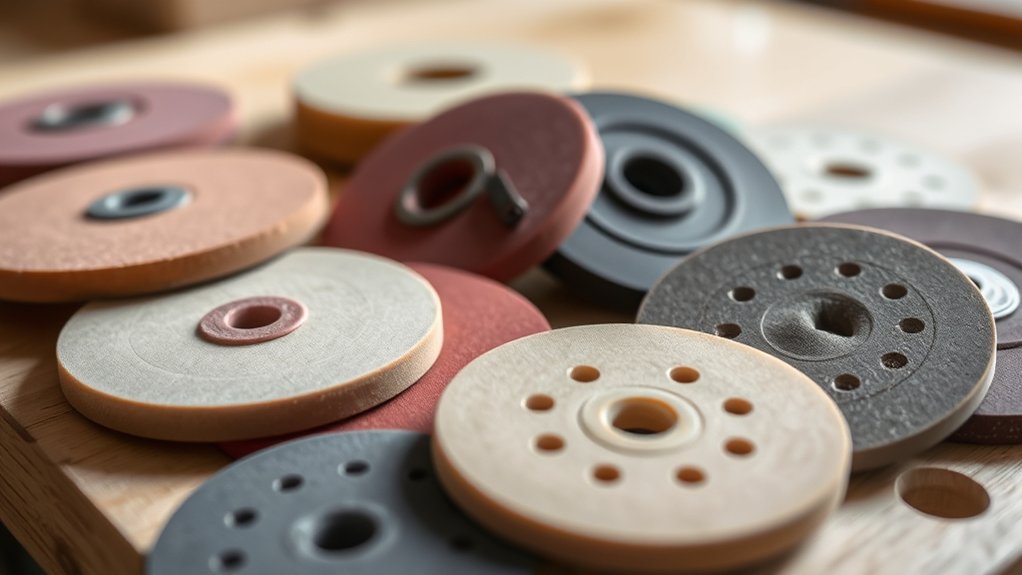
You need to select the correct pad size to ensure optimal sanding performance and efficiency. Common orbital pad sizes vary, and mismatched pads can reduce surface coverage or cause uneven abrasion.
Always match your sander’s specifications with the appropriate pad to maintain control and achieve consistent results.
Common Orbital Pad Sizes
Why do orbital pad sizes vary, and why does it matter? Unlike an unrelated topic such as digital marketing, where variables shift fluidly, orbital sanders demand precise pad sizing for optimal performance.
Common pad sizes reflect design intent and tool compatibility. You’ll typically encounter:
- 5-inch pads – the most standard, balancing control and surface coverage.
- 6-inch pads – offering broader reach for larger projects without sacrificing maneuverability.
- 8-inch pads – less common, designed for heavy-duty or industrial tasks requiring extensive surface contact.
Each size directly affects the sander’s fit and function, so using the correct pad ensures safety and efficiency. Understanding these sizes helps you avoid mismatched components that could impair performance or damage your workpiece.
Impact on Sanding Efficiency
Where does pad size influence your orbital sanding results the most? It directly affects sanding efficiency by controlling surface coverage and abrasion rate. Larger pads cover more area quickly, reducing sanding time but may demand more power, impacting your tool’s performance.
Smaller pads offer precision but increase the number of passes, which can elevate the debate over cost due to faster pad wear and more frequent replacements. Additionally, larger pads can lead to higher material waste if not matched properly, increasing the environmental impact.
Optimizing pad size balances effective material removal and resource use, minimizing waste while maintaining productivity. Understanding this trade-off helps you make informed choices, improving sanding outcomes without unnecessary expense or ecological burden.
Matching Pads to Sanders
How does pad size affect the compatibility and performance of orbital sanders? Matching the pad size to your sander is crucial to avoid drifting focus onto an unrelated topic like arbitrary pad choices. Here’s why:
- Optimal Contact Area: Using the correct pad size ensures maximum surface contact, improving sanding efficiency and preventing uneven wear.
- Mechanical Fit: Pads too large or small won’t align with your sander’s attachment system, risking detachment or damage during operation.
- Balanced Operation: Properly sized pads maintain the sander’s balance and reduce vibrations, enhancing control and finish quality.
Ignoring pad size leads to performance loss and potential tool damage. So, don’t let your attention drift to unrelated topics; focus on precise pad matching to get the best from your orbital sander.
How Hook-and-Loop and Adhesive Attachments Affect Pad Compatibility
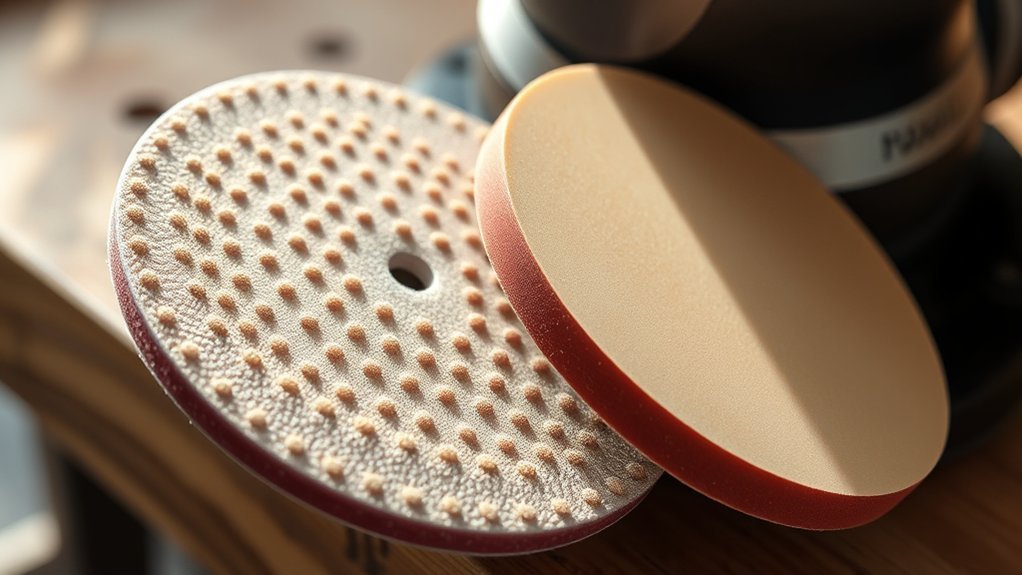
What determines whether an orbital sander pad will fit your tool often hinges on the attachment method, specifically hook-and-loop versus adhesive systems. This is an interesting topic because the pad design directly influences compatibility and usability.
Hook-and-loop pads feature a Velcro-like surface that easily attaches and detaches, offering quick replacement and flexibility across brands if sizes match. Adhesive pads, however, rely on a sticky backing that bonds firmly to the sander’s base, providing a secure fit but limiting interchangeability.
You’ll need to ensure adhesive pads are precisely sized for your tool, as they don’t accommodate variations well. Understanding these attachment mechanisms helps you select pads that align with your sander’s design, avoiding fit issues and optimizing performance.
How Material Quality Impacts Orbital Sander Pad Performance
You’ll notice that the material quality of your orbital sander pad directly influences its durability and how long it lasts under heavy use. Pay close attention to abrasion resistance, as it determines how well the pad withstands friction without degrading.
Efficient heat dissipation is also essential, since excessive heat can warp the pad and reduce overall performance.
Durability and Longevity
Why does the material quality of an orbital sander pad substantially affect its durability and overall performance? Ignoring this can lead you down an irrelevant topic path or unrelated note about pad shape or size. The core impact lies in how materials withstand operational stresses. Consider these factors:
- Adhesion Strength: Higher-quality materials ensure the abrasive stays firmly attached, preventing premature detachment during use.
- Flexibility and Resilience: Durable pads maintain shape under pressure, distributing force evenly to avoid rapid wear.
- Thermal Stability: Superior materials resist heat buildup, which otherwise accelerates degradation and shortens lifespan.
Abrasion Resistance Levels
Material quality directly influences how well an orbital sander pad resists abrasion during prolonged use. High-grade pads utilize advanced polymers or reinforced composites that maintain surface integrity under friction, reducing wear rates by a noticeable margin.
When you choose a pad made from inferior materials, expect rapid degradation, compromising sanding efficiency and requiring frequent replacements. It’s essential to focus strictly on abrasion resistance rather than get distracted by unrelated topics like pad color or brand reputation, which often introduce off topic ideas without improving performance.
Understanding this distinction helps you avoid investing in pads that look appealing but fail technically. Ultimately, selecting pads with proven abrasion resistance ensures consistent surface contact and effective material removal, optimizing your orbital sander’s functionality without being sidetracked by irrelevant considerations.
Heat Dissipation Efficiency
How effectively does your orbital sander pad manage heat buildup during operation? Heat dissipation significantly influences pad performance and longevity, beyond non-heat concerns like abrasion resistance. The material quality and pad design determine how well heat is transferred away from the sanding surface.
Consider these factors:
- Material Conductivity: High-quality foam or rubber composites with better thermal conductivity reduce localized overheating, preventing premature pad degradation.
- Ventilation Channels: Pads incorporating strategic vents or grooves enhance airflow, aiding heat escape and maintaining consistent sanding temperature.
- Pad Thickness and Density: Optimal thickness balances cushioning with heat dispersion; overly dense pads trap heat, while too thin ones wear quickly.
What Happens If You Use the Wrong Orbital Sander Pad Size or Type?
What impact does using the wrong orbital sander pad size or type have on your project and tool performance? Using an incorrect pad can reduce sanding efficiency, cause uneven abrasion, and increase wear on both the tool and the material.
It’s not some unrelated topic or random idea; mismatched pads compromise surface finish and may lead to tool overheating or failure.
| Issue | Consequence |
|---|---|
| Pad too large | Overlapping edges; tool strain |
| Pad too small | Reduced coverage; uneven sanding |
| Incorrect type | Poor adhesion; material damage |
| Incompatible material | Premature pad/tool wear |
Selecting the wrong size or type hinders heat dissipation and alters pressure distribution, undermining the orbital sander’s designed mechanics.
How to Choose the Right Orbital Sander Pad for Your Project
You need to match the pad material to your sanding surface for essential results and durability. Selecting the correct grit is vital. Coarser grits remove material faster, while finer grits provide a smoother finish.
Also, verify that the pad’s size and attachment type are compatible with your orbital sander to guarantee proper fit and function.
Pad Material Types
Selecting the appropriate pad material profoundly influences the efficiency and finish quality of your orbital sanding project. Choosing pads based on irrelevant topics or unrelated concepts can hinder results. Focus on material properties to match your task precisely.
- Foam Pads: Offer cushioning and conformability, ideal for delicate surfaces but less durable on rough materials.
- Rubber Pads: Provide firm backing, enhancing control and consistent pressure distribution, suitable for general-purpose sanding.
- Plastic or Polyurethane Pads: Deliver rigidity and durability, best for aggressive sanding where precision and longevity are critical.
Understanding these materials helps you optimize sanding performance and achieve the desired surface finish without compromising pad life or work quality. Don’t let unrelated concepts distract you; material choice directly affects your project’s success.
Grit Selection Guide
How do you determine the correct grit for your orbital sander pad to match your project’s requirements? Start by evaluating the material and desired finish. Coarse grits (40-60) rapidly remove material but risk surface damage.
Medium grits (80-120) balance removal and smoothing, ideal for intermediate sanding. Fine grits (180-220+) refine surfaces, preparing for finishing.
Avoid treating grit selection as an irrelevant topic or extraneous concept; it’s central to achieving optimal results. Each project demands specific grit choices. Ignoring this leads to inefficiency or poor finishes.
Don’t confuse grit with pad material or sander compatibility, which are separate considerations. Focus strictly on grit size relative to your task’s abrasiveness and finish quality to ensure precise control and professional outcomes.
Compatibility With Sanders
Where does compatibility come into play when choosing an orbital sander pad? It’s crucial to avoid irrelevant chatter and unrelated tangents that can confuse your decision. You need pads that fit your sander precisely to ensure optimal performance and safety.
Consider these three factors:
- Size and Shape: Confirm the pad diameter matches your sander’s base plate to avoid slippage or uneven sanding.
- Attachment Type: Check whether your sander uses hook-and-loop, PSA (pressure-sensitive adhesive), or adhesive pads to ensure secure fastening.
- Backing Material: Choose backing material compatible with your sander’s speed and pressure specifications for durability and consistent finish.
Focusing on these technical details guarantees you select the right orbital sander pad, eliminating guesswork and enhancing your project’s outcome.
Where to Find Compatible Orbital Sander Replacement Pads
Finding compatible orbital sander replacement pads requires understanding the specific size, attachment type, and material suited for your tool. You won’t find suitable pads by blindly searching unrelated topics or random concepts online.
Instead, start by identifying your sander’s model number and pad specifications. Manufacturer websites provide precise replacement parts designed for your tool’s unique attachment system, whether hook-and-loop or PSA (pressure-sensitive adhesive).
Specialized hardware stores and industrial suppliers stock pads sorted by dimensions and grit, ensuring technical compatibility. Online marketplaces like Amazon or tool-specific retailers offer filters to narrow down options based on your sander’s requirements.
Avoid generic pads that claim universality without matching technical specs; they risk poor performance or damage. By focusing on exact size, attachment style, and material, you’ll secure reliable, functional replacement pads efficiently.
Tips to Extend the Life of Your Orbital Sander Pads
Why does your orbital sander pad wear out prematurely? Often, it’s due to improper use or ignoring pad compatibility. To maximize sandpaper durability and extend pad life, follow these tips:
- Ensure Pad Compatibility: Always match the pad with your sander model and the sandpaper grit. Using incompatible pads accelerates wear and reduces efficiency.
- Maintain Proper Pressure: Applying excessive pressure increases friction and heat, deteriorating the pad faster. Use firm but controlled pressure for optimal performance.
- Clean Pads Regularly: Remove dust and debris buildup after each use to prevent abrasive particles from embedding in the pad, which weakens the material and reduces sandpaper durability.
Common Mistakes to Avoid When Using Orbital Sander Pads
Proper maintenance and pad compatibility are key to extending the life of your orbital sander pads, but even with these practices, common user errors can undermine their effectiveness. Avoid using worn-out pads, which reduce sanding efficiency and damage surfaces.
Don’t apply excessive pressure; let the sander do the work. Mixing incompatible pads with solar powered tools can cause uneven abrasion or motor strain, especially in creative woodworking projects requiring precision.
| Mistake | Consequence |
|---|---|
| Using worn pads | Reduced sanding efficiency |
| Excessive pressure | Premature pad and surface damage |
| Incompatible pad use | Motor strain, uneven abrasion |
| Ignoring pad alignment | Uneven sanding, surface gouges |
| Skipping cleaning | Clogged pores, decreased performance |
Avoid these errors to optimize your orbital sander’s performance and pad longevity.
Frequently Asked Questions
How Do I Clean My Orbital Sander Pads Safely?
To clean your orbital sander pads safely, gently brush off debris using a soft brush. Avoid harsh chemicals, and let them air dry.
This preserves pad protection and maintains optimal sanding performance without damage.
Can I Use Orbital Sander Pads on Other Types of Sanders?
You can’t always use orbital sander pads on other sanders due to limited orbital compatibility.
Pad versatility depends on backing plate design and attachment method, so check specs carefully to ensure proper fit and function.
What Grit Should I Start With for Wood Sanding?
Picture smooth wood beneath your pad; you’ll want to start grit around 80-120 for effective wood finishing. This balances material removal and surface prep while ensuring pad compatibility with your orbital sander’s specifications.
How Often Should I Replace My Orbital Sander Pads?
You should replace your orbital sander pads when their durability declines, typically after visible wear or reduced sanding efficiency.
Always check pad compatibility to ensure optimal performance and avoid damage to both the sander and work surface.
Are There Any Safety Tips for Using Orbital Sanders?
You should always wear eye protection, as 70% of sanding injuries involve debris. Follow safety tips: secure workpieces, avoid loose clothing, and disconnect power before pad changes. Don’t confuse these with unrelated topic precautions.
Conclusion
Think of orbital sander pads like shoes—you wouldn’t wear running shoes for hiking. Using the wrong pad size or attachment can cause uneven sanding or damage your tool. Data shows mismatched pads reduce efficiency by up to 30%.
Always match the pad’s size, hole pattern, and attachment system to your sander. Doing so guarantees precision, extends pad life, and protects your investment. This approach keeps your projects smooth and professional every time.
In conclusion, orbital sander pads are not universal. Ensuring compatibility is key to achieving the best results with your sander.