If you choose Danish oil, be aware it dries slowly and cures over days to weeks, especially in humid conditions.
It forms a thin, flexible layer, offering limited protection against water, wear, and impact, making it less suitable for high-traffic or outdoor items.
The oil also darkens wood over time and needs frequent reapplication, which can be labor-intensive.
These factors may prompt you to explore more durable finishes designed for long-lasting protection and stability.
Why Danish Oil Takes Longer to Dry and Cure
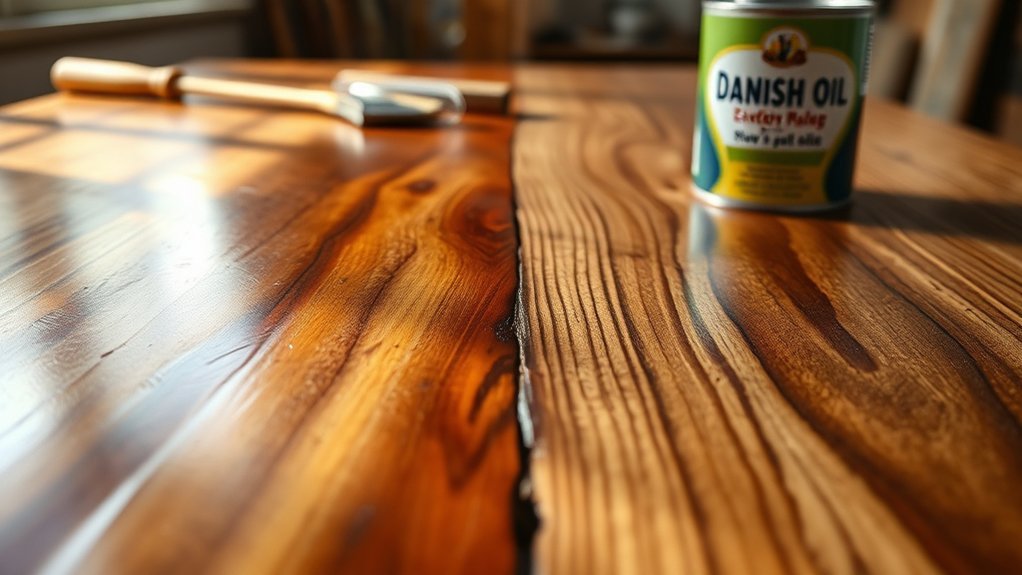
Although Danish oil provides a rich, durable finish, it takes longer to dry and cure compared to other wood finishes because it penetrates deeply into the wood fibers and relies on oxidization to harden. You should understand that drying factors such as temperature, humidity, and ventilation considerably influence the drying rate.
Higher humidity slows the evaporation of solvents, extending drying time. Additionally, curing time is prolonged since the oil hardens through a chemical reaction with oxygen rather than simple solvent evaporation. The oil’s penetration depth means it must oxidize fully within the wood’s pores, which is a gradual process.
Consequently, you’ll notice that while the surface may feel dry, the finish requires days or even weeks to cure completely, ensuring ideal durability and resistance.
How Danish Oil Provides Less Water and Wear Protection
When you apply Danish oil, keep in mind that its limited water resistance means moisture can penetrate more easily than with other finishes. This results in reduced surface durability, making the wood more prone to damage under frequent use.
Consequently, the finish is more vulnerable to wear, requiring more frequent maintenance to preserve its appearance and protection.
Limited Water Resistance
Since Danish oil penetrates wood fibers rather than forming a solid surface layer, it provides only minimal resistance to water and wear. When you apply Danish oil, it soaks into the wood, enhancing its appearance but offering limited moisture protection.
Unlike film-forming finishes, Danish oil lacks the ability to create an effective barrier against water ingress. This inadequate sealant effectiveness means that surfaces treated with Danish oil are more susceptible to water stains, swelling, and potential damage over time.
If you’re working in environments with frequent exposure to moisture or spills, Danish oil won’t provide the robust water resistance you might need. Consequently, while it enhances wood grain and texture, Danish oil isn’t suitable when durable moisture protection is a priority.
Reduced Surface Durability
Beyond its limited water resistance, Danish oil also falls short in providing a durable surface that can withstand everyday wear and tear. When you apply Danish oil, it penetrates the wood fibers but forms only a thin, flexible film on the surface.
This results in minimal surface protection, leaving the finish vulnerable to scratches, dents, and abrasion. Unlike polyurethane or varnish, Danish oil lacks the robust polymerization needed to create a hard, resilient layer. Consequently, you’ll face durability concerns if the wood is exposed to frequent handling or mechanical stress.
While Danish oil enhances the wood’s natural appearance, its protective qualities don’t adequately shield against impact or friction. For applications demanding long-lasting surface protection, Danish oil often requires regular reapplication, which can be inconvenient and less effective over time.
Vulnerability to Wear
Although Danish oil soaks into the wood to enhance its grain, it doesn’t form a substantial barrier against water or mechanical wear. When you apply Danish oil, it penetrates the wood fibers but leaves the surface relatively unprotected, resulting in low wear resistance.
This means your wood is more susceptible to surface abrasion from everyday use. Unlike hard film finishes that create a durable, protective layer, Danish oil’s lack of a solid film means it offers minimal defense against moisture infiltration and physical damage.
Consequently, if you’re aiming for long-term protection against scratches, dents, or water spots, Danish oil falls short. You’ll need to reapply frequently or consider additional surface treatments to improve abrasion resistance and water repellency for enhanced durability.
How Danish Oil Can Darken Your Wood Over Time
When you apply Danish oil to wood, it initiates a chemical reaction that can gradually deepen the wood’s natural color. This occurs because the oil penetrates the wood fibers, oxidizing over time and causing a darkening effect.
The degree of wood color change depends on factors such as wood species, application thickness, and exposure to light. Consequently, you may notice finish variation across different areas, especially if the oil is applied unevenly or the wood has inconsistent porosity.
This darkening can alter your original aesthetic expectations, making it challenging to maintain a uniform appearance. If precise color retention is critical for your project, you should consider these effects. Danish oil’s tendency to darken wood over time is an important limitation impacting long-term visual consistency.
Why Danish Oil Is Unsuitable for High-Traffic or Outdoor Use

Since Danish oil lacks a durable, hardening surface layer, it doesn’t provide adequate protection against abrasion or weather exposure, making it unsuitable for high-traffic or outdoor environments. When applied, Danish oil penetrates wood fibers but cures to a relatively soft finish, which compromises traffic resistance.
This softness allows scratches, dents, and wear to accumulate quickly under heavy use, reducing the wood’s lifespan. Additionally, its limited outdoor durability means it cannot effectively resist moisture, UV radiation, or temperature fluctuations. Over time, these environmental factors cause degradation, such as fading, swelling, or cracking.
If you need a finish for surfaces exposed to constant foot traffic or outdoor conditions, Danish oil won’t deliver the robust protection required, necessitating alternative finishes engineered specifically for enhanced outdoor durability and high traffic resistance.
What Maintenance Challenges Danish Oil Presents
Even though Danish oil enhances wood’s natural appearance, you’ll face ongoing maintenance challenges due to its relatively soft finish and limited protective qualities. The difficult application requires careful surface preparation and multiple thin coats to avoid uneven drying.
Additionally, frequent reapplication is necessary to maintain protection, as the finish wears down quickly under regular use. This can be both time-consuming and costly.
| Challenge | Description |
|---|---|
| Difficult Application | Requires precise, multiple thin coats |
| Soft Finish | Offers minimal scratch and impact resistance |
| Frequent Reapplication | Needs regular renewal to maintain protection |
| Uneven Drying Risk | Can cause blotches if not applied correctly |
| Limited Weatherproofing | Susceptible to moisture without additives |
Better Finishes to Consider Instead of Danish Oil

If you’re seeking improved durability and easier maintenance, consider alternative wood finishes like polyurethane or varnish, which form a robust protective barrier. These coatings offer superior resistance to moisture, abrasion, and UV exposure compared to Danish oil.
Evaluating these options will help you select a finish that better suits your specific application and longevity requirements.
Alternative Wood Finishes
What other wood finishes can provide superior protection and aesthetic qualities compared to Danish oil? You might consider a polyurethane finish, which forms a durable, water-resistant film that withstands abrasion and chemical exposure better than Danish oil’s penetrating, softer layer.
Polyurethane is available in gloss levels, allowing you to tailor the shine and clarity of your wood surface precisely. Alternatively, shellac varnish offers a quicker drying time and delivers a warm, rich tone that enhances wood grain depth. It’s also repairable by re-dissolving with alcohol, unlike Danish oil’s polymerized film.
Both finishes require more meticulous application but result in a more robust and visually consistent coating. If you want longevity and enhanced surface resilience, these alternatives outperform Danish oil in technical durability and aesthetic stability.
Protective Coating Options
Moving beyond alternative wood finishes, it’s important to evaluate protective coating options that offer superior durability and resilience compared to Danish oil. When considering finish options, you want protective coatings that guard against moisture, abrasion, and UV damage effectively.
Here are three technical alternatives:
- Polyurethane: Provides a hard, abrasion-resistant surface with excellent water and chemical resistance, ideal for high-traffic or moisture-prone areas. Available in oil- or water-based formulas, it forms a thick, durable film.
- Conversion Varnish: A professional-grade coating that cures chemically, offering exceptional hardness, chemical resistance, and color retention, though it requires specialized application techniques.
- Epoxy Resin: Creates a robust, impermeable barrier, perfect for surfaces exposed to heavy wear or moisture, but it may yellow over time without UV stabilizers.
Each of these protective coatings delivers more reliable protection than Danish oil’s penetrating finish.
Frequently Asked Questions
Is Danish Oil Safe to Use on Food-Contact Surfaces?
You can use Danish oil on food-contact surfaces, but guarantee it’s fully cured to maintain food safety. Its surface protection is effective, yet curing time is essential to prevent any chemical transfer to food items.
Can Danish Oil Be Applied Over Previously Finished Wood?
Yes, you can apply Danish oil over previously finished wood, but verify the existing finish is compatible by sanding lightly to promote adhesion.
Proper Danish oil application requires surface preparation to avoid finish incompatibility and achieve ideal results.
Does Danish Oil Have Any Strong Odors or VOCS?
You might notice strong scents when using Danish oil, which emit volatile organic compounds (VOCs). These can cause health concerns if inhaled excessively, so guarantee proper ventilation and avoid prolonged exposure during application and drying.
How Long Does Danish Oil Last Before Needing Reapplication?
You’ll typically need to reapply Danish oil every 6 to 12 months, depending on application frequency and durability factors like surface wear, exposure to moisture, and UV light. These factors all influence its protective longevity.
Is Danish Oil Compatible With All Wood Types?
Danish oil compatibility varies with wood absorption rates; it works best on open-grain woods like oak or walnut. Denser woods absorb less, requiring multiple coats or alternative finishes for effective protection and appearance.
Conclusion
In choosing your coating, consider Danish Oil’s slower drying and subdued sturdiness. Its susceptibility to staining, surface softening, and subtle darkening signals significant shortcomings for high-traffic or harsh environments.
You’ll face frequent finish failures and frustrating maintenance demands. For durable, dependable defense, deliberate on alternatives delivering distinct durability and decisive water resistance.
Don’t dismiss the details—diligent decision-making guarantees your woodwork withstands wear, water, and time with unwavering, well-rounded protection. Keep in mind the disadvantages of Danish Oil when making your final choice.