Rustins Danish Oil isn’t fully waterproof but provides moderate water resistance by penetrating and sealing wood fibers.
It protects against light spills and humidity, making it suitable for indoor use and some outdoor applications when properly applied with multiple coats.
However, prolonged water exposure can cause damage, so regular maintenance is necessary to sustain its protective qualities.
If you want to understand how to maximize its moisture defense and when to choose alternative finishes, keep exploring further details.
What Is Rustins Danish Oil and How Does It Work
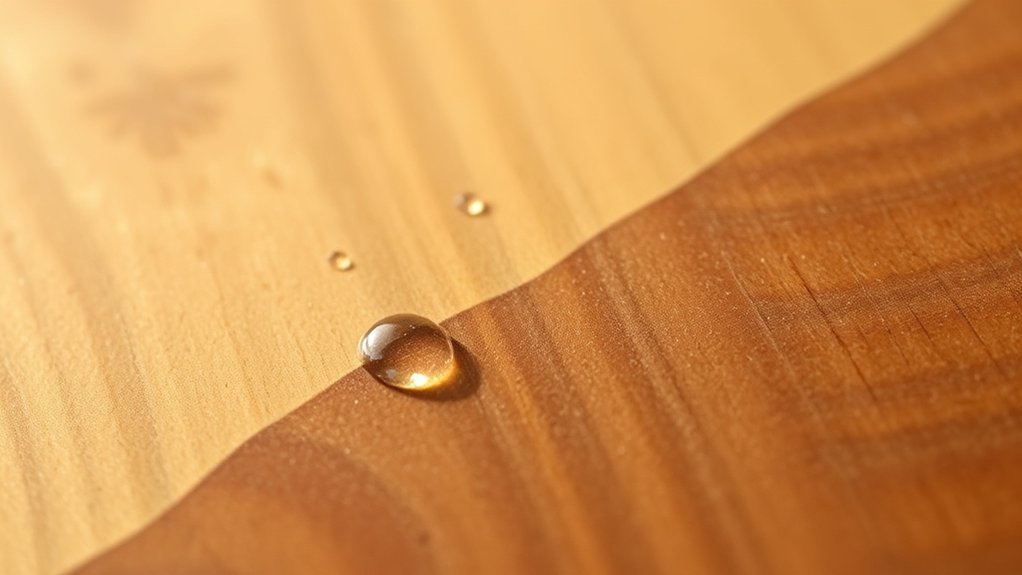
Rustins Danish Oil is a wood finishing product that combines oils and varnishes to penetrate and protect wood surfaces. When you apply it, the oil seeps deep into the wood fibers, enhancing grain definition and providing a durable, satin finish.
This blend is designed for various wood types, including hardwoods like oak and softwoods like pine, adapting to their porosity for ideal absorption. For best results, you should use specific application techniques: apply thin, even coats with a lint-free cloth or brush, allowing each layer to absorb fully before wiping off excess.
Multiple coats build up protection and improve water resistance without forming a thick film. Proper surface preparation and curing time are critical to achieving the oil’s full protective and aesthetic benefits.
Is Rustins Danish Oil Waterproof? The Quick Answer
Although Danish oil offers enhanced water resistance compared to untreated wood, it is not fully waterproof. You’ll find in Rustin’s reviews that while it protects against light spills and humidity, it doesn’t prevent water penetration under prolonged exposure.
If you need complete waterproofing, consider Danish oil alternatives like spar varnish or polyurethane.
| Feature | Rustins Danish Oil | Waterproof Alternative |
|---|---|---|
| Water Resistance | Moderate | High |
| Application Complexity | Simple | Moderate |
| Drying Time | 4-6 hours | 8-24 hours |
| Finish | Matte to satin | Glossy to satin |
| Longevity | 1-2 years before recoating | 3-5 years or more |
This table helps you evaluate your options precisely.
Rustins Danish Oil’s Waterproof Performance and Moisture Resistance
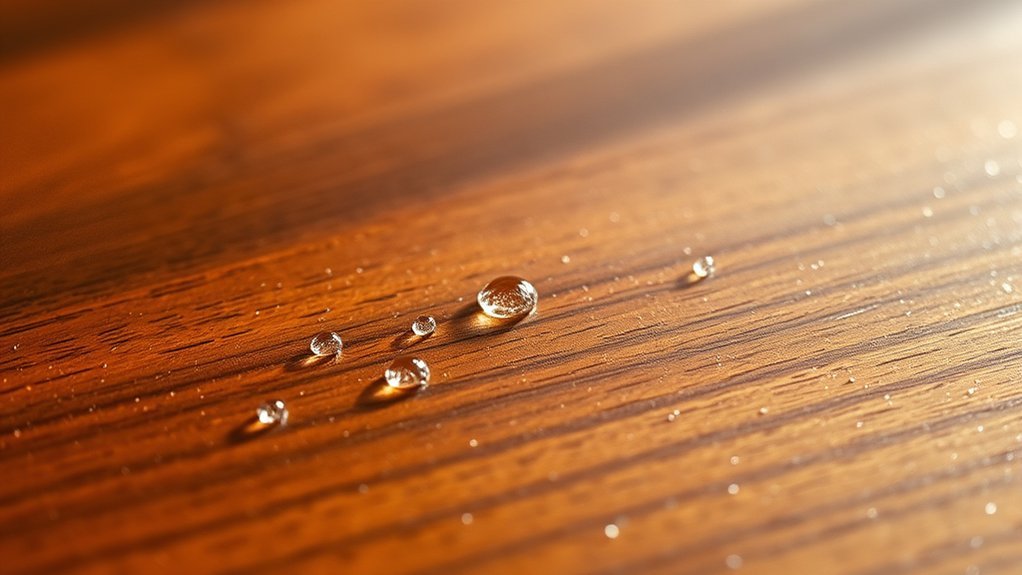
When you apply Danish oil, you’re enhancing the wood’s ability to resist moisture penetration to a certain extent, but it won’t create a fully impermeable barrier. Rustins Danish Oil improves surface moisture resistance through controlled absorption, yet durability concerns arise if the coating is too thin or uneven.
Proper application techniques are essential to maximize its protective qualities. Consider these points:
- Confirm multiple thin coats for better penetration and moisture resistance.
- Avoid pooling or over-application, which compromises drying and durability.
- Light sanding between coats promotes adhesion and uniform protection.
- Understand that Danish oil seals but doesn’t fully waterproof. Prolonged water exposure can still cause damage.
Can You Use Rustins Danish Oil on Outdoor Wood?
You can apply Rustins Danish Oil on outdoor wood due to its penetrating oil properties that enhance water resistance and durability. When used outside, it provides a protective barrier against moisture and UV exposure, but requires multiple coats and proper curing for peak performance.
Make sure to prepare the wood surface thoroughly and reapply periodically to maintain effective outdoor protection.
Rustins Danish Oil Properties
Rustins Danish Oil combines penetrating oils and varnishes to enhance wood’s natural grain while providing a protective finish. Understanding its oil properties helps you improve application techniques for the best results.
This oil is a blend of drying oils and alkyd varnishes, allowing it to soak deeply into wood fibers and form a durable, slightly flexible film on the surface.
Key attributes include:
- Deep penetration enhances wood grain visibility and texture
- Moderate water resistance but not fully waterproof
- Dries to a satin sheen, balancing aesthetics and protection
- Requires multiple coats with proper drying time between applications for maximum durability
Outdoor Wood Protection
Although Danish oil offers some water resistance, it isn’t fully waterproof, which limits its effectiveness for prolonged outdoor exposure. When used on outdoor furniture, Rustins Danish Oil penetrates the wood fibers, providing a moderate barrier against moisture but not a complete seal.
This partial protection can enhance wood longevity to some extent by reducing surface water absorption and slowing weathering. However, for wood consistently exposed to rain, humidity, or direct sunlight, Danish oil alone may degrade faster, requiring frequent reapplication.
Its formulation lacks the robust UV inhibitors and waterproofing agents found in dedicated exterior finishes. Consequently, while you can use Rustins Danish Oil on outdoor wood, expect limited durability. For ideal wood longevity, consider supplementary protective coatings or products specifically designed for outdoor conditions.
Application Tips For Outdoors
When applying Danish oil to outdoor wood, it’s important to prepare the surface meticulously by sanding and cleaning to confirm ideal penetration and adhesion. For outdoor furniture, this guarantees enhanced durability against weather conditions.
Follow these technical steps for best results:
- Sand the wood with fine-grit paper (220 grit) to open pores for better oil absorption.
- Remove all dust and debris with a tack cloth or vacuum before application.
- Apply oil evenly using a lint-free cloth, allowing 15 minutes for penetration before wiping excess.
- Repeat application 2-3 times, with 6-8 hours drying between coats, to build a protective layer suitable for outdoor exposure.
Proper application extends protection and maintains the wood’s appearance despite moisture and UV exposure.
Applying Rustins Danish Oil for Better Water Resistance
If you want to enhance the water resistance of your wood, applying Danish oil correctly is crucial. Begin by preparing the surface: sand the wood smoothly and remove dust. Use a clean, lint-free cloth or a natural bristle brush for applying Rustins Danish Oil.
Apply thin, even coats, allowing each layer to penetrate fully before adding the next. Employ slow, circular motions to guarantee uniform absorption and avoid pooling. After 15–20 minutes, wipe off excess oil to prevent tackiness.
Repeat this process for 3 to 4 coats, waiting 6 to 8 hours between applications. These applying techniques optimize the oil’s penetration and curing, greatly improving durability and water resistance.
Proper application builds a resilient barrier, protecting the wood against moisture ingress while maintaining its natural appearance.
Common Mistakes That Hurt Rustins Danish Oil’s Water Protection
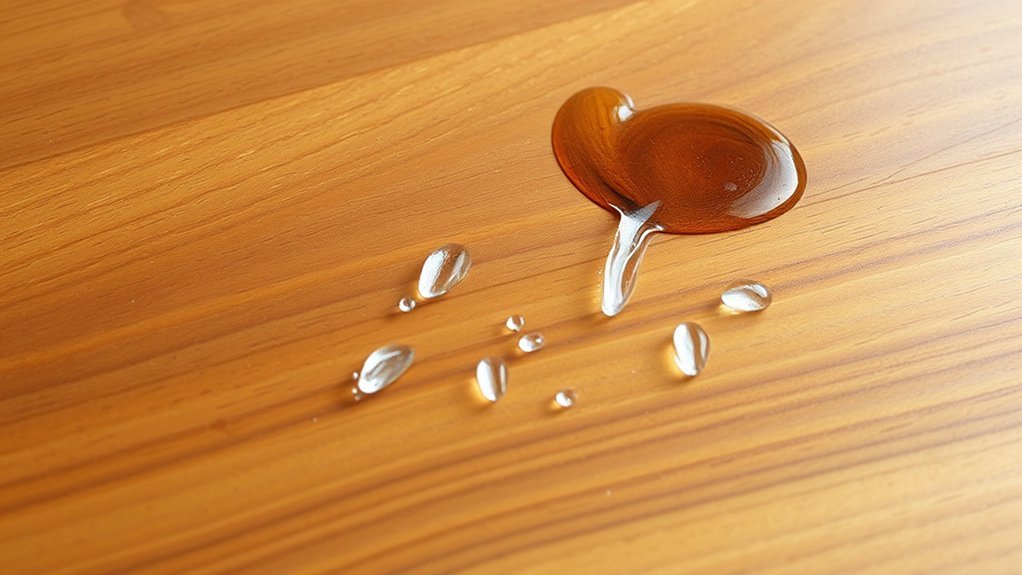
If you apply Rustins Danish Oil too thinly, it won’t form an adequate barrier against water penetration. Skipping thorough surface preparation can prevent proper oil absorption, reducing its protective effectiveness.
Also, ignoring the recommended reapplication schedule compromises the long-term water resistance of the finish.
Applying Too Thinly
Although Rustins Danish Oil is designed to penetrate and protect wood surfaces, applying it too thinly greatly reduces its water-resistant properties. If the application thickness is insufficient, the oil absorption is suboptimal, leaving the wood vulnerable to moisture ingress.
You want to guarantee enough oil saturates the fibers to form a durable barrier. Common pitfalls include:
- Using a single, light coat that evaporates before full absorption
- Wiping off excess oil immediately, preventing deep penetration
- Applying with a dry cloth that fails to deliver adequate oil volume
- Neglecting multiple coats necessary for build-up and enhanced water repellency
Maintaining the correct application thickness allows the oil to polymerize properly, establishing a robust hydrophobic layer that considerably improves water protection.
Skipping Surface Preparation
Guaranteeing proper surface preparation is just as important as applying the right thickness of Rustins Danish Oil. Skipping sanding and ignoring cleaning can greatly reduce the oil’s ability to penetrate and seal wood fibers, compromising water resistance.
Without sanding, the surface remains uneven and clogged with old finishes or debris, preventing uniform absorption. Ignoring cleaning leaves contaminants that interfere with adhesion and curing.
| Preparation Step | Impact on Water Protection |
|---|---|
| Skipping Sanding | Uneven absorption, weak seal |
| Ignoring Cleaning | Contaminants block oil penetration |
| Proper Preparation | Smooth, clean surface guarantees deep oil penetration |
Ignoring Reapplication Timing
When you don’t reapply Rustins Danish Oil within the recommended timeframe, the wood’s protective barrier weakens, reducing its water resistance. Proper application techniques hinge on consistent maintenance to preserve finish durability.
Neglecting reapplication leads to surface degradation and diminished waterproofing. To enhance protection, consider these factors:
- Monitor the oil’s absorption rate and surface dryness before reapplying.
- Follow manufacturer guidelines, typically reapplying every 6–12 months based on use and exposure.
- Prepare the surface lightly before each coat to guarantee adhesion and uniform finish.
- Avoid excessive buildup by applying thin, even layers to maintain peak finish durability.
How Long Does Rustins Danish Oil Last Against Water Exposure?
Since Rustins Danish Oil penetrates deeply into the wood fibers, its water resistance can last several months under normal indoor conditions. Durability testing reveals that the oil forms a semi-permeable barrier, reducing water absorption but not entirely preventing it.
Under light water exposure, such as occasional spills, the oil maintains its protective properties for approximately three to six months. However, prolonged or heavy water exposure accelerates wear, compromising the finish within weeks.
The product’s longevity depends on factors like wood type, application thickness, and environmental conditions. You should understand that while Rustins Danish Oil improves water resistance, it isn’t a permanent waterproof sealant.
Continuous exposure degrades the protective layer, necessitating periodic examination. This insight is vital for evaluating the product’s suitability for your specific water exposure needs.
Maintaining and Reapplying Rustins Danish Oil for Waterproofing
To maintain ideal waterproofing, you should reapply Rustins Danish Oil every 6 to 12 months, depending on exposure and wear.
Before reapplication, verify the surface is clean, dry, and lightly sanded to promote proper adhesion. Skipping these preparation steps can compromise the oil’s protective barrier and reduce its effectiveness.
Reapplication Frequency Guidelines
Although Rustins Danish Oil provides a durable waterproof finish, you’ll need to reapply it periodically to maintain ideal protection. The reapplication timing depends largely on the level of surface wear and environmental exposure. To optimize waterproofing, monitor the wood’s condition and follow these guidelines:
Inspect surfaces every 6 to 12 months for signs of dullness or water absorption. High-traffic or outdoor items may require reapplication every 3 to 6 months due to accelerated surface wear.
Lightly sand the surface before each reapplication to guarantee proper adhesion. Apply thin, even coats and allow full curing between layers for maximum waterproofing.
Surface Preparation Tips
When preparing a surface for maintaining or reapplying Rustins Danish Oil, you’ll need to make certain the wood is clean, dry, and free of any previous finish residues that could hinder adhesion. Begin with thorough surface cleaning, using a mild detergent solution to remove dirt, grease, or contaminants, followed by rinsing and allowing the wood to dry completely.
Next, employ precise sanding techniques to create an ideal surface profile: use fine-grit sandpaper (220-320 grit) to lightly abrade the wood, promoting better oil penetration without damaging the fibers. Always sand in the direction of the grain to avoid scratches.
After sanding, remove dust with a tack cloth or vacuum to prevent imperfections. Proper surface preparation makes sure of uniform finish absorption and maximizes Rustins Danish Oil’s waterproofing performance over time.
Comparing Rustins Danish Oil With Other Waterproof Wood Finishes
While Rustins Danish Oil offers a blend of oil and varnish that penetrates wood fibers and provides moderate water resistance, you’ll find that other waterproof wood finishes, such as polyurethane, spar varnish, and epoxy coatings, deliver varying degrees of moisture protection and durability depending on their chemical composition and application methods.
Danish Oil benefits include enhancing wood grain and ease of application, but its water resistance is less robust than some Danish Oil alternatives. Consider these options:
- Polyurethane: Forms a hard, durable film, excellent for floors, highly water-resistant but can obscure wood texture.
- Spar Varnish: Flexible and UV-resistant, ideal for outdoor use where moisture and sunlight exposure are high.
- Epoxy Coatings: Creates a thick, impermeable barrier, superior water resistance but requires careful application.
- Tung Oil: Natural finish providing moderate water repellency and a rich appearance.
When Should You Pick a Different Finish Than Rustins Danish Oil?
If your project demands maximum water resistance or exposure to harsh outdoor conditions, you’ll want to contemplate finishes beyond Rustins Danish Oil. While excellent for indoor wood sealing, it’s less suited for surfaces facing prolonged moisture or UV exposure.
Alternative finishes like marine varnishes or epoxy coatings provide superior barrier protection and durability.
| Finish Type | Water Resistance | Ideal Use Cases |
|---|---|---|
| Rustins Danish Oil | Moderate | Indoor furniture, low-moisture |
| Marine Varnish | High | Boats, outdoor wood surfaces |
| Epoxy Coating | Very High | Extreme moisture, industrial |
| Polyurethane | High | Floors, heavy wear areas |
Choose alternative finishes when you need enhanced protection that Rustins Danish Oil alone cannot guarantee.
Frequently Asked Questions
Is Rustins Danish Oil Safe for Food-Contact Surfaces?
Rustins Danish Oil isn’t recommended for food-contact surfaces since it lacks specific food safety certification.
While it provides excellent surface protection, you shouldn’t trust it where direct food contact occurs without proper curing and testing.
How Long Does Rustins Danish Oil Take to Dry?
Rustins Danish Oil typically has a drying time of 4 to 6 hours, depending on oil absorption and environmental conditions. Multiple coats may extend drying time; make certain each layer fully absorbs before applying the next for ideal finish.
Can Rustins Danish Oil Be Tinted or Colored?
You might expect Rustins Danish Oil to offer extensive tinting options, yet it’s primarily designed as a clear finish. While you can experiment with color mixing, results vary, so precise testing is essential before application.
Does Rustins Danish Oil Enhance Wood Grain Appearance?
Yes, Rustins Danish Oil greatly enhances wood grain appearance by penetrating fibers. You’ll achieve ideal wood grain enhancement through careful oil application techniques like applying thin coats and wiping excess promptly for a smooth, lustrous finish.
What Tools Are Best for Applying Rustins Danish Oil?
You’ll want to wield a brush application or foam applicator like a pro! Both provide precise, even coverage for Rustins Danish Oil, ensuring deep penetration and a flawless finish without streaks or blotches on your wood surface.
Conclusion
While Rustins Danish Oil isn’t fully waterproof like specialized sealants, it offers significant moisture resistance by penetrating and hardening within the wood fibers. This helps protect the wood from everyday spills and humidity.
If you’re concerned about heavy water exposure, combining it with a topcoat or choosing a dedicated waterproof finish might be better. Such options provide stronger barriers against prolonged wet conditions.
However, for moderate protection and enhancing wood durability, Rustins Danish Oil provides a reliable, breathable barrier that preserves wood integrity without trapping moisture. This makes Rustins Danish Oil a smart choice for many indoor and light outdoor applications.